

Hoi An Travel Tips
Hoi An Leads Asia’s Slow Travel Trend in 2026: What the List Says and How to Do It Right
Hoi An Leads Asia’s Slow Travel Trend in 2026: What the List Says and How to Do It Right
Agoda put Hoi An first on its 2026 list of Asia’s slow travel destinations. Here is what that list really says, what the visitor numbers show, and how to do slow travel in Hoi An properly — by bicycle, and by the week.
In March 2026 the booking platform Agoda published its picks for slow travel destinations in Asia, and Hoi An came first — ahead of Ubud, Kyoto, Galle, Luang Prabang, Chiang Mai and Kerala. The headlines wrote themselves. Hoi An “tops Asia”, “beats Kyoto”, “leads the trend”.
We run a bike rental shop at 84 Phan Chau Trinh, so we watch how people actually use this town, and the honest picture is more interesting than the headline. Hoi An is superb for travelling slowly. But most visitors still do it fast: a bus from Da Nang in the afternoon, lanterns at dusk, gone by ten. This guide is about the other way — what slow travel in Hoi An looks like on the ground, what it costs, and where to ride when you have days rather than hours.

- What Agoda’s list actually says
- What slow travel means in Hoi An
- The numbers: most visitors don’t stay the night
- Recognition beyond the Agoda list
- A slow day in Hoi An, hour by hour
- Five slow travel routes from the Old Town
- Bicycle, e-bike or motorbike?
- How long to stay, and where to base yourself
- What to skip, and small courtesies
- FAQ
What Agoda’s list actually says
The list is a short editorial release, not a statistical index. Agoda named seven places it recommends for slow travel in Asia and described each in a paragraph: Hoi An, Ubud, Kyoto, Galle, Luang Prabang, Chiang Mai and Kerala. Hoi An is listed first. The release does not publish a score, a methodology or the booking data behind the order.
That matters because some of the coverage turned “listed first” into “ranked number one by booking volume”, which the release does not claim. What it does say about Hoi An is fair: a compact old town you can walk, tailors and cooking classes that ask you to come back tomorrow, and rice paddies a short ride away. Agoda’s senior vice president of supply, Andrew Smith, framed the whole list around travellers wanting trips that feel “grounded in place”.
So read it as a well-chosen recommendation from a large booking platform, not a crown. The good news is that the recommendation holds up. Hoi An really is one of the easiest places in Asia to slow down, for reasons that have little to do with any list.
Hoi An rewards the second day more than the first, and the fifth day more than the second.
What slow travel means in Hoi An
The idea is simple to define and harder to do: fewer places, more time in each, and more of that time spent the way locals spend it. Instead of ticking off sights, you stay long enough for the town to stop performing for you. In Hoi An that happens surprisingly fast, because the town is small and its daily rhythm is easy to join.
Three things make Hoi An unusually good at it.
- Scale. The Ancient Town is a few hundred metres across and completely flat. The beaches, vegetable gardens and craft villages sit three to six kilometres out — a gentle bicycle ride, not an expedition.
- A daily rhythm you can see. The market is busiest before seven, gardeners in Tra Que water their beds at dawn and dusk, fishermen come in to An Bang and Cua Dai in the early morning. Stay a few days and you start keeping the same hours.
- Things that take more than one visit. A tailored shirt needs a fitting and a second fitting. A cooking class starts with a market walk. A lantern workshop takes an afternoon. The town is built around returning.
What slow travel in Hoi An is not: the 90-minute evening visit that most tour itineraries sell. That visit is lovely, but it is the busiest, most compressed version of the town.

The numbers: most visitors don’t stay the night
Here is the part the “slow travel capital” headlines left out. According to Hoi An’s own 2024 tourism figures, reported by Bao Quang Nam (now Bao Da Nang), the town received about 4.4 million visits, more than 3.5 million of them international. But the number of overnight stays was about 1.87 million, and hotel room occupancy averaged 46.8%.
Put those side by side and the picture is clear: fewer than half of the visits to Hoi An involve sleeping in Hoi An. Many visitors arrive from Da Nang or a cruise port, walk the Old Town, and leave the same evening. The first half of 2025 continued the trend — around 2.8 million visits, up 17.4% on the year before, with roughly 1.5 million international visitors.
For anyone staying longer this is good news. An occupancy rate under 50% means Hoi An has plenty of beds, weekly and monthly rates are easy to negotiate outside Tet and the summer peak, and the quiet hours — early morning, late evening, weekdays in the villages — belong to the people who stayed.
| Figure | Value | Period |
|---|---|---|
| Total visits | about 4.4 million | 2024 |
| International visits | over 3.5 million (+11.4%) | 2024 |
| Overnight stays | about 1.87 million | 2024 |
| Room occupancy | 46.8% | 2024 |
| Total visits | about 2.8 million (+17.4%) | Jan–Jun 2025 |
Recognition beyond the Agoda list
The Agoda pick is the latest in a long run of awards, and a few of them say more about slow travel than the list does.
- UNESCO World Heritage Site since 1999, for the Ancient Town’s preserved trading-port streetscape from the 15th to 19th centuries — Vietnamese, Chinese and Japanese influences in one walkable grid.
- Tra Que was named one of UN Tourism’s Best Tourism Villages in 2024, one of 55 rural communities chosen worldwide. That is the award to pay attention to if you travel this way: it rewards villages where tourism supports farming rather than replacing it.
- Asia’s Leading Cultural City Destination at the World Travel Awards, which Hoi An won again in 2025.
None of these are reasons to visit on their own. They are a useful sign that the things slow travellers come for — working farms, living craft villages, an old town that is still lived in — are being protected rather than paved over.

A slow day in Hoi An, hour by hour
This is the day we suggest to guests who tell us they have “a few days and no plan”. It uses the town’s heat and crowd pattern instead of fighting it.
| Time | What to do | Why then |
|---|---|---|
| 5:30–7:00 | Ride to Tra Que or the rice fields north of town | Cool air, low light, gardeners at work |
| 7:00–8:30 | Breakfast at Hoi An Market: cao lau, banh mi, coffee | Stalls are busy and the food is fresh |
| 8:30–10:30 | Walk the Ancient Town, step into one or two heritage houses | Before day groups and the heat |
| 11:00–15:00 | Tailor fitting, cooking class, nap, café | The hottest hours — stay in the shade |
| 15:30–17:30 | Ride to An Bang or the coconut forest | Softer light, beach cooling down |
| 18:00 onwards | Lanterns and the river on foot | The Old Town closes to most vehicles in the evening |
Repeat with small changes and you have a week. The point is not to see more each day; it is to see the same streets and fields at different hours until they become familiar.
Five slow travel routes from the Old Town
All five start from the Ancient Town. The first four suit a bicycle or an electric bicycle; the fifth is a motorbike ride. Distances are one way, from routes we re-measured on Google Maps in September 2026.
| Route | One way | Best by | Best time |
|---|---|---|---|
| Tra Que vegetable village | ~3–3.5 km | Bicycle | Sunrise or late afternoon |
| Thanh Ha pottery village | ~4 km | Bicycle | Morning |
| An Bang Beach | ~4–5 km | Bicycle or e-bike | Early morning or after 15:30 |
| Bay Mau coconut forest, Cam Thanh | ~5–6 km | E-bike | Before 9:00 |
| Marble Mountains | ~18 km | Motorbike | Morning, before the heat |
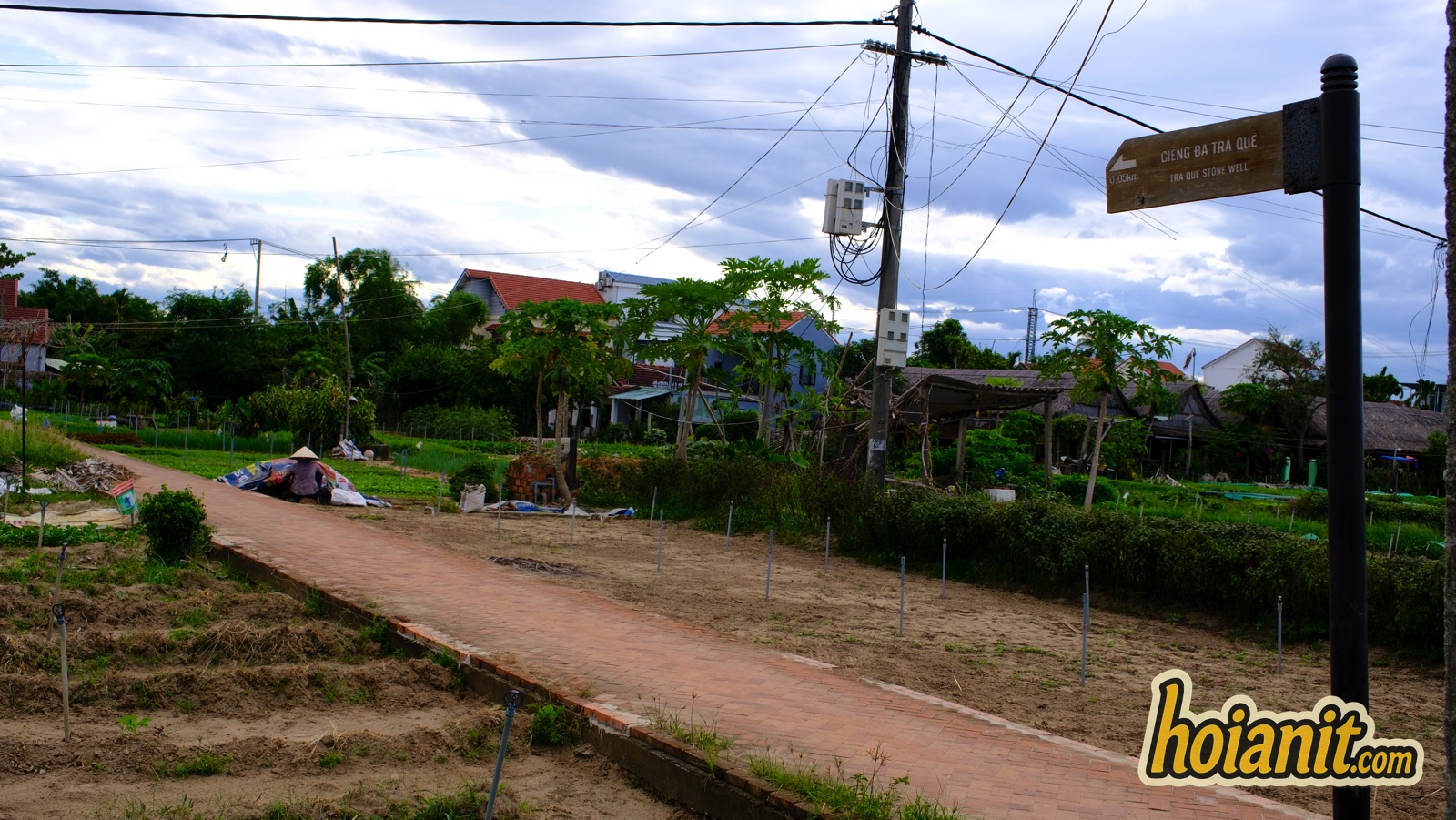
Tra Que and the fields to An Bang
The classic slow travel loop. Ride north to Tra Que, where families have grown herbs and greens in seaweed-fed beds for generations, then follow the small lanes east through the paddies to An Bang for a swim. Back through town it is about 12 km in total — a relaxed morning by bicycle.
Across the river to Thanh Ha
West along the river to the potters of Thanh Ha, where you can watch a wheel spun by foot and try it yourself. Combine it with the carpentry workshops of Kim Bong on Cam Kim island for a full day of craft villages at a walking pace.
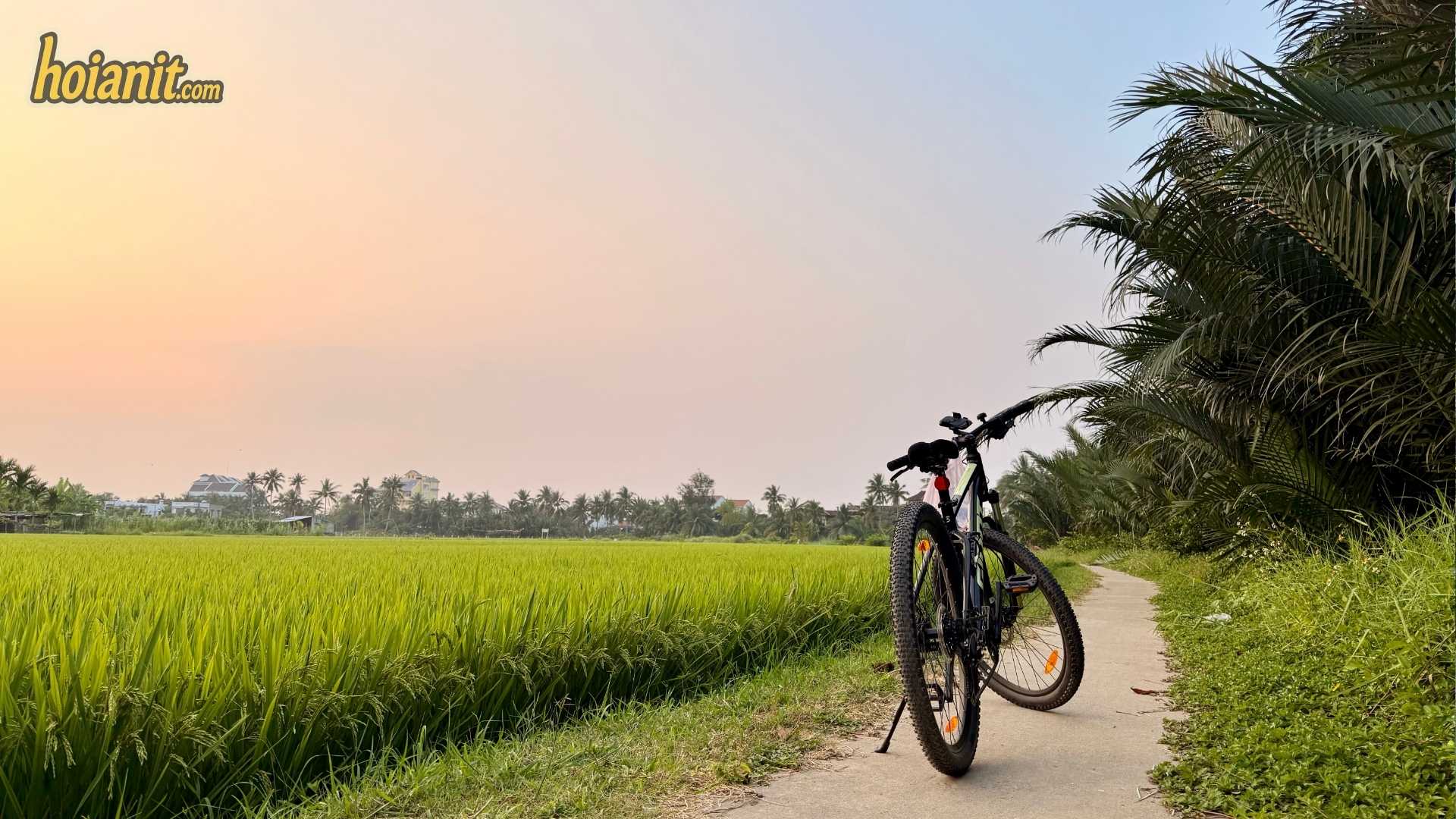
The coconut forest, early
Bay Mau in Cam Thanh is beautiful and, by mid-morning, very busy. Go early, and consider a quiet rowing boat through the nipa palms rather than the loud basket-boat shows (more on that below). Our Hoi An cycling routes guide maps all of these in detail.
Bicycle, e-bike or motorbike for slow travel?
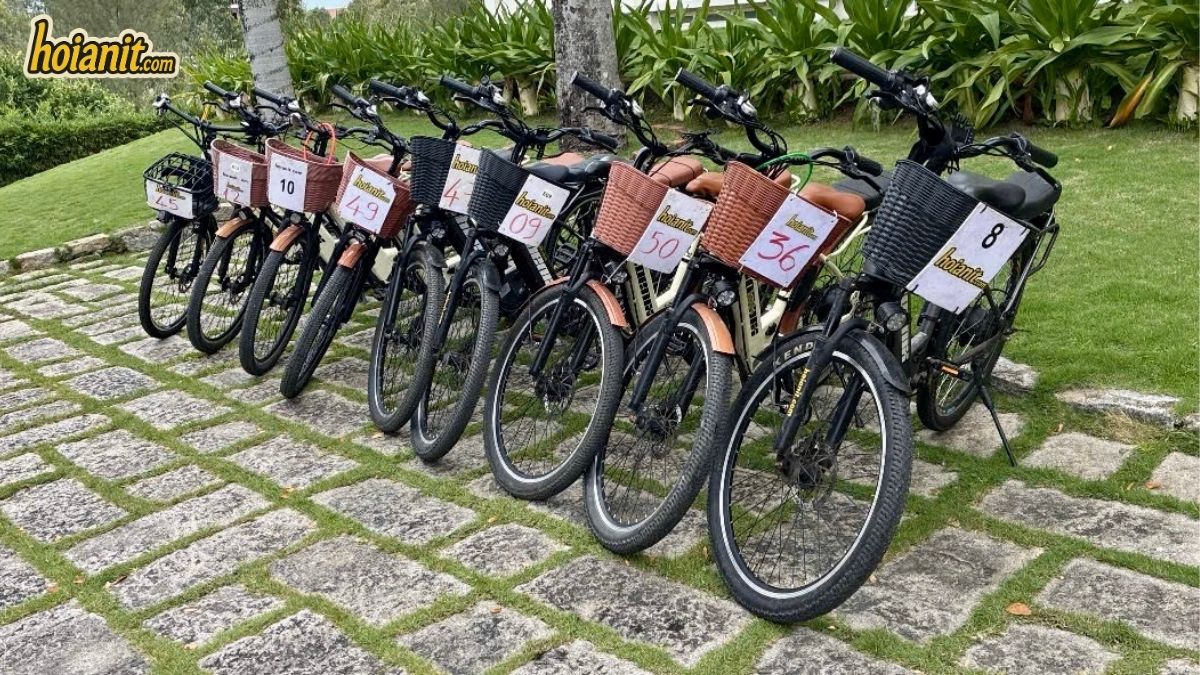
Slow travel and a motorbike are not opposites. The right vehicle depends on how far you want to go and how hot it is. These are our current daily prices, checked in our shop system in September 2026.
| Vehicle | Price per day | Licence | Good for |
|---|---|---|---|
| City bicycle | 50.000₫ (~$2) | None | Old Town edges, Tra Que, Thanh Ha |
| Mountain bike | 100.000₫ | None | Longer rides on rougher lanes |
| Electric bicycle (pedal assist) | 100.000₫ | None | An Bang, Cam Thanh, hot afternoons |
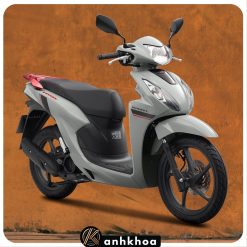
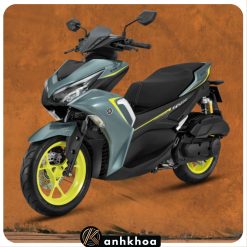
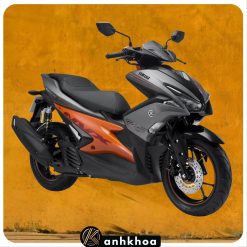
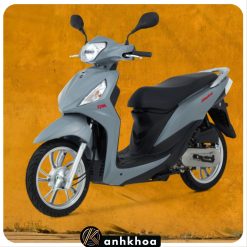
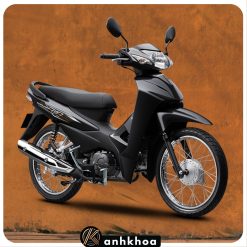
| Semi-automatic motorbike | from 110.000₫ | Yes, plus IDP | Marble Mountains, day trips |
| Automatic scooter | from 150.000₫ | Yes, plus IDP | Da Nang, My Son, Hai Van |
For long stays the discount structure matters more than the day rate: rentals of 7 days or more are 10% off, and 30 days or more are 30% off. Confirm the final quote by message, as prices shift with the season. Anything over 50cc needs a licence valid for motorbikes and a 1968 International Driving Permit — see our bicycle vs e-bike vs motorbike comparison if you are unsure.









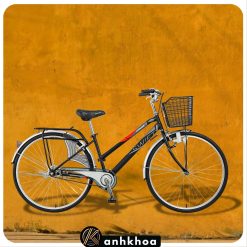
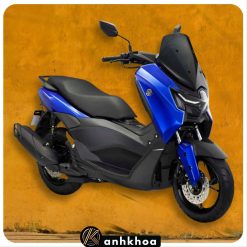



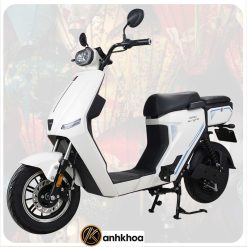
Bikes Rental


How long to stay, and where to base yourself
If you want to slow down, four nights is the minimum that changes how Hoi An feels, and a week is better. Two nights gives you the Old Town. Four gives you the Old Town at dawn, the villages, a beach afternoon and a tailor who remembers your name. A month — increasingly common with remote workers — lets you settle into a café and a route.
- Near the Ancient Town: walk to dinner and the market, but pay more and hear more.
- Cam Thanh and the rice fields: homestays and small villas among the paddies, the most rural base of all — you will want a bicycle or e-bike.
- An Bang: beach mornings, a 10–15 minute ride into town.
Our where to stay in Hoi An guide compares the areas, and the month-by-month weather guide helps you avoid the October–November flood weeks, which are the one time taking it slow here gets genuinely difficult.
What to skip, and small courtesies
Being honest about the busy parts makes the slow parts easier to find.

- Skip the peak-hour basket-boat shows if you want quiet. The spinning boats and loud music are a party, not a nature trip.
- Skip the lantern boats at the busiest hour right after dark; walk the far bank of the river instead, or come back on a weeknight.
- Spread the heritage houses over several days. Since 10 August 2026 you pay 20.000₫ per site as you enter instead of buying a five-site ticket, which suits slow travel perfectly: one house a morning, no rush to get your money’s worth.
- Ask before photographing gardeners, potters and market sellers. Buying something small is the easiest way to ask.
- Ride slowly through villages. Lanes are shared with children, dogs and bicycles loaded with greens.
If you want a ready-made structure for your first days, our 3-day Hoi An itinerary works well as a starting point — just stretch it over five. We also post short rides from the shop on our TikTok.
Slow down with a bike from Anh Khoa
Bicycles, electric bicycles and motorbikes from our shop at 84 Phan Chau Trinh, with helmets, a raincoat and a map of the quiet lanes. Weekly rentals 10% off, monthly rentals 30% off, deposit 2.000.000₫ or a passport copy — we never keep your passport.
FAQ
Is Hoi An really the top slow travel destination in Asia?
Agoda listed Hoi An first among seven slow travel picks for Asia in March 2026, ahead of Ubud, Kyoto, Galle, Luang Prabang, Chiang Mai and Kerala. The release is an editorial recommendation and does not publish a score or methodology, so it is fairer to say Hoi An was Agoda’s first pick than that it was ranked number one.
How many days do I need for slow travel in Hoi An?
Four nights is the minimum that lets you see the Old Town early in the morning, ride to the villages and have a slow beach afternoon. A week is better, and monthly stays are common among remote workers.
How many tourists visit Hoi An each year?
Official figures put 2024 at about 4.4 million visits, more than 3.5 million of them international, but only about 1.87 million overnight stays. In the first half of 2025 Hoi An received around 2.8 million visits, up 17.4% on the year before.
What is the best way to get around Hoi An slowly?
A bicycle for the Old Town edges, Tra Que and Thanh Ha; an electric bicycle for An Bang and Cam Thanh on hot days; and a motorbike only for longer trips such as the Marble Mountains or Da Nang. At our shop a city bicycle is 50.000₫ a day and an electric bicycle 100.000₫.
Do I need a licence to rent a bike in Hoi An?
No licence is needed for a bicycle or a pedal-assist electric bicycle. Motorbikes over 50cc need a licence valid for motorbikes and a 1968 International Driving Permit.
Is there a discount for renting a bike for a week or a month?
Yes. At Anh Khoa rentals of 7 days or more are 10% off and rentals of 30 days or more are 30% off. The final price is confirmed by message because rates change with the season.
When is the best season for slow travel in Hoi An?
February to April is mild and dry, and May to August is hot but sunny. Avoid October and November if you can, when heavy rain can flood the Old Town and make village rides difficult.
Agoda’s list is from its “Top Picks for Slow Travel Destinations in Asia” release of 26 March 2026 (via Yahoo Finance). Visitor figures for 2024 and the first half of 2025 follow Hoi An’s official reports published by Bao Quang Nam / Bao Da Nang. Tra Que’s recognition is from UN Tourism’s Best Tourism Villages 2024.
Distances are approximate, one way from the Ancient Town. Rental prices were checked in September 2026 and change with the season; your quote by message is the final price. Anh Khoa rents bicycles, electric bikes and motorbikes in Hoi An; this article contains no affiliate links.








Pick your ride in Hoi AnChọn xe cho chuyến đi Hội An
Scooters, electric bikes and bicycles from one shop in the Old Town — delivered to your hotel, helmets and roadside help included.Xe máy, xe điện và xe đạp — giao tận khách sạn, kèm hai nón bảo hiểm và hỗ trợ dọc đường.
Not sure which one fits? Message us on WhatsApp and we’ll recommend a bike for your plans.
Chưa biết chọn xe nào? Nhắn Zalo 0935 439 306, tụi mình tư vấn theo lịch trình của bạn.