
Hoi An Travel Tips
Vietnamese Motorbike License in Da Nang: Can Foreigners Take the A1 Test?
Vietnamese Motorbike License in Da Nang: Can Foreigners Take the A1 Test?
Yes, a foreigner can sit the A1 license test in Da Nang, but the theory exam is in Vietnamese only and you need a visa or residence card with 90+ days left. Here is how it works in 2026, and the faster legal options.
Every week someone at our counter on Phan Chau Trinh asks the same thing: can I just take the test here and get a Vietnamese license? The honest answer depends on two things — how long you are allowed to stay in Vietnam, and whether you can read Vietnamese. This guide walks through the rules that took effect on 1 July 2026 under Circular 108/2026/TT-BCA, what the A1 license test in Da Nang actually involves, what changes in 2027 and 2028, and the quicker legal routes most visitors should take instead.
- The short answer: yes, but the A1 license theory test is in Vietnamese
- Who can apply for an A1 license in Da Nang
- The language barrier: no English exam, no interpreter
- What the A1 license test looks like until February 2027
- What changes in March 2027 and January 2028
- Step by step: getting an A1 license in Da Nang
- Faster routes: IDP, conversion and the car-license shortcut
- No license? What you can legally ride around Hoi An
- Our honest take: is it worth it for you?
- Frequently asked questions
The short answer: yes, but the A1 license theory test is in Vietnamese
Nothing in Vietnamese law reserves the motorbike test for citizens. A foreigner who meets the residence rule can enrol at a driving school in Da Nang and sit exactly the same exam as a local rider. A1 covers two-wheelers up to 125cc, or electric motorbikes up to 11 kW — which is almost every scooter you will see on the road in Hoi An.
The catch is practical, not legal. The theory part is taken on a computer, in Vietnamese, and there is no translated version and no interpreter for foreign candidates. The one big exception: if you already hold a valid car license, the theory part is waived and you only sit the riding test. That is how most foreigners in Da Nang actually get through — a driving instructor in the city told VnExpress in June 2026 that most of his foreign students already had a car license, and that very few sit the full theory test.
Before you plan anything, find your own row in the table below. For most readers, the full test is not the shortest road.
| Your situation | Your realistic route |
|---|---|
| Tourist, motorbike license at home | Bring a 1968 International Driving Permit with the motorcycle (A) category, plus your home license. No test. |
| Tourist, no motorbike license | The A1 license test is not open to you. Rent a no-license vehicle (50cc, low-power e-scooter, e-bike). |
| Expat (visa or TRC 90+ days), foreign motorbike license | Convert it to a Vietnamese license. No test. |
| Expat with a car license only | Sit the A1 riding test. The theory test is waived. |
| Expat, no license, reads Vietnamese | Full A1 license test through a driving school. |
| Expat, no license, no Vietnamese | Possible but hard: learn the Vietnamese question bank well enough to pass. |

Who can apply for an A1 license in Da Nang
Under Circular 108/2026/TT-BCA, the Ministry of Public Security rulebook for driving tests that replaced Circular 12/2025 on 1 July 2026, a candidate for an A1 license must:
- Be at least 18 years old on test day.
- Hold a valid driver health certificate from an approved clinic (now issued electronically).
- Have completed a course at a licensed driving school — the school confirms this and normally files your dossier.
- As a foreigner, provide a copy of one of these: a visa or temporary residence card with at least 90 days still valid, a permanent residence card, or a diplomatic or official ID card.
- Have no unpaid traffic fines — open violations block you from the test until they are settled.
The visa line is new. Before 1 July 2026 only residence cards counted, so long-stay visa holders without a TRC were stuck. Note how the 90 days are counted, though: it is the time left on your document when you file, not the length the visa was issued for. A fresh 90-day e-visa therefore only qualifies on the day you land, and visitors on a visa exemption or a 30-day e-visa fall outside the rule entirely.
Two local details that trip people up. Licensing moved from the old Department of Transport to the police in March 2025, so your dossier is handled by the Traffic Police of Da Nang City Police, usually via your driving school. And since 1 July 2025, Hoi An is part of Da Nang City — so if you live in Hoi An, you go through the same office and the same test centres as someone living near My Khe beach.
The language barrier: no English exam, no interpreter
This is the part most English-language guides get wrong. You will read online that “some big centres” offer the test in English. We found no basis for that in the regulations: the question bank is set nationally by the Traffic Police Department and the computer test runs in Vietnamese.
There is an interpreter clause in Circular 108 — and it explains where the confusion comes from. Article 14 allows an oral, paper-based A1 license theory test, read aloud by examiners with an interpreter, but only for Vietnamese citizens from ethnic minorities who cannot read Vietnamese, with written confirmation from their commune. It does not extend to foreigners. Phones and notes are banned in the exam room, and any cheating voids the result.
English does help during the course. Da Nang schools that take foreign students often arrange an English- or Chinese-speaking helper on the practice yard. But inside the exam room you are on your own with the screen.
The riding test is ten minutes of balance. The theory test is a reading exam in a language most visitors have never studied.
People who pass without speaking Vietnamese do it by brute force: weeks with a study app, a Vietnamese partner or friend translating the trickier situation questions, and drilling until the answers are automatic. Questions with a road sign are easy to guess; questions about right of way, traffic culture and alcohol rules are where non-readers lose points.
What the A1 license test looks like until February 2027
Circular 108 took effect on 1 July 2026, but the actual test content from the previous rulebook stays in use until 28 February 2027. If you sit the test before March 2027, this is what you face:
| Part | Format | To pass |
|---|---|---|
| Theory | 25 multiple-choice questions on a computer, 19 minutes, in Vietnamese. One of them is a critical question. | 21 / 25 — and the critical question must be correct, or you fail regardless of score |
| Riding | Four exercises on a closed course: figure eight, straight-line lane, lane with obstacle bars, rough road. Bike supplied by the test centre. | 80 / 100 points |
On the riding course you lose 5 points each time a foot touches the ground, a wheel touches a line or the engine stalls. Riding out of the course with both wheels, dropping the bike or doing the exercises out of order ends the test on the spot. The figure eight is where nervous riders put a foot down.
Since 1 July 2026 the order is strict: fail the theory and you are not allowed onto the riding course that day. A part you pass is kept on record for one year, so you only resit what you failed.
What changes in March 2027 and January 2028
This is the information almost nobody has published in English yet, and it matters if you are deciding when to sit the test. Circular 108 phases in a much harder motorbike exam:
- From 1 March 2027 — longer theory, stricter ridingThe theory test grows to 40 questions in 27 minutes, with a pass mark of 36. The riding test adds real-road habits: adjust your mirrors before moving off, signal at set points, and look over each shoulder before you start — skip the shoulder check and the test is stopped. The whole course must be done in 3 minutes, riding with both hands and feet on the footrests.
- From 1 January 2028 — a second riding testA new “Test No. 2” adds 11 traffic situations on the yard: pulling out onto a main road, left and right turns, a red light, a U-turn, giving way at a pedestrian crossing, overtaking above 20 km/h, an emergency stop and a railway crossing. You ride two laps within 5 minutes, and elbow and knee pads become mandatory.
If you are an expat who needs the full A1 license test anyway, February 2027 is the last month of the shorter 25-question format. Book with a school early — dossiers must reach the police at least 7 working days before a test session.
Step by step: getting an A1 license in Da Nang
- Check your residence documentVisa or TRC with 90+ days left, or a permanent residence card. If it runs out mid-process, the dossier stalls.
- Enrol at a licensed driving schoolThe school gives you the course, files your dossier with the Traffic Police and books your test session. All-in A1 packages in Vietnam commonly run around 900,000–1,800,000₫ in 2026; schools offering English support tend to charge more. Ask whether retests and extra practice are included.
- Get the driver health checkDone at an approved hospital or clinic. Tell them it is for a driving license so you get the right certificate.
- Study the theory — or skip itWith a valid car license you are exempt. Everyone else needs the Vietnamese question bank, learned well.
- Practise the figure eightDo it on a bike similar to the test bike, not on your automatic rental scooter.
- Test dayBring your passport and residence document originals. Identity is checked at the theory room and on the yard; helmet on and strapped before you move.
- Collect your licenseUnder Circular 108 a digital license is issued within about 2 hours of the session ending; a plastic PET card is printed on request within 3.5 working days.
The full legal text is published by Thu Vien Phap Luat (Circular 108/2026/TT-BCA) if your school tells you something different and you want to check.
Faster routes: IDP, conversion and the car-license shortcut
For most of our customers the test is a detour. Pick your lane:
Whether you already ride legally at home decides almost everything.
You hold a motorbike license in your country
Short trip: carry a 1968-convention IDP showing category A plus your home license. Staying 90+ days: convert it to a Vietnamese license, no test.
You have never held one
On holiday, ride a no-license vehicle: a 50cc scooter, a speed-limited e-scooter or an electric bicycle. Only long-stay residents can sit the A1 test.
Not sure which IDP you have? Read Do you need a license to ride in Hoi An.
The International Driving Permit (tourists)
Vietnam recognises IDPs issued under the 1968 Vienna Convention, carried together with your national license. The permit must list the motorcycle category; a car-only IDP does not cover a scooter. A 1949-convention IDP is not accepted. If you are pulled over, the officer wants to see both documents — see our guide to a police stop in Hoi An.
Converting a foreign license (expats)
With a valid national motorbike license and a visa or residence card with 90+ days left, you can swap it for the Vietnamese equivalent without any test. You need a certified Vietnamese translation of your license, and the new license runs no longer than your visa or card. An IDP cannot be converted on its own, and neither can a temporary or expired license. Once the dossier is complete, the card is printed within 2.5 working days.
The car-license shortcut
Already drive a car? Your valid car license waives the A1 license theory test, so you only need the riding exam. For a non-Vietnamese speaker this removes the hardest part, and it is the route behind most of the foreign passes in Da Nang.
No license? What you can legally ride around Hoi An
Vietnam’s road law has a moped class — mopeds of 50cc or less, or electric scooters up to 4 kW, with a design speed no higher than 50 km/h — that riders aged 16 and over may use without a license. Electric bicycles need none either. Around Hoi An, An Bang, Tra Que and the rice-field lanes, that covers most of what visitors want to do.
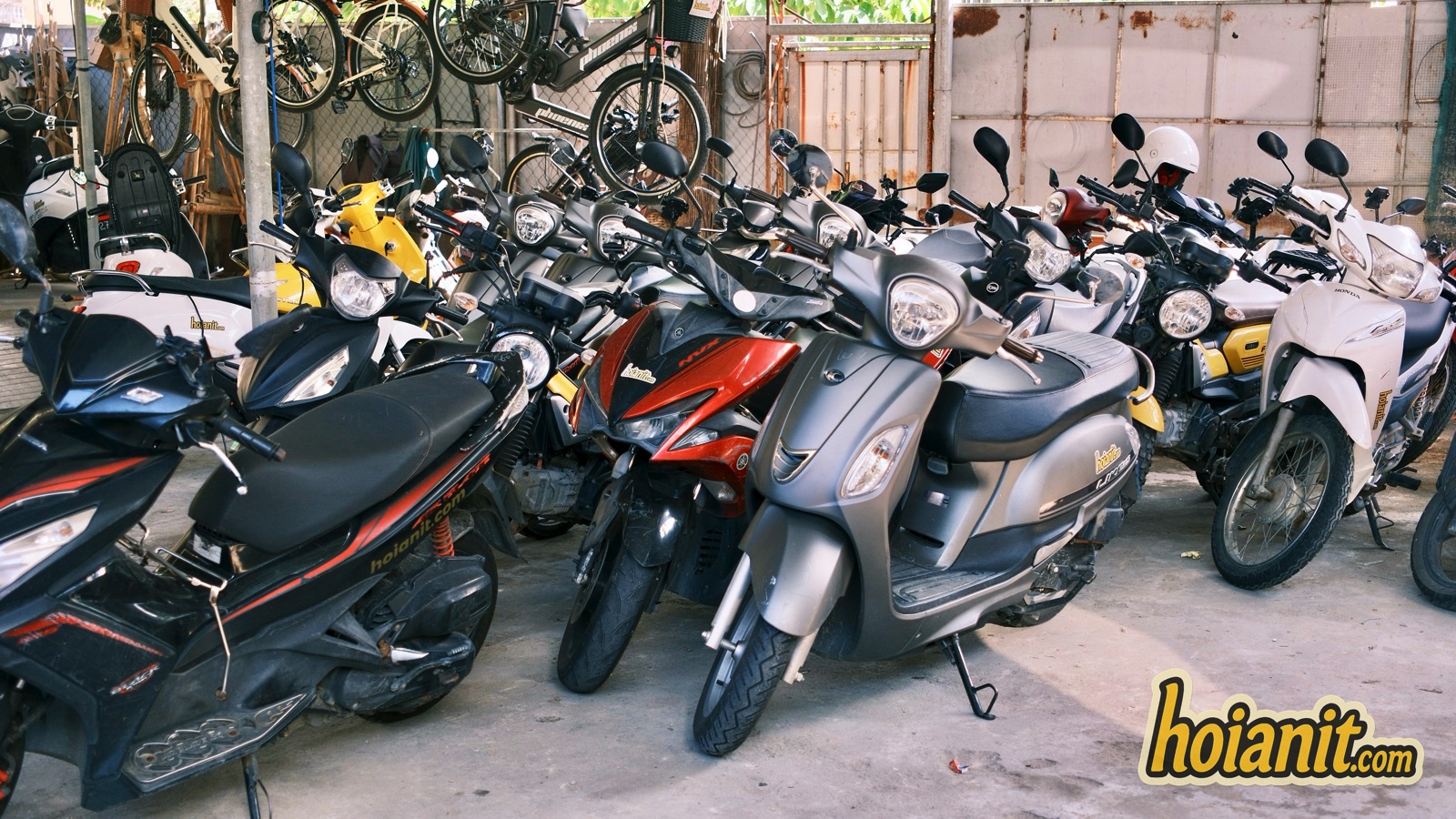
In our fleet that means the SYM Shark 50cc and KYMCO Like 50cc, the VinFast Evo200 Lite (speed-limited to 49 km/h with a 1.5 kW rated motor), our mini electric scooters and the electric bicycles. You still need a helmet, a registered bike — ours are — and a clear head; drink-riding rules apply to mopeds too. Read your travel insurance wording as well, because some policies only pay out when the rider holds the license the policy names. Our motorbike insurance guide covers what we can and cannot insure.

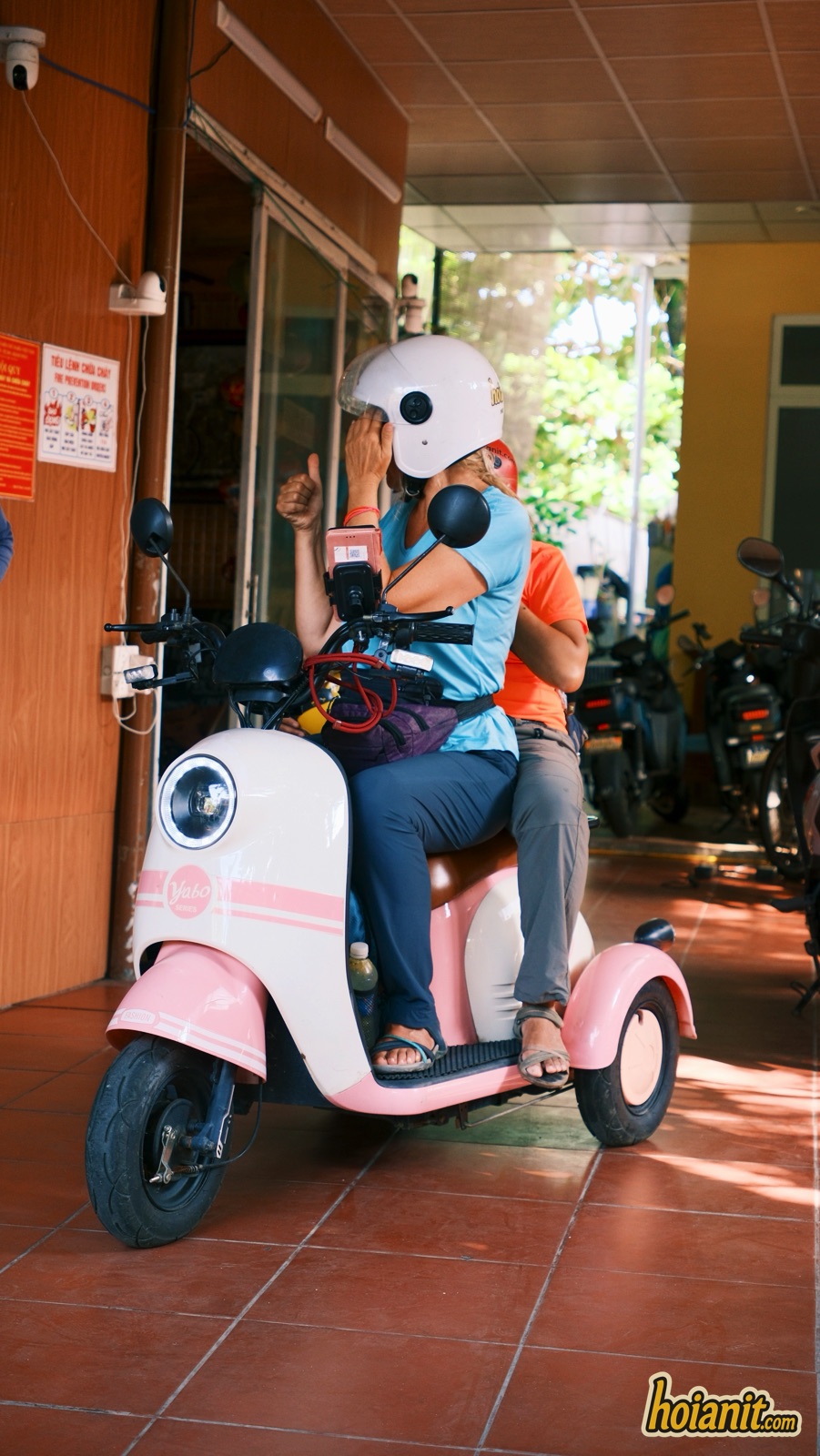
What these bikes are not for: long climbs and highway runs. For the Hai Van Pass or a ride to Hue you want a full-size scooter and the license to match.
Our honest take: is it worth it for you?
On holiday? No. The A1 license test is closed to short-stay visitors, and the legal alternatives above are quicker. Living here three months or more? Yes, a Vietnamese license is worth having — for police checks, for insurance claims after a crash, and for peace of mind on the commute. Convert your home license if you can; take the car-license shortcut if you drive; sit the full A1 license test only if you are ready to study the Vietnamese question bank.
A word of warning. We are a rental shop, not a driving school, and we cannot register you for the test. Anyone offering an A1 license “without the exam” is selling something that will not survive a police database check — every license issued since 2025 sits in the national system.
What we can do: rent you a no-license bike for your holiday, set you up with a monthly rental while your paperwork goes through (30 days or more gets 30% off), and teach you to ride. Our evening riding lessons are simply there to teach you how to ride — balance, braking and handling local traffic, with our own staff. They are not a licensed driving-school course, they come with no certificate, and they do not count toward the A1 license test. If you need the license, you still enrol at a licensed school.
Need a bike while you sort your license?
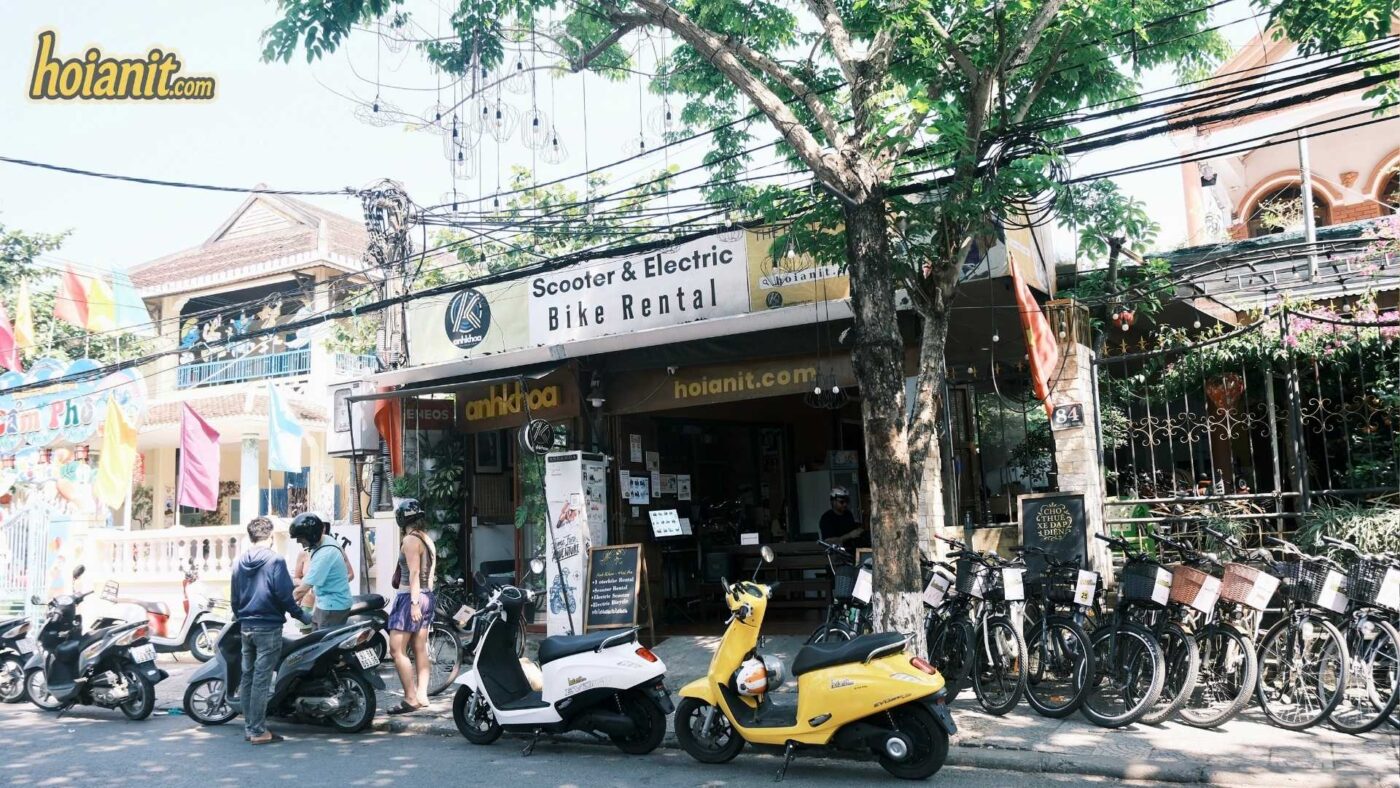
Message us with your dates and whether you hold a license — we will tell you honestly which bikes you can ride. Pick up at 84 Phan Chau Trinh, Hoi An, or ask about hotel delivery.
Zalo 0935 439 306 · info@hoianit.com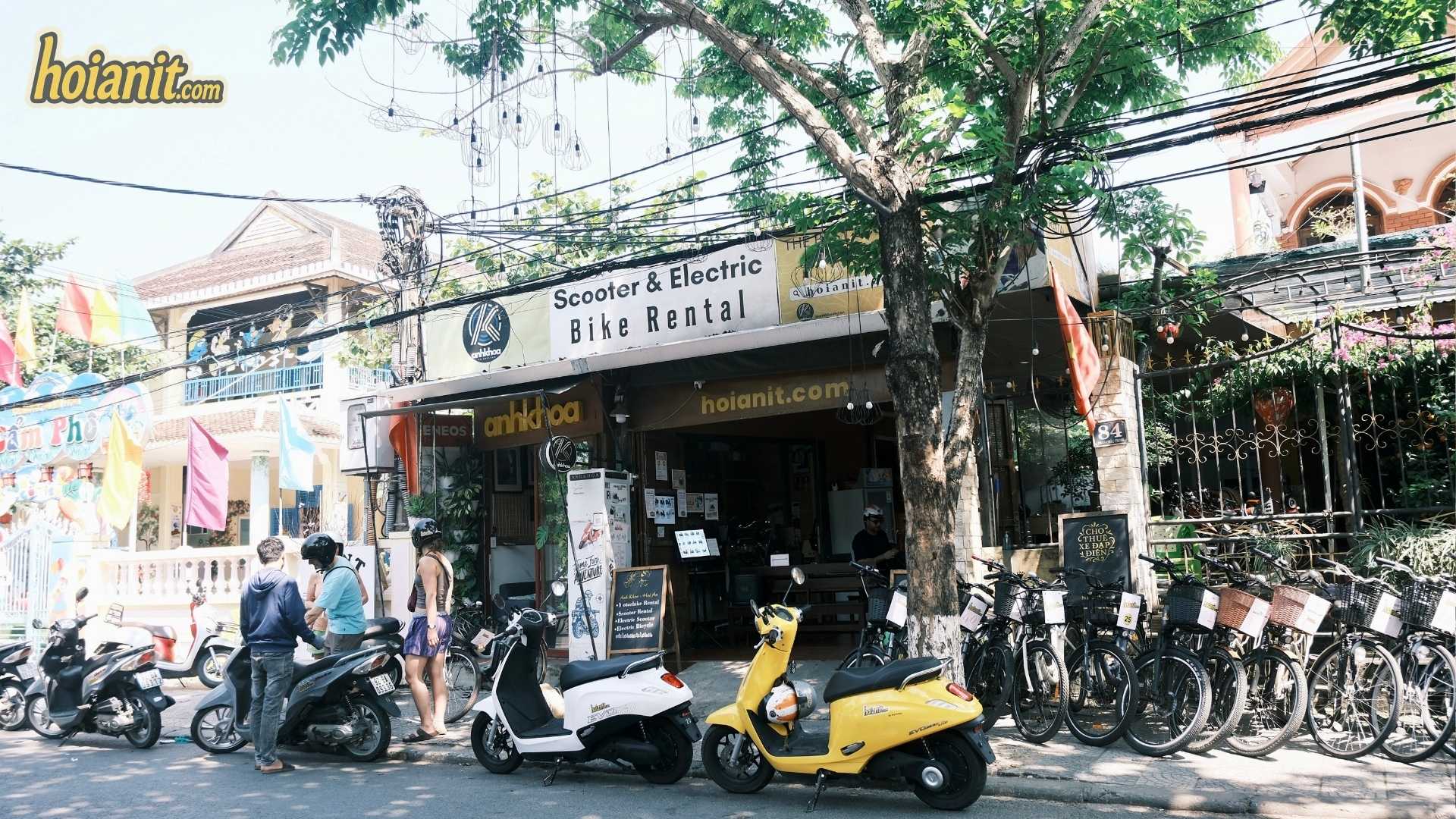
Frequently asked questions
Can foreigners take the motorbike license test in Da Nang in English?
No. The A1 theory test is taken on a computer in Vietnamese only, and the rules do not allow an interpreter for foreign candidates. If you hold a valid car license, the theory test is waived and you only sit the riding test.
Can a tourist get an A1 license in Vietnam?
Not on a short trip. Foreign applicants need a visa or temporary residence card with at least 90 days still valid, a permanent residence card, or a diplomatic or official ID card. Tourists should carry a 1968 International Driving Permit or rent a no-license vehicle.
How many questions are on the A1 theory test?
Until 28 February 2027 the test has 25 questions in 19 minutes and you need 21 correct, including one critical question you must not get wrong. From 1 March 2027 it becomes 40 questions in 27 minutes with a pass mark of 36.
How much does an A1 license cost in Da Nang?
Driving school packages that include paperwork, practice and test fees commonly cost around 900,000 to 1,800,000 VND in 2026. Schools that provide English support usually charge more, so ask what is included before you pay.
Can I convert my home motorbike license instead of taking the test?
Yes, if your license is valid and you hold a visa or temporary residence card with at least 90 days left, or a permanent residence card. You need a certified Vietnamese translation, and no test is required. An International Driving Permit on its own cannot be converted.
What can I ride in Hoi An without any license?
Mopeds of 50cc or less and electric scooters up to 4 kW with a design speed no higher than 50 km/h, plus electric bicycles. Riders must be at least 16, wear a helmet and use a registered vehicle.
Where do you take the A1 license test if you live in Hoi An?
Since 1 July 2025 Hoi An belongs to Da Nang City, so applications go through a licensed driving school and the Traffic Police of Da Nang City Police, with tests held at approved centres in the city.
Rules checked on 29 October 2026 against Circular 108/2026/TT-BCA (in force from 1 July 2026, with the new test content applying from 1 March 2027 and 1 January 2028) and the 2024 Law on Road Traffic Order and Safety. Package prices are 2026 market ranges, not official fees. This is a practical guide, not legal advice — confirm details with your driving school and the Traffic Police before you pay.








Pick your ride in Hoi AnChọn xe cho chuyến đi Hội An
Scooters, electric bikes and bicycles from one shop in the Old Town — delivered to your hotel with helmets, plus free roadside help within 10 km of Hoi An.Xe máy, xe điện và xe đạp — giao tận khách sạn, kèm hai nón bảo hiểm, cứu hộ miễn phí trong bán kính 10 km.
Not sure which one fits? Message us on WhatsApp and we’ll recommend a bike for your plans.
Chưa biết chọn xe nào? Nhắn Zalo 0935 439 306, tụi mình tư vấn theo lịch trình của bạn.