

Riding Rules & Licenses
Police Stop in Hoi An: What Happens, What to Say, What It Costs
Police Stop in Hoi An: What Happens, What to Say, What It Costs
A police stop in Hoi An is usually a short paper check. Here is what the officer must do, what you should do, the words you will hear, and what happens when a document is missing.
Most riders who ask us about the police do it in a lowered voice at the counter, as if the question itself might get them into trouble. It won’t. A police stop in Hoi An is a normal part of riding here, the same way a roadside check is normal in Europe or Australia, and for a rider with the right papers it is a few minutes at the side of the road and a polite nod.
We rent bikes at 84 Phan Chau Trinh and our phone rings when a customer is standing next to an officer, so this guide is built from those calls as much as from the rulebook. It covers what the officer is required to do under the rules that came into force in 2025, what you should do, the Vietnamese words you will hear, and exactly what happens when something is missing. It does not cover how to avoid the police. There is no trick for that, and the only reliable way is to ride legally.
- A police stop in Hoi An at a glance
- Where and when a police stop in Hoi An happens
- What the officer has to do
- What you should do, step by step
- The papers they ask for
- Words you will hear, and what to say
- When something is missing: fines, records, a held bike
- Filming the stop, and why cash is a bad idea
- Taking the license question off the table
- How your rental shop fits in
- Frequently asked questions
A police stop in Hoi An at a glance
Every police stop in Hoi An that we have heard about from customers followed the same shape. The details change; the order does not. If you only read one section, read this table.
| Stage | What happens | What you do |
|---|---|---|
| 1. The signal | An officer points a baton at you, blows a whistle or calls through a loudspeaker | Indicate, slow down, pull over where he points |
| 2. The greeting | The officer salutes and says why you were stopped | Engine off, helmet and sunglasses off, greet him |
| 3. The papers | He asks for license, registration card and insurance | Hand them over; say if something is on your phone |
| 4. The result | He tells you what he found: nothing, a small fine, or a written record | Listen, ask for the amount in writing, call your shop if lost |
| 5. The ending | You ride on, or the bike is held and you get a receipt for it | Keep every paper you are given; photograph it |
Most stops end at stage 3. The rest of this guide is about stages 4 and 5, because that is where tourists lose time and money, almost always through a missing document or a misunderstanding rather than anything the officer did.
An officer who stops a rider with a 1968 permit, a registration card and a fastened helmet has nothing to write down. That is the whole secret.
Where and when a police stop in Hoi An happens
Traffic police work the roads that carry the most motorbikes, not the lanes inside the Old Town. Inside the pedestrian area the barriers already keep vehicles out during the day and evening; the rules for that are in our guide to the Hoi An Old Town vehicle restriction hours. Outside it, the places our customers mention most are:
- The beach roads towards An Bang and Cua Dai, where tourist traffic is thickest in the late morning and afternoon.
- The coast road to Da Nang (Lac Long Quan / Vo Nguyen Giap), long and straight, which is where speed is checked.
- The approaches to town from the Da Nang and Tam Ky directions.
Checks are not limited to those places and there is no fixed schedule anyone can give you. Two patterns are real, though. Around Tet and other public holidays, enforcement campaigns run across the country and roadside checks become more frequent. And in the evening, especially near restaurant and bar strips, the check is often an alcohol test, where the legal limit for a motorbike rider is zero.
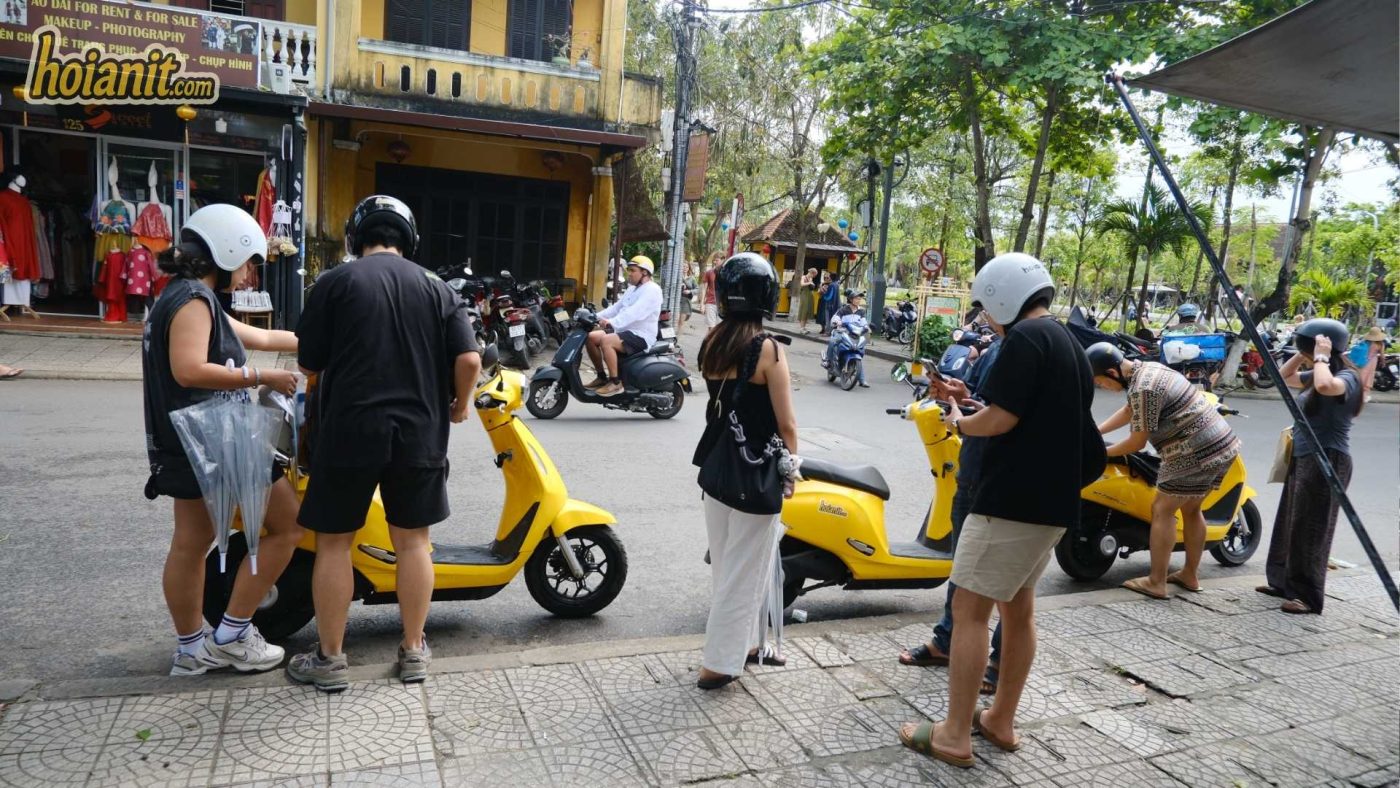
Hoi An is now part of Da Nang City
Since the administrative merger of 1 July 2025, Hoi An is no longer a city in Quang Nam province but three wards and a commune of Da Nang City. For a rider that changes nothing on the road, but it explains why the paperwork you may be handed says Da Nang, and why the traffic police you meet on the coast road and in Hoi An now belong to the same city police force.
Cameras don’t wave you over
Not every fine comes from a roadside stop. Da Nang uses traffic cameras, and a camera fine goes to the registered owner of the bike, which for a rental is the shop, sometimes weeks after you have flown home. Ask your shop how it handles camera fines before you ride; it is an honest question and a good shop has a clear answer.
What the officer has to do
Since 1 January 2025, the work of traffic police on the road is governed by Circular 73/2024/TT-BCA from the Ministry of Public Security. Most travellers never hear of it, but it is useful to know, because it tells you what a normal stop looks like and therefore what an unusual one looks like.
Traffic police signal a stop with a traffic baton, a whistle, a loudspeaker or signals from a patrol vehicle, and choose a place where stopping is safe. Once you have stopped, the circular sets out the order of the check. The Government’s policy portal summarises it as the steps of a traffic police check:
- Ask you to stop safelyAnd, in a car, to get out; on a motorbike you simply stop and switch off.
- SaluteAccording to police regulations. It looks formal, and it is supposed to.
- Tell you why you were stoppedThe legal basis for the stop and what will be checked.
- Check the documentsPaper documents, or electronic ones through the national ID app and police databases.
- Tell you the resultWhether there is a violation and what will happen next.
A stop does not need a visible offence. The rules allow police to stop vehicles when they see a violation, when a camera or other equipment records one, under a planned patrol or check, at the request of another authority, or following a report from the public. A routine document check at a checkpoint is lawful even if you were riding perfectly.
Traffic police (Cảnh sát giao thông) wear the yellow-khaki uniform and work from marked posts or patrol bikes. If a man in plain clothes on an ordinary scooter waves you down and asks for money, you are not in a police stop. Don’t hand over documents or cash; ride on to a busy place and call the police on 113, or call your rental shop.
What you should do, step by step
This is what we tell every rider at handover. None of it is about “handling” the officer. It is about making the stop short and making sure you understand what is said.
- Pull over early and safelyIndicate, slow down and stop where the officer points, not ten metres past him in the traffic lane.
- Engine off, helmet off, sunglasses offSo he can see your face. Keep your hands where he can see them.
- Greet him“Xin chào” and a nod. It costs nothing and sets the tone for everything after it.
- Hand over the papers he asks forLicense and IDP, the bike’s registration card, the insurance certificate. If a paper is missing, say so rather than searching every pocket for a minute.
- Listen before you argueIf you don’t understand, say so. Ask him to write the amount or the offence down, or show you on his phone.
- Call your rental shop if you are stuckPut the phone on speaker. A shop can explain in Vietnamese in thirty seconds what would take ten minutes of gestures.
- Keep and photograph every paperA receipt, a record, a note that the bike is held. You will need them later.
What not to do is shorter: don’t ride off, don’t raise your voice, don’t grab back documents, and don’t offer money. Each of those turns a simple stop into a much longer one.
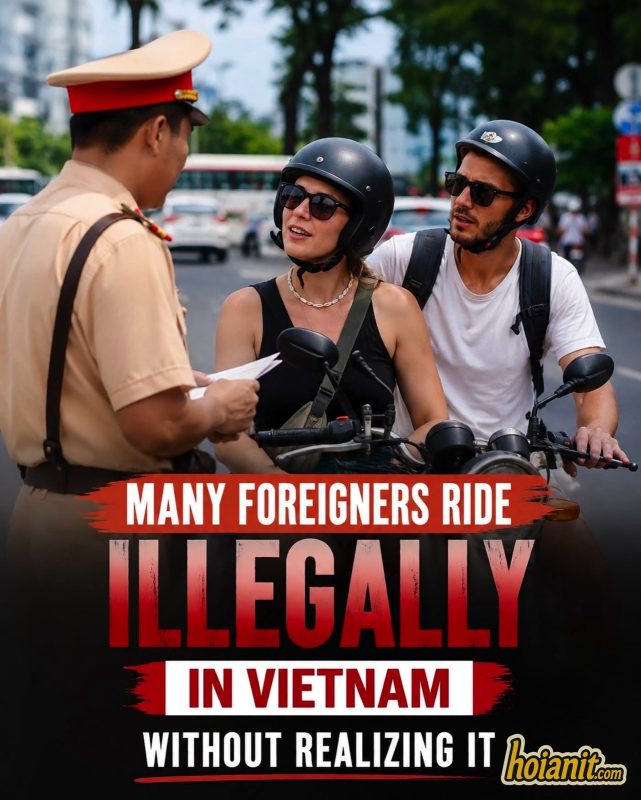
The papers they ask for
There are three documents that decide how a police stop in Hoi An ends. Two of them are the rental shop’s job, one is yours.
| Document | Who provides it | Original or copy? | If you can’t show it |
|---|---|---|---|
| Motorbike license + 1968 IDP with A or A1 stamped | You | Originals | Not carried: 200,000–300,000₫. Not held at all: 2–4M₫ (≤125cc) or 6–8M₫ (bigger) |
| Registration card (cà vẹt) | Rental shop | Original or certified copy, kept with the bike | 200,000–300,000₫ |
| Compulsory civil liability insurance | Rental shop | Paper or electronic certificate | 200,000–300,000₫ |
| Passport | You | A clear photo or copy is usually enough for a traffic check | Not a traffic fine, but the original may be needed if a record is made |
Two details catch people. First, missing-paper fines stack: three missing papers are three fines. Second, your license only counts together with the right permit. Vietnam recognises International Driving Permits issued under the 1968 Vienna Convention, and only for the categories stamped in it. The United States, Canada and Australia issue 1949 permits, which Vietnam does not accept; a UK permit bought for Vietnam is the 1968 kind. A 1968 permit stamped only for cars (category B) does not cover a motorbike. Our guide to the 1968 IDP in Vietnam has the full country list, and do you need a license to ride a motorbike in Hoi An covers the rest.
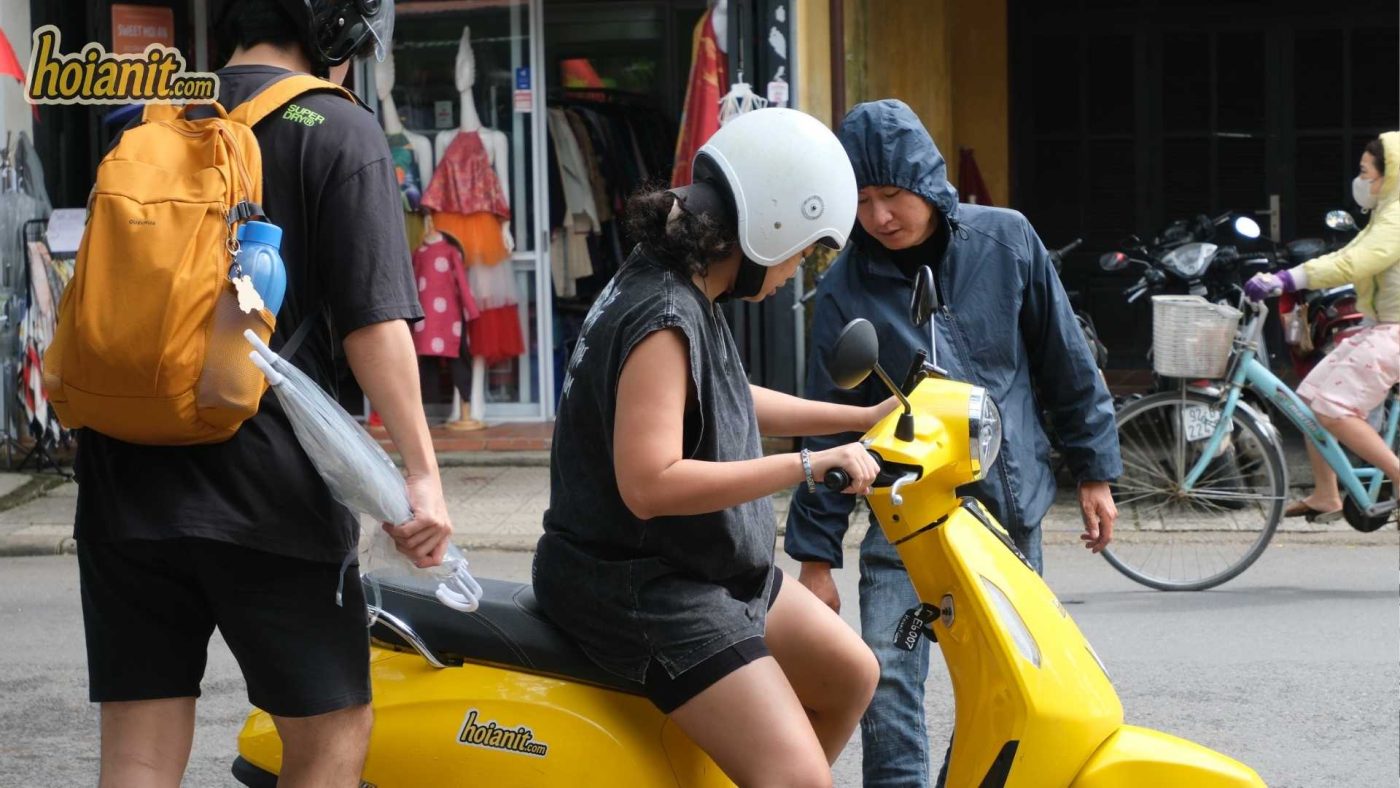
Vietnamese riders can now show some documents through the VNeID app, and officers check electronic records. That rarely helps a tourist: a foreign license is not in the Vietnamese system. Carry the originals of your license and permit, and leave your passport in the hotel safe.
Words you will hear, and what to say
Officers in Hoi An deal with foreign riders every week and many will manage a few words of English, but you should not count on it. These are the phrases that come up in almost every stop. Screenshot the table; it is more useful at the roadside than any app.
| You may hear | It means |
|---|---|
| Cho xem giấy tờ | Show me your papers |
| Bằng lái xe | Driving license |
| Giấy đăng ký xe / cà vẹt | The bike’s registration card |
| Bảo hiểm | Insurance certificate |
| Đội mũ bảo hiểm | Wear your helmet |
| Thổi vào đây | Blow into this (alcohol test) |
| Lập biên bản | I am writing up a violation record |
| Tạm giữ xe | The bike is being held |
| Ký vào đây | Sign here |
| You can say | It means |
|---|---|
| Xin chào anh | Hello (to a man; “chị” for a woman) |
| Tôi không hiểu tiếng Việt | I don’t understand Vietnamese |
| Anh viết ra giúp tôi được không? | Could you write it down for me? |
| Tôi gọi cửa hàng cho thuê xe được không? | May I call my rental shop? |
| Cho tôi xin biên lai | May I have a receipt? |
| Cảm ơn anh | Thank you |
The two most useful lines are the third and the fourth. A figure written on paper removes every misunderstanding about money, and a phone call to someone who speaks both languages removes the rest.
When something is missing: fines, records, a held bike
If the check finds a problem, what happens next depends mostly on the size of the fine. The full list of amounts is in our guide to Vietnam motorbike license fines; this section is about the procedure.
Small fines: settled on the spot
For a fine of up to 250,000₫ for an individual, the officer can decide the penalty without writing a full record. In that case you pay on the spot and receive a receipt. Ask for it (“cho tôi xin biên lai”). A receipt is what makes the payment a fine rather than something else.
Larger fines: a written record
For anything above that, and for every license, helmet or alcohol offence, the officer writes a violation record (biên bản vi phạm hành chính). He should explain it, give you a copy, and ask you to sign.
- You do not pay the officer. The penalty decision tells you where to pay: at a bank, the State Treasury or online. The law gives ten days from receiving the decision to pay.
- The record has space for your explanation. If you disagree, write your side there, in English if you need to, rather than refusing everything.
- Refusing to sign does not stop the process. The officer notes the refusal, with a witness where possible, and the record stands. Signing confirms you received it, not that you agree.
The bike may be held
For offences such as riding without a valid license, the vehicle can be held for up to seven days while the case is processed, and longer if the case is complicated. You get a record of the hold. Keep it and send a photo to your rental shop straight away: the bike is theirs, and they will need it to get it back after the fine is paid.
| Situation | Usual outcome |
|---|---|
| Everything in order | Papers returned, you ride on |
| License left at the hotel | 200,000–300,000₫; bike may be held until you show it |
| Helmet strap open | 400,000–600,000₫, written record |
| No valid license, bike up to 125cc | 2,000,000–4,000,000₫, record, bike likely held |
| Any alcohol | From 2,000,000₫, record, bike can be held |
Foreigners are sanctioned exactly like Vietnamese riders, with no separate “tourist fine” and no surcharge. Vietnam Law Magazine explains how foreigners are sanctioned for traffic violations.
Filming the stop, and why cash is a bad idea
Can you record the officer?
The short answer is yes, carefully. An older circular spelled out that people could monitor traffic police with audio and video recording. The 2024 rules dropped that sentence, which many websites reported as a ban. It isn’t. As LuatVietnam explains in its piece on the removed recording clause, recording is not prohibited as long as you do not obstruct the officer or step into a restricted area.
In practice, a phone held up in an officer’s face makes a two-minute check longer and colder. If you want a record, photograph the documents you are given. That is the evidence that matters later, and nobody minds you doing it.
Paying without a receipt is not a fine; it is a bribe, and offering one is an offence in itself. Under the Criminal Code, giving a bribe worth 2,000,000₫ or more can be prosecuted as a crime. A tourist who tries it turns a 400,000₫ helmet fine into a problem with no upper limit. Pay what is written, where it is written, and ask for the receipt.
Taking the license question off the table
The honest way to make a police stop in Hoi An a non-event is to ride something you are allowed to ride. If your permit is the 1949 kind, or you never got one, four kinds of vehicle need no license at all. Prices are our daily rates, checked in September 2026.
| Vehicle | Why no license | From |
|---|---|---|
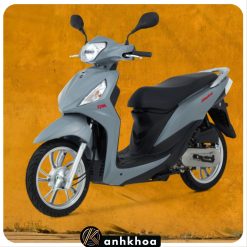
| Genuine 50cc scooter (SYM Shark 50cc, KYMCO Like 50cc) | Moped class, rider 16+ | 200,000₫/day |
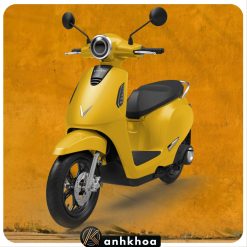
| Low-power electric scooter (Mini Electric Scooter, VinFast) | Moped class, up to 4 kW | 150,000–200,000₫/day |
| Electric bicycle | Bicycle rules | 100,000₫/day |
| Bicycle | Bicycle rules | 50,000₫/day |

Helmet, phone and alcohol rules still apply on a moped, so a no-license bike is not a no-rules bike. Be careful with “50cc” scooters from shops that paint the number on a 110cc engine: riding one of those without a license is the 2–4 million dong offence. Our 50cc license guide shows how to check, and renting a motorbike in Hoi An without a license covers the options. You can browse the no-license bikes directly.
How your rental shop fits in
A rental shop cannot make a stop go away, and any shop that says it can is telling you something you should not believe. What a good shop does is quieter and more useful.
- It checks your permit before you ride. Decree 168 fines an owner who hands a vehicle to someone not qualified to ride it: 8–10 million dong for an individual, 16–20 million for a business. When we ask to see the category page of your IDP, it is our fine we are avoiding as well as yours.
- It puts the bike’s papers on the bike. Registration card and insurance certificate, in a place you know.
- It picks up the phone. Our WhatsApp is +84 935 206 306 and the 24/7 roadside line is +84 766 766 087. If you are stopped and lost for words, call and hand the phone to the officer.
- It deals with a held bike. The bike belongs to the shop, so collecting it after the fine is paid is a job we do with you.
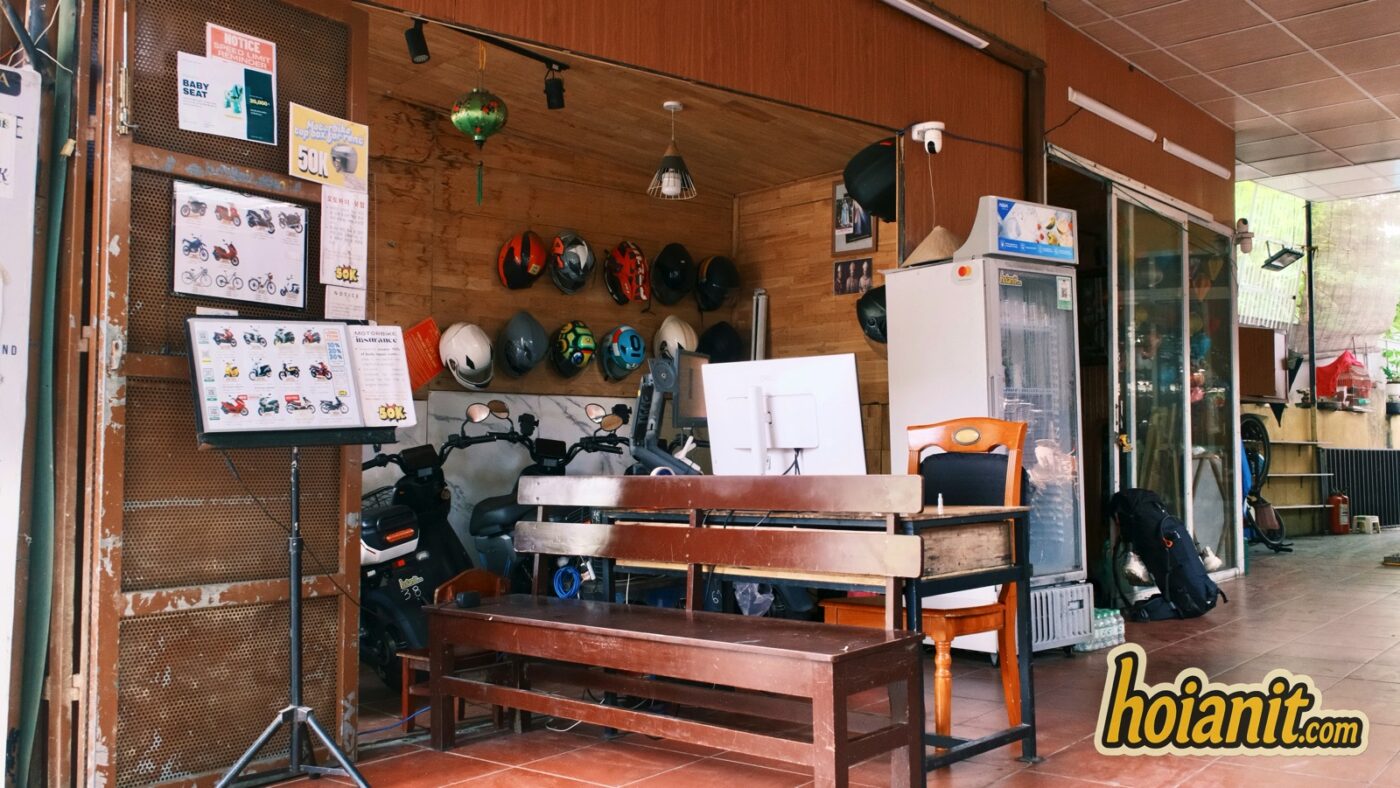
Our guide to what is included in your Hoi An motorbike rental lists what comes with the bike, and tips to avoid fines when riding in Vietnam covers the everyday habits that keep a stop short.
Send us a photo of your IDP’s category page and we will tell you which bikes you can ride legally, before you pay anything. No deposit, no passport held, helmets included, and a real person on the phone if you are ever stopped.
Frequently asked questions
Do police stop tourists on motorbikes in Hoi An?
Yes. Traffic police run routine checks on the main roads around Hoi An, especially the beach roads and the coast road to Da Nang, and more often around Tet and public holidays. For a rider with a valid license, a 1968 IDP, the bike’s papers and a fastened helmet, a police stop in Hoi An is usually a short document check.
What documents do police check at a traffic stop in Vietnam?
Your motorbike license together with a 1968 Convention International Driving Permit stamped for motorbikes, the bike’s registration card, and the compulsory insurance certificate. The rental shop provides the last two. A photo of your passport is usually enough for a traffic check.
Do I need to carry my original passport when I ride?
No. A clear photo or copy of the photo page and visa is usually enough for a traffic check. Keep the original in the hotel safe; if a written record is made, you may be asked to show it later.
Can I pay a traffic fine in cash to the officer?
Only fines up to 250,000₫ can be settled on the spot, and you should receive a receipt. Larger fines are written on a violation record and paid at a bank, the State Treasury or online within ten days. Offering cash to make a fine disappear is a separate offence.
What happens if I am stopped without a valid license?
For a bike up to 125cc the fine is 2,000,000–4,000,000₫, and 6,000,000–8,000,000₫ for anything bigger. The officer writes a violation record and the bike can be held for up to seven days, longer in complicated cases.
Can I film the police during a stop?
Recording is not prohibited, as long as you do not obstruct the officer or enter a restricted area. In practice, photographing the documents you are given is more useful than filming the conversation.
Should I sign the violation record if I don’t understand it?
Ask for it to be explained, or call your rental shop first. The record has space for your own explanation, which you can write in English. Refusing to sign does not stop the process; signing confirms you received the record, not that you agree with it.
Do I need a license for a 50cc scooter or an electric bicycle in Hoi An?
No. A genuine 50cc moped, or an electric scooter up to 4 kW with a top speed of 50 km/h, needs no license, only a rider aged 16 or over. Electric bicycles and bicycles need none either. Helmet and alcohol rules still apply.
Want the numbers behind every fine? Read Vietnam motorbike license fines 2026.
Procedure is based on Circular 73/2024/TT-BCA (in force 1 January 2025) and the Law on Handling Administrative Violations; fine amounts on Decree 168/2024/ND-CP as amended by Decree 238/2026/ND-CP, cross-checked with the Government policy portal, LuatVietnam and Vietnam Law Magazine in September 2026. Dollar figures are approximate at about 26,000₫ to the dollar. This is a rider’s guide, not legal advice; at the roadside, the officer’s record is what counts. Rental prices are our daily rates at 84 Phan Chau Trinh, Hoi An at the time of writing.
More Bike Options in Hoi An
E-Bike · No license










Pick your ride in Hoi AnChọn xe cho chuyến đi Hội An
Scooters, electric bikes and bicycles from one shop in the Old Town — delivered to your hotel, helmets and roadside help included.Xe máy, xe điện và xe đạp — giao tận khách sạn, kèm hai nón bảo hiểm và hỗ trợ dọc đường.
Not sure which one fits? Message us on WhatsApp and we’ll recommend a bike for your plans.
Chưa biết chọn xe nào? Nhắn Zalo 0935 439 306, tụi mình tư vấn theo lịch trình của bạn.