Hoi An Travel Tips
Teochew Assembly Hall Hoi An: The Right Address, History and What to See
Teochew Assembly Hall Hoi An: The Right Address, History and What to See
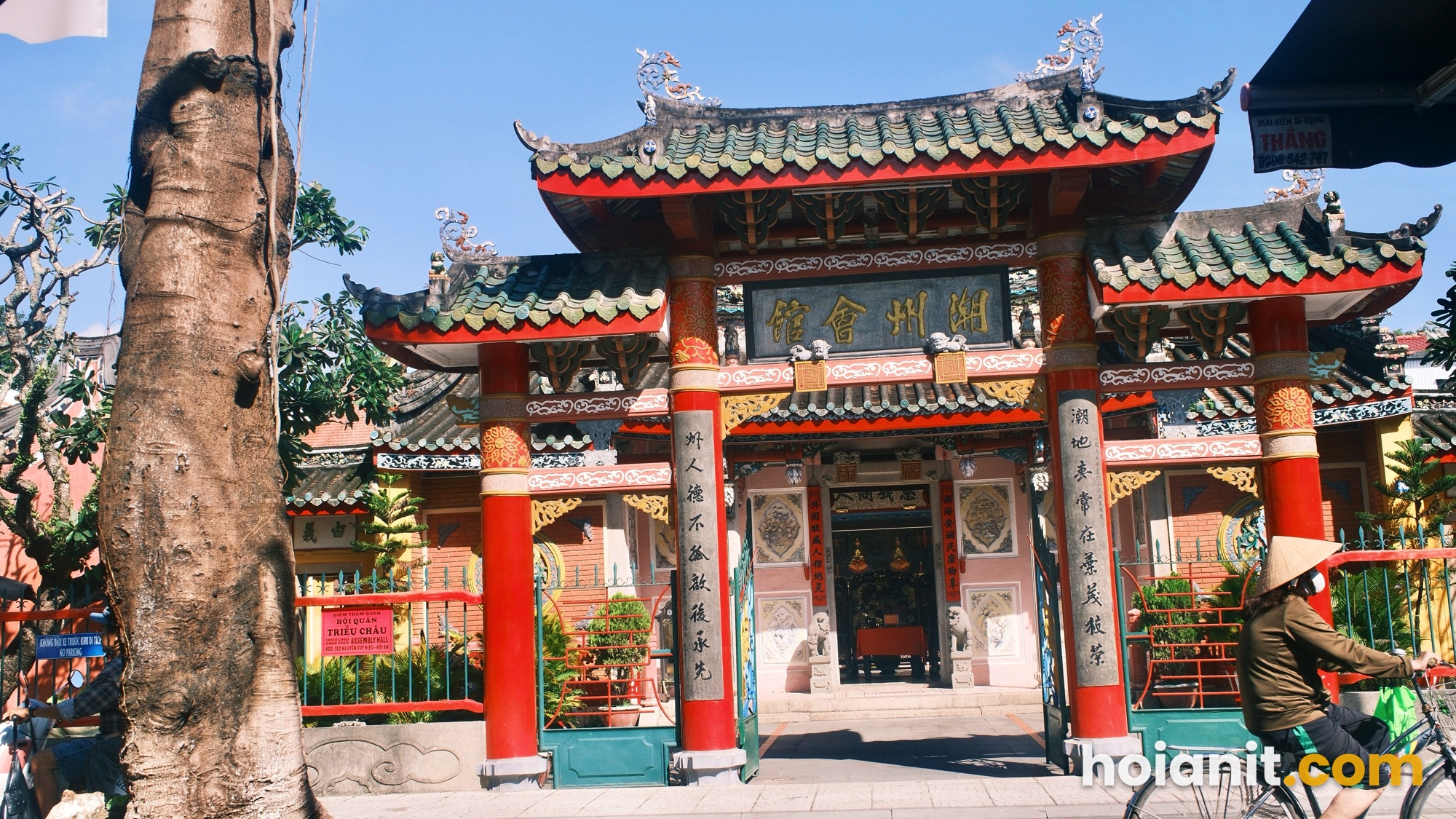
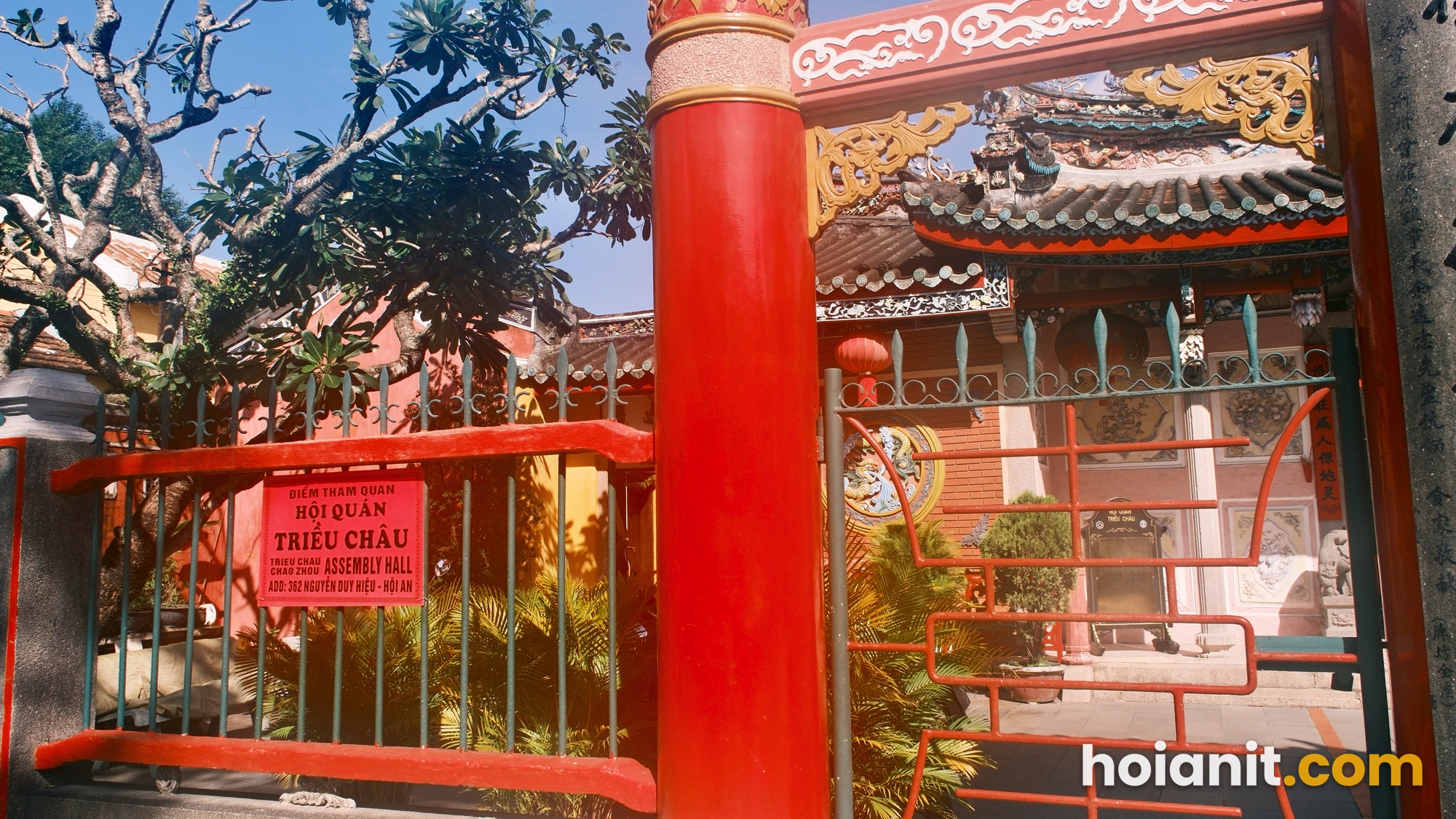
The Teochew Assembly Hall in Hoi An is at 362 Nguyen Duy Hieu. Work began in 1845, it honors a protector of sea traders, and it is usually much quieter than the halls on Tran Phu.
Most visitors reach the Fujian hall, take a photo, and turn back. Keep walking along Nguyen Duy Hieu and you’ll find a hall that gets a fraction of the crowds, with wood carving that rewards a slow look. This guide starts with what most online guides get wrong, the address, the dates and the ticket, then covers the general on the main altar, how the hall is laid out and how it compares with the other four Chinese halls.
Teochew Assembly Hall: quick facts
| Item | Details |
|---|---|
| Address | 362 Nguyen Duy Hieu, Hoi An |
| Hours | Closes 17:00 on Google Maps. Opens around 07:00–08:00 depending on the source |
| Google rating | 4.4 stars, 113 reviews |
| Ticket | 20,000₫ per site since 10 August 2026 |
| Allow | About 20 minutes |
| Built | 1845–1852, according to the stele kept at the hall |
| Restored | 1887, 1970 and 1991 |
| From our shop | 800 m, about 11 minutes on foot |
| From the Fujian hall | 260 m, about 4 minutes on foot |
Entry is not free, whatever older guides say, and the old 120,000₫ Old Town ticket no longer applies. See how entry fees work now in our Hoi An ticket guide, and get directions on Google Maps.

History of the Teochew Assembly Hall and its deity
According to a stone stele kept at the hall and cited in a study by Nguyen Cuong on the Hoi An heritage site, construction began in 1845 and finished in 1852. Many guides give only the first date. The main deity is Phuc Ba Tuong Quan, a protector of sailors and sea traders. This makes sense. Teochew merchants lived off the sea trade through this port, so the hall was both a place of worship and a place to meet, and help one another.
The Teochew community came from Chaozhou, in the east of Guangdong province, and by the mid-19th century there were enough Teochew traders in Hoi An to fund a hall of their own. Each Chinese community in the port built one: a temple, a meeting room and a place to look after members who fell ill or died far from home. The Teochew Assembly Hall sits at the eastern end of the Old Town, away from the Fujian and Cantonese halls on Tran Phu, which is part of the reason it stays quiet.
The building you see is not exactly the one finished in 1852. The hall was repaired in 1887, 1970 and 1991, so some tiles, paint and timbers are later replacements. That is normal for a working temple in a town that floods most years, and it is why the colours on the gate look fresher than the date suggests.
You may also see 1776 in an older guidebook. We could not find a source for that date. The stele and the Hoi An heritage research both point to 1845, so that is the date we use.
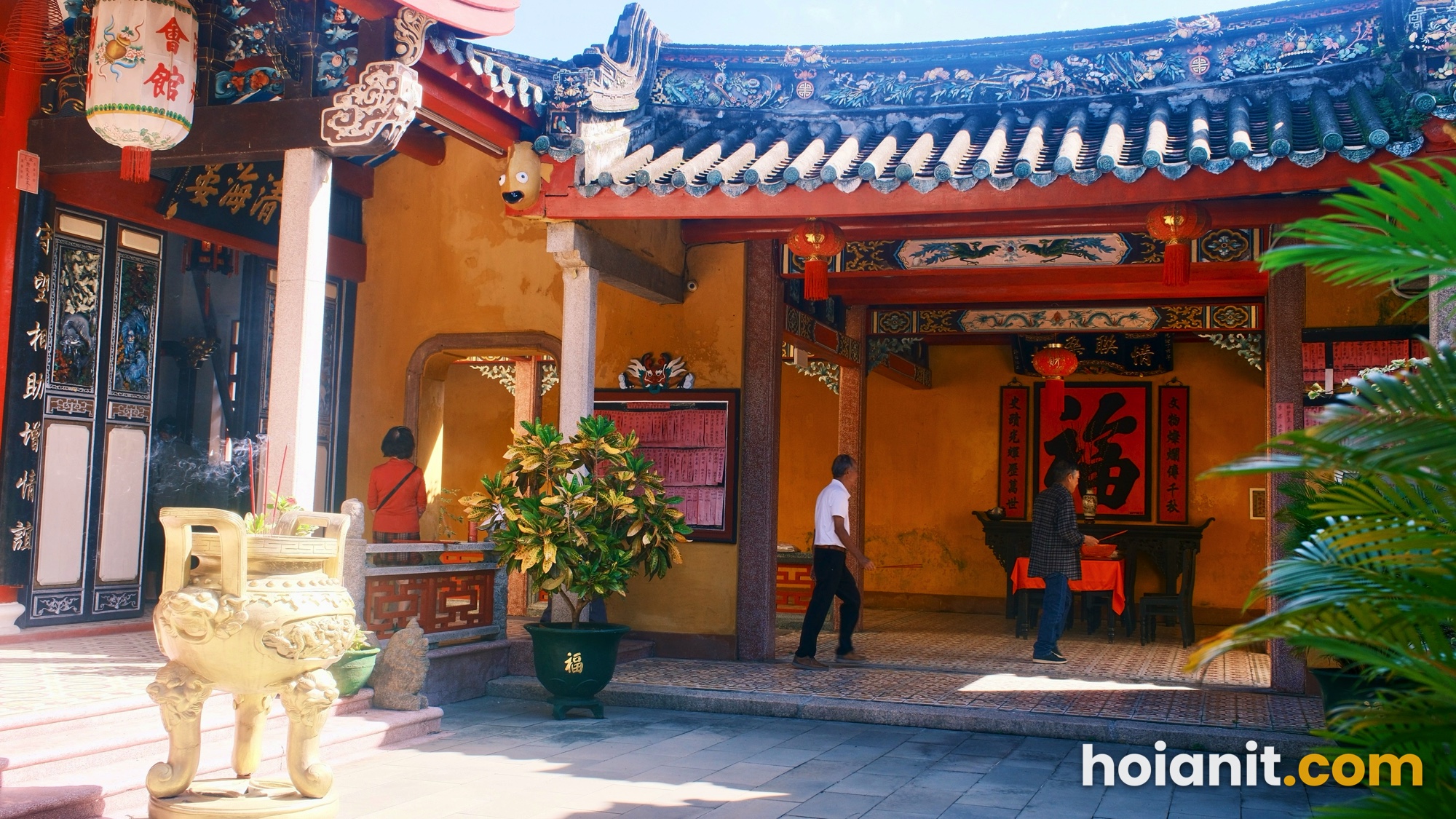
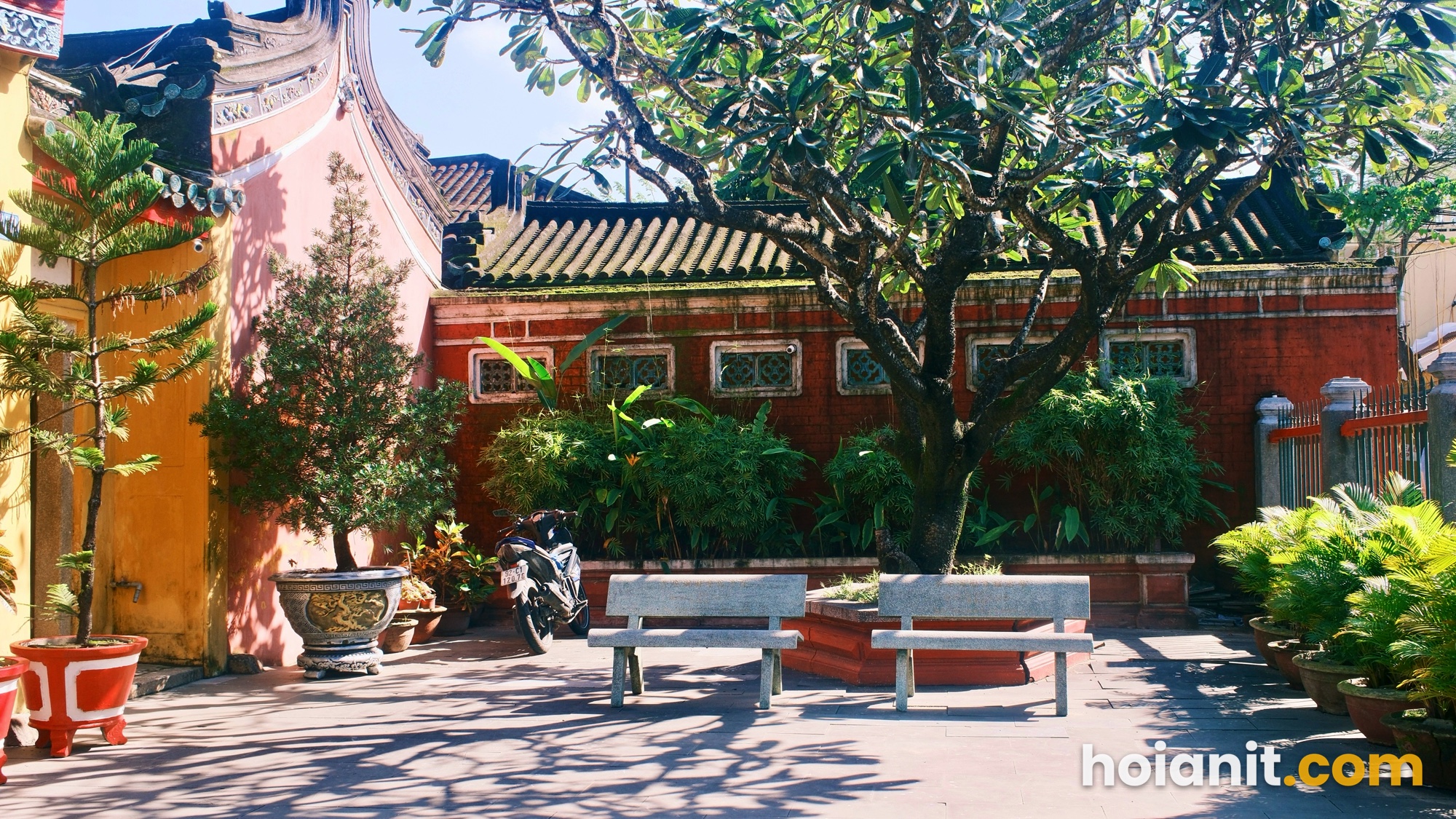
The gate takes a few seconds to photograph. The carved wood inside is the part that repays some of your time.
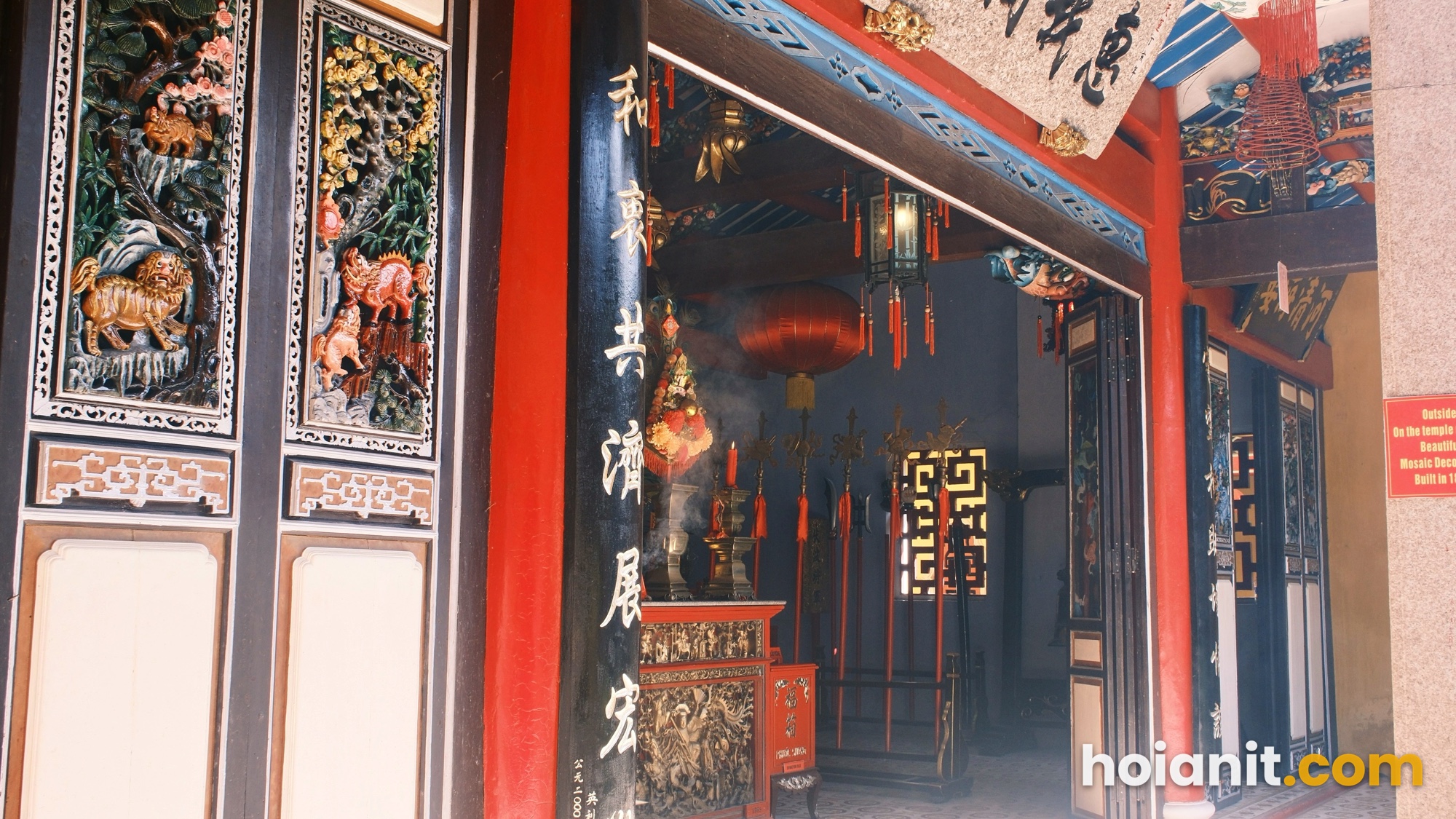
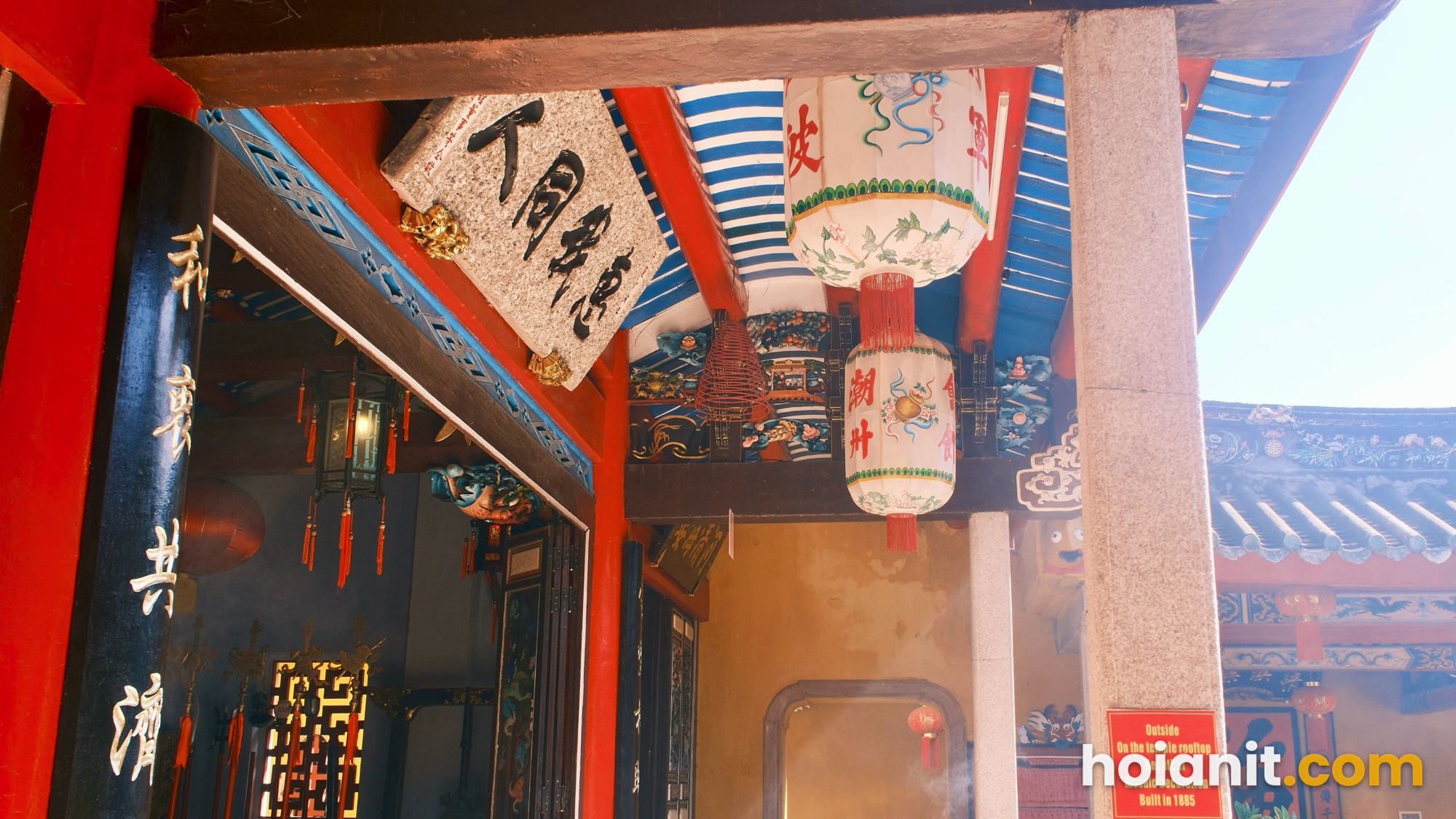
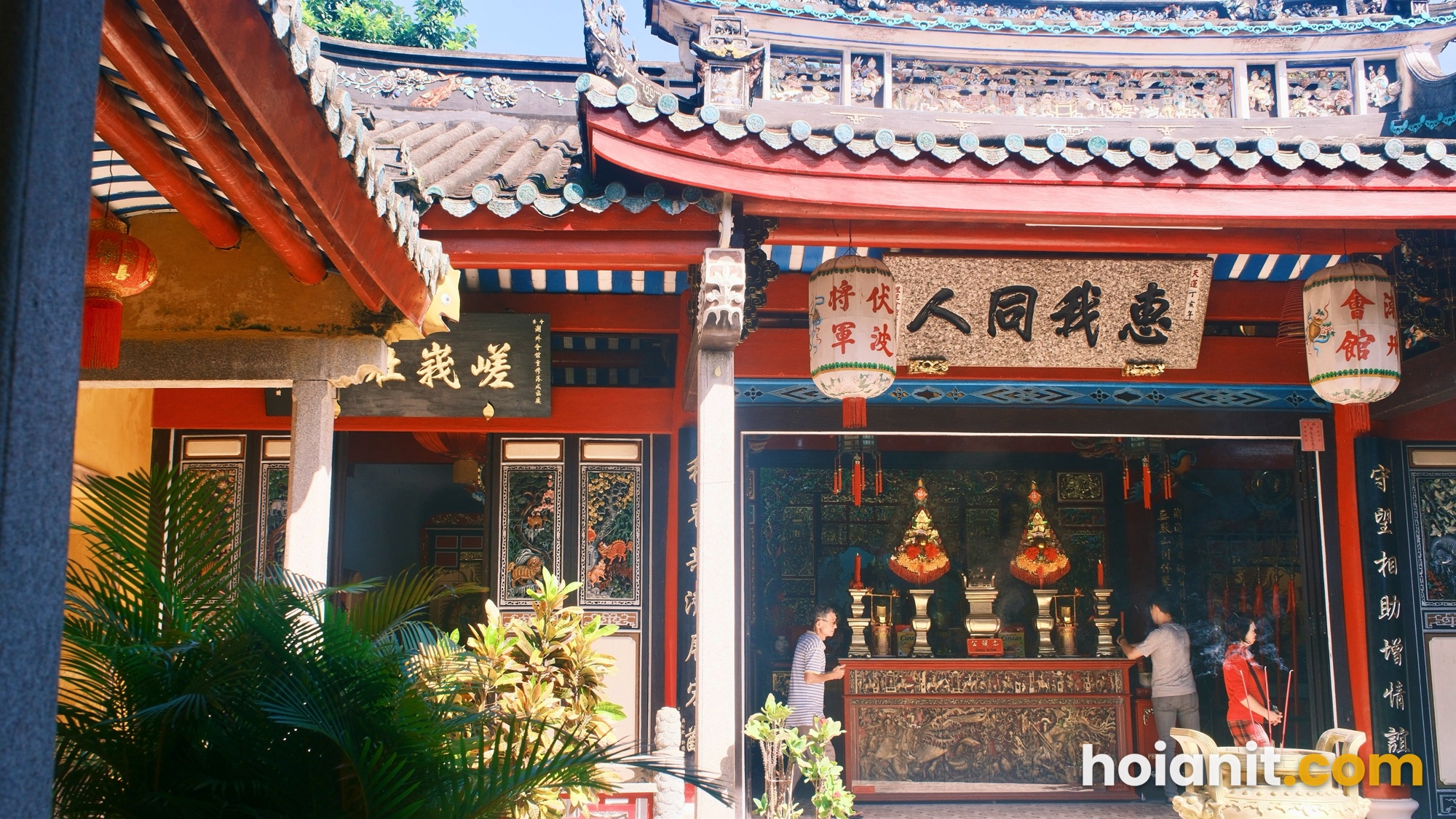
Who Phuc Ba Tuong Quan was, and why it matters here
Phuc Ba Tuong Quan is the Vietnamese reading of Fubo Jiangjun, “the Wave-Subduing General”. The title belonged to Ma Yuan, a general of China’s Eastern Han dynasty, and over the centuries coastal communities in southern China came to pray to him for a safe passage at sea. For Teochew merchants whose cargo crossed the South China Sea, that was the protection that mattered most.
There is an awkward side to this for Vietnamese visitors. Ma Yuan is the same general who put down the uprising of the Trung Sisters in the year 43, the revolt Vietnamese children learn about as one of the first stands against Chinese rule. In the Teochew Assembly Hall he is honoured for a different reason entirely, as a sea god of a migrant community. Local guides rarely mention it, and it is worth knowing before you ask who is on the central altar.
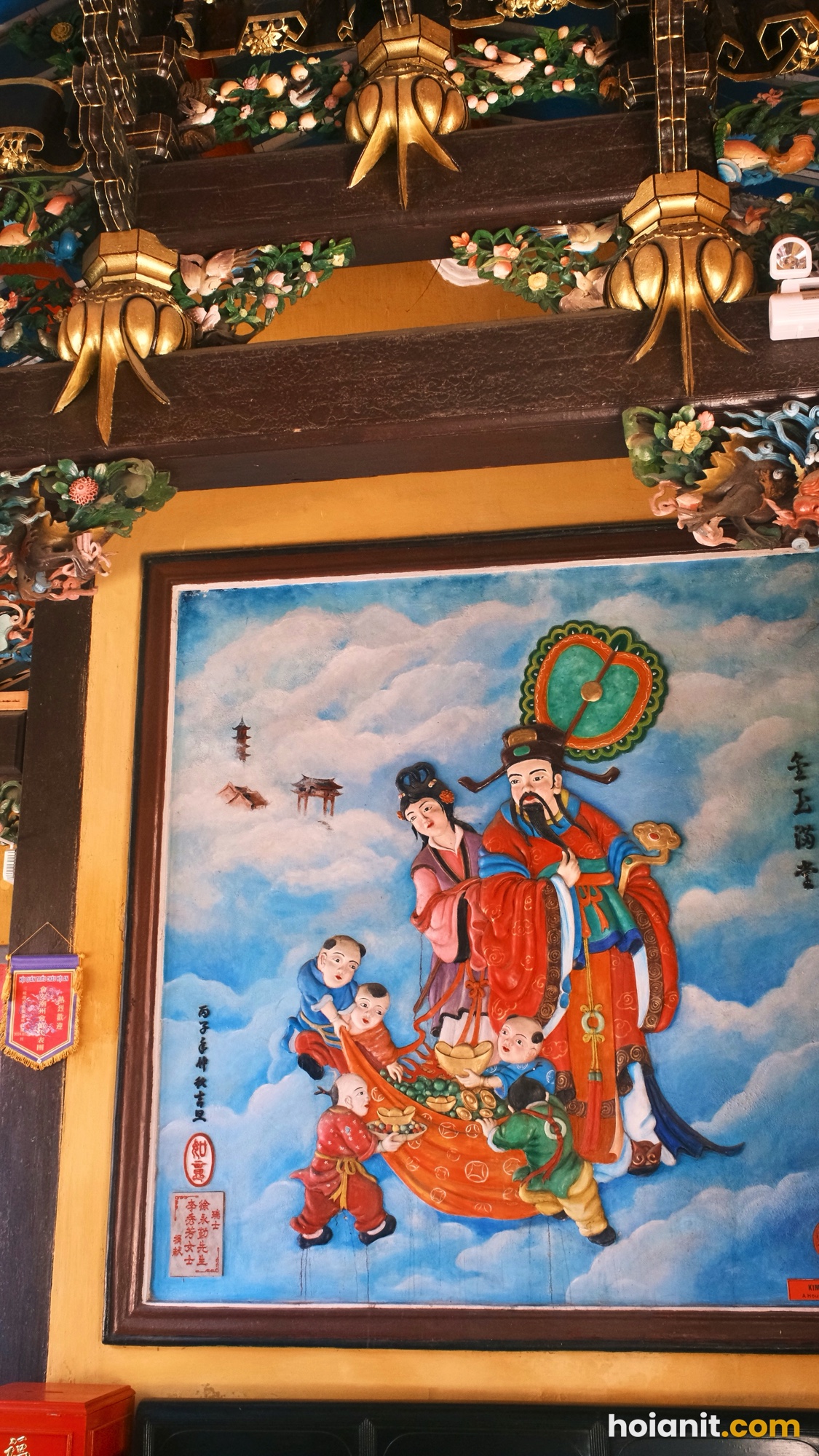
He is not alone there. Visitors’ accounts describe the God of Wealth on one side of him and Phuoc Duc, the earth god, on the other: safe seas, good business and a protected home, the three things a merchant community prayed for.
How the Teochew Assembly Hall is laid out
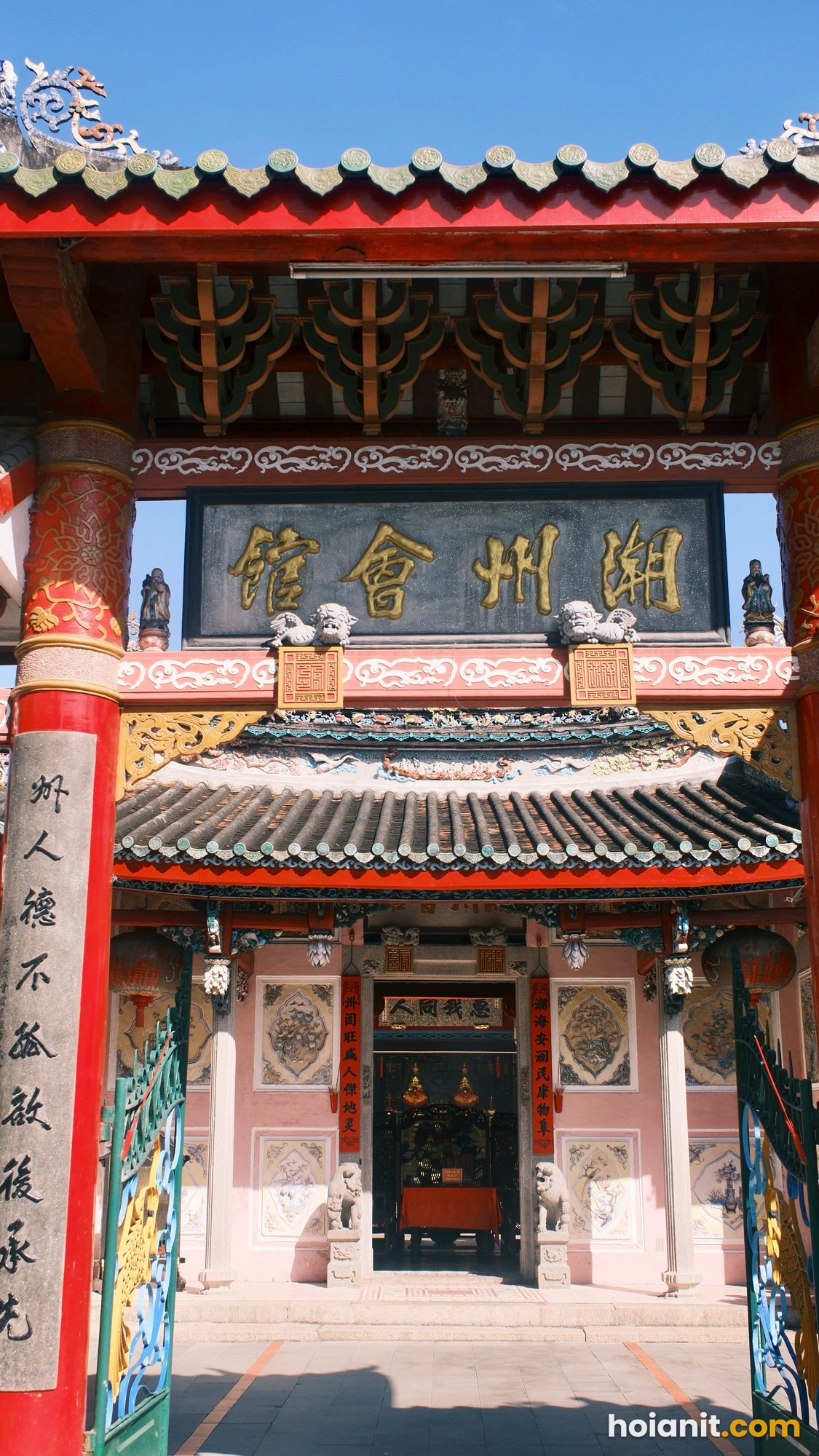
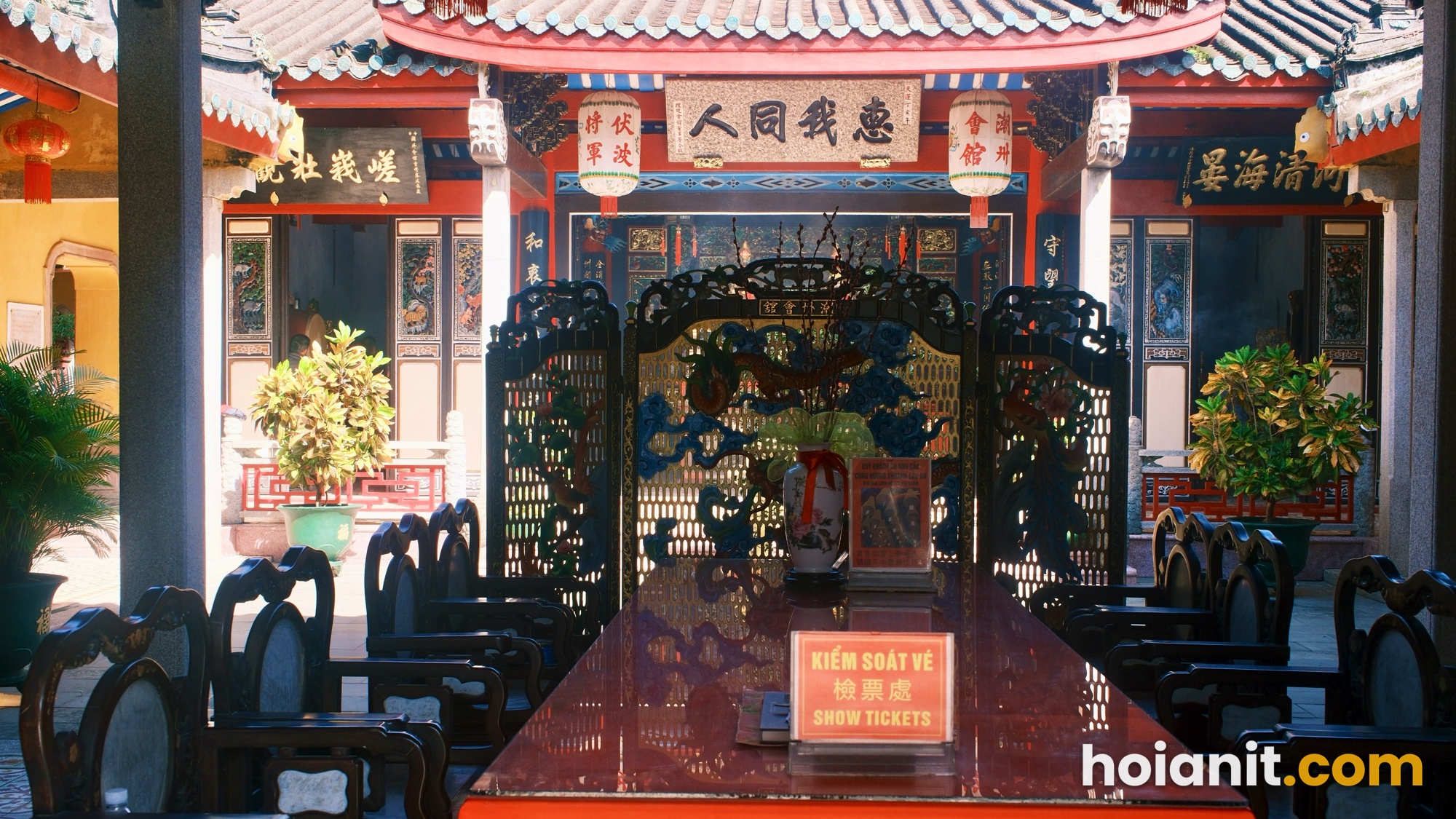
Like the other Chinese halls in Hoi An, it is built as a sequence you walk straight through: the gate on Nguyen Duy Hieu, a front courtyard, a front hall, then an inner open courtyard with side wings, and the main hall at the back. The buildings close around that inner courtyard, so once you are inside the street noise drops away.
- The gate. The two wooden entrance doors are painted with door gods on the outside; the inner faces carry four characters in relief.
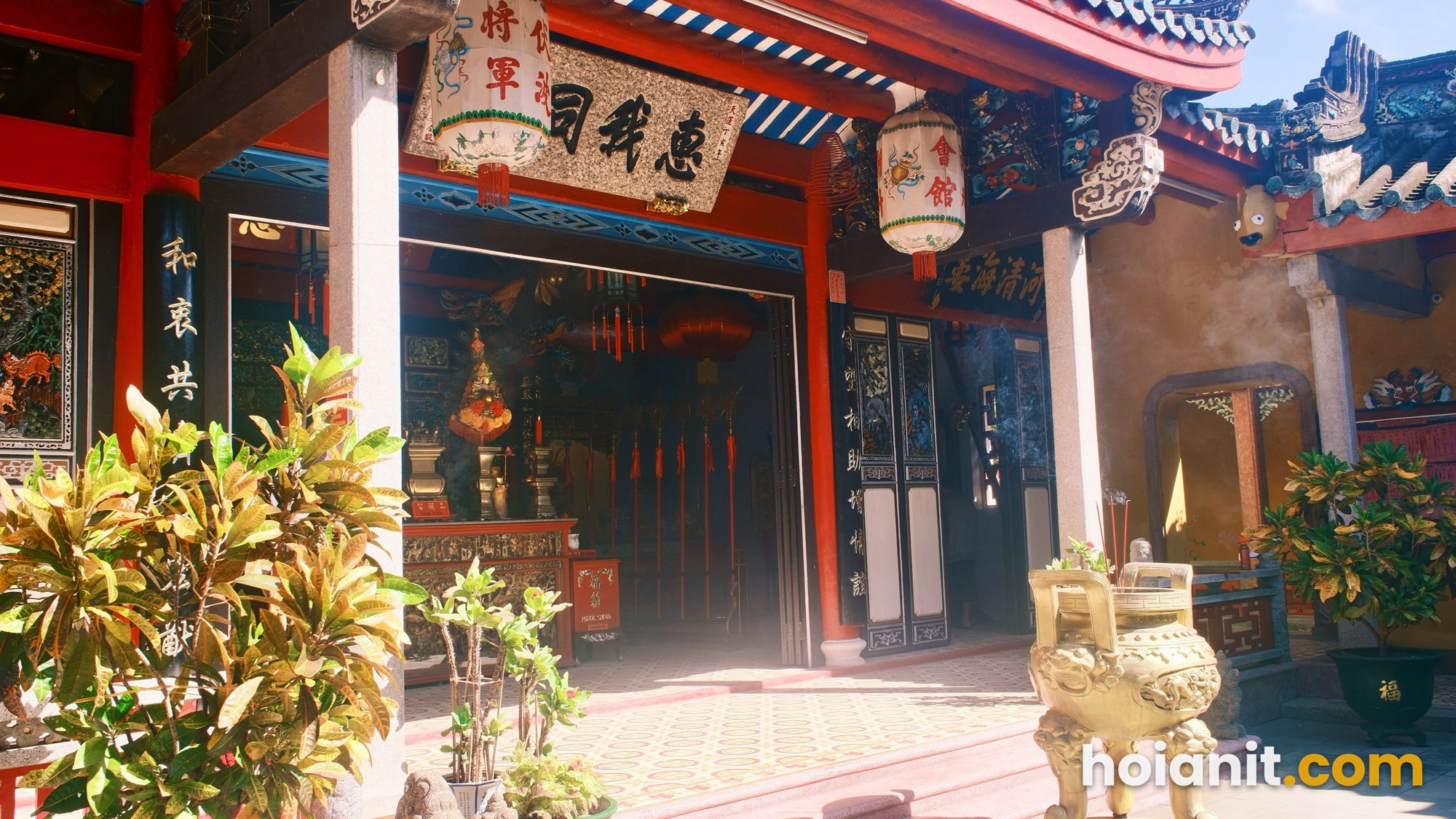
- The front hall. Its roof ends in upturned, swallow-tail ridges in the southern Chinese style.
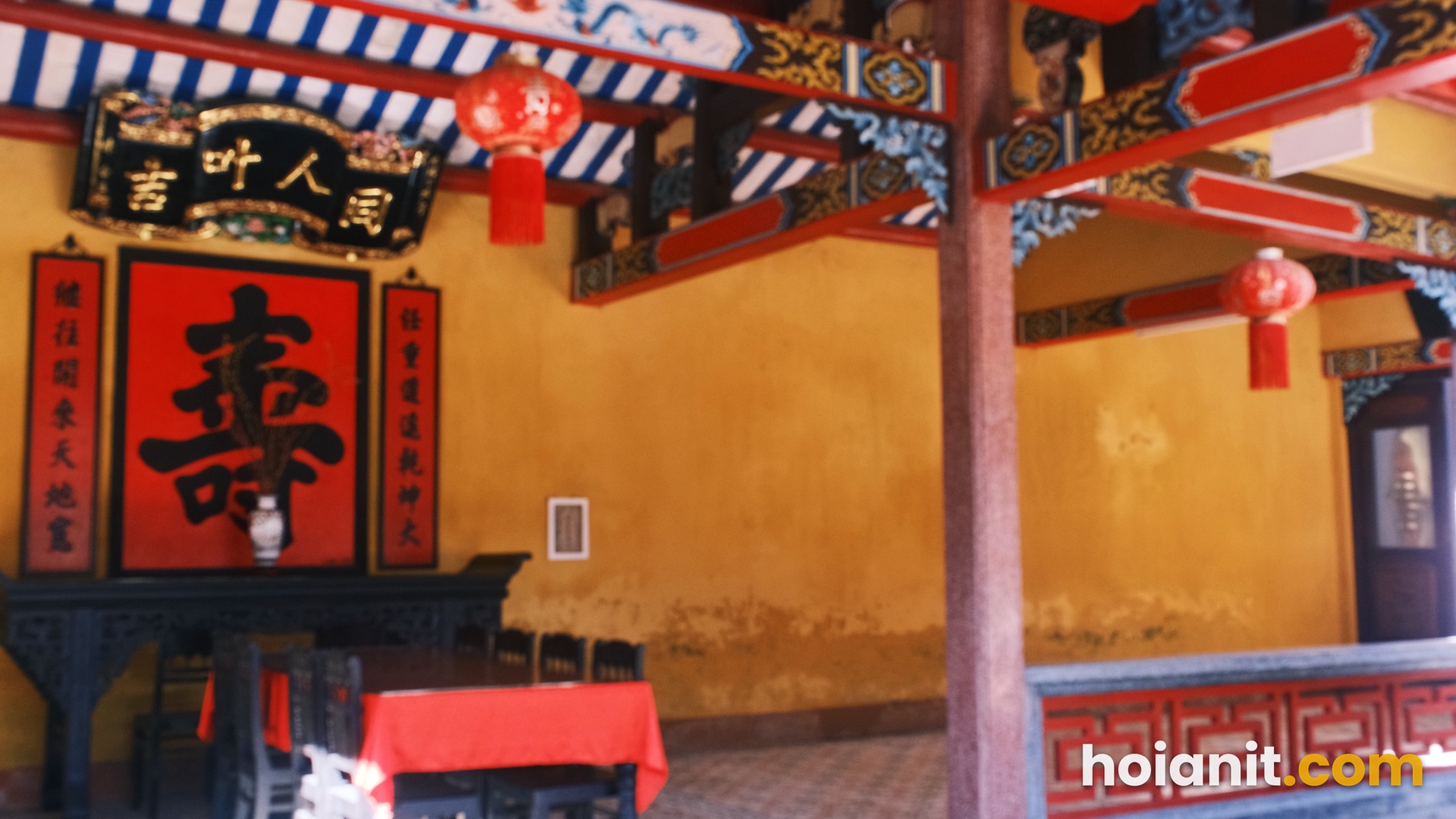
- The side wings. Rooms for meetings and for remembering the community’s ancestors. One has a large red 壽, longevity, painted on the wall.
- The main hall. Phuc Ba in the centre, the God of Wealth and the earth god on either side.
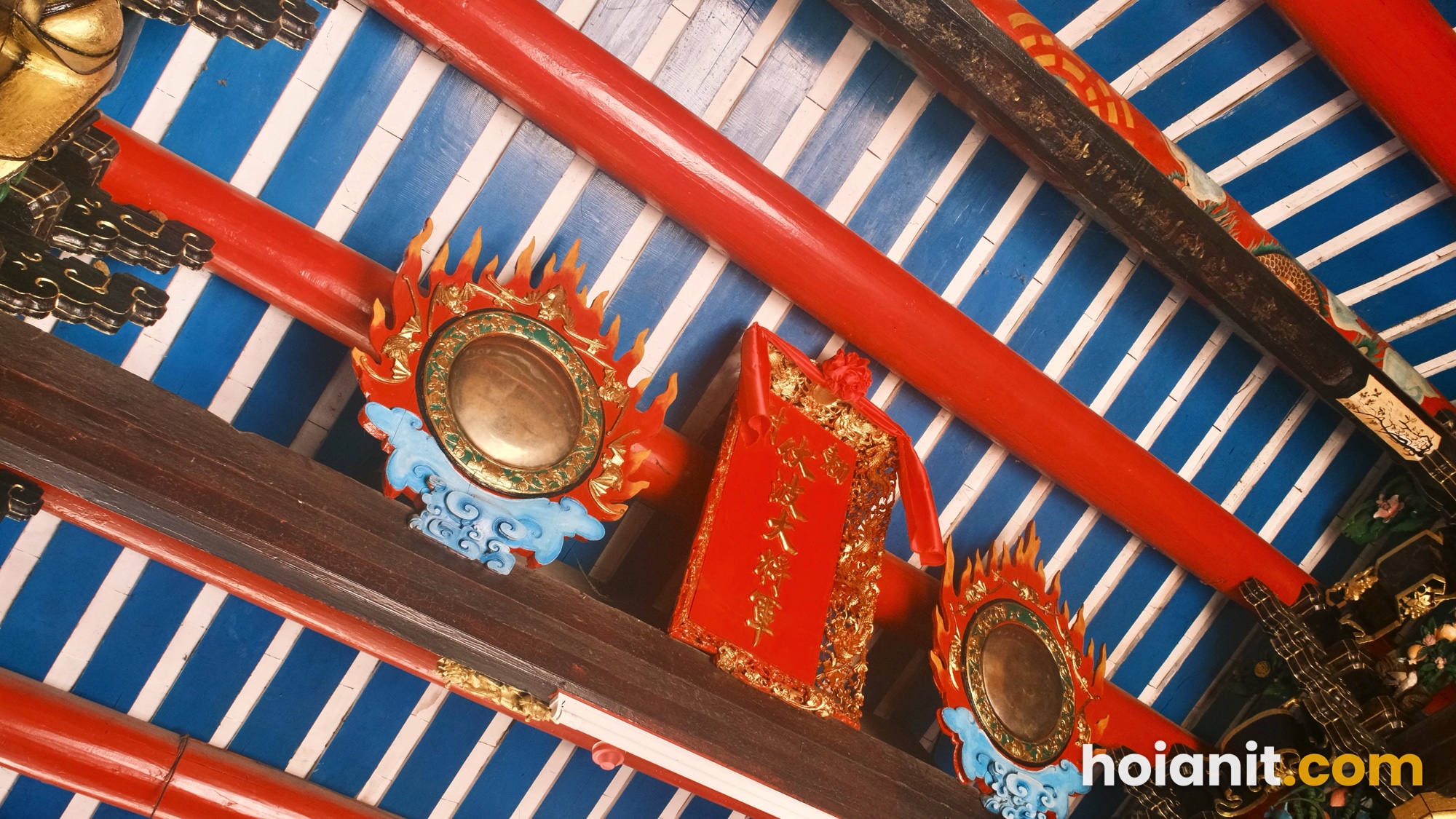
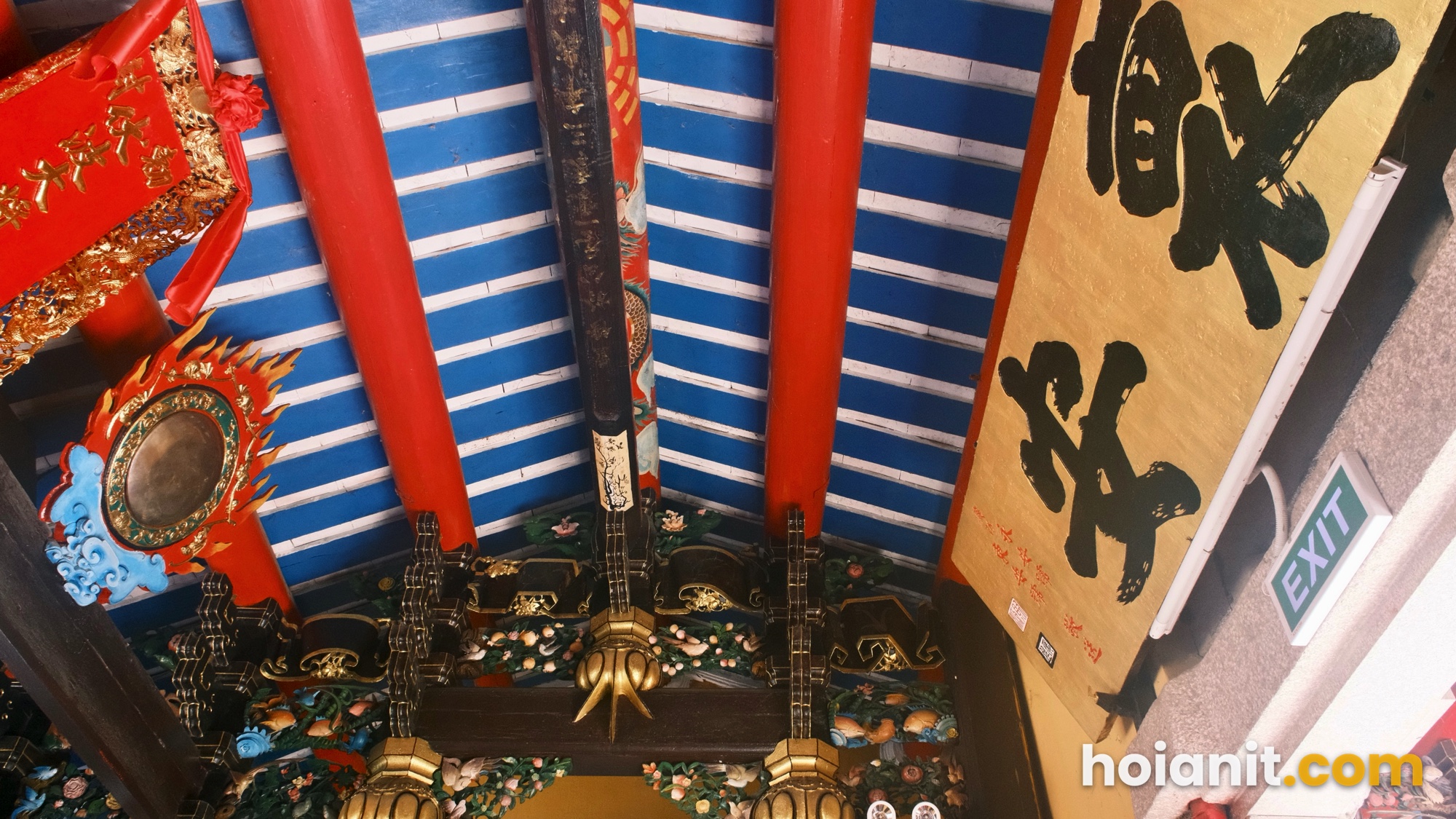
Several accounts say much of the decoration was made in or brought from China: ceramic pieces on the roof, carved timber, lacquered boards. Up close you can see the layers of repair, older dark wood beside newer red paint. Neither is a reason to skip it; both belong to a building that is still in use.
What to see in 20 minutes
- Gate and roofline: ceramic details and creatures along the ridges.
- Wood carving: stop at the beams and doors, as this is what most people walk past.
- Main altar: this is a working place of worship, so keep your voice low.
A simple order that works: look at the gate and its roofline from across the street, step through and stop at the carved doors and beams of the front hall, cross the courtyard to the main altar, then finish in the side rooms. Twenty minutes is enough if you only look; allow forty if you like photographing details.
Dress modestly, don’t touch the carvings, and skip the flash. Because it is quiet, you’ll have time for details. The Vietnamese version of this page is here.

When the hall fills up: festivals
Most days you share the Teochew Assembly Hall with a caretaker and one or two visitors. The exception is the 16th day of the first lunar month, when Vietnamese travel sources report the biggest ceremony of the year: the Lantern Festival (Nguyen Tieu) offering, combined with a memorial for the community’s founding ancestors. Teochew descendants come back from other towns, and the courtyard fills with incense and offerings.
If you are in Hoi An then, go, but behave as a guest at a family event: stay at the edges, ask before photographing people, and do not expect a performance. The date moves each year on the Western calendar and usually falls in February or early March.
Teochew Assembly Hall vs the other four Chinese halls
Hoi An has five Chinese assembly halls, and the ticket counts each one as a separate site. If you only have time for two, pair the busiest with the quietest.
| Hall | Address | Known for |
|---|---|---|
| Fujian (Phuc Kien) | 46 Tran Phu | The largest and busiest; the site has been used since 1697 |
| Chinese (Ngu Bang) | 64 Tran Phu | Shared by five communities, dates from 1741 |
| Cantonese (Quang Dong) | 176 Tran Phu | The dragon courtyard, at the west end of the Old Town |
| Hainan (Hai Nam) | 10 Tran Phu | A memorial to 108 Hainanese men killed in 1851 |
| Teochew (Trieu Chau) | 362 Nguyen Duy Hieu | Wood carving and quiet, at the east end of the Old Town |
Our pick for a short visit: the Fujian hall first, for scale, then walk 260 m east to the Teochew Assembly Hall to see the carving without the crowds.
Getting there and what to pair it with
Nguyen Duy Hieu runs along the eastern side of the Old Town. Motor vehicles are restricted on the walking streets at 09:00–11:00 and 15:00–21:30, so we suggest parking and walking, or using a bicycle. From here, it’s an easy walk to the Fujian Assembly Hall and the Cantonese Assembly Hall, passing the free Chinese Assembly Hall at 64 Tran Phu on the way, or ride to the Confucius Temple.
On foot from our shop at 84 Phan Chau Trinh it is about 800 m, roughly 11 minutes, measured on Google Maps. From the Fujian Assembly Hall it is only 260 m, four minutes east along Tran Phu as it becomes Nguyen Duy Hieu. If you navigate by coordinates, the hall is at 15.8778, 108.3331.
Combining the Old Town with the beach or My Son on the same day? Our motorbike rental in Hoi An can bring a scooter to your hotel; leave it outside the walking streets and cover the last few hundred metres on foot.
Exploring the Old Town?
Bicycles from 50,000₫ a day, scooters from 110,000₫. Collect free at 84 Phan Chau Trinh, or have it delivered from 30,000₫.
Zalo 0935 439 306Frequently asked questions
Where is the Teochew Assembly Hall in Hoi An?
It is at 362 Nguyen Duy Hieu Street, at the eastern end of the Old Town. Some sites give 157, which is wrong. Google Maps and a study by Nguyen Cuong published by the Hoi An heritage center both give 362.
When was the Teochew Assembly Hall built?
According to a stone stele kept at the hall and cited in that study, work began in 1845 and finished in 1852. Many guides only give 1845.
Who is worshipped there?
The main deity is Phuc Ba Tuong Quan, a protector of sailors and sea traders. This fits a merchant community who made their living from the sea.
Do I need a ticket for the Teochew Assembly Hall?
Yes. The Teochew Assembly Hall is a ticketed site. Since 10 August 2026 it costs 20,000₫ per site, the same for Vietnamese and foreign visitors, and under-16s enter free. The old 80,000₫ and 120,000₫ tickets no longer apply.
When is it open?
Google Maps shows closing at 17:00. Sources give opening times of 07:00 or 08:00, so go after 08:00 if you want to be sure.
Is the Teochew Assembly Hall worth visiting?
Yes, if you like detail more than size. It is smaller than the Fujian hall but far quieter, and the carved doors and beams are the best reason to come. Twenty minutes is enough.
How far is it from the Fujian Assembly Hall?
About 260 m, a four-minute walk east along Tran Phu into Nguyen Duy Hieu.
When is the busiest day at the Teochew Assembly Hall?
The 16th day of the first lunar month, usually in February or early March, when the community holds its Lantern Festival offering and a memorial for its founding ancestors.
Address and closing time from Google Maps on 7 November 2026. Dates from a study by Nguyen Cuong. Ticket price is the rate in force since 10 August 2026.

E-Bike · No license




E-Bike · No license
Keep reading Hoi An Travel Tips