
Hoi An Travel Tips
Chinese Assembly Hall Hoi An: The Free Hall Five Communities Share
Chinese Assembly Hall Hoi An: The Free Hall Five Communities Share
The Chinese Assembly Hall in Hoi An, at 64 Tran Phu, dates from 1741 and was shared by five Chinese communities. Entry is free, but it shuts for lunch, which most guides never mention.
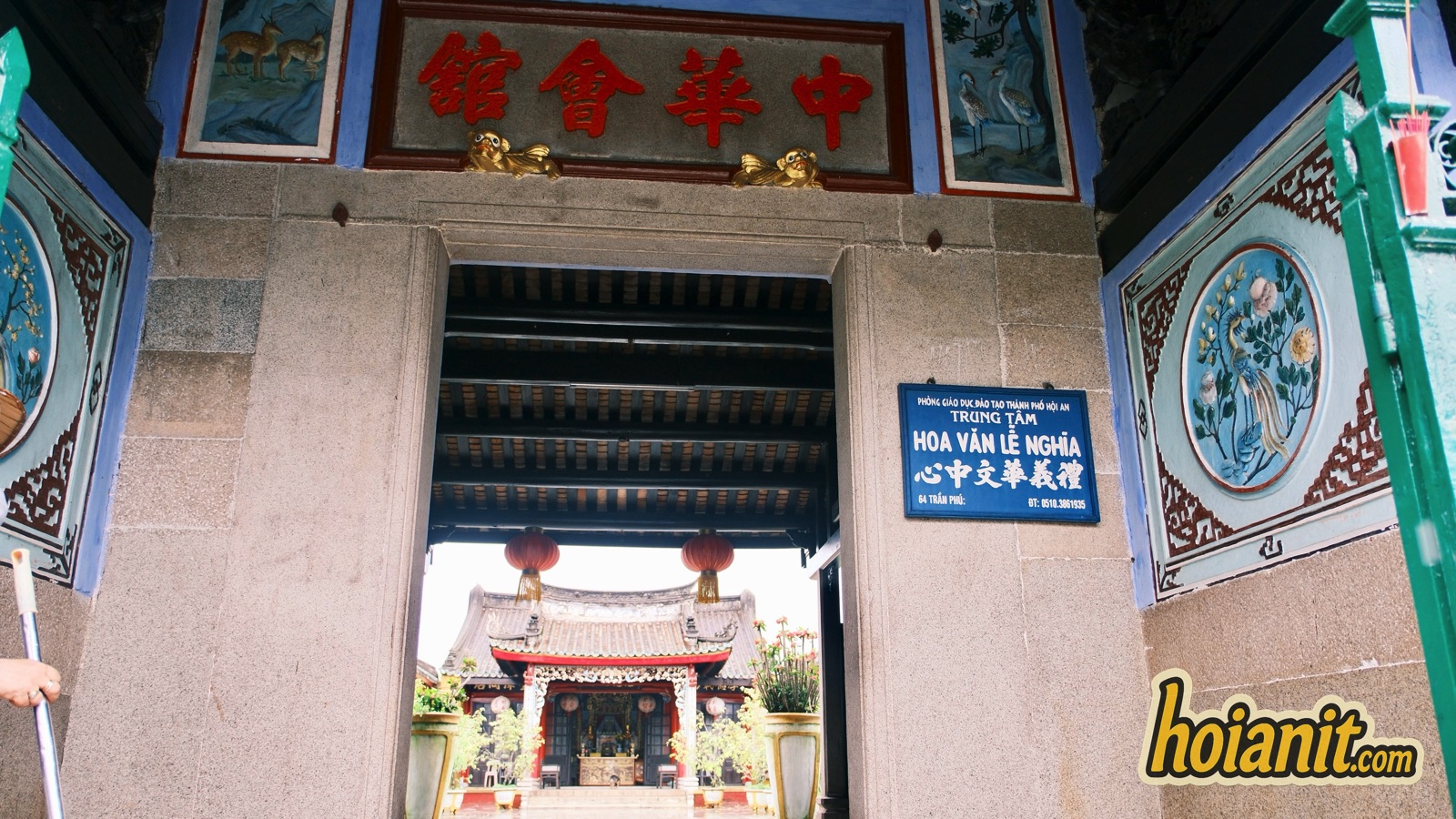
Every Chinese clan in old Hoi An had its own hall: Fujian, Cantonese, Teochew, Hainan. Then there is the one they built together. Locals call it Hoi Quan Ngu Bang, the hall of the five congregations, and the gate still reads 中華會館, Trung Hoa Hoi Quan. It is the oldest of the Chinese assembly halls in town, it charges nothing, and inside it hides two things most visitors walk straight past: a portrait of Sun Yat-sen over his most famous motto, and a wall of wartime martyrs. We photographed every corner for this guide.
Chinese Assembly Hall: quick facts
| Item | Details |
|---|---|
| Names | Chinese Assembly Hall, Trung Hoa Assembly Hall, Hoi Quan Ngu Bang, Duong Thuong Hall |
| Address | 64 Tran Phu, Hoi An Ward, Da Nang City (Old Town) |
| Dates from | 1741, renovated in 1855 and 1928 |
| Shared by | Fujian, Cantonese, Teochew, Hainan and Hakka (Gia Ung) communities |
| Main deity | Thien Hau, the sea goddess known in China as Mazu |
| Ticket | Free. It is not one of the paid assembly halls |
| Hours | Google Maps: 07:00–11:00 and 14:00–16:00. Older guides say open all day |
| Time needed | 20–30 minutes |
Hoi An’s old administrative names changed on 1 July 2025, when Quang Nam merged into Da Nang. The hall now sits in Hoi An Ward, Da Nang City, so older addresses that say “Minh An Ward, Quang Nam” are out of date. Directions are on Google Maps.
Why five communities built one Chinese Assembly Hall
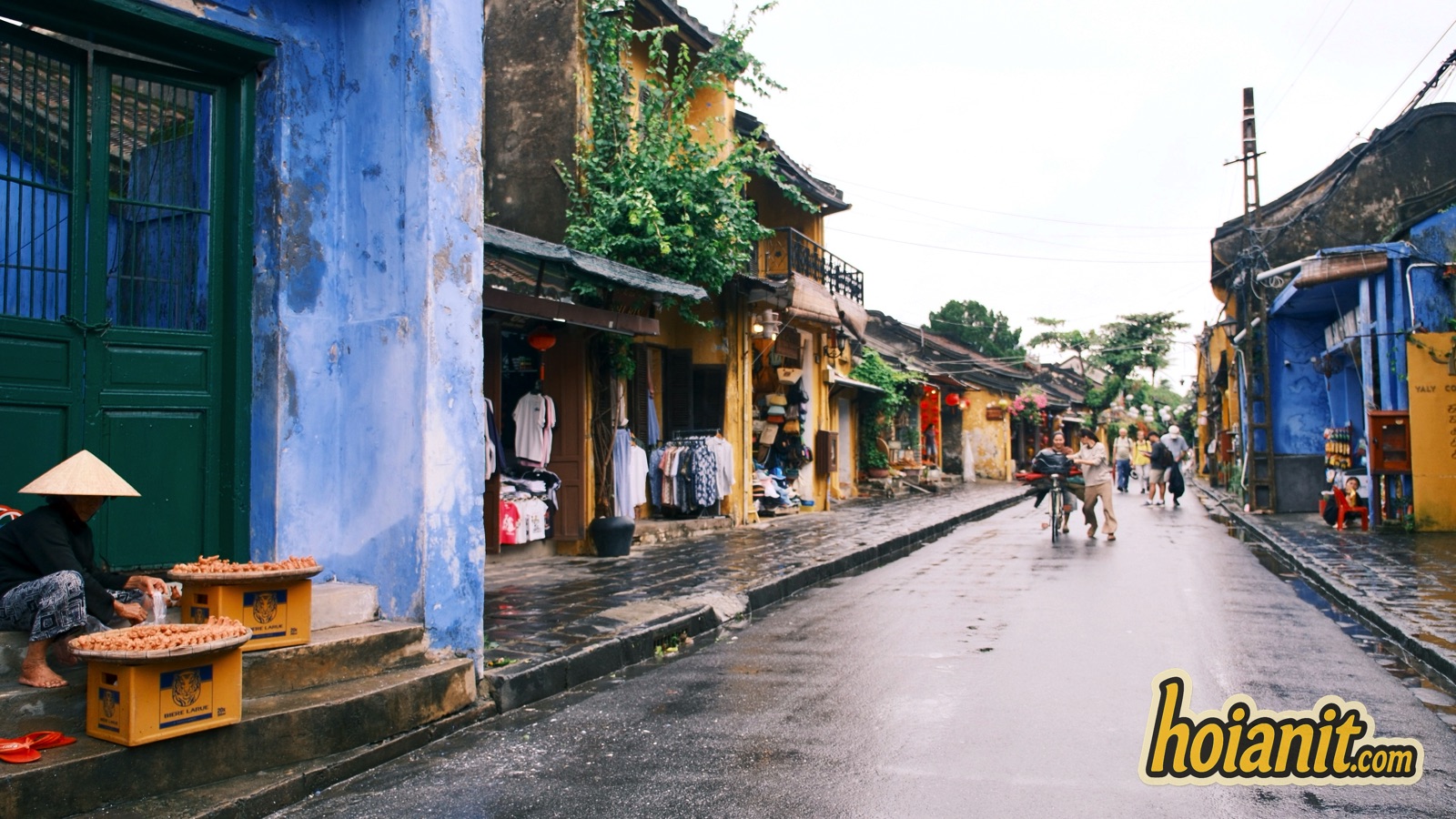
In the 1700s Hoi An was the busiest port in central Vietnam, and Chinese merchants arrived in waves, each group speaking its own dialect and praying at its own altar. Besides their own clan halls, traders from all five groups pooled money for a shared one. Most sources date it to 1741, and Vietnamese guides call the Chinese Assembly Hall the oldest of Hoi An’s Chinese assembly halls.
The five “bang”, or congregations, were Fujian (Phuc Kien), Cantonese (Quang Dong), Teochew (Trieu Chau), Hainan (Hai Nam) and Hakka (called Gia Ung in Vietnamese sources). That is where the Vietnamese name Ngu Bang, “five congregations”, comes from. Its first name was Duong Thuong, roughly “the overseas traders’ hall”. Later it was called Giang Triet Hall, and today it is Trung Hoa Hoi Quan, the name carved over the gate.
When did the name change? Sources disagree. A VinWonders guide (December 2025) links the change to the 1855 renovation. Other English guides tie it to 1928, the second renovation, when the hall also took on a school. We give you both dates because we could not find a primary record that settles it.
The other halls on Tran Phu belong to one clan each. This is the one hall they all built together, and it doesn’t ask for a ticket.
Gate, courtyard and the hall’s layout
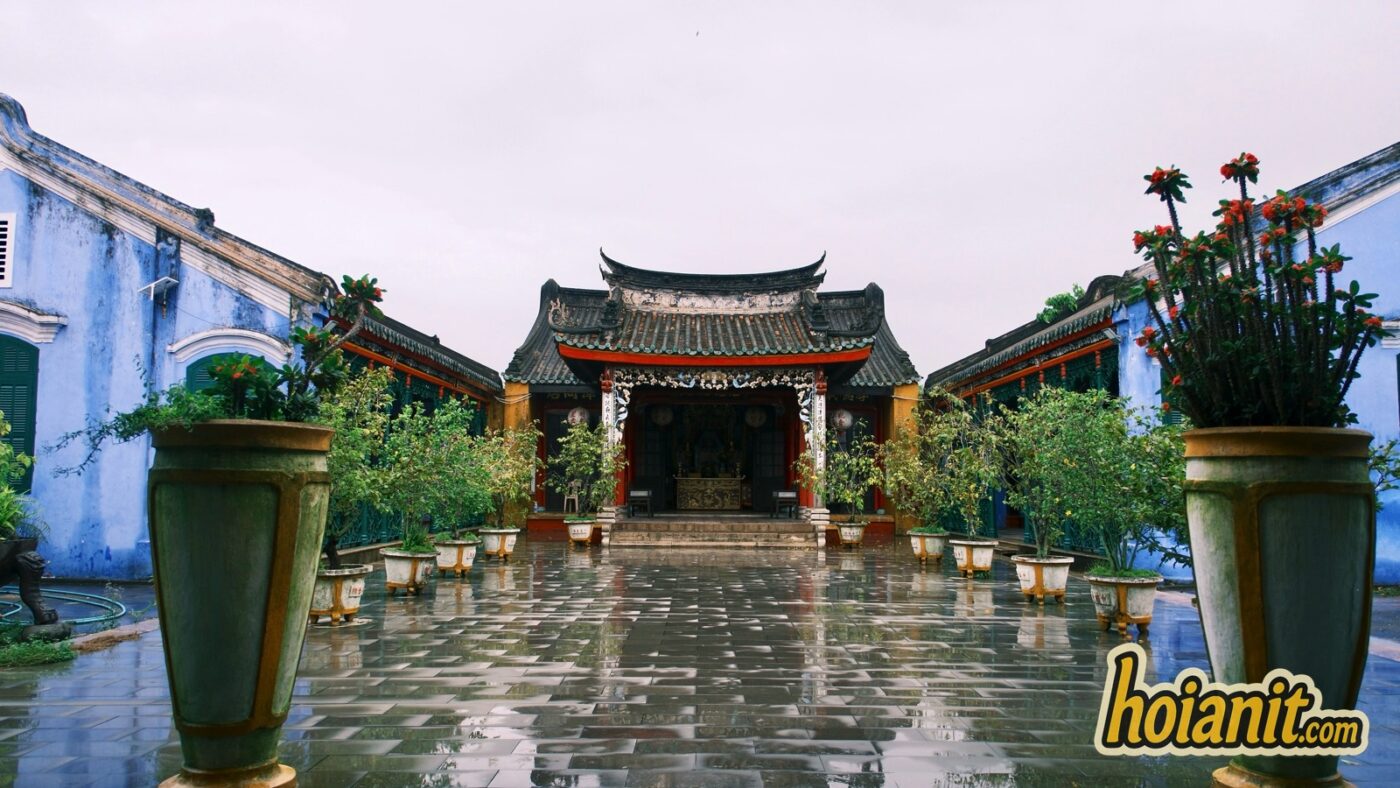
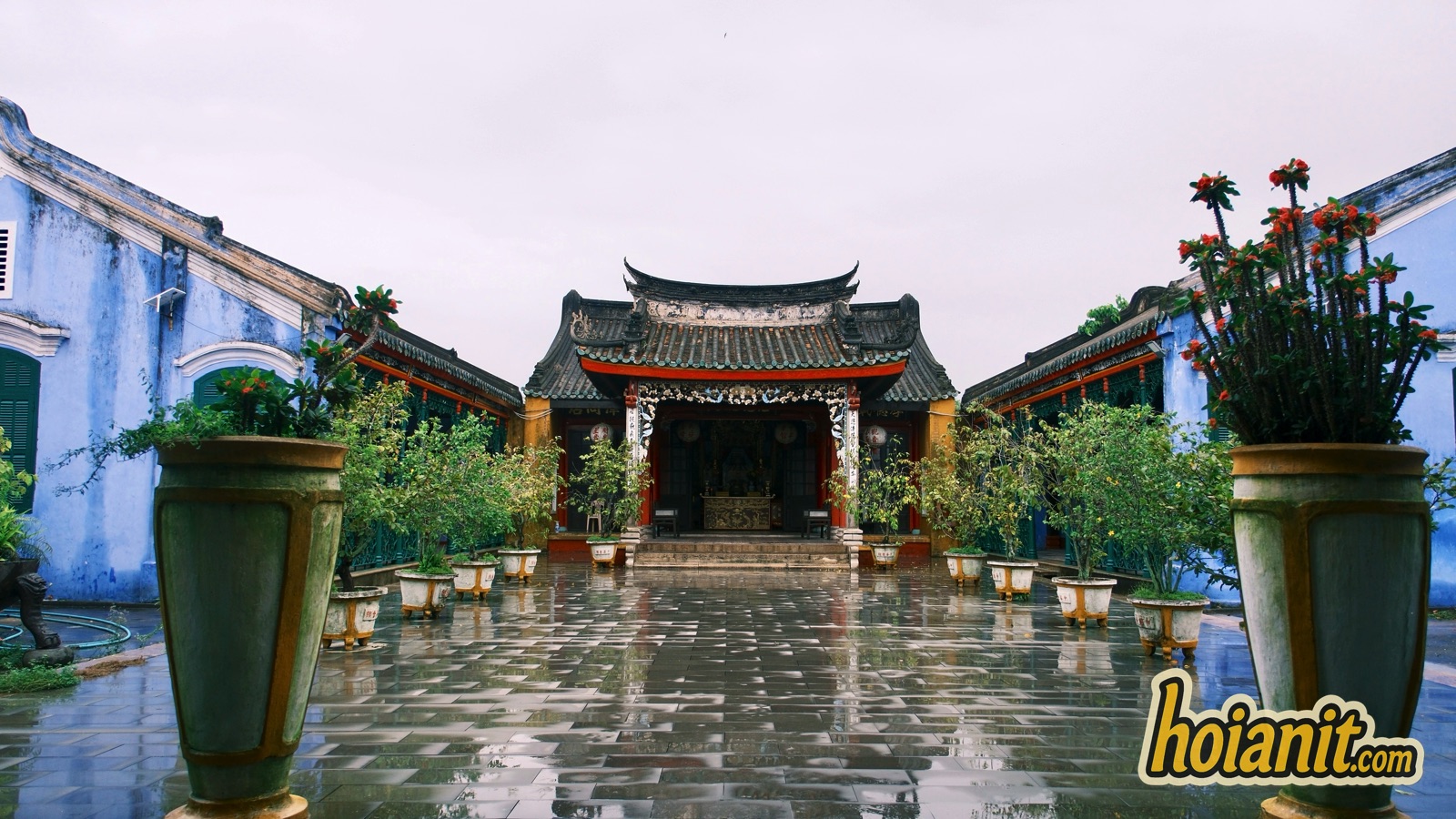
The plan follows the shape of the character 國: a front hall, a main hall at the back, and two long side wings around a paved courtyard. It is simpler than the Fujian hall a few doors down. There is no dragon fountain and no stacked roofs. What you get instead is space. On a quiet morning you may have the whole courtyard to yourself.
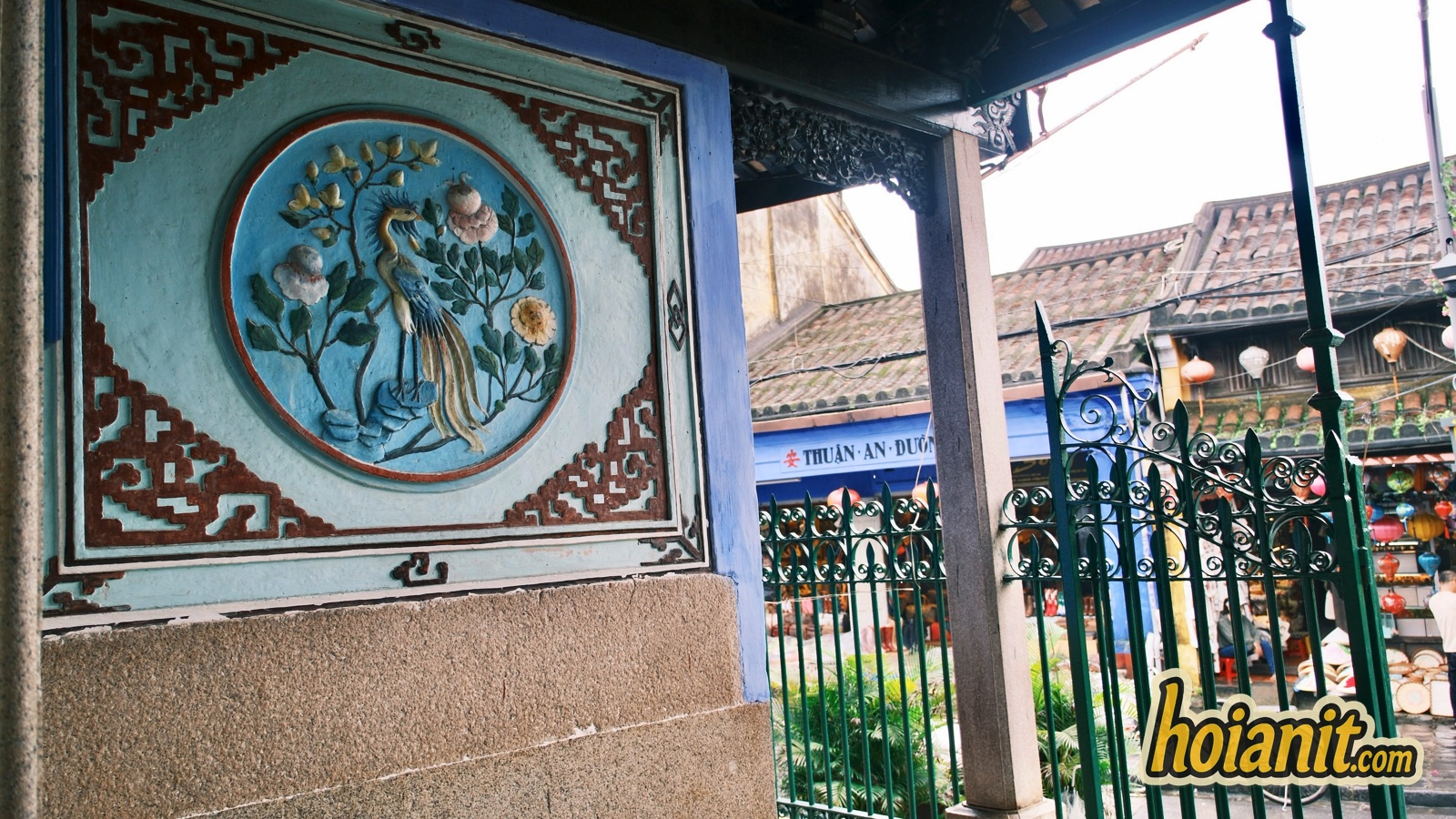
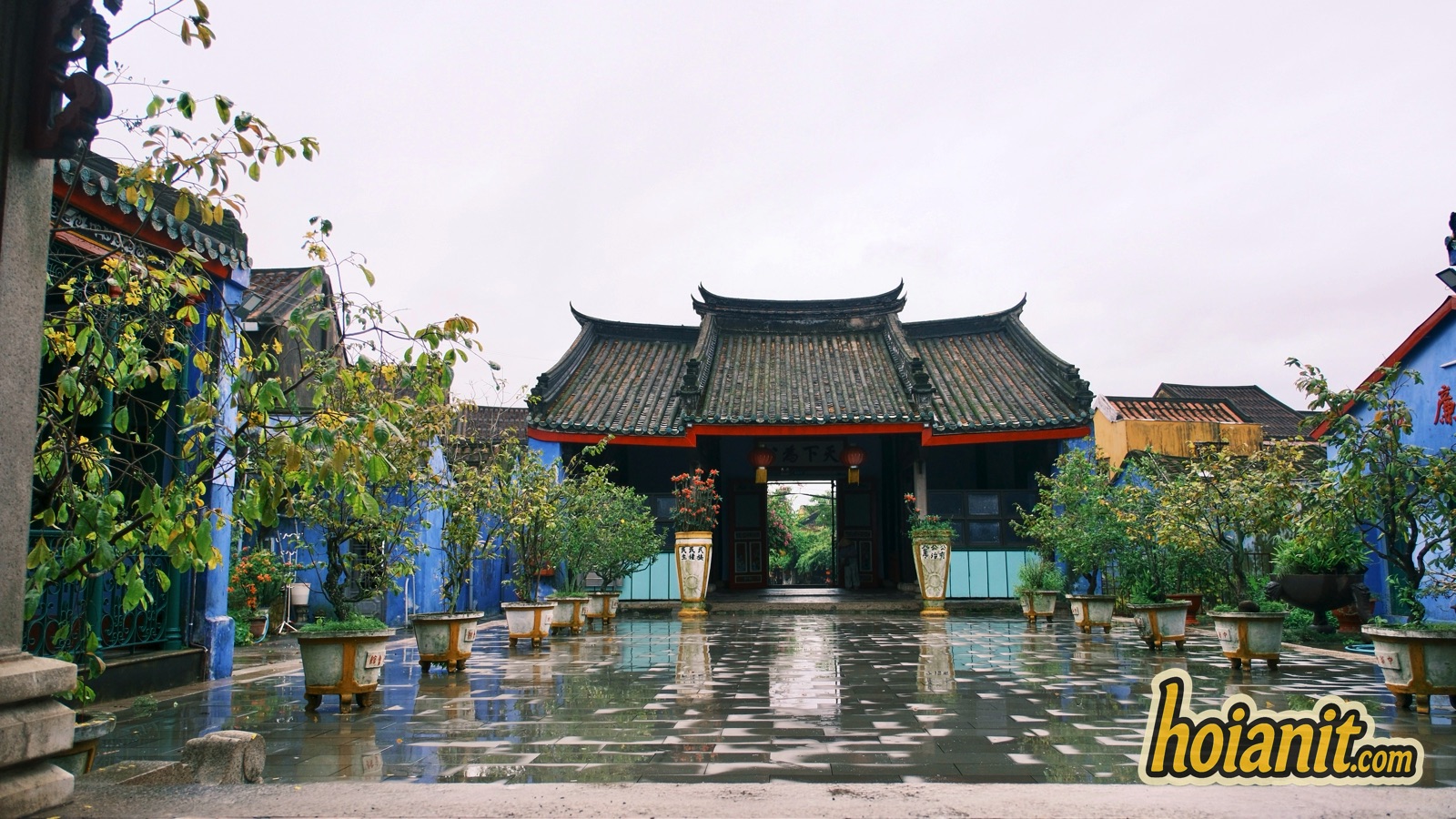
- The gate: granite door frame, a red plaque, and blue walls set with round ceramic reliefs. Look for the bird among the peonies.
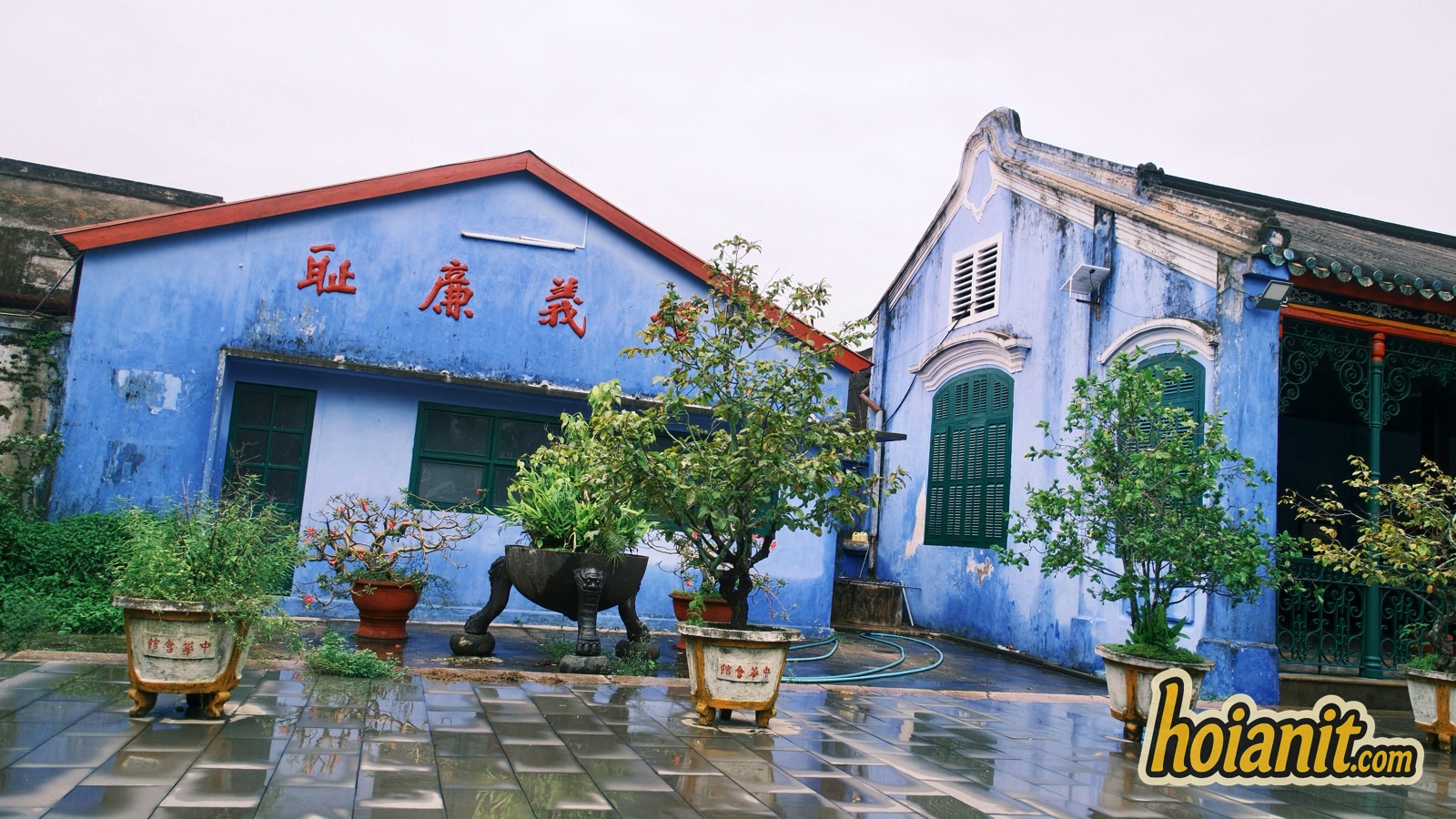
- The courtyard: rows of bonsai and flowering shrubs in glazed pots. After rain the tiles mirror the main hall, so this is the best photo in the building.
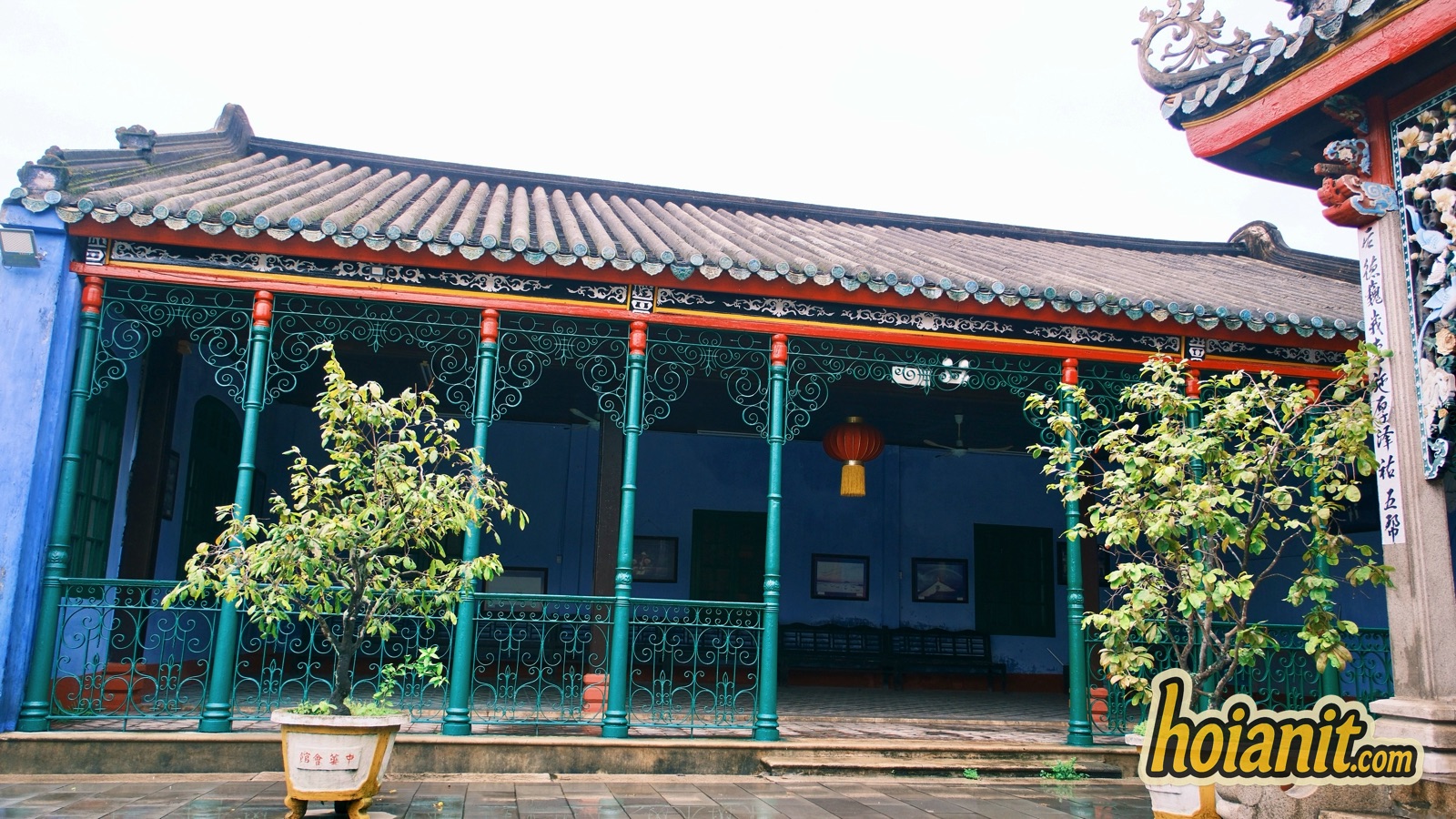
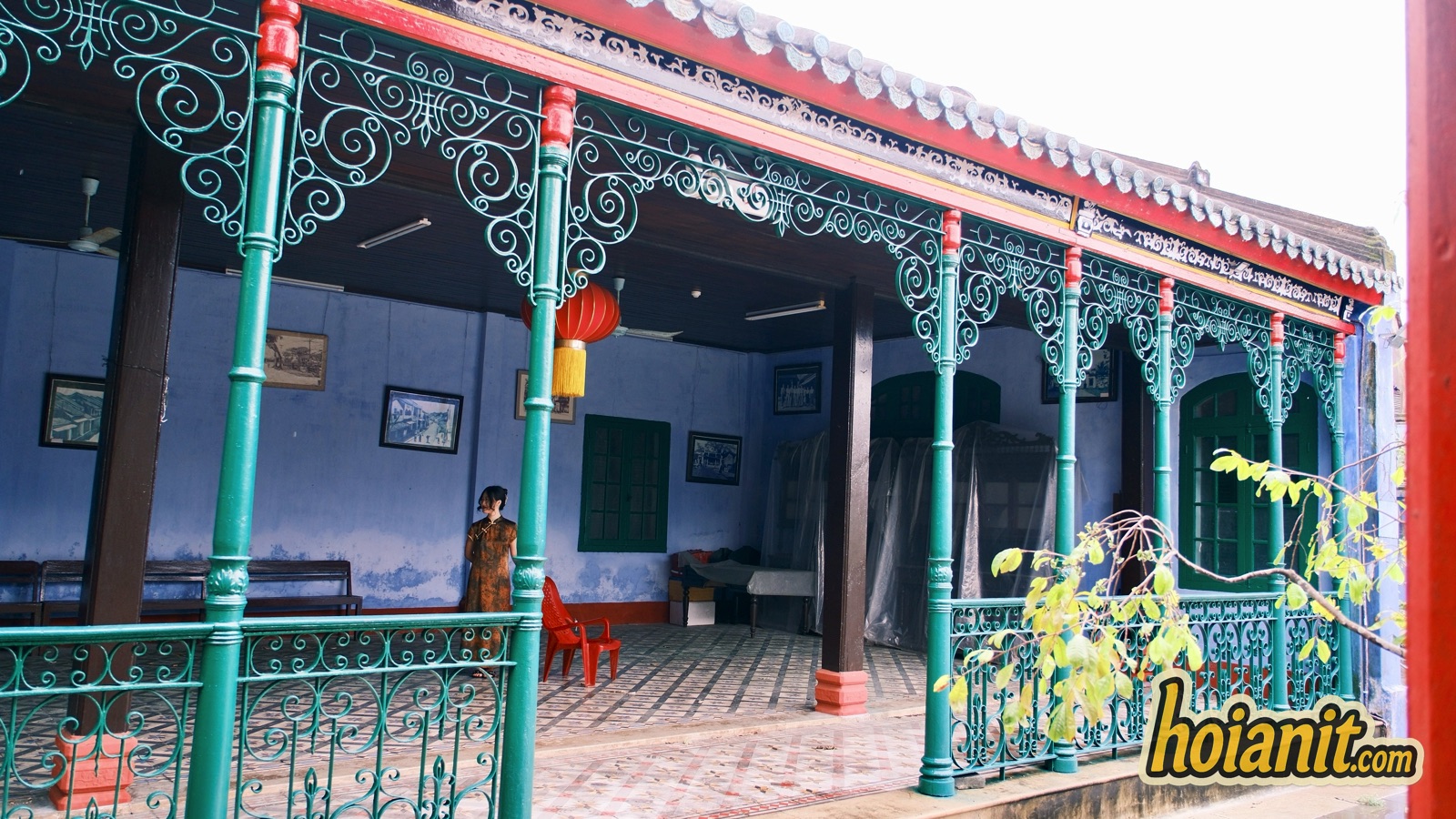
- The side wings: long verandas with green cast-iron columns and scrolled railings, closer to a colonial shophouse than a temple.
The Thien Hau altar
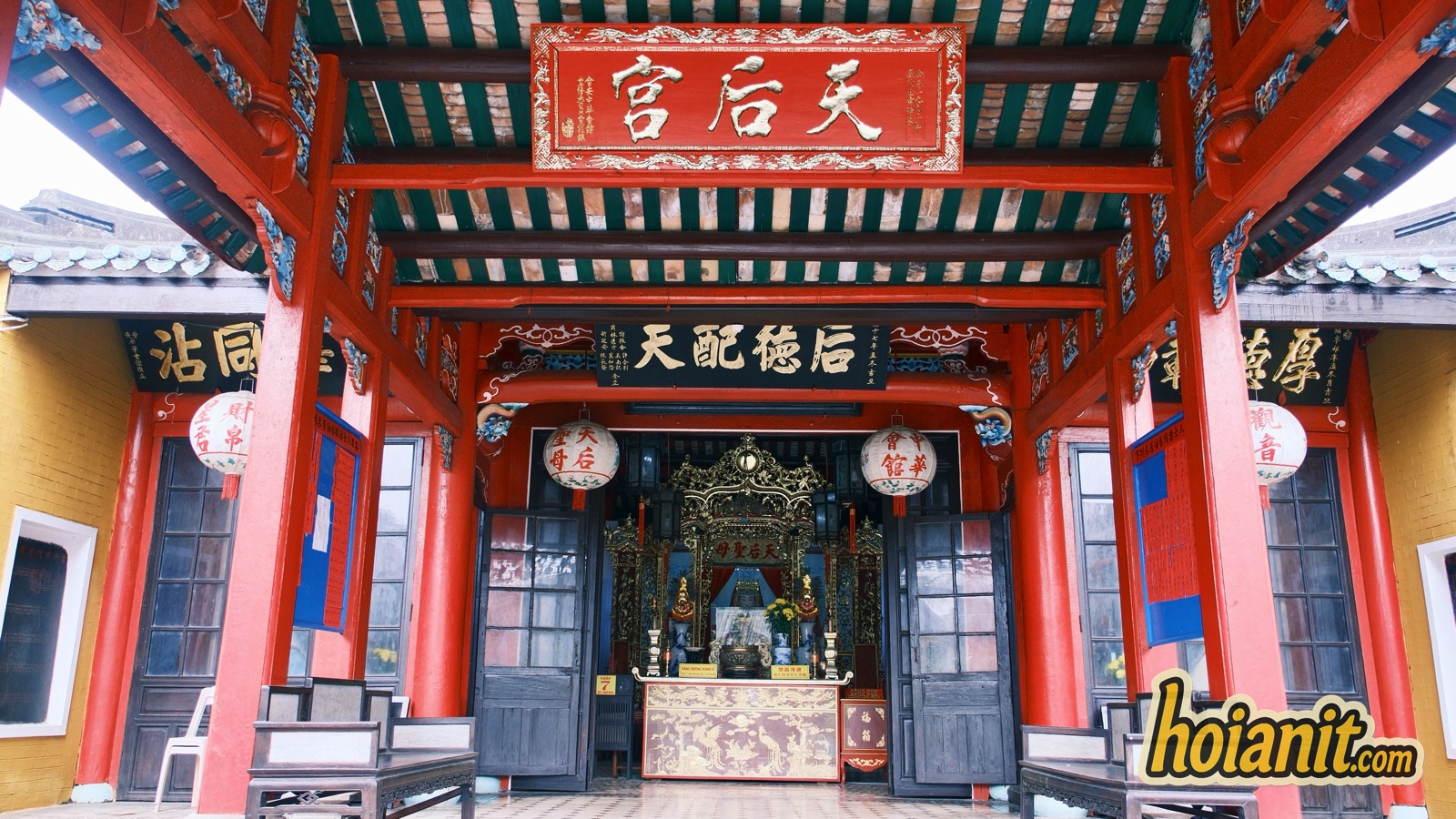
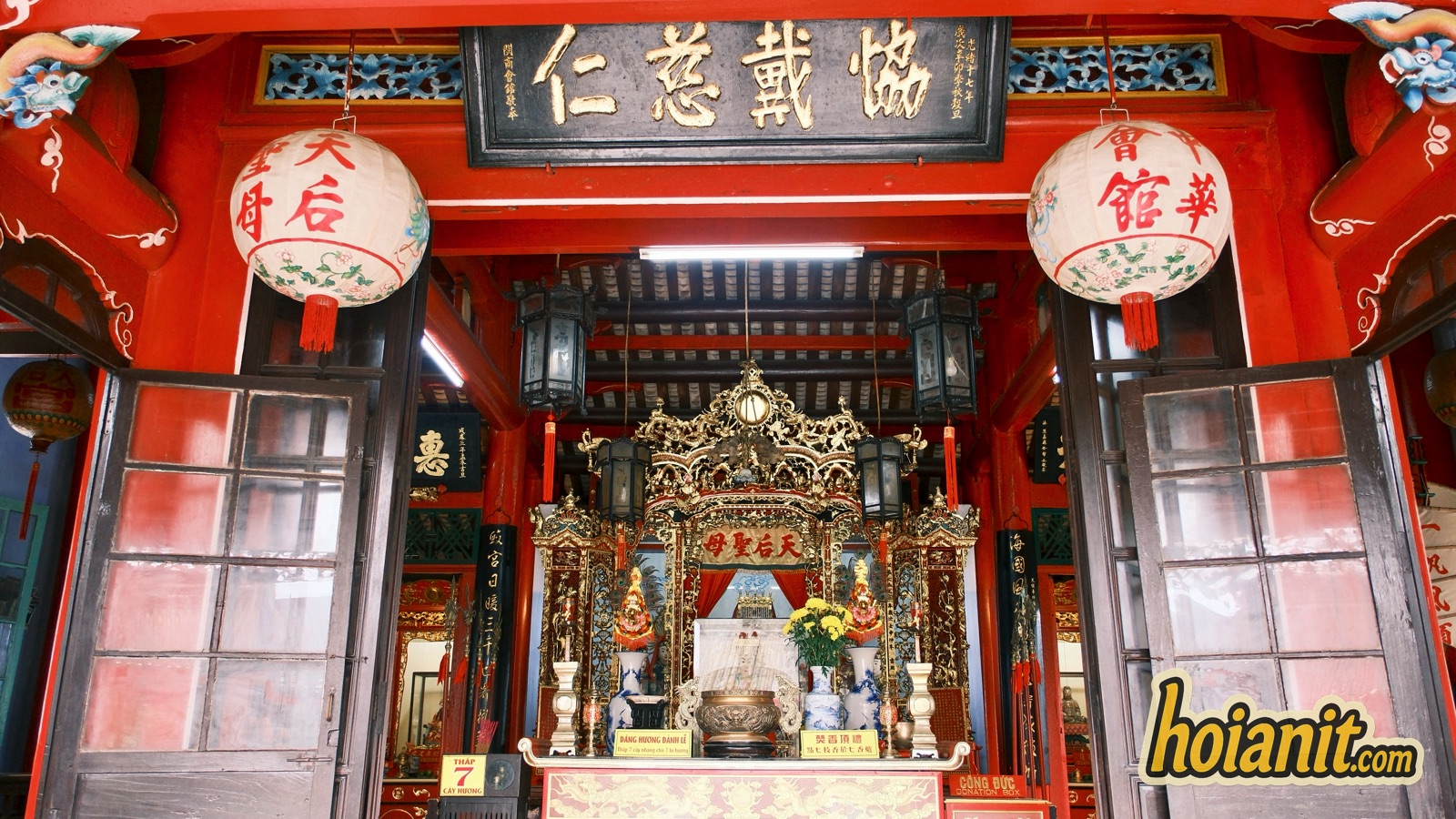
The main hall is dedicated to Thien Hau Thanh Mau, the Holy Mother of Heaven, better known by her Chinese name, Mazu. She protects sailors, and for merchants who crossed the South China Sea in wooden junks she was the obvious choice. The board over the inner hall reads 天后宮, “Palace of the Heavenly Queen”. On either side of her altar stand her two helpers, Thien Ly Nhan (“thousand-mile eyes”) and Thuan Phong Nhi (“wind-borne ears”), who spot ships in trouble. A VinWonders guide also lists an altar to Tai Bach Tinh Quan, the god of wealth.
This is still a place of worship, so keep your voice down, don’t step onto the altar platform, and skip the flash.
Five details most visitors walk past
Most people stop at the altar and leave. These are the details that make this hall different from every other hall in Hoi An, and you’ll find all of them within a few metres of the main hall.
1. Sun Yat-sen over the back door
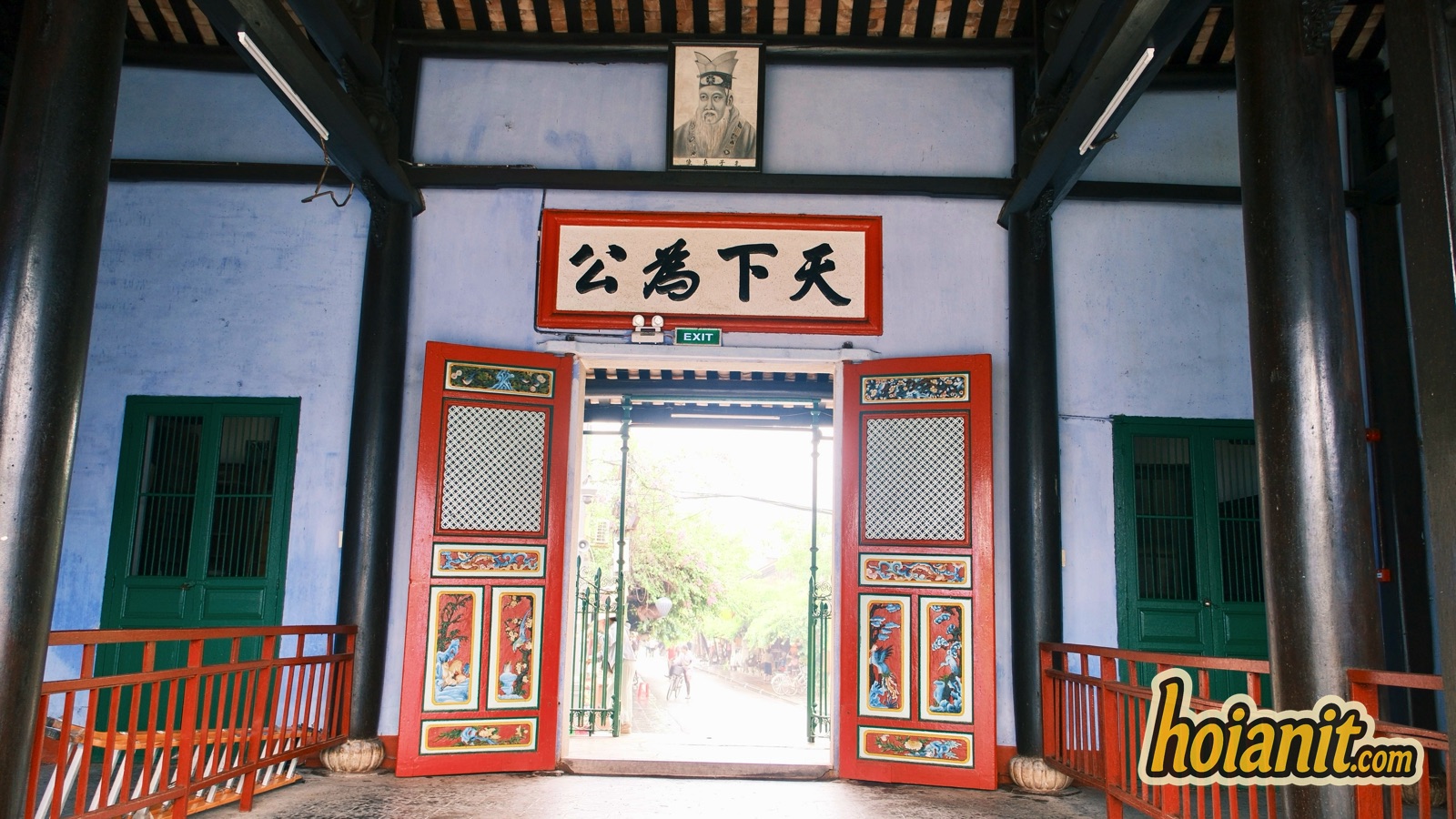
Walk through the main hall to the rear doorway. Above it hangs a red board with four characters, 天下為公: “all under heaven belongs to the people”. It is the phrase Sun Yat-sen, founder of the Republic of China, wrote again and again, and his portrait hangs right above it. It dates the hall’s later life to the Republican era, when overseas Chinese communities across Southeast Asia rallied behind his movement.
2. A wall of wartime martyrs
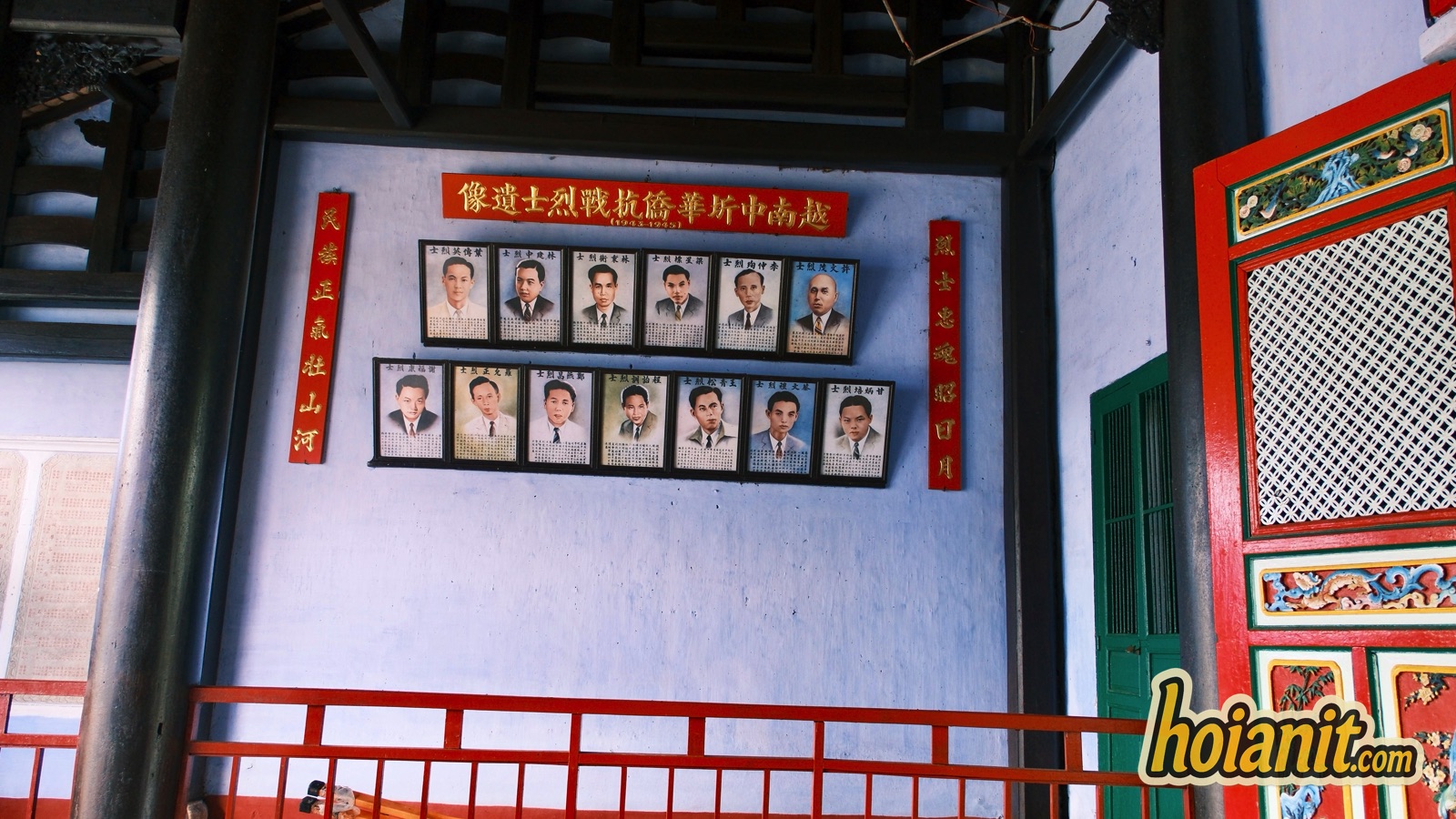
In a side bay, thirteen framed portraits of young men hang under a red banner that reads 越南中圻華僑抗戰烈士遺像: portraits of the overseas Chinese of central Vietnam who died in the War of Resistance. In Chinese usage 抗戰 normally means the war against Japan (1937–1945). Two vertical boards flank them, 民族正氣壯山河 (“the nation’s righteous spirit makes the mountains and rivers mighty”) and 烈士忠魂昭日月 (“the loyal souls of the martyrs shine like sun and moon”). It is a quiet, personal corner that no other guide we read describes.
3. Righteousness, integrity, shame
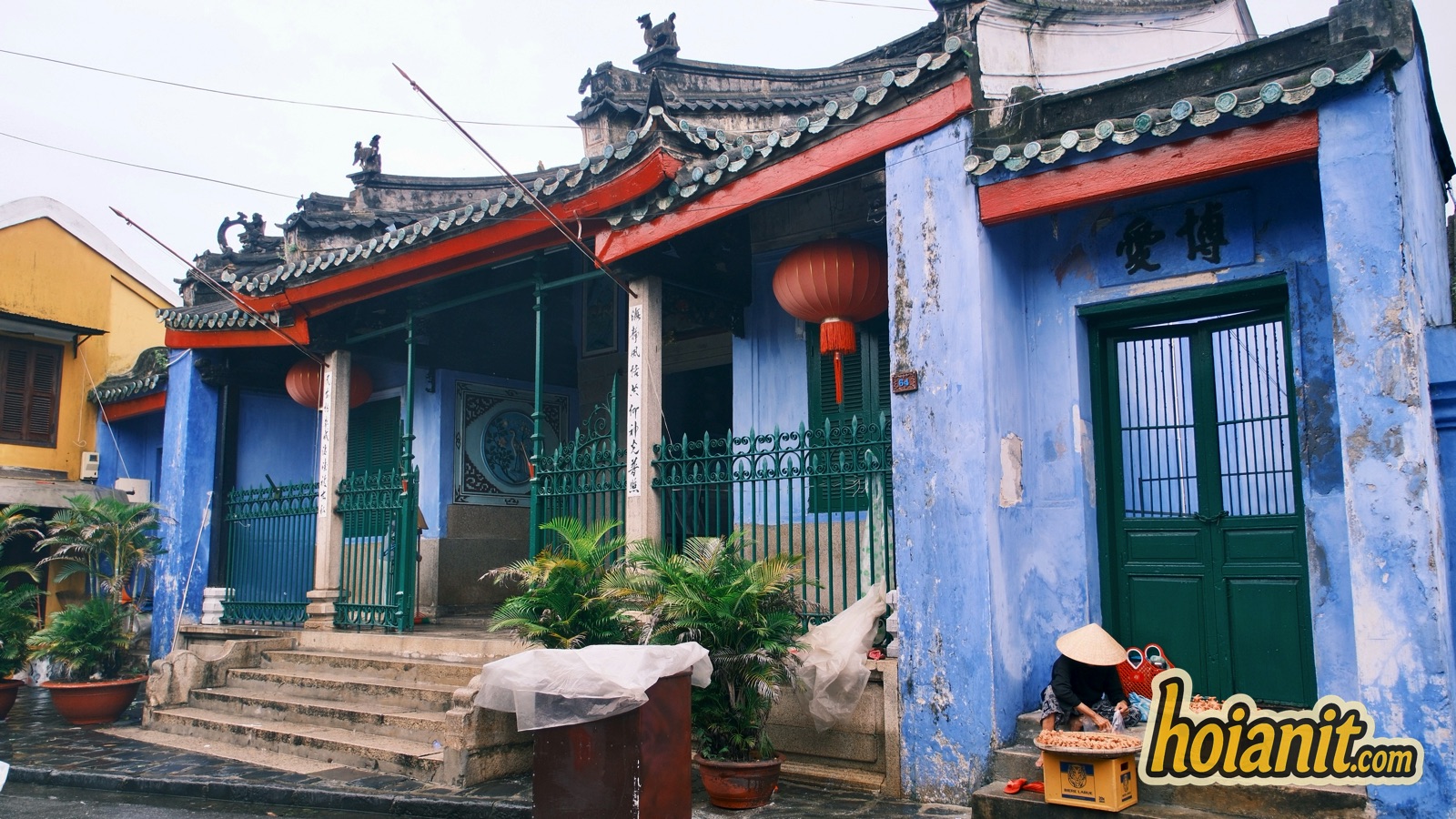
On the blue side building, raised red characters read 義廉恥: righteousness, integrity and a sense of shame, three of the four Confucian virtues. The fourth, 禮 (propriety), is the first word of the school’s name, Le Nghia. In front of it, a bronze animal statue stands among the potted plants.
4. The cast-iron verandas
The side wings have slim green cast-iron columns and lacy railings, with Chinese tiles above them. It is the most “Hoi An” corner of the hall: a Chinese building finished with ironwork you’d expect on a colonial villa.
5. The stone tablets
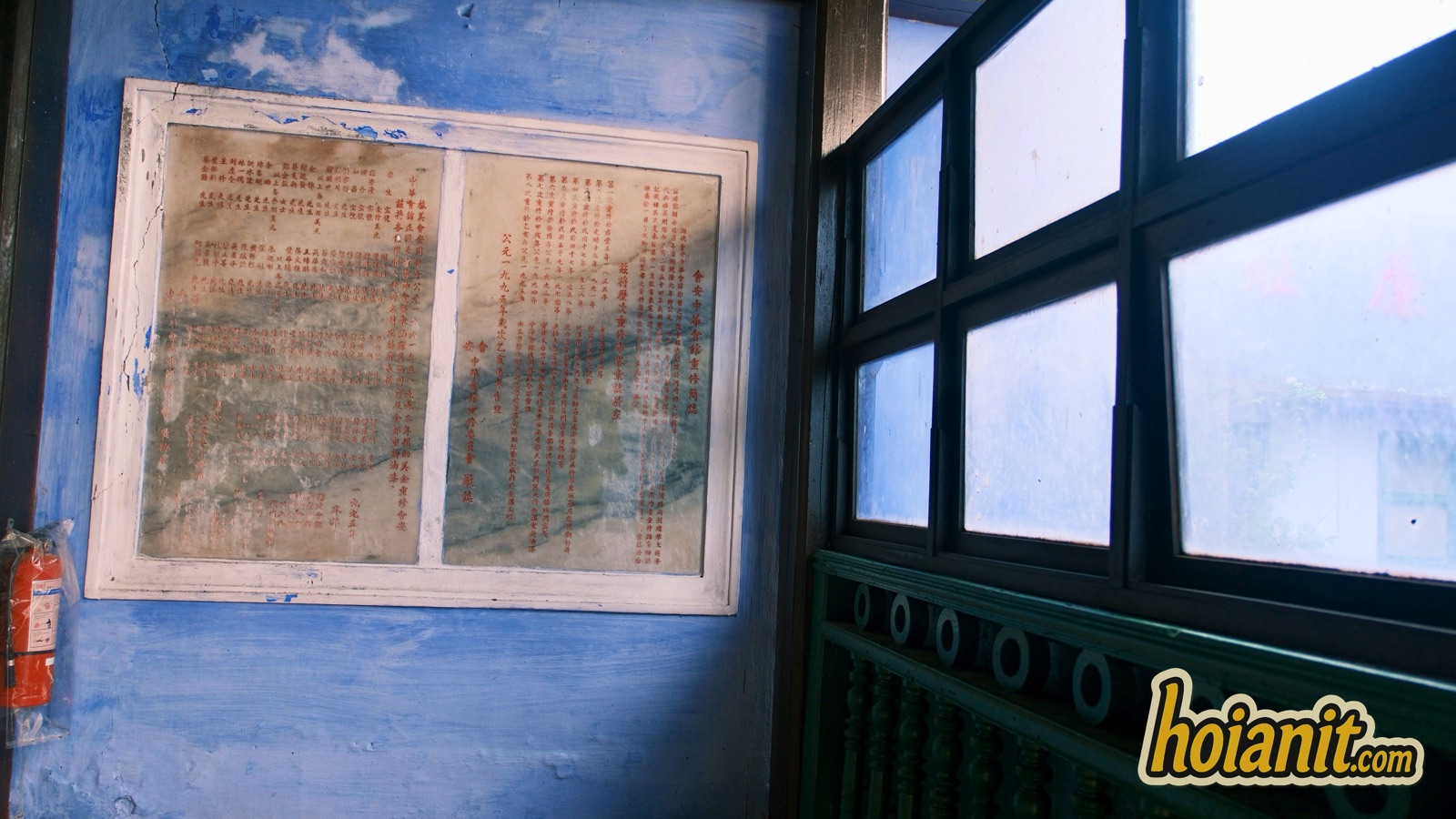
On a blue wall near the back, two marble tablets are covered in hand-carved Chinese text. Time and damp have faded them, but they are the hall’s own records, and they’re worth a look if you read Chinese.
A hall that is still a school
A blue sign by the gate reads “Trung Tam Hoa Van Le Nghia”, 禮義華文中心, the Le Nghia Chinese Language Centre. The hall has housed a school for the community’s children for generations, and Vietnamese sources say classes are now open to anyone who wants to learn Chinese, not only Chinese families. VinWonders also mentions a basketball court behind the main hall, used by the students.
Next door, a matching blue building has another two-character board, 博愛, “universal love”, another phrase closely tied to Sun Yat-sen.
When to visit the Chinese Assembly Hall
- Go in the morning. Google Maps lists 07:00–11:00 and 14:00–16:00, and older guides say it is open all day. A morning visit works with either.
- Early is quieter. Tran Phu is the busiest street in the Old Town and fills up from mid-morning.
- Just after rain is when the courtyard tiles reflect the main hall. Most of the photos on this page were taken that way.
- Thien Hau’s birthday falls on the 23rd day of the third lunar month, usually in April or early May. VinWonders says the hall celebrates with the Fujian hall: statue bathing, vegetarian offerings and lion dancing. Expect crowds and incense smoke.
Getting there and a walking route
The hall is at 64 Tran Phu, in the heart of the walking streets. From our shop at 84 Phan Chau Trinh it is 600 m, about 8 minutes on foot (Google Maps, November 2026). Motorbikes are banned from the Old Town’s walking streets at 09:00–11:00 and 15:00–21:30, so park outside the core and walk, or come by bicycle.
A good one-hour route for the three halls on Tran Phu: start here (free), walk east to the Fujian Assembly Hall at 46 Tran Phu, then west to the Cantonese Assembly Hall near the Japanese Bridge. If you still have energy, the quieter Teochew Assembly Hall is at the eastern end of Nguyen Duy Hieu.
Exploring the Old Town?
Bicycles from 50,000₫ a day, scooters from 110,000₫. Collect free at 84 Phan Chau Trinh, or have it delivered to your hotel from 30,000₫.
Zalo 0935 439 306Frequently asked questions
Where is the Chinese Assembly Hall in Hoi An?
It is at 64 Tran Phu in the Old Town, now Hoi An Ward, Da Nang City. It is about 600 m from 84 Phan Chau Trinh and a short walk west of the Fujian Assembly Hall at 46 Tran Phu.
Is the Chinese Assembly Hall free?
Yes. The hall does not charge entry. It is not one of the paid assembly halls (Fujian, Cantonese, Teochew), which cost 20,000₫ each since 10 August 2026.
What are the Chinese Assembly Hall opening hours?
Google Maps lists 07:00–11:00 and 14:00–16:00, with a lunch closure. Some older guides say it is open all day, so a morning visit is the safe choice.
Is the Chinese Assembly Hall the same as Hoi Quan Ngu Bang?
Yes. Hoi Quan Ngu Bang, Trung Hoa Hoi Quan, Duong Thuong Hall and the Chinese Assembly Hall are all names for the same building at 64 Tran Phu.
When was the Chinese Assembly Hall built?
Most sources date it to 1741, with renovations in 1855 and 1928. That makes it the oldest of the Chinese halls in town.
Who is worshipped there?
Thien Hau, the sea goddess known in China as Mazu, who protects sailors and traders. Her helpers Thien Ly Nhan and Thuan Phong Nhi stand beside her.
How long do I need there?
Allow 20–30 minutes. Give yourself time to walk to the rear doorway with Sun Yat-sen’s portrait and the side bay with the martyrs’ portraits, which most visitors miss.
Đọc bằng tiếng Việt: Hội quán Ngũ Bang Hội An.
Hours and walking distance from Google Maps, 12 November 2026. Construction and renovation dates, deities and festival details from VinWonders (December 2025), Gody and Local Vietnam. Sources disagree on when the hall was renamed. Ticket status from our Hoi An ticket guide, rules in force since 10 August 2026. Chinese inscriptions read from our own photos.

E-Bike · No license




E-Bike · No license
Keep reading Hoi An Travel Tips