

Hoi An Travel Tips
Cantonese Assembly Hall Hoi An 2026: Ticket, Dragon Courtyard and the 1911 Story
Cantonese Assembly Hall Hoi An 2026: The Ticket, the Dragon Courtyard and the God They Swapped in 1911
The Cantonese Assembly Hall sits 100 m from the Japanese Covered Bridge and has the best courtyard of the five. It also changed the god on its main altar — here is why, and what your 20,000₫ buys.
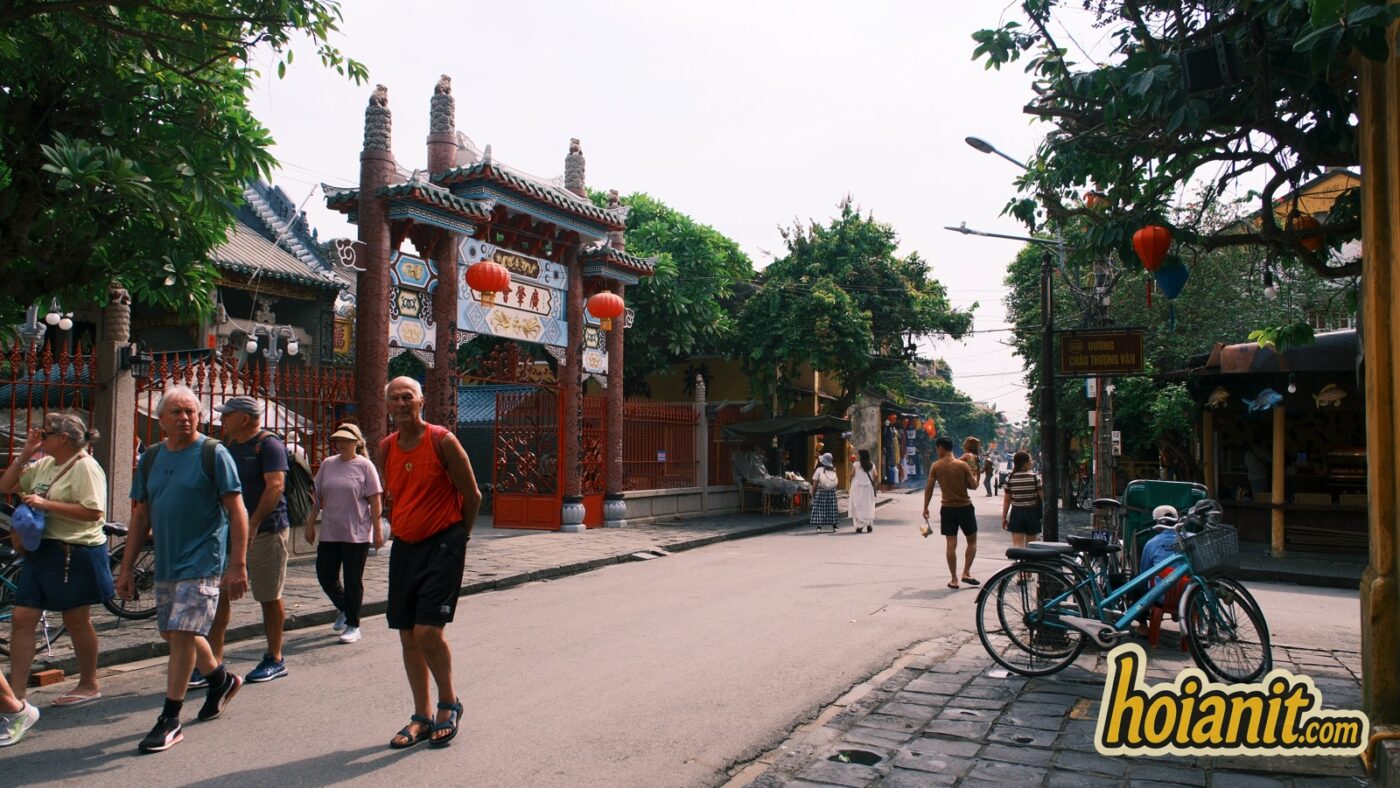
Almost nobody arrives at this hall on purpose. You come off the Japanese Covered Bridge, walk a hundred metres east on Tran Phu, and there is a green-and-red triple gate on your left with a pond and a dragon behind it. That accident of position makes it the most-entered hall in Hoi An — and the one visitors understand least, because the story here is not the usual sea-goddess story. Sometime around 1911 this community took their goddess off the main altar and put a general there instead.
- What an assembly hall is, and what this one is for
- Walking there from the bridge
- Ticket, hours and how long to stay
- 1885: a building shipped in pieces
- The god they swapped in 1911
- What to look at, in order
- Quan Cong, Red Hare and what people ask for
- Festival days worth planning around
- Best light and the three photo angles
- Which of the five halls to choose
- Frequently asked questions
The Cantonese Assembly Hall: what you are walking into
A Chinese assembly hall in Hoi An is a clubhouse before it is a temple. Merchants from one province pooled money to buy a plot, put up a hall, installed the deity who had kept their ships afloat, and used the building for everything a community abroad needs: arbitration, loans, funerals for men who died a thousand miles from their family graves, and the annual banquet that reminded everyone they were still one group.
This one belonged to traders from Guangzhou and Zhaoqing in Guangdong province, which is why its proper name is Quang Trieu hoi quan — the two place names run together. Vietnamese signage calls it hoi quan Quang Dong; English signage calls it the Cantonese Assembly Hall. Same building.
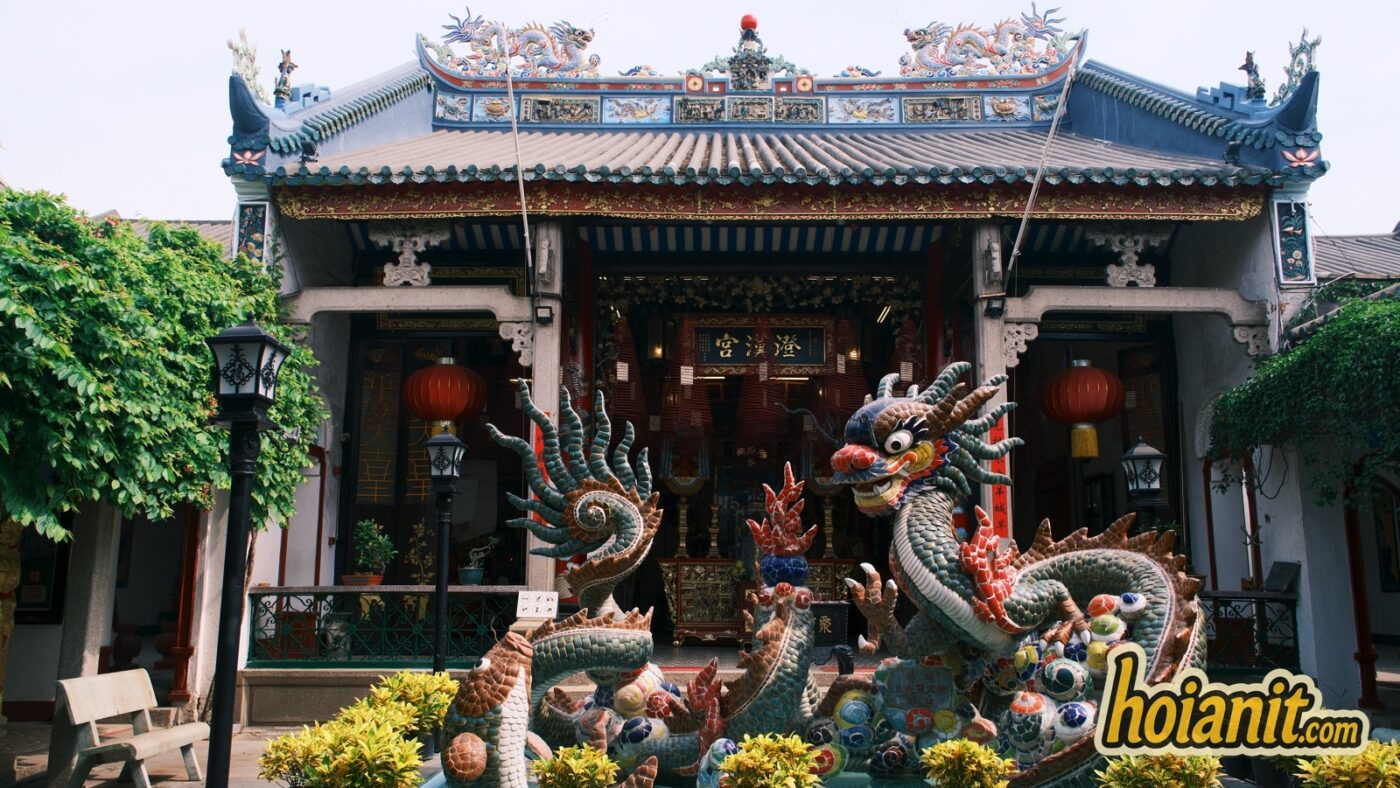
What sets it apart from the other four is the middle. Most halls run gate–hall–courtyard–hall in a dark line. Here the courtyard is the point: an open square with a pond, a carp turning into a dragon, and two full-size dragons built up from broken porcelain. It is the only hall in Hoi An where people sit down.

Walking to the Cantonese Assembly Hall from the bridge
Address 176 Tran Phu. From our shop at 84 Phan Chau Trinh it is 240 m, about 3 minutes on foot — down onto Tran Phu and west towards the Japanese Covered Bridge, hall on the left. From the bridge itself, turn your back on it and walk about 100 m east. There is no way to get this wrong.
- You walk, you do not ride. The Old Town core closes to motorbikes from 9:00 to 11:00 and 15:00 to 21:30 — the details are in our guide to the Old Town vehicle-free hours. Park outside the zone, or leave the bike with us for free and walk in.
- Pair it with the bridge. The Japanese Covered Bridge is 100 m away and the Fukien Assembly Hall is a five-minute walk further east, all on the same street.
- Coordinates: the hall sits at the western end of Tran Phu, on the north side, opposite a row of tailors.
Ticket, hours and how long to stay
There is no separate ticket for the Cantonese Assembly Hall. This is one of the twenty-one ticketed sites in the Old Town, and since 10 August 2026 each costs 20,000₫ per person, children under 16 free. Staff check tickets just inside the triple gate, so you cannot slip into the courtyard for photos without paying.
| Item | Detail |
|---|---|
| Adults, any nationality | 20,000₫ per site, since 10 August 2026 |
| Children under 16 | Free |
| Covers | This site only; each of the 21 ticketed sites is charged separately |
| Hours | Daytime only, generally about 7:30 to 17:30 |
| Time needed | 20–30 minutes |
The hours matter more here than at most sites. The streets outside stay busy until late, the lanterns come on, and people assume the halls are open too. They are not. If you want the main hall rather than a photograph of a lit gate, be inside before 17:00. Full mechanics of the ticket are in our guide to the Hoi An entrance ticket, and the newer machines in the smart ticket kiosks.
1885: a building that arrived in pieces
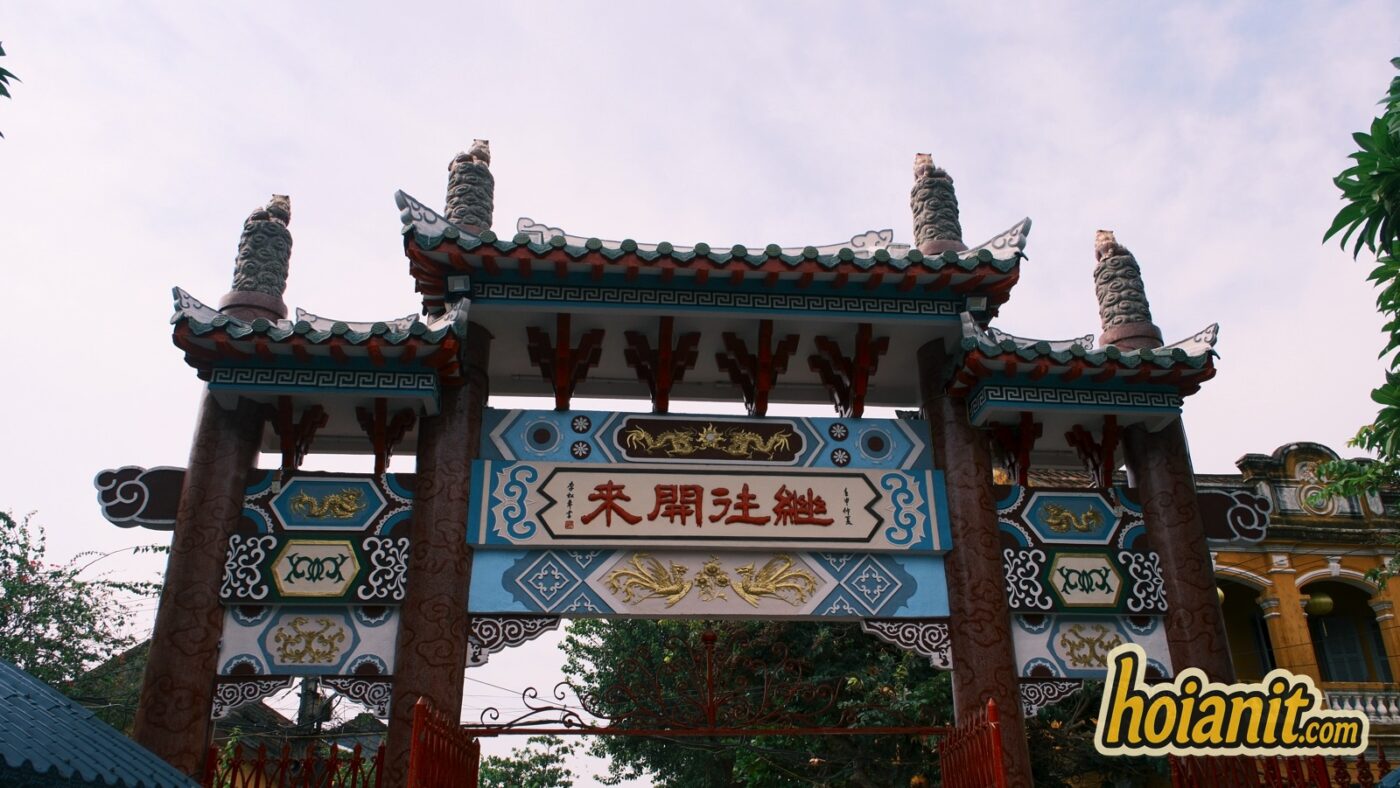
Cantonese merchants had been trading in Hoi An since the 1600s, but they were late to build. The Fujian and Chaozhou communities had their halls long before the Cantonese Assembly Hall went up in 1885, at the western end of Tran Phu, on the side of town nearest the bridge.
The community’s own account is that the timber columns and the carved stonework were made in Guangdong and shipped over ready to assemble. You can see the argument for it standing in the courtyard: the proportions, the glaze colours and the ceramic-shard work are noticeably more southern-Chinese than anything else in Hoi An, where most halls absorbed a good deal of Vietnamese carpentry.
The whole Old Town, this hall included, went on the UNESCO World Heritage list in 1999, which is what pinned the buildings in place and produced the ticket system you are now using.
A clubhouse that arrived by boat, already carved, and then changed its mind about which god was in charge.
The god they swapped in 1911
Here is the part that makes this hall different from every other one on the street. When it opened in 1885 the main altar belonged to Thien Hau Thanh Mau, the sea goddess, with Confucius alongside her — the standard arrangement for a community that lived by shipping.
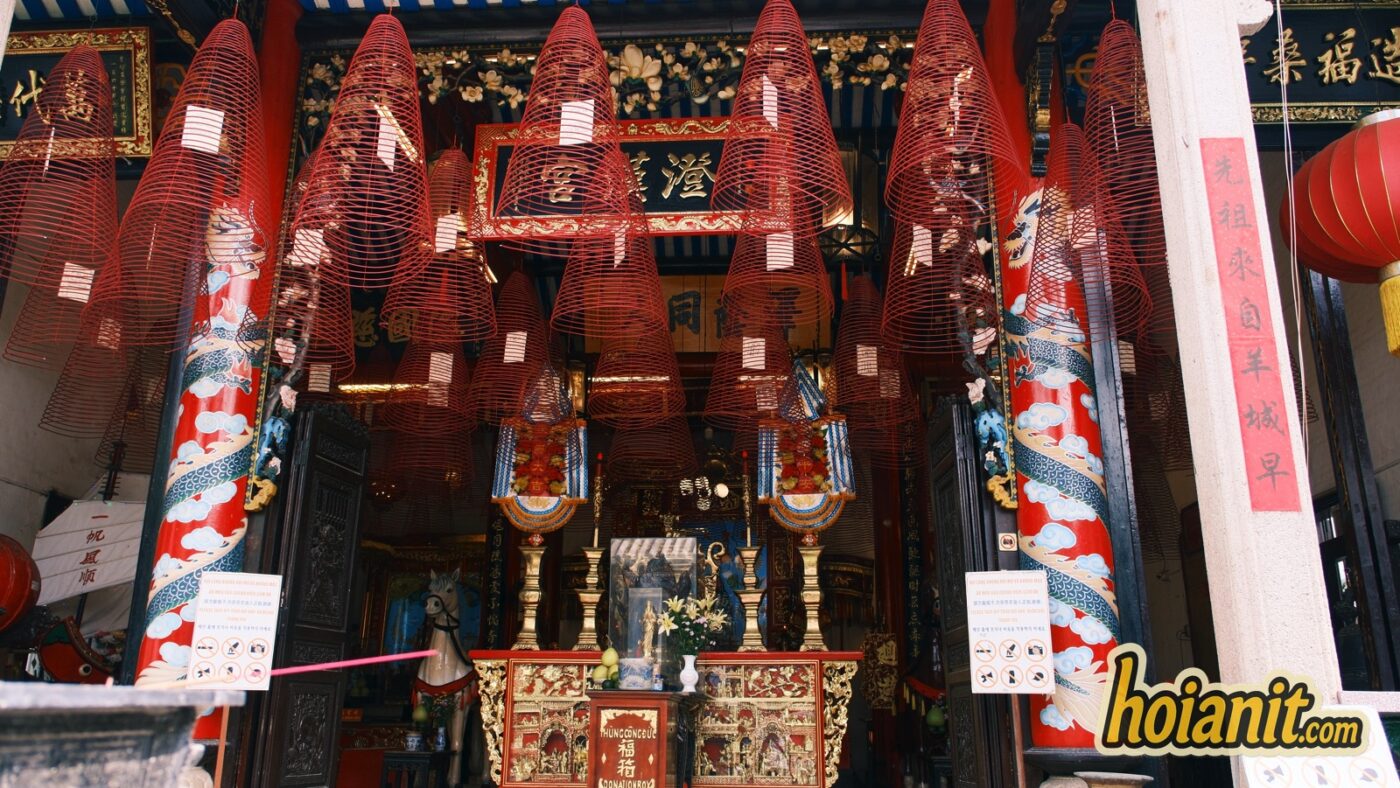
In 1911 they changed it. The Xinhai Revolution had just ended imperial rule in China, and the Cantonese community in Hoi An moved Quan Cong — the deified general Guan Yu — onto the main altar, together with the founding fathers of their own association. Thien Hau kept an altar; she just stopped being the reason people came.
Why a general instead of a goddess? Because by 1911 these families were no longer sailors, they were shopkeepers and financiers, and Quan Cong is the patron of the one thing a merchant sells before he sells anything else: his word. Loyalty, righteousness, keeping a promise. It is a quietly revealing swap — a community telling you, on its own altar, what it had become. Locals still sometimes call the place the Cantonese Quan Cong temple because of it.
What to look at, in order
The Cantonese Assembly Hall reads front to back in four stages. Do it in order and the twenty-five minutes make sense.
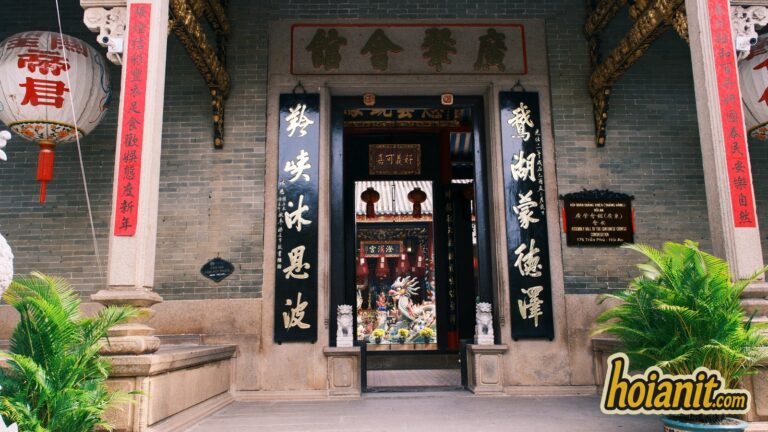
- The triple gate. Three openings, tube-tile roof, relief scenes from the Three Kingdoms in green and red. Photograph it from the far side of Tran Phu — from close up you cannot fit it in.
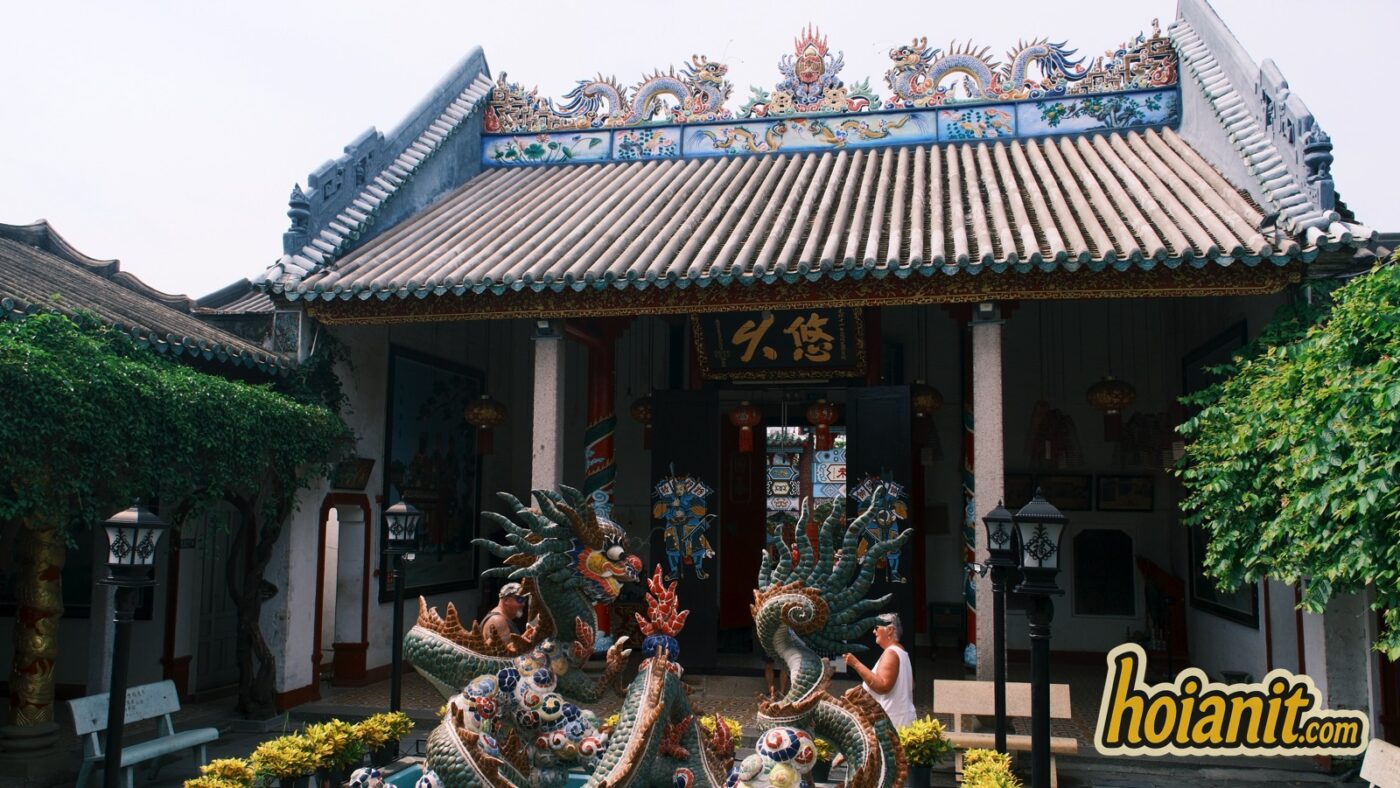
- The dragon courtyard. An open square with a pond, a carp turning into a dragon at its centre — the standard wish for a son passing the imperial exams — and two large dragons built up from thousands of broken porcelain fragments set in mortar. This is the picture everyone comes away with. Stone benches and potted trees make it the one shaded place to sit in the Old Town that is not selling you a coffee.
- The phuong dinh. The square open pavilion in the middle of the courtyard, with a stacked roof. Outdoor ceremonies and association meetings happened here rather than inside.
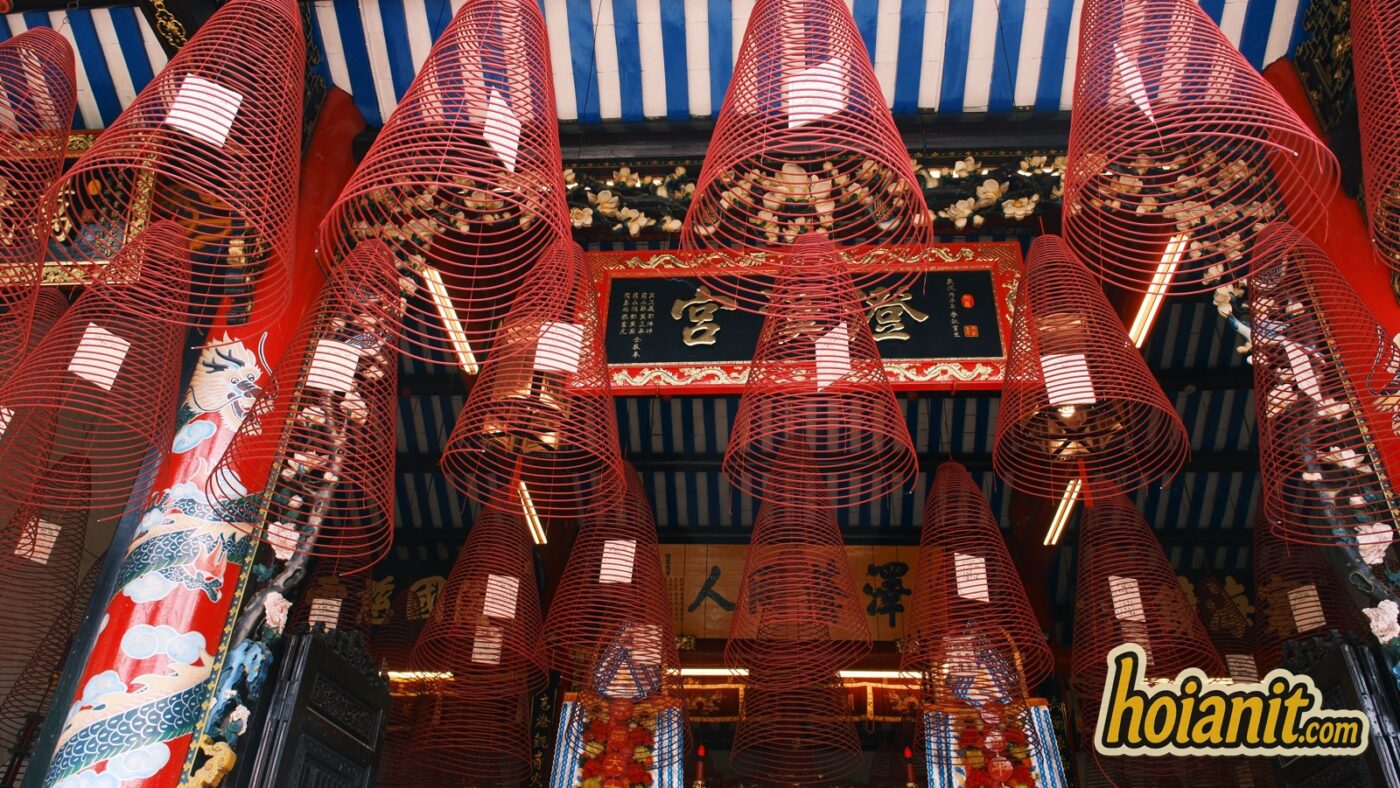
- The main hall. Quan Cong at the centre, flanked by Quan Binh and Chau Thuong, with a statue of Red Hare — his warhorse — and a white horse standing guard. Gilded parallel sentences, bronze incense burners and blue-glazed nineteenth-century jars.
- The rear court. Most visitors turn round at the main hall and miss it. Behind is a small yard with the altar of the association’s founders and a stone stele listing everyone who paid for the building. Read the length of that list and you get a better sense of how large the Cantonese community once was than any museum panel gives you.
Quan Cong, Red Hare and what people ask for
Guan Yu was a real general of the Three Kingdoms period, executed in 220 AD, and promoted over the following centuries into one of the most widely worshipped figures in the Chinese world. Merchants adopted him because his legend is built entirely on keeping his word under pressure.
What that means in the hall: people come to ask for trustworthiness in business and protection from bad faith — not for wealth directly. You will see Chinese-Vietnamese families and Hoi An locals lighting incense, shaking fortune sticks, and touching the mane of the Red Hare statue for luck on the way out.
Festival days worth planning around
| Occasion | Lunar date | What you get |
|---|---|---|
| Tet Nguyen Tieu | 15th of the 1st month | All five Chinese communities hold ceremonies; lanterns, lion dance, offerings. The Old Town is packed that night |
| Quan Cong’s day | 24th of the 6th month | The hall’s own big day — Cantonese-rite ceremony, sometimes lion dance or opera |
| Via Ba Thien Hau | 23rd of the 3rd month | A smaller rite for the goddess who lost the main altar in 1911 |
These are lunar dates and move against the Western calendar every year. If you want the association rather than the architecture, the 24th of the sixth month is the day to aim at.
Best light and the three photo angles
| When | What it is like | Verdict |
|---|---|---|
| 7:30–9:00 | Just open, courtyard empty, low sun through the gate | The best hour, by a distance |
| 9:00–11:00 | The bridge crowd arrives; a queue for the dragon photo | Avoid if you can |
| 15:30–17:30 | Soft light reaching into the main hall | Best for interior shots |
| After dark | Closed, but the gate is lit | Exterior only |
- The gate: from the opposite pavement, waiting for a gap in the bicycles.
- The courtyard: stand at the pavilion and shoot back towards the gate — pond, carp and gate all land in one frame.
- The main hall: no flash. Late-afternoon daylight is enough, and flash flattens the gilding to nothing.
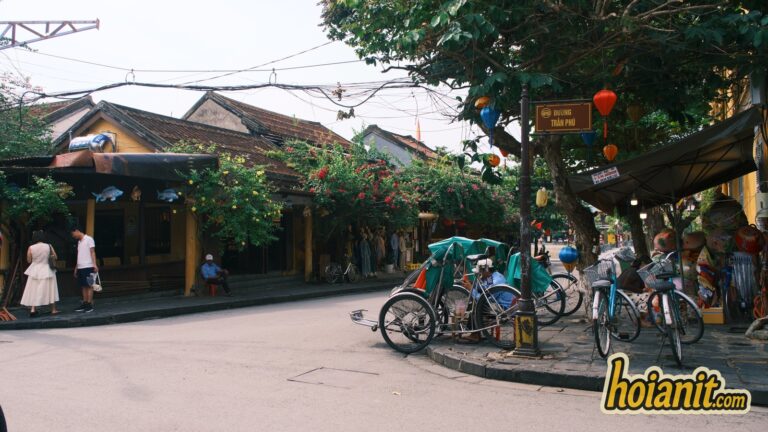
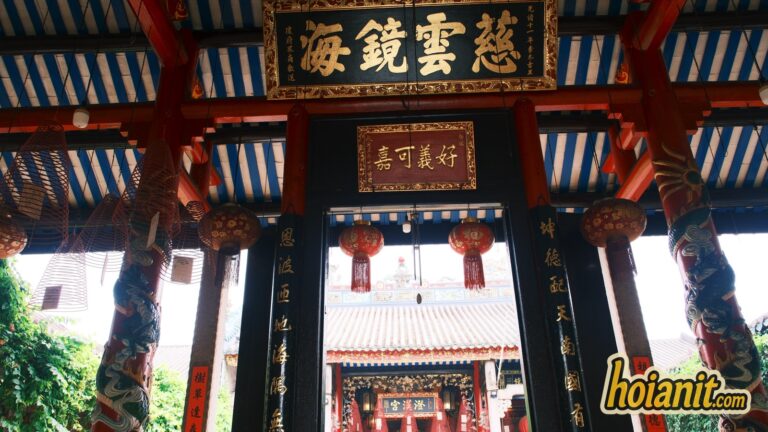
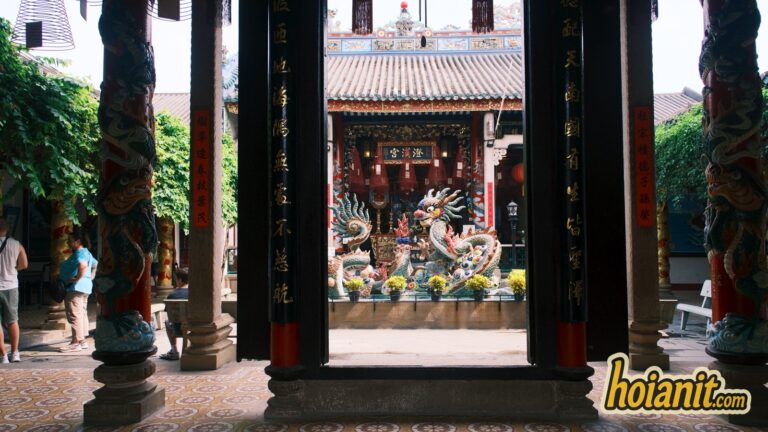
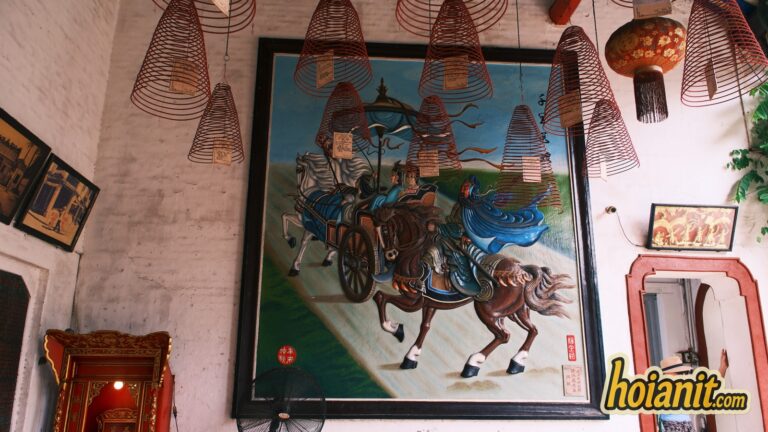
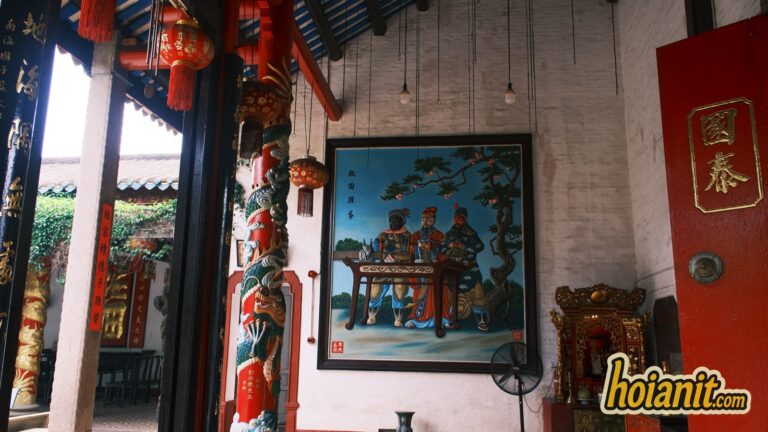
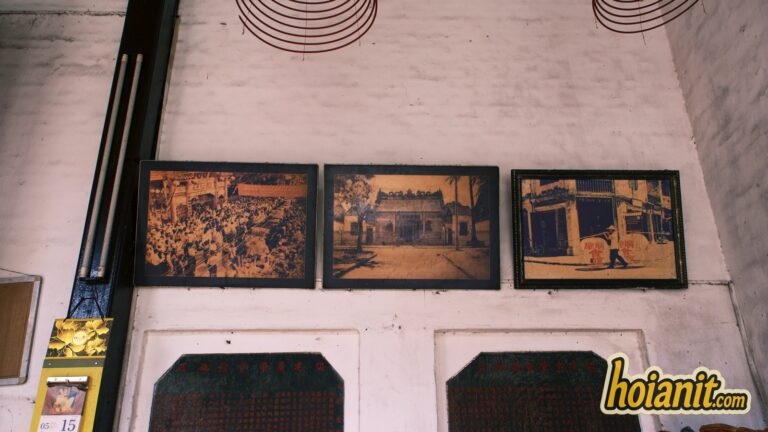
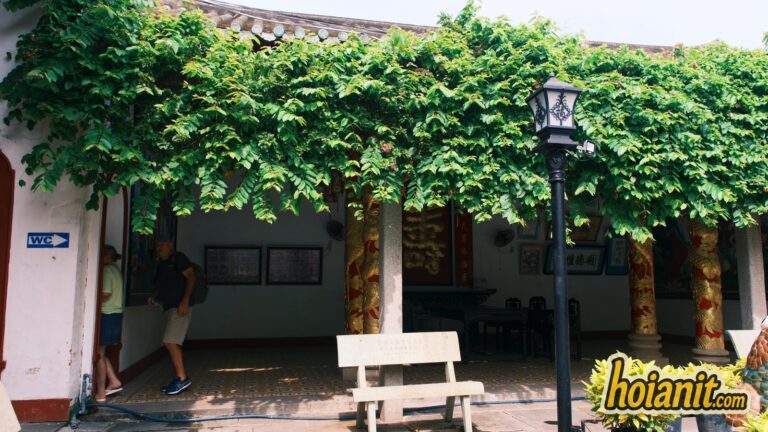
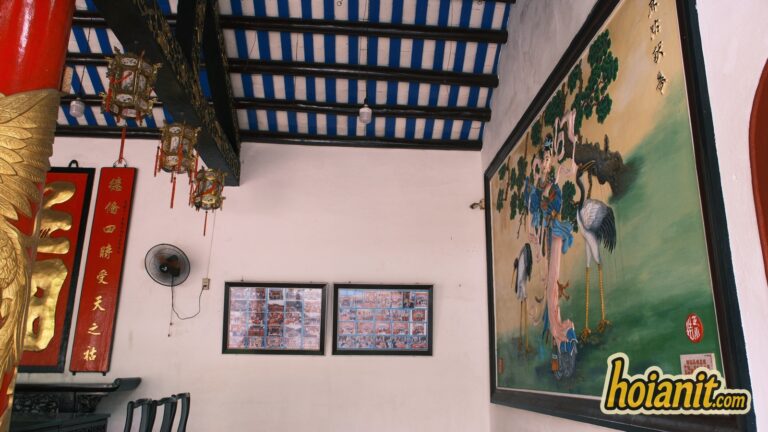
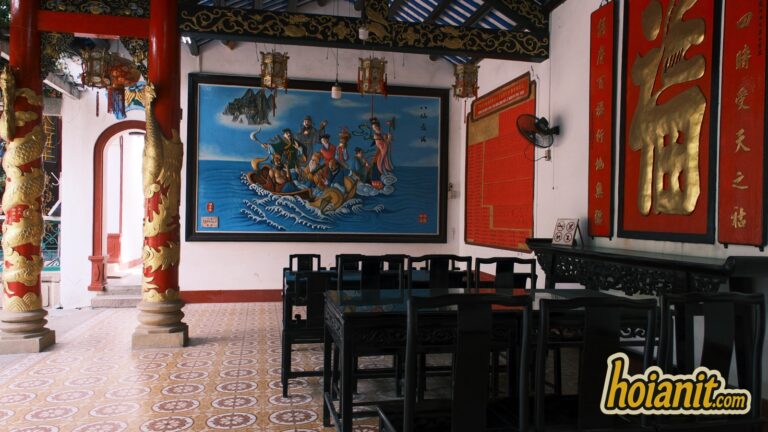
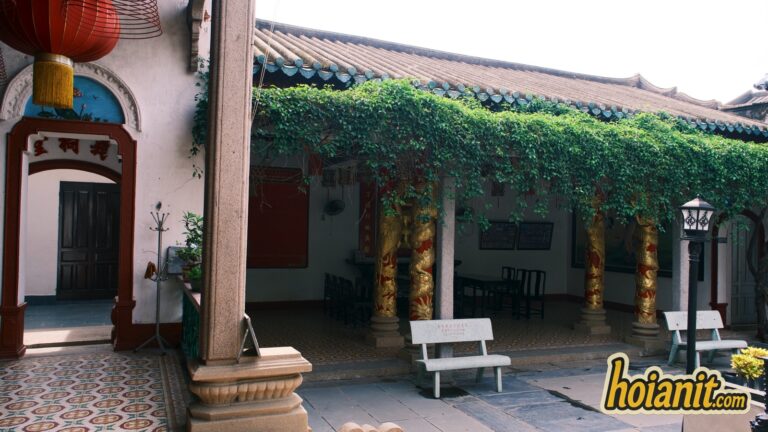
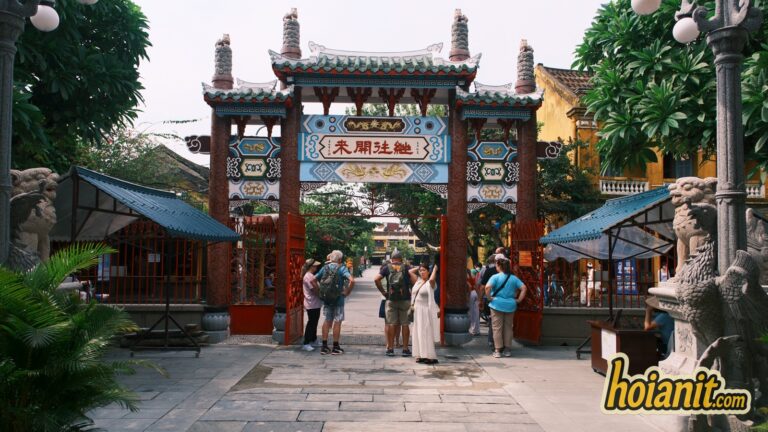
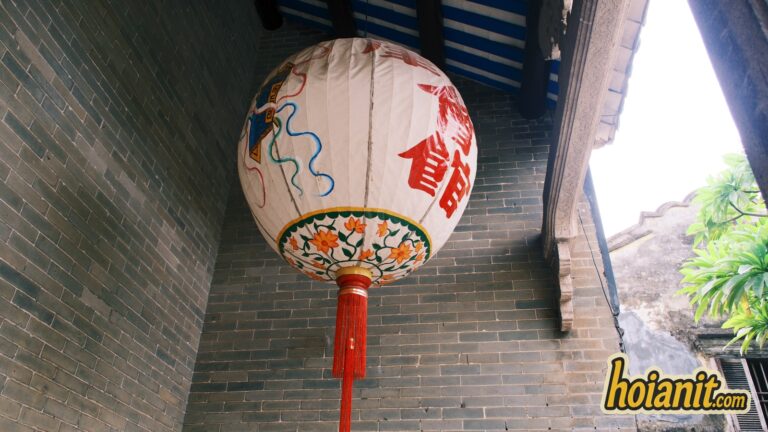
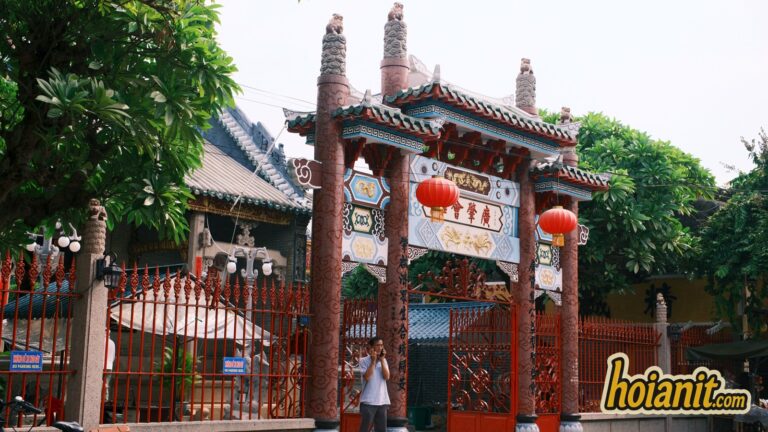
More of the hall: the street outside, the gate, the courtyards, the wall paintings, and the old photographs of Hoi An hung in the side rooms. Tap any picture to open it.
Which of the five halls to choose
| Hall | Address | Strength | Ticket |
|---|---|---|---|
| Cantonese (Quang Dong) | 176 Tran Phu | The courtyard, and it is next to the bridge | 20,000₫ |
| Fukien (Phuc Kien) | 46 Tran Phu | Biggest and most ornate; hanging incense coils | 20,000₫ |
| Trieu Chau (Chaozhou) | 157 Nguyen Duy Hieu | The finest woodcarving of the five; quiet | 20,000₫ |
| Hainan (Quynh Phu) | 10 Tran Phu | The 108 merchants story; sombre and quiet | Free |
| Chinese All-Community | 64 Tran Phu | Shared hall of all five groups; plain | Free |
With one morning, do the Cantonese Assembly Hall and the Fukien hall — five minutes apart on the same street and genuinely different in feel. With time for one, pick by what you like: courtyard here, scale and incense at Fukien, carving at Trieu Chau. And remember two of the five cost nothing, which is useful once the ticket is spent.
Done with the Old Town? Bike is three minutes away
We are 240 m from this gate at 84 Phan Chau Trinh. Leave the bike with us for free while you walk the ticket circuit, then ride out to An Bang, Cua Dai or the coconut forest when the heat drops. Scooters, semi-automatics, electric bikes and bicycles, with helmets, raincoats and a map showing the vehicle-free hours. Want something lighter? You can rent a scooter in Hoi An from 110,000₫ a day.
Cantonese Assembly Hall: frequently asked questions
Where is the Cantonese Assembly Hall in Hoi An?
At 176 Tran Phu, at the western end of the Old Town, about 100 m east of the Japanese Covered Bridge. From our shop at 84 Phan Chau Trinh it is 240 m, roughly 3 minutes on foot.
Do I need a ticket to go in?
Yes. It is one of the 21 ticketed sites, so entry costs 20,000₫ per person, the same for Vietnamese and foreign visitors since 10 August 2026; children under 16 go free. Staff check just inside the gate, so you cannot photograph the courtyard without paying the entry fee.
What time does the Cantonese Assembly Hall open?
Daytime only, generally about 7:30 to 17:30. It closes in the evening even though the streets outside stay busy, so go before 17:00 if you want to see the main hall.
Who is worshipped there?
Quan Cong, the deified general, together with the founders of the Cantonese association — since 1911. When the hall was built in 1885 the main altar belonged to Thien Hau, the sea goddess, and Confucius; Thien Hau still has an altar.
When was it built?
In 1885, by merchants from Guangzhou and Zhaoqing in Guangdong province, which is why its Vietnamese name is Quang Trieu hoi quan. By the community’s own account, the timber and stonework were made in Guangdong and shipped over to be assembled here.
How long does a visit take?
Twenty to thirty minutes: gate, courtyard with the carp-and-dragon pond, the pavilion, the main hall and the rear court with the donors’ stele. Add ten minutes if you sit down in the courtyard, which is worth doing.
Which festivals are held there?
Tet Nguyen Tieu on the 15th of the first lunar month and Quan Cong’s day on the 24th of the sixth lunar month are the two big ones, with ceremonies and sometimes a lion dance. There is also a smaller rite for Thien Hau on the 23rd of the third lunar month.
Is the Cantonese Assembly Hall better than the Fukien one?
Different, not better. Fukien is bigger, more ornate and heavier with incense; this one has the only real courtyard, the ceramic dragons and the 1911 story. If you can enter two halls, do both — they are five minutes apart.








Pick your ride in Hoi AnChọn xe cho chuyến đi Hội An
Scooters, electric bikes and bicycles from one shop in the Old Town — delivered to your hotel, helmets and roadside help included.Xe máy, xe điện và xe đạp — giao tận khách sạn, kèm hai nón bảo hiểm và hỗ trợ dọc đường.
Not sure which one fits? Message us on WhatsApp and we’ll recommend a bike for your plans.
Chưa biết chọn xe nào? Nhắn Zalo 0935 439 306, tụi mình tư vấn theo lịch trình của bạn.