
Riding Rules & Licenses
Confucius Temple Hoi An: Free Entry, What To See & The Wrong Date Everyone Repeats
Free to enter · 7 minutes’ walk from the Japanese Bridge · and three different Confucian sites that almost every guide online confuses with each other
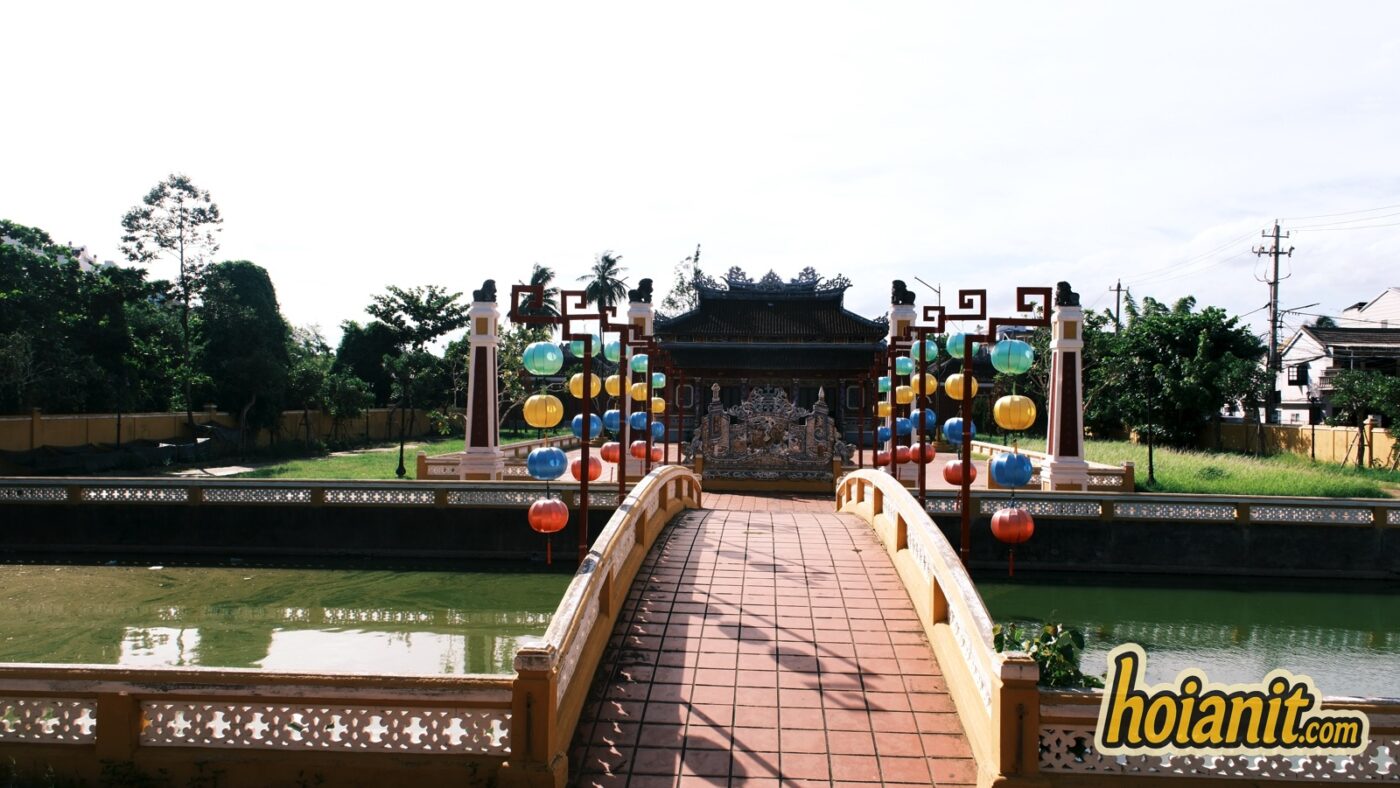
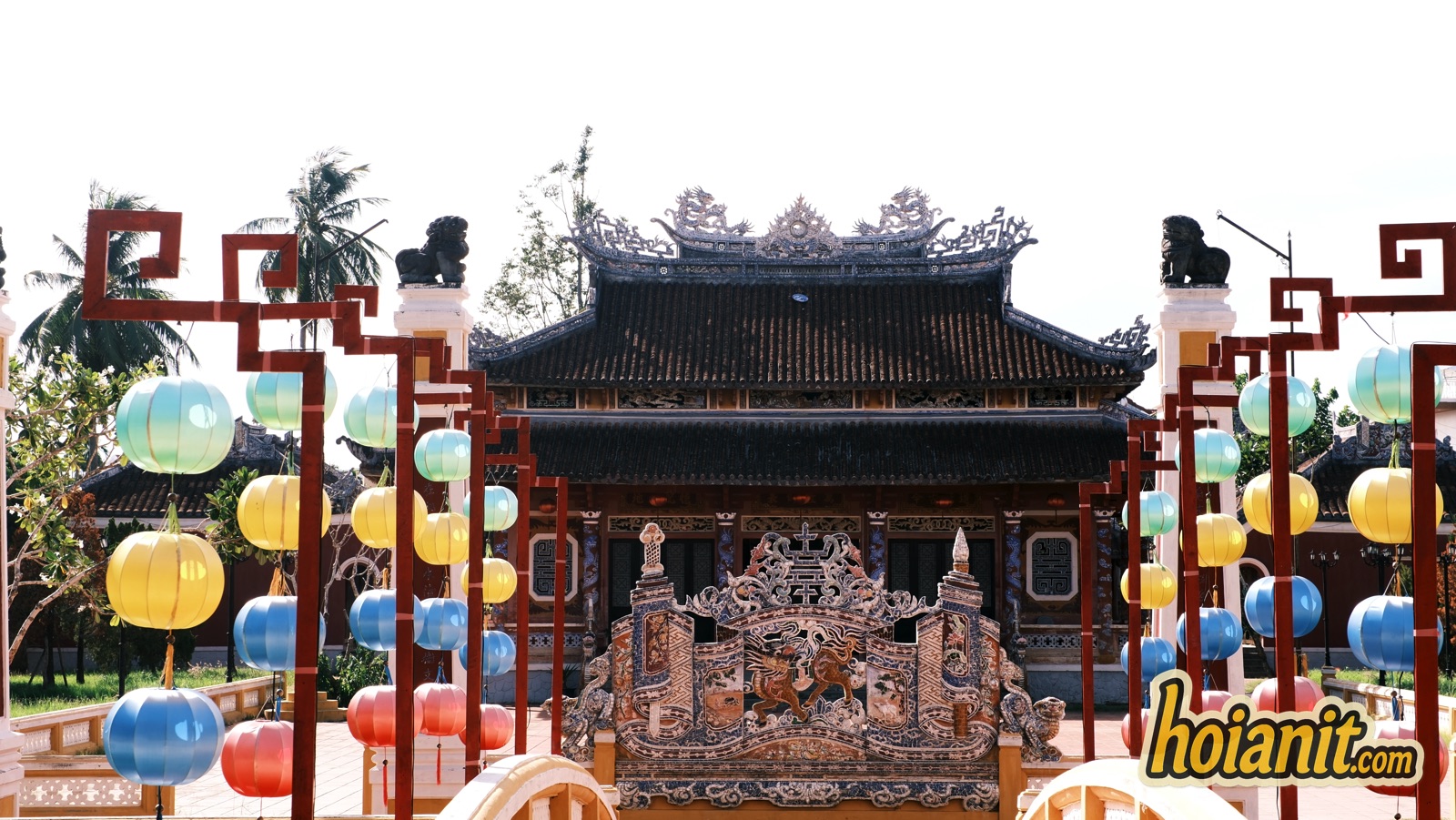
Walk northwest along Tran Hung Dao and you’ll pass a big lotus pond with a half-moon bridge and a heavy tiled gate behind it. That’s the Confucius Temple, and you can walk straight in without a ticket. Most English-language pages will tell you it was built in the late 18th century. It wasn’t — it was built in 1961, and the reason that matters is the whole story. This guide covers what you’ll actually see, how to get there, and how to tell the three Confucian sites in Hoi An apart.
- Three Confucian sites, not one — how to tell them apart
- Why most English guides give the wrong date
- Getting there, opening hours and tickets
- What you’ll actually see
- The 86 pines and the screen wall
- The memorial pillar across the road
- Why a temple built in 1961 is interesting at all
- Etiquette and photography
- What else is within walking distance
- Frequently asked questions
Three Confucian sites, not one — how to tell them apart
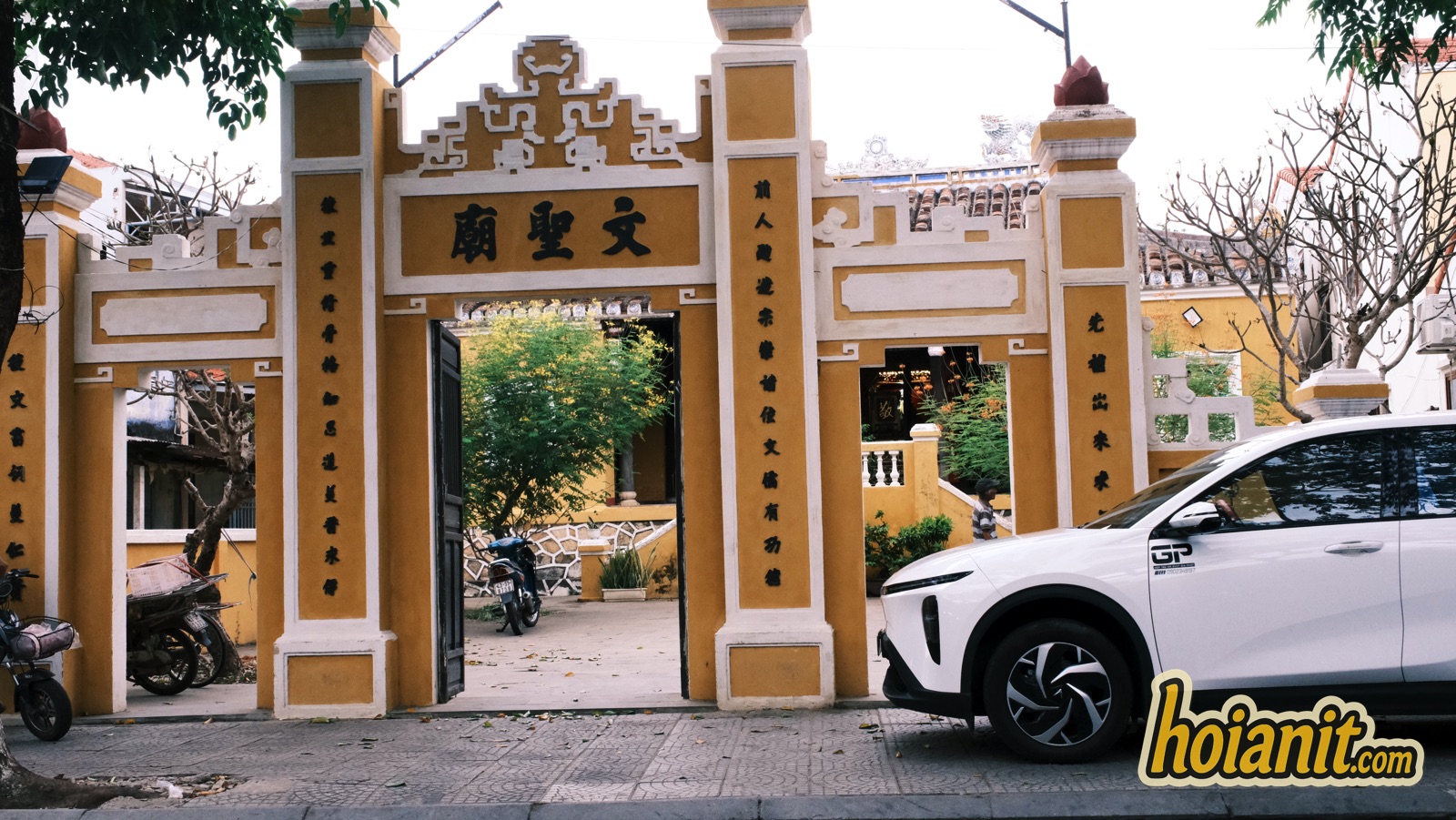
This is where nearly every English-language page goes wrong, so it’s worth two minutes. Hoi An has three surviving places of Confucian worship, all three listed as provincial heritage sites. They are completely different in age, scale and purpose.
| Confucius Temple | Cam Pho Van Thanh Mieu | Minh Huong Van Chi | |
|---|---|---|---|
| Vietnamese name | Khổng miếu | Văn Thánh miếu Cẩm Phô | Văn chỉ Minh Hương |
| Address | 122 & 161 Tran Hung Dao | 32 Hung Vuong | Inside the old town |
| Built for | The whole province | Cam Pho village | Minh Huong village |
| Built | 1961, finished in 2 years | Unknown; oldest object 1850 | Begun 1867, finished 1868 |
| Listed | Provincial, 2013 | Provincial, 2011 | Provincial, 2023 |
| Spot it by | Big lotus pond on the street | Raised 1.5 m platform, yin-yang tiles | Stone stele inscribed 1871 |
The one on Tran Hung Dao with the lotus pond is the province’s temple — big, modern, free, easy to find. The other two are village shrines: much older, much smaller, often locked outside festival days. If a guide sends you to “the Confucius Temple,” they mean the first one.
Why most English guides give the wrong date
You’ll read online that Hoi An’s Confucius Temple was “constructed in the late 18th century and restored in 1879, 1913, 1929.” Those restoration dates are real — but they belong to a different building. The 1913 restoration is recorded on the ridge beam of the Cam Pho village shrine on Hung Vuong, half a kilometre away.
The temple on Tran Hung Dao was documented by the Hoi An Centre for Cultural Heritage Management and Preservation: fundraising began in September 1960, construction started in January 1961, and it was completed within two years. The temple’s own founding society published the details in 1962.
So if a sign, a guide or a blog tells you you’re standing in an 18th-century temple, you’re not. What you’re standing in is something arguably more interesting, and section 07 explains why.
Getting there, opening hours and tickets
- It’s free. The temple sits outside the boundary where the old town entrance ticket is checked, so you don’t need to buy anything.
- From the Japanese Bridge: about 500 m northwest, roughly 7 minutes on foot.
- From the central market: about 1 km straight along Tran Hung Dao.
- Two street numbers. 161 is the temple; 122 is the memorial pillar directly opposite. Both are part of the same listed site — don’t skip the second one.
- By motorbike or bicycle: Tran Hung Dao is a normal road, not a pedestrian street, so you can ride there at any hour. There’s space to park inside the grounds.
- Best light: early morning. By midday you’re shooting into the sun across the pond.
- Opening hours are daylight hours and are not formally published. It’s a working heritage site rather than a museum, so treat the gate as the source of truth.
What you’ll actually see
The layout runs in a fixed sequence, and it was designed that way in one go — the plans were drawn by Ton That Sa, a well-known artist and architect from Hue.
| Order | What it is | Look for |
|---|---|---|
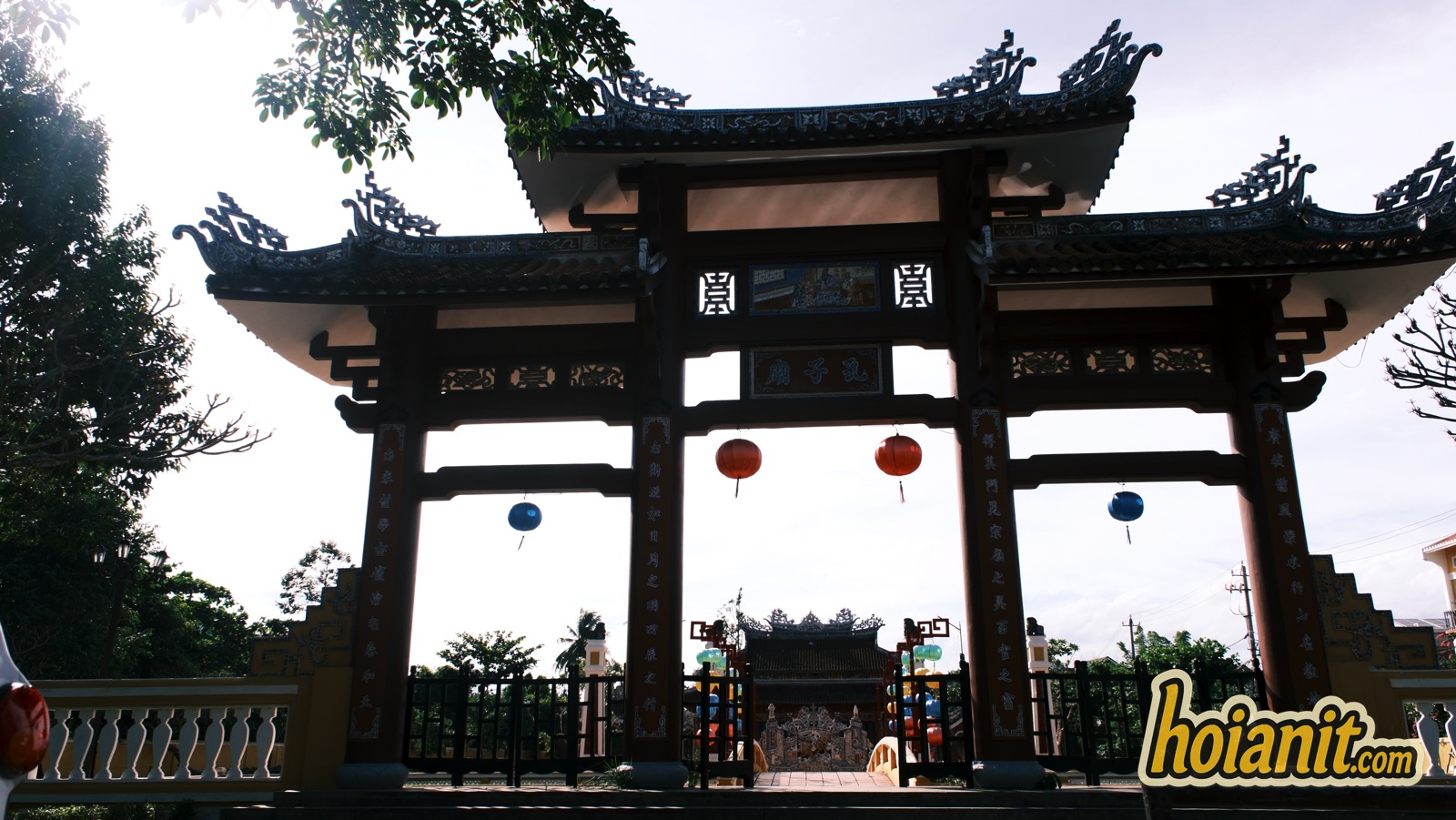
| 1 | Triple gate | Modelled on the Que Li gate at the Confucius Temple in Qufu, Shandong — Confucius’s birthplace. Carved panel of “Confucius teaching” |
| 2 | Lotus pond and half-moon bridge | The bridge is the only way into the courtyard, by design |
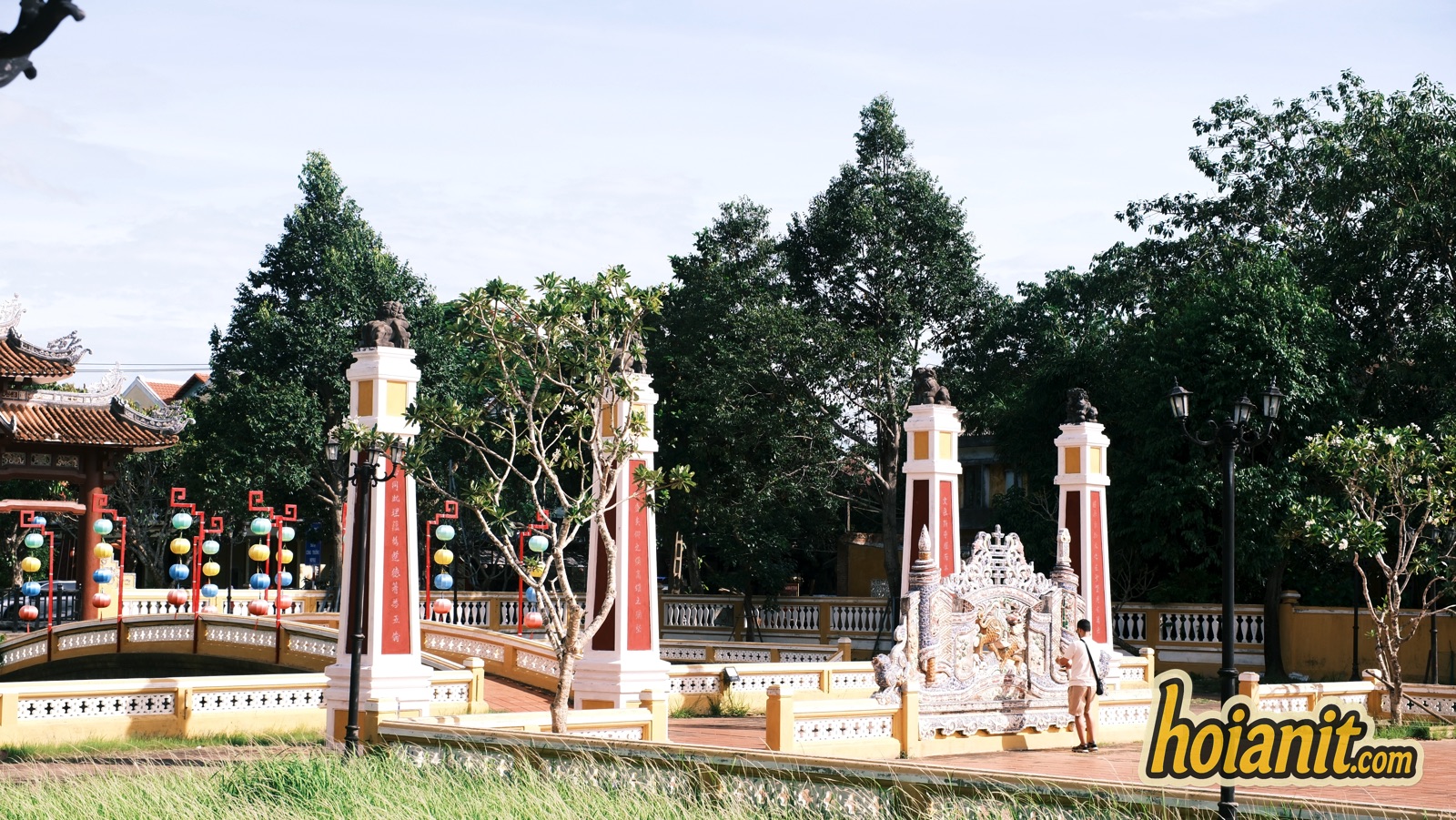
| 3 | Spirit screen | Carved with a long ma — a dragon-horse. Sides show a fisherman, woodcutter, ploughman and herdsman |
| 4 | Four pillars | A reclining ky lan (Chinese unicorn) on top of each |
| 5 | Courtyard | Originally planted with exactly 86 pines — see the next section |
| 6 | Front hall | Ceremonial preparation. Dragon-wrapped columns inlaid with porcelain shards |
| 7 | Great Achievement Hall | The main sanctuary, with the effigy of Confucius |
The couplets carved down every pillar are worth a look even if you can’t read them. The pair on the outer gate pillars begins with the characters Quang and Nam — the province’s own name — and goes on to put the Marble Mountains and the Sai Thi river on the same footing as Confucius’s home ground in Shandong. It’s a local boast hidden inside a classical form.
The 86 pines and the screen wall
The courtyard is a list of names
The original design called for exactly 86 pine trees. That’s 4 + 10 + 72: the Four Correlates, the Ten Philosophers and the Seventy-Two Disciples — the men credited with carrying Confucius’s teaching forward after his death.
One tree per person. Whoever drew the plan turned the entire courtyard into a roll call, which is a quietly elegant idea for a space most visitors cross in thirty seconds.
The spirit screen you walk around is doing something similar. The four scenes on its faces — fisherman, woodcutter, ploughman, herdsman — each stand for a specific historical figure: Jiang Ziya, Zhu Maichen, Yi Yin and Li Mi. What they have in common is that all four did manual work before they rose. Putting them on the first thing a visitor has to walk around is a deliberate message to the local children this place was built for.
The memorial pillar across the road
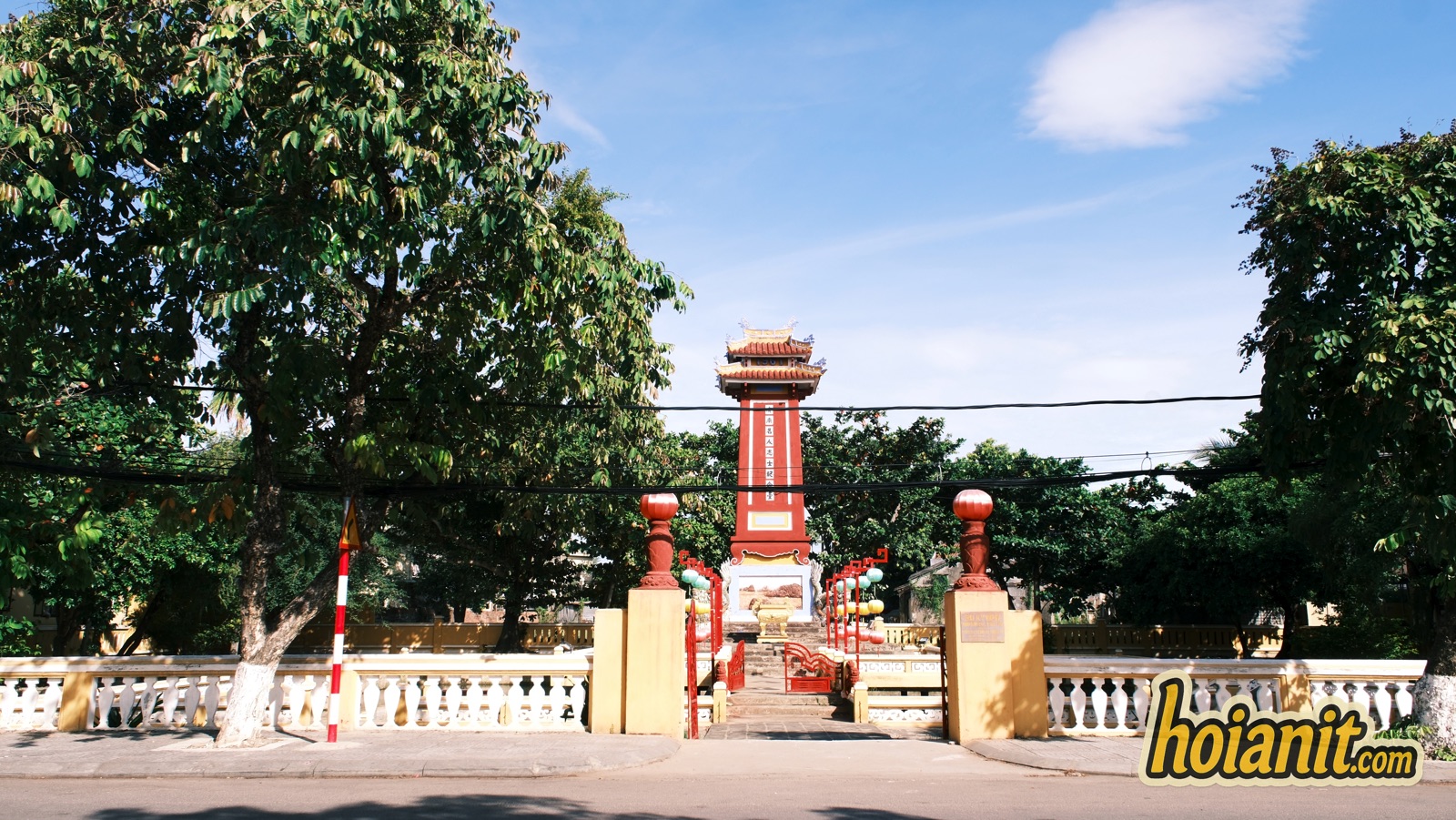
At 122 Tran Hung Dao, directly opposite, stands the Quang Nam Memorial to Distinguished Scholars and Patriots — a four-sided tower on a stone pier in its own lotus pond. Most visitors photograph the temple and leave without crossing the street, which is a shame, because the base is the more unusual object.
Its four faces carry relief panels of four landmarks of old Quang Nam province:
| Relief | Note |
|---|---|
| Marble Mountains | Now in Da Nang — full visiting guide here |
| Hai Van Pass gate | The old fortified pass north of Da Nang |
| Nong Son coal mine | Not scenery — industry |
| Cham Islands bird caves | The traditional swiftlet-nest harvest |
Three landscapes and a coal mine. In 1961, on a monument in a Confucian idiom, someone chose to say that Quang Nam was mountains, a mountain pass, an island — and a working colliery. That is not a conventional thing to carve.
Why a temple built in 1961 is interesting at all
Here’s the part the “18th century” claim erases.
Quang Nam province did have an old Confucian temple: the Van Mieu at Thanh Chiem, recorded in the Nguyen dynasty’s own imperial geography. It moved twice because the river ate its foundations, settling on its final site in 1835. Then:
- 1885 — burnedFrench troops attacked Quang Nam and burned the temple down.
- 1890 — rebuiltThe province funded materials, appointed thirty caretakers and set aside two mau of communal rice land to support them.
- The tablets were carried offDuring the Nghia Hoi uprising led by Nguyen Duy Hieu, the insurgents removed every spirit tablet from the temple and installed them in their own Van Mieu inland at Que Son. They refused to let men who had sided with the French perform the rites.
- c. 1947 — gone for goodFrench forces landed at Vinh Dien. Under the scorched-earth policy of the resistance, the temple was demolished so it could not be occupied.
Thirteen years later, in September 1960, a private society of elderly Confucian scholars — the Quang Nam Antiquities Society, successor to the old provincial literati association — raised money to build a replacement in Hoi An.
Most Confucian temples in Vietnam were built by the imperial court. This one wasn’t. It was funded by a private club of old scholars, on communal village land, at a moment when Confucian learning had lost its official function entirely — Vietnam’s last classical examination was held in 1919, forty-one years before they broke ground.
It isn’t a monument built by power. It’s a monument built by regret.
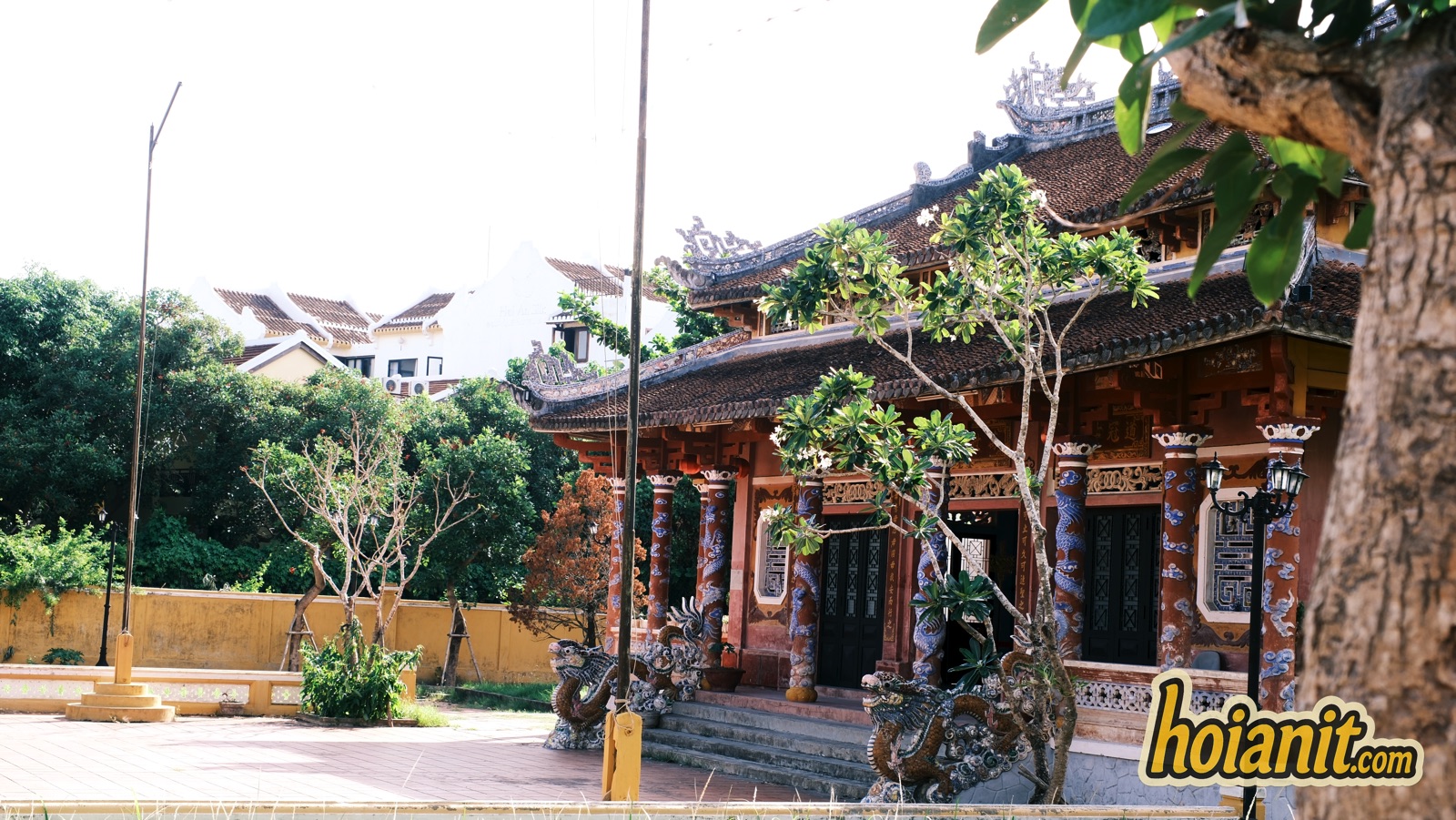
So the temple is only sixty-five years old. The institution behind it is centuries old and was destroyed twice by war. That’s the thing to hold in your head while you’re crossing the bridge.
Etiquette and photography
- Dress modestly — covered shoulders, and shorts or skirts to the knee — before entering the halls.
- Take your shoes off at the threshold of the sanctuary.
- Don’t photograph anyone mid-ceremony. Architecture is fine.
- Don’t climb on the pillars or sit on the bridge parapet. It’s a listed monument, not a park.
- No picnics in the grounds.
- Keep your voice down. There are usually a few local people around, and it’s a quiet place.
- If the gate is shut, it’s shut. The village shrines in particular are often locked outside ceremony days.
What else is within walking distance
The temple sits in the old Cam Pho quarter, just outside the ticketed core. Within a few hundred metres there is a genuinely unusual concentration of active places of worship from five different traditions — all still in use, none of them museums:
| Place | Address | Tradition |
|---|---|---|
| Protestant Church | 114 Phan Chau Trinh | Protestant — service times and history |
| Catholic Church | 106 Nguyen Truong To | Catholic, 400 years of history |
| Cao Dai Temple | 88 Hung Vuong | Cao Dai, Tay Ninh branch |
| Second Cao Dai Temple | Tran Cao Van | Founded 1952, original 1950s architecture |
| Cam Pho Van Thanh Mieu | 32 Hung Vuong | Confucian village shrine |
None of this is an accident. Hoi An was an international trading port for several centuries, and ports pull in people from everywhere, each bringing what they believe. Visitors come for the lanterns and the old houses; the thing sitting a street away is better evidence of how open this town actually was.
Getting around Hoi An
We rent motorbikes, scooters and electric bikes, delivered to your hotel with two helmets and roadside support. Our shop is at 84 Phan Chau Trinh, in the same quarter as everything on this page.
84 Phan Chau Trinh, Hoi An · open dailyIf you’d rather have someone read the Chinese couplets out loud for you instead of guessing, there are guided walking tours of the old town — check dates and book at Hoi An walking tours on GetYourGuide. That’s an affiliate link: it costs you nothing extra, and we earn a small commission if you book through it.
Frequently asked questions
Is the Confucius Temple in Hoi An free to visit?
Yes. The temple stands on Tran Hung Dao street, outside the boundary where the Hoi An old town entrance ticket is checked, so you can walk in without buying anything. It is a working heritage site rather than a museum, so dress modestly, remove your shoes before entering the halls, and do not eat or picnic in the grounds.
How old is the Confucius Temple in Hoi An?
It was built in 1961 and completed within two years, not in the 18th century as many English-language pages state. Fundraising by the Quang Nam Antiquities Society began in September 1960 and construction started in January 1961. The confusion arises because the restoration dates often quoted, including 1913, belong to the older Cam Pho village shrine on Hung Vuong street half a kilometre away.
How many Confucian temples are there in Hoi An?
Three survive today and all three are listed as provincial heritage sites. The Confucius Temple at 122 and 161 Tran Hung Dao was built by the province in 1961. The Cam Pho Van Thanh Mieu at 32 Hung Vuong is the Cam Pho village shrine, whose oldest object dates from 1850. The Minh Huong Van Chi inside the old town is the Minh Huong village shrine, begun in 1867 and listed in 2023.
How do I walk there from the Japanese Bridge?
Head northwest along Tran Hung Dao for about 500 metres, which takes roughly seven minutes. The temple is at number 161 and the memorial pillar is at number 122 directly opposite. Both are part of the same listed site. Tran Hung Dao is a normal road rather than a pedestrian street, so you can also ride there at any hour and park inside the grounds.
What is the memorial pillar opposite the temple?
It is the Quang Nam Memorial to Distinguished Scholars and Patriots, a four-sided tower on a stone pier in a lotus pond at 122 Tran Hung Dao. The four faces of its base carry relief panels of the Marble Mountains, the Hai Van Pass gate, the Nong Son coal mine and the bird caves of the Cham Islands. Most visitors miss it because they do not cross the road.
Why were 86 pine trees planted in the courtyard?
The number is 4 plus 10 plus 72, standing for the Four Correlates, the Ten Philosophers and the Seventy-Two Disciples who carried Confucius’s teaching forward. The original design called for one pine for each of them, turning the courtyard into a roll call of names rather than simple landscaping.
Who designed the temple?
The plans were drawn by Ton That Sa, a well-known artist and architect from Hue, in a classical East Asian idiom. The triple entrance gate was deliberately modelled on the Que Li gate that stands before the Confucius Temple at Qufu in Shandong, China, the philosopher’s birthplace.
What happened to the older provincial Confucian temple?
The Van Mieu at Thanh Chiem moved twice because of river erosion before settling on its final site in 1835. French troops burned it in 1885 and the province rebuilt it in 1890. During the Nghia Hoi uprising the insurgents removed every spirit tablet and installed them at their own temple at Que Son, refusing to let those who had sided with the French perform the rites. Around 1947 the building was demolished under the scorched-earth policy of the resistance.
Is it worth visiting?
Allow twenty to thirty minutes, including the memorial across the road. It suits travellers who want a quiet, free, uncrowded stop a short walk from the old town, and who find it interesting that a temple can be sixty-five years old while the institution behind it is centuries old and was destroyed twice by war. Visitors looking mainly for ancient buildings may prefer the assembly halls inside the ticketed zone.
Updated August 2026. Historical detail comes from the inventory files and research papers of the Hoi An Centre for Cultural Heritage Management and Preservation, from the researcher Phu Binh writing in Quang Nam newspaper, and from the Quang Nam Antiquities Society’s own 1962 publication. Opening hours are not formally published and the site is managed locally, so treat times as indicative. There is a fuller Vietnamese version of this article at Khổng miếu Hội An.
— Anh Khoa, Hoi An local








Pick your ride in Hoi AnChọn xe cho chuyến đi Hội An
Scooters, electric bikes and bicycles from one shop in the Old Town — delivered to your hotel, helmets and roadside help included.Xe máy, xe điện và xe đạp — giao tận khách sạn, kèm hai nón bảo hiểm và hỗ trợ dọc đường.
Not sure which one fits? Message us on WhatsApp and we’ll recommend a bike for your plans.
Chưa biết chọn xe nào? Nhắn Zalo 0935 439 306, tụi mình tư vấn theo lịch trình của bạn.