
Hoi An Travel Tips, Useful Information
Hoi An on a Rainy Day (2026): What Locals Actually Do
Hoi An on a Rainy Day (2026): What Locals Actually Do
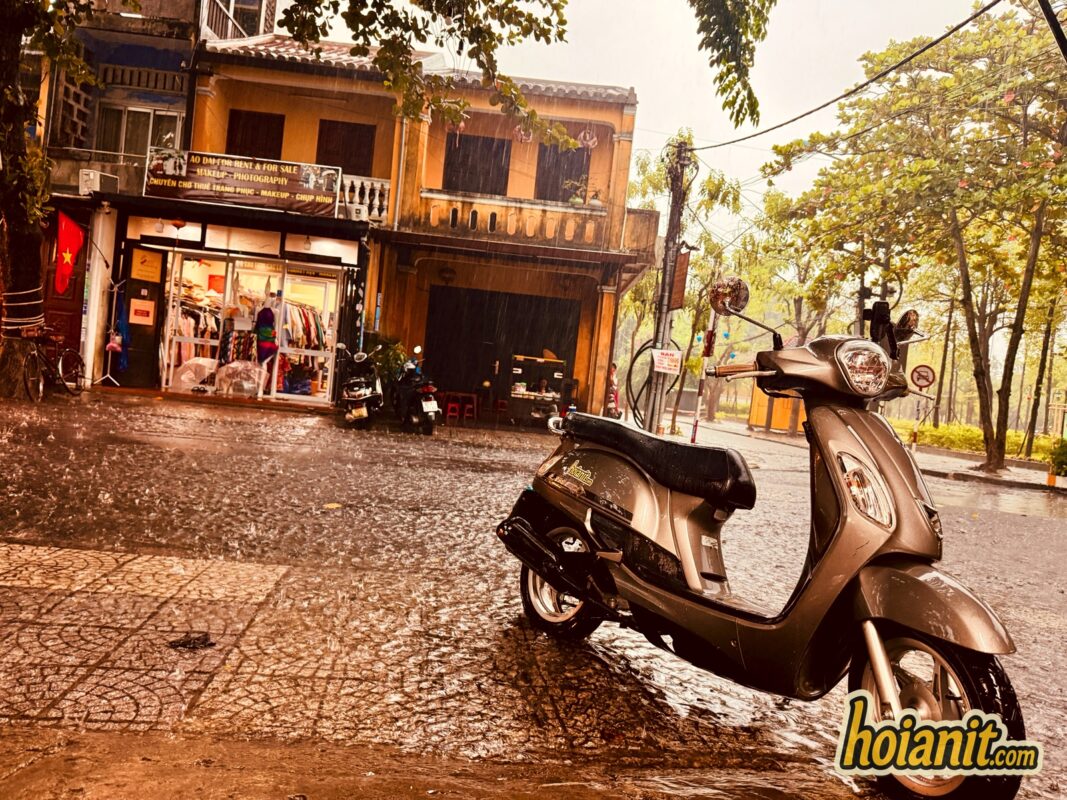
A Hoi An rainy day is not a lost day. Here is the local playbook: what works under a roof, what each stop costs since the 2026 ticket change, and how to tell ordinary rain from a flood day.
Rain in Hoi An is not a malfunction, it is a season. From roughly September to January the town gets its yearly soaking, and even in the dry months a June afternoon can dump an hour of theatrical tropical rain and then act as if nothing happened. Travellers message us in a small panic: the forecast shows rain all week, is the trip ruined? No. Some of our favourite versions of this town only exist in the rain. You just need a different plan, and an honest one, because there is also a specific kind of rainy day when the right answer is to change your plans entirely.
- The two kinds of Hoi An rainy day
- A rainy day plan, morning to night
- Cooking classes: the classic rain move
- Lanterns, pottery and the craft workshops
- Old houses and museums, 20,000₫ a door
- The café crawl and the tailor day
- The spa afternoon and VinWonders
- Getting around in the rain
- Flood days: the honest section
- FAQ
If your dates fall in late October or November, read our Hoi An flood season guide as well. It covers which streets go under, where to stay and whether to move your dates.
The two kinds of Hoi An rainy day
Kind one: ordinary rain. Grey sky, steady drizzle or dramatic bursts, streets wet but still streets. This is almost every rainy day, and everything in this guide applies. The Old Town is arguably prettier like this: lantern light doubles itself in the wet paving, the tour groups thin out, and café windows become front-row seats.
Kind two: flood rain. A few times most years, usually October or November, a storm system parks offshore and the Thu Bon river climbs into the riverside streets. Bach Dang goes under first, then sometimes Nguyen Thai Hoc and Tran Phu. Locals move furniture upstairs with practised calm and boats appear on what was yesterday a road. That is not a sightseeing day; skip to the flood section for what to do instead.
Which kind you get depends heavily on the month. These are the monthly averages we use across the site, from our Hoi An weather month by month guide:
| Months | Average rain | What a Hoi An rainy day looks like |
|---|---|---|
| February–April | 30–34 mm | Rare. A shower is news, and it is over before your coffee is |
| May–August | 56–104 mm | Short, hard afternoon storms around 3 pm that clear in under an hour |
| September | 297 mm | The turn. Heavier showers, often late afternoon and at night, dry spells between |
| October | 526 mm | The wettest month. Whole days of rain, the first floods, storm warnings |
| November | 363 mm | Still wet, cooler, flood risk continues. Keep plans flexible |
| December–January | 92–206 mm | Grey and drizzly, rarely dangerous, often damp |
The gap is the point: October brings roughly seventeen times the rain of March. In the dry season you plan around a shower; in October you plan around the weather, and you check the official forecast from the National Centre for Hydro-Meteorological Forecasting each morning.
A Hoi An rainy day plan, morning to night
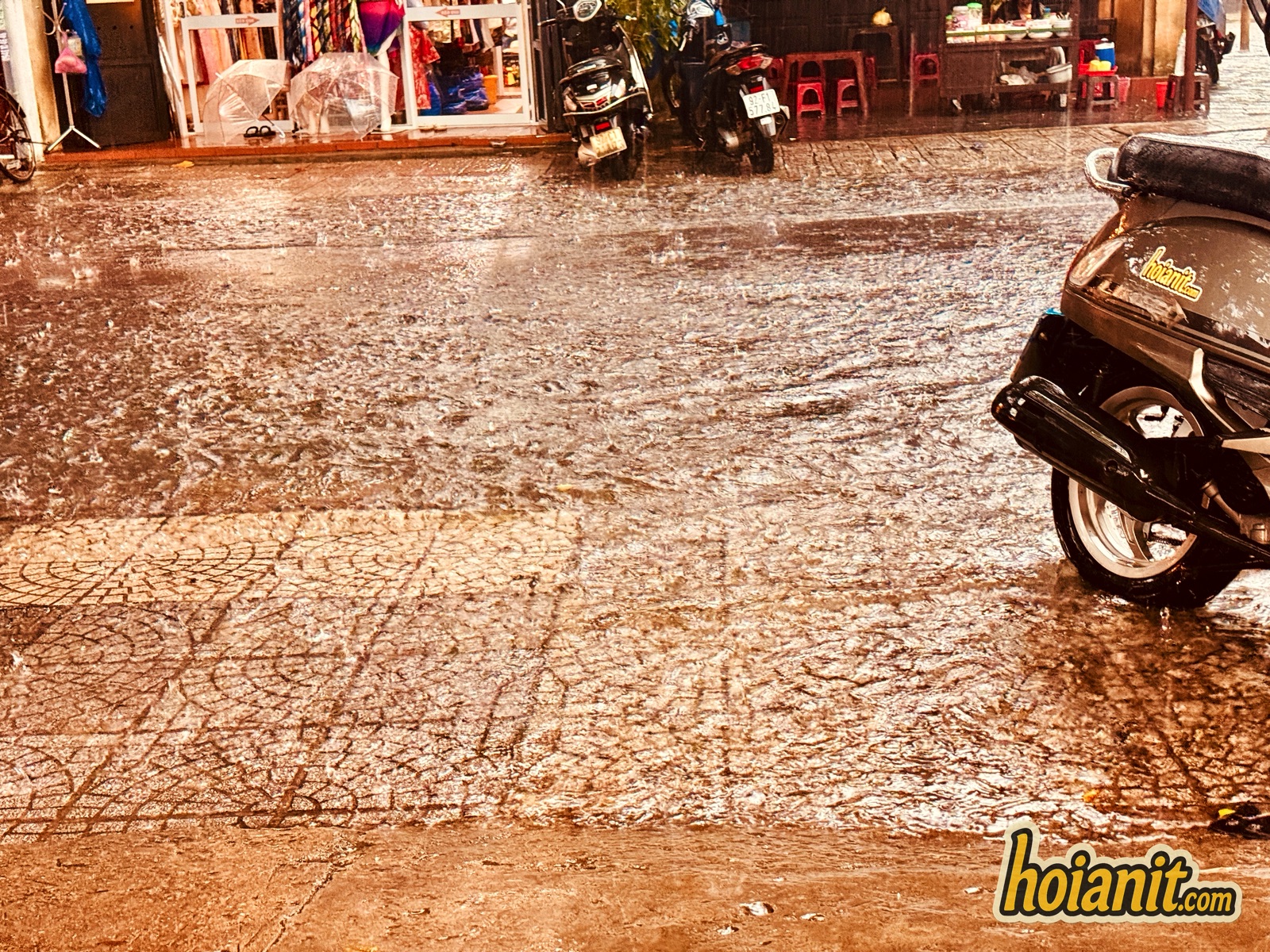
Rain in Hoi An tends to follow a rhythm: lighter in the morning, heaviest from mid-afternoon into the evening, especially from September on. So put the walking first and the long indoor things later. This is the day we suggest to guests who wake up to a grey sky:
| Time | Plan | Why it works in the rain |
|---|---|---|
| 7:00–9:00 | Breakfast at Hoi An Market, then two heritage houses | The market hall is roofed; early heritage visits beat the coach groups |
| 9:30–11:00 | Handicraft Workshop, then the 10:15 folk show on Bach Dang | Both under cover, three minutes apart |
| 11:30–13:00 | Long lunch upstairs, overlooking the street | A good window seat makes the weather part of the meal |
| 13:30–17:00 | Cooking class, tailor fitting or a spa booking | Three hours indoors right through the heaviest rain of the day |
| 17:30 onward | Lantern streets in a poncho, dinner nearby | Wet stone reflects every lantern; the crowds are half the dry-season size |
Everything in the first two rows is within ten minutes’ walk of our shop at 84 Phan Chau Trinh, which also makes it a dry place to leave a bike for the day. For more ideas on filling the day with food, our guide to what to eat in Hoi An lists the dishes worth sheltering for.
The classic Hoi An rainy day move: a cooking class
Ask anyone who lives here how to spend a Hoi An rainy day and this is the first answer. You are under a roof, your hands are busy, the food is the town’s best asset anyway, and a good class runs three to four hours, which neatly swallows the worst of a rainy afternoon. Most start with a market visit (umbrellas are usually provided, and a poncho makes it an adventure), then you cook the local canon: cao lau, white rose dumplings, banh xeo and fresh spring rolls.
The styles differ more than the menus. Market-tour classes in town are the most rain-proof, because the walk is short and the kitchen is close. Garden classes in Tra Que and countryside classes with a basket-boat ride are better on a dry day; in heavy rain the outdoor half gets cut or soggy, so ask the operator what happens to that part before you book. We compare the main types in our full guide to Hoi An cooking classes. If you want a combined day that includes a class, the market visit, cooking class, basket boat and lantern dinner package on Klook is one we have seen guests enjoy; just save it for a day with a break in the weather.
Lanterns, pottery and the craft workshops
Hoi An’s craft workshops are the rainy day’s second gear: shorter than a cooking class, usually 1.5 to 2 hours, cheap, and you leave holding the proof. The silk lantern workshop is the signature one. You bend the bamboo frame, stretch the silk and take your lantern home folded flat so it survives a suitcase. How it works and who runs the good ones is in our lantern-making class guide.
If you would rather watch than make, the Hoi An Handicraft Workshop at 9 Nguyen Thai Hoc is the best roof in town for it: one courtyard house with craftspeople working on lanterns, pottery, woodwork, embroidery and mats, and short try-it sessions paid separately. Three minutes away, the traditional performance house at 66 Bach Dang runs folk music and bai choi shows at 10:15, 15:15 and 16:15, indoors and seated, which is about as rain-proof as culture gets.
Beyond that: leather-craft sessions where you stitch a card holder or belt, embroidery demonstrations at the silk houses, and pottery throwing in Thanh Ha village, where the kilns and wheels are under cover. All of these book the same day outside peak season. Things you make yourself are also the souvenirs people actually keep; our Hoi An souvenirs guide has the rest of the list.
Old houses and museums on a Hoi An rainy day, 20,000₫ a door
The heritage houses, assembly halls and small museums are made for rain: deep tiled roofs, inner courtyards where you can watch a downpour from a dry wooden veranda, and rooms quiet enough to hear it on the tiles. They are also cheaper and more flexible than they used to be. Since 10 August 2026, under Da Nang City Council Resolution 98/2026, each heritage site in the Old Town charges 20,000₫ per person, the same price for Vietnamese and international visitors, with children under 16 and students free. The old 3-sites-for-120,000₫ coupon is gone, so on a wet day you can duck into as many or as few as the weather dictates. Details and booth locations are in our Hoi An entrance ticket guide.
The one to see in the rain is Quan Thang Ancient House at 77 Tran Phu. On a wooden column inside, someone has painted red lines and years: 1964, 1999, 2007, 2009, each one marking how high a flood reached in this room. The 1964 line, the Giap Thin flood, sits highest, at about 3.4 metres on the river gauge. Standing under it while rain hammers the courtyard tells you more about this town than any panel. Tan Ky Old House at 101 Nguyen Thai Hoc keeps similar flood marks and is two minutes from the riverfront.
| Indoor stop | Address | Time inside | Good to know |
|---|---|---|---|
| Museum of History and Culture | 10B Tran Hung Dao | 45 min | Three floors, the whole timeline; open 7:00–17:00 |
| Museum of Trade Ceramics | 80 Tran Phu | 30–45 min | Shipwreck finds from off Cu Lao Cham; closed on the 15th of each month |
| Museum of Folk Culture | 33 Nguyen Thai Hoc | 30 min | Daily life, crafts, fishing and festivals |
| Quan Thang Ancient House | 77 Tran Phu | 20 min | The flood-mark column |
| Tan Ky Old House | 101 Nguyen Thai Hoc | 20 min | Flood marks, and a family that still lives upstairs |
The café crawl and the tailor day
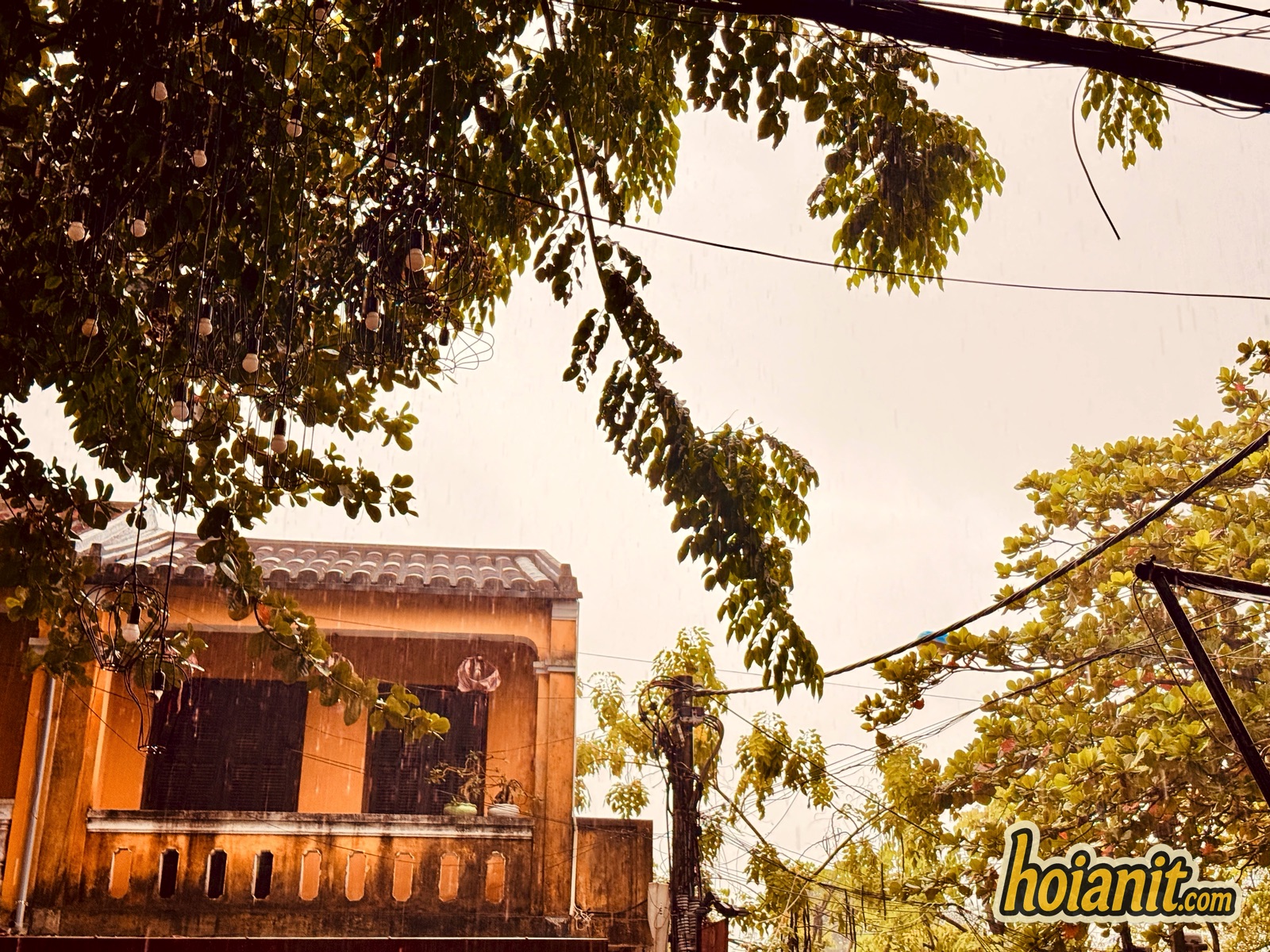
The café crawl is the town’s true wet-weather sport. Upstairs balconies under awnings looking down at umbrella traffic on Tran Phu; hidden courtyards around Sica alley; roasters pouring egg coffee and salt coffee that taste better with rain on the glass. Two or three cafés, a book, and the afternoon disappears with no regret. When choosing, pick places with a covered upper floor rather than a pretty garden; the garden ones move everyone inside the moment it pours. Our best cafés in Hoi An list marks which ones have the good indoor seats.
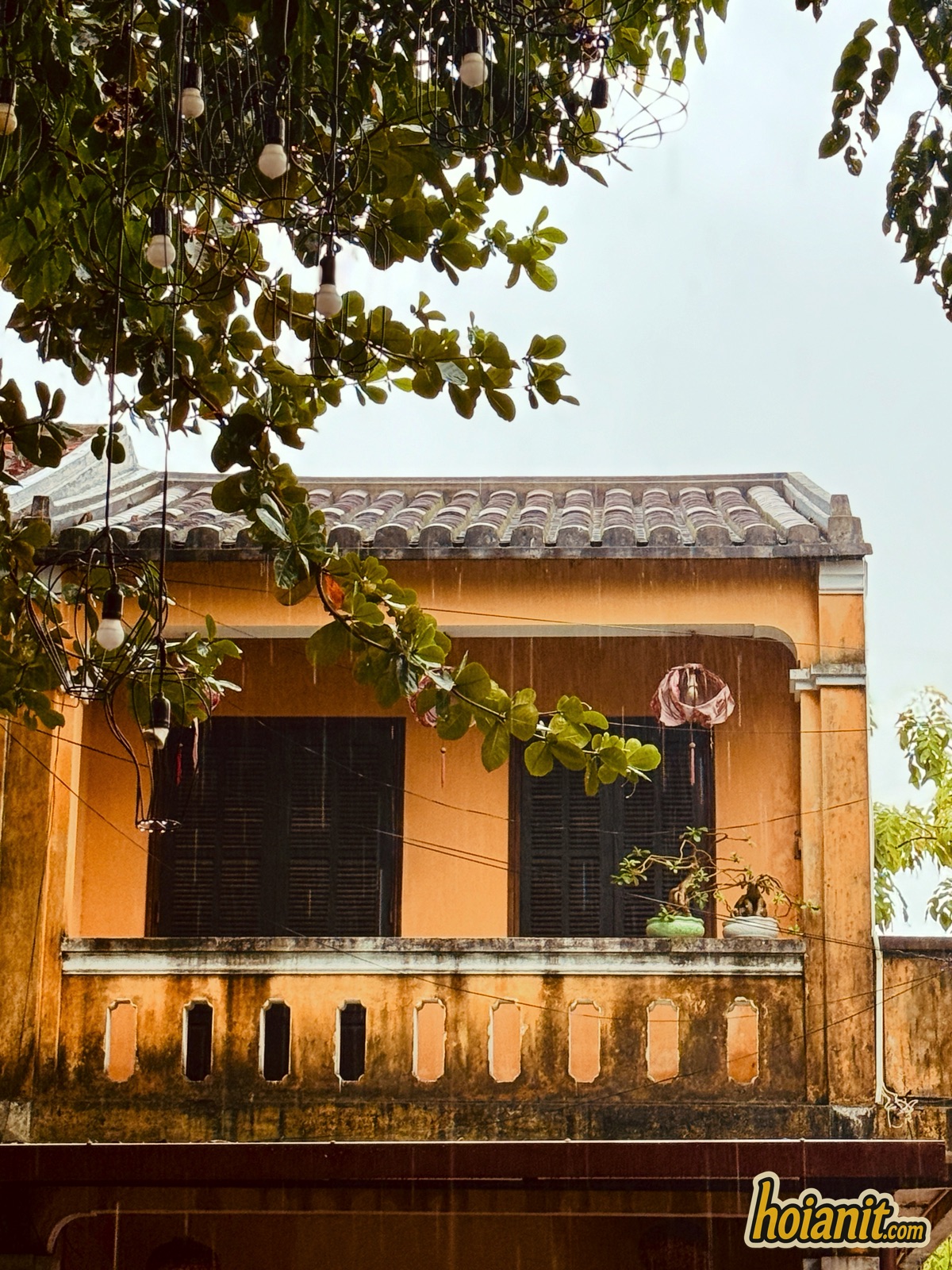
The tailor day is rain’s most productive alibi. A fitting at one of Hoi An’s hundred-plus tailor shops is entirely indoors, takes about an hour, and turns a grey day into the reason you own the best-fitting jacket of your life. Rainy days are the smart time to start an order: measured on the wet Tuesday, first fitting Wednesday, final tweaks Thursday. The multi-visit rhythm suits a stretch of bad weather perfectly. Go in with photos of what you want, insist on at least one fitting for anything structured, and pay the balance only when it fits.
Dry-season Hoi An belongs to everyone. Rainy Hoi An, with its wet lantern light and empty lanes, belongs to whoever stayed.
The spa afternoon and VinWonders
A Hoi An rainy day is the best possible soundtrack for ninety minutes on a massage table, and the spa scene runs from neighbourhood massage houses at around 200,000₫ an hour to serious wellness spas at a fraction of what the same hour costs at home. Wet season is their quiet season too, so same-day bookings that are impossible in July suddenly work in November. If you want one booked in advance, the Ylang Ylang spa experience on Klook is a reliable choice in town.
The biggest rain option sits outside town. VinWonders Nam Hoi An is the region’s theme park, about 16 km and 30 minutes from the Old Town along Vo Chi Cong and the coast road (we measured from our shop on Google Maps). More of it is under cover than people expect: indoor game halls, the roofed river safari boat, the craft houses on the folk-culture island and the show venues. On a drizzle day it works and the queues evaporate; on a genuine storm day the outdoor rides close, so check the sky honestly before you buy. Tickets are cheaper online than at the gate: VinWonders Nam Hoi An tickets on Klook.
Getting around Hoi An in the rain
On foot. Every convenience store and half the street vendors sell plastic ponchos for 10,000–20,000₫ the moment rain starts. Buy one, accept the fashion sacrifice, and the Old Town stays completely walkable. Locals live in these things four months a year. Sandals beat trainers: wet trainers stay wet for two days in this humidity.
By Grab. Car and bike taxis keep running in ordinary rain, but surge pricing kicks in during a downpour and drivers thin out. Inside the protected zone, cars cannot reach most streets anyway, so you will walk the last stretch.
On a rented bike. In light rain, riding around town is fine and often quicker than waiting for a car: Hoi An is flat and town traffic moves slowly. Ride gently, brake early, avoid painted lines and metal covers, and stop under a roof when a storm cell passes rather than riding through it. Our guide to riding in the rain in Hoi An covers the technique and the moments to stay off the road.

When you park, choose a covered spot or a raised one rather than the lowest corner of the street. In flood months, park on higher ground near Phan Chau Trinh, where our shop is, rather than by the river. If water starts rising around a bike you rented from us, leave it, move yourself, and message us: we would rather move the bike than fish it out.
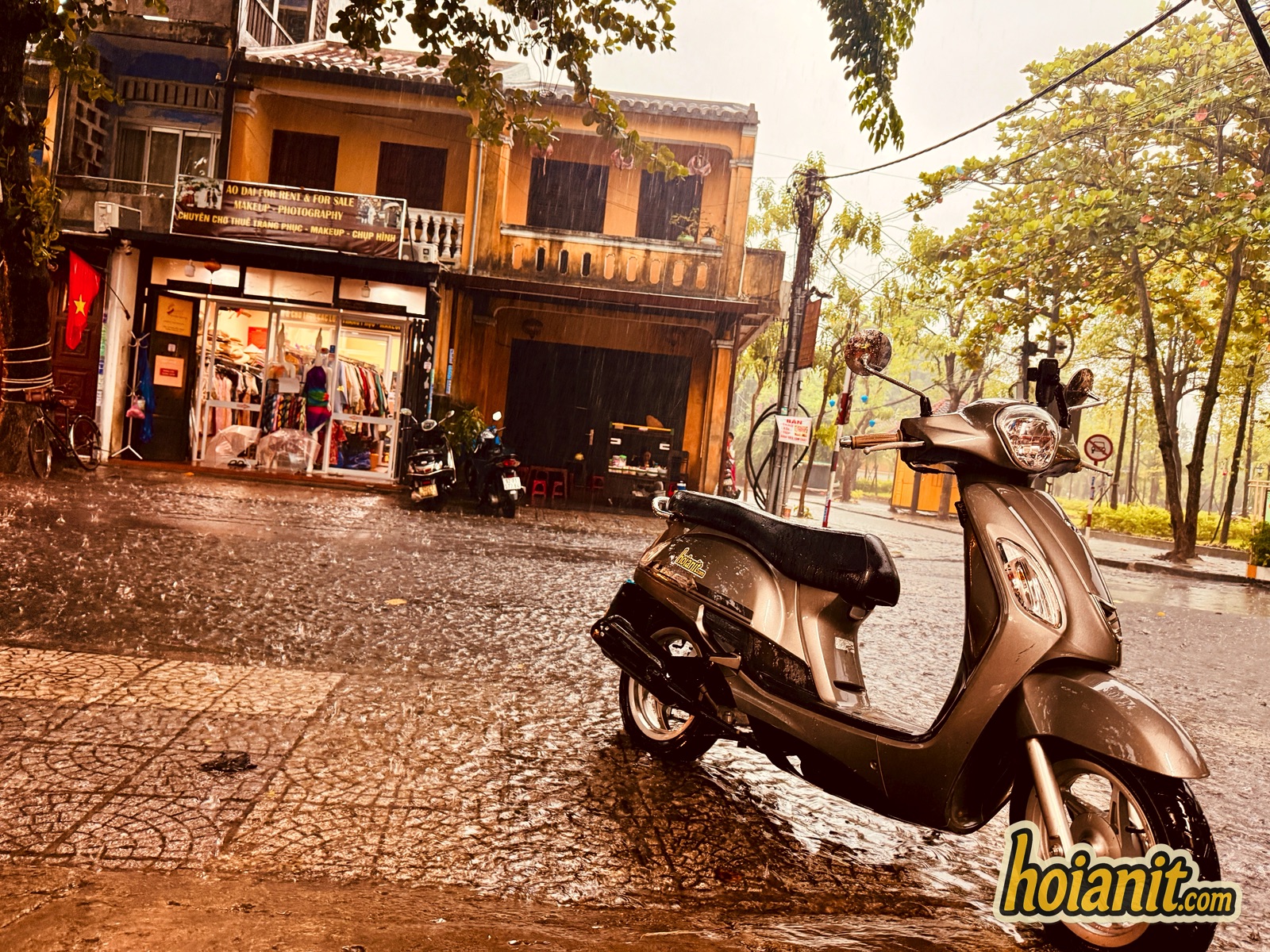
A bike that comes ready for the rain
Automatic scooters, electric scooters and bicycles from our shop at 84 Phan Chau Trinh, or delivered to your hotel from 30,000₫. Helmets and raincoats come with every bike, and our roadside line answers 24/7 if the weather turns.
84 Phan Chau Trinh, Hoi An · Zalo 0935 439 306 · roadside line +84 766 766 087 (24/7)Flood days: the section other guides do not write
When the river actually comes up, the plan changes, and you deserve straight answers rather than “Hoi An is magical in all weathers.” It is worth knowing how big these floods can be. In late October 2025 the Thu Bon at Hoi An rose to around 3.4 metres, level with the 1964 flood that tops the column at Quan Thang, and some readings put it slightly above, as Viet Nam News reported at the time. Most years are nowhere near that, but most years do bring a day or two of water in the riverside streets.
- Do not wade for photos. Flood water is river water mixed with everything a town’s streets contain. Locals wade because they must; a drone shot is not worth an infected cut.
- Follow the locals’ lead. Boats replace streets for a day or two, shopkeepers stack goods on high shelves, and life shifts one street uphill. Cafés and restaurants on higher ground, around Phan Chau Trinh and north of it, carry on as normal.
- Riverside hotels are where location backfires. If you are booked on An Hoi islet or along Bach Dang in October or November, a flood can mean relocating. Our where to stay in Hoi An guide flags which areas carry this risk.
- Do not ride through flooded streets. Water hides kerbs and potholes and drowns engines. If a bike stalls in water, do not try to restart it; push it to higher ground and call us.
- Go up or inland. Da Nang and the road to the airport usually stay open; it is the last two kilometres into the Old Town that stop, not the region. Getting in and out of Hoi An is normally fine unless a storm is actually crossing the coast.
- It passes fast. Typical floods peak and drain within 24 to 48 hours. The clean-up is a town-wide ritual, and the cafés are full again before the mud is off the doorsteps.
FAQ: rainy days in Hoi An
What can you do in Hoi An when it rains?
Plenty. A Hoi An rainy day still gives you cooking classes, lantern-making and craft workshops, the folk show on Bach Dang, tailor fittings, the old houses and museums, the café scene, spa afternoons and the covered parts of VinWonders. In ordinary rain the Old Town stays fully walkable in a 10,000₫ poncho.
Which months does it rain most in Hoi An?
The wet season runs roughly September to January. October is the wettest month, averaging about 526 mm, with November close behind at about 363 mm; that is also when floods happen. February to April is the driest stretch, at around 30 mm a month.
Does Hoi An flood, and is it dangerous?
The riverside streets flood a few times most years, usually in October or November when the Thu Bon river rises. Floods are usually calm and short, 24 to 48 hours, but do not wade in flood water, do not ride through it, and expect riverside hotels to be affected while higher streets carry on as normal.
How much are the Old Town heritage sites on a rainy day?
Since 10 August 2026 each heritage site charges 20,000₫ per person, the same for Vietnamese and international visitors, with children under 16 and students free. You pay per site, so you can visit as many or as few as the weather allows.
Is the Old Town still worth visiting in the rain?
Yes. In ordinary rain it is arguably at its best: fewer crowds, lanterns reflected in the wet paving, and cafés with upstairs seats over the street. Only on a flood day do the riverside streets become a no-go.
Can I ride a scooter in Hoi An when it rains?
In light rain, yes, if you ride slowly; Hoi An is flat and town traffic is slow. Stop under a roof during heavy downpours and thunderstorms, avoid riding at night on unfamiliar roads in heavy rain, and never ride through water that hides the road surface.
Should I cancel my Hoi An trip if the forecast shows rain all week?
Usually not. A week of rain in the forecast often means showers each day with dry hours between. Keep outdoor plans flexible, book classes on the day, and only reconsider if official storm or flood warnings are issued for your dates.
Planning around the weather? See also our flood season guide and month-by-month weather guide.








Pick your ride in Hoi AnChọn xe cho chuyến đi Hội An
Scooters, electric bikes and bicycles from one shop in the Old Town — delivered to your hotel, helmets and roadside help included.Xe máy, xe điện và xe đạp — giao tận khách sạn, kèm hai nón bảo hiểm và hỗ trợ dọc đường.
Not sure which one fits? Message us on WhatsApp and we’ll recommend a bike for your plans.
Chưa biết chọn xe nào? Nhắn Zalo 0935 439 306, tụi mình tư vấn theo lịch trình của bạn.