
Hoi An Travel Tips, Food & Coffee
Hoi An Cooking Classes (2026): The Honest Guide to Choosing One
Hoi An Cooking Classes (2026): The Honest Guide to Choosing One
A Hoi An cooking class can be a 90-minute hotel-kitchen demo or a full day that starts in the wet market and ends in a basket boat. Here is how to tell them apart, which nine schools have the review record to back it up, and what you should pay.
Cooking classes are Hoi An’s most-booked experience for a reason: this is the town that gave Vietnam cao lầu and white rose dumplings, and for a few hours somebody hands you the recipes. But “cooking class” covers everything from a 90-minute restaurant demo to a full day that starts in the wet market and ends in a basket boat — at wildly different prices. Having spent years in this town’s food scene (and having recently retired our own cooking-class-adjacent tours), here is the honest map of what you are choosing between.
Some links in this article are affiliate links — if you book through them, we earn a small commission at no extra cost to you. It helps keep this guide free and updated.
The four kinds of Hoi An cooking class
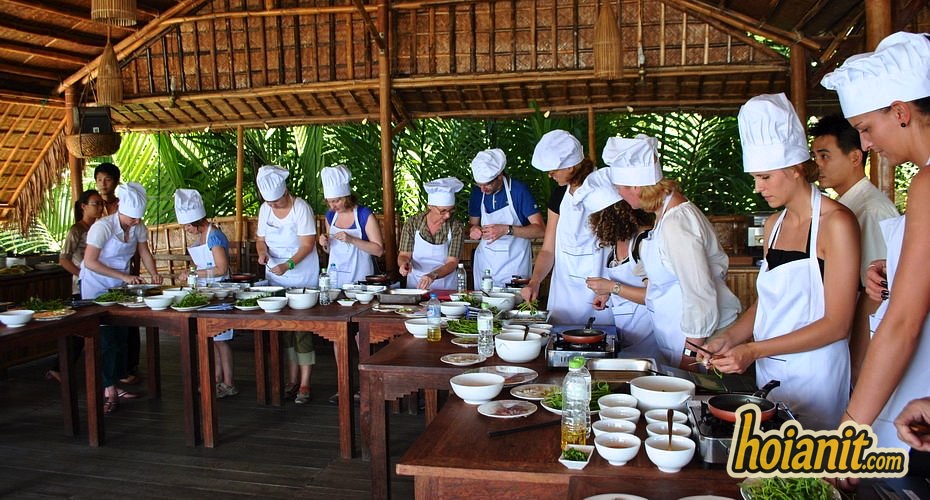
- The market-to-table half day — the classic, and our default recommendation: shop the wet market with the chef, learn what lemongrass looks like before it is minced, then cook. The market hour is where the actual learning happens.
- The Cam Thanh combo — market, a basket-boat ride through the coconut palms, then cooking at a riverside garden kitchen. More spectacle, slightly less stove time; the best single-booking “Hoi An day” for first-timers. Our basket boat guide covers the boat half.
- The farm-to-table version — built around Trà Quế herb village: pick your greens from the famous seaweed-fertilised beds, then cook them. Calmer, greener, and the best choice for a second visit or garden lovers — our Tra Que guide covers the village itself.
- The quick demo — 90 minutes in a restaurant kitchen, no market. Fine for tight schedules and rainy evenings; just know you are buying dinner-with-participation, not a class.
Nine cooking classes with the reviews to prove it
Hoi An has dozens of cooking classes and most listings look identical online. These nine are the ones with a checkable address and a review record on Google Maps (re-checked September 2026), grouped by the kind of class they run. We have no commercial relationship with any of them.
Bay Mau Eco Cooking Tour
The biggest name in the basket-boat-plus-cooking format, and by a distance the most-reviewed cooking experience in Hoi An. The day runs market, coconut-forest basket ride, then your own station in a riverside kitchen. It is a well-oiled machine — which is exactly what first-timers with one day want, and what people looking for a quiet six-person class do not.
Ms Hanh Cooking Class
A home kitchen in a lane off Lê Hồng Phong, ten minutes’ walk from the Ancient Town, with a perfect 5.0 from nearly 650 people. Reviews are the kind you cannot fake: the chef’s name comes up in most of them, the market walk is described dish by dish, and the recipe booklet gets used back home.
Gioan Cookery School
One of the original independent cooking schools in town and still at 5.0 after 648 reviews. Small groups, a proper market visit, and chefs who explain the why as well as the how. The lane address confuses taxi drivers — save the pin, not the street name.
Hoi An Eco Cooking Tour
Next door to Ms Hanh in the same lane and run in the same spirit: market first, then a garden kitchen, with the emphasis on local produce and minimal plastic. 4.9 from 421 reviews. If Ms Hanh is full, this is the natural second call.
Cooking with Jolie
A newer school that has raced to a 5.0 from 381 reviews, and one of the few with proper evening classes — useful if your mornings are already spoken for. Reviewers single out the hosts by name and the pace, which is relaxed rather than production-line.
Green Bamboo Cooking School
The premium option: a full day with chef Van that starts at the market and ends with a long lunch, capped at a small group. It costs three to four times a standard class and the reviews suggest people feel it was worth it — but book it for the food, not for a quick tick-box afternoon.
Tra Que Water Wheel Restaurant & Cooking Classes
The established farm-to-table class inside the herb village itself: pick from the beds, then cook in an open-air kitchen looking over them. 4.9 from 701 reviews. The calmest setting on this list and the one to choose if you have already done a market class elsewhere.
Red Bridge Cooking School
The oldest big-name school in Hoi An, reached by a short boat ride down the river from town. Market, boat, herb garden, then a spacious purpose-built kitchen. It is more polished and more of a group experience than the family kitchens above; 4.8 from 557 reviews reflects that trade-off.
Morning Glory Cooking School (Vy’s Market)
Ms Vy’s Taste Vietnam group runs the classes out of Vy’s Market on An Hội islet — the most central option, a two-minute walk over the bridge from the Ancient Town. It is the right choice for a rainy day or a tight schedule; the market-hall setting is livelier and less intimate than a home kitchen.
What separates a great class from a demo
Price predicts less than these four lines in a listing:
- “Market visit included” — the single biggest quality marker. Chopping pre-portioned ingredients is assembly; choosing them is cooking.
- Your own station. One wok per guest (or per couple) beats watching a chef’s wok from row three.
- Group size stated. Under ten and you will ask questions; over twenty and you are at a show.
- A recipe booklet to take home — the difference between a nice memory and actually making bánh xèo at home in November.
What you’ll actually cook
Almost every class draws from the same beloved deck, and that is fine — these are the dishes worth learning:
| Dish | What you learn |
|---|---|
| Bánh xèo (crispy pancake) | Batter hiss, the flip, and the herb-wrap ritual |
| Fresh spring rolls | Rice-paper handling — harder and more satisfying than it looks |
| White rose dumplings | Hoi An’s own — pleating the translucent shrimp parcels |
| Beef in betel leaf / lemongrass chicken | Marinades and the char |
| Green papaya salad | The fish-sauce–lime–sugar balance that unlocks the whole cuisine |
Note what is usually absent: true cao lầu — its noodles are a guarded local supply chain, which is its own story — and that is precisely the kind of thing a good chef-teacher will happily explain over the market’s noodle stalls.
Prices decoded
As of 2026 the market clusters around three bands: US$25–35 for a solid market-plus-cooking half day, US$35–45 once a basket-boat ride, Trà Quế farming or hotel pickup joins the bill, and under US$20 for the quick demos. Everything includes the meal you cook — nobody leaves a Hoi An cooking class hungry — and most include town pickup. Paying more past US$45 buys privacy or a full day (couples’ classes, private chefs, Green Bamboo’s seven-hour format), not better spring rolls.
| Format | 2026 price | What’s inside |
|---|---|---|
| Quick restaurant demo | under US$20 | 90 min, no market, you eat what the group makes |
| Market-to-table half day | US$25–35 | Market walk, own station, 3–5 dishes, recipe booklet |
| Cam Thanh combo | US$25–45 (Bay Mau: ₫600–700K reported) | Market, basket boat, riverside kitchen, sometimes lantern dinner |
| Farm-to-table at Trà Quế | US$30–45 | Pick your own herbs, garden kitchen, quieter setting |
| Full-day chef-led | US$100+ (Green Bamboo ~US$110) | 7 hours, small group, long lunch |
Affiliate link — you pay the same price, and we may earn a small commission that keeps this guide free.
Vegetarians, kids, and allergies
- Vegetarian & vegan: well handled in Hoi An — tofu and mushroom swaps are standard, and some kitchens run dedicated veggie menus. Say so at booking, not at the stove.
- Kids: spring rolls and pancake-flipping are catnip for children; most family-friendly classes welcome them at reduced rates. The market hour tests short attention spans — the Cam Thanh combo’s boat ride solves that neatly.
- Allergies: fish sauce is in everything by default. Serious allergies deserve a message to the operator before booking — good ones adapt happily with notice, none can improvise mid-class.
Booking it right
Book one to two days ahead in high season — the small-group classes (the ones you want) cap their tables first. Morning classes get the market at its liveliest; evening classes trade the market for lantern light. And pair it wisely: a cooking class plus our what-to-eat guide on day one turns the rest of your Hoi An eating into a treasure hunt you have the map for. If you would rather eat than cook, the street-food route — or a guided evening food walk — scratches the same itch with zero dishes.
The market hour is the class. Anyone can teach you to fold a spring roll — what stays with you is the chef explaining, over a pyramid of limes, why the fish sauce here tastes different from Saigon’s. Pick the class that starts at the market.
Getting there
The home kitchens on Lê Hồng Phong and Lý Thường Kiệt are inside town — ten minutes on foot from the Ancient Town. Trà Quế and Cẩm Thanh are short, flat rides, and most schools include pickup anyway. Distances below are from our shop at 84 Phan Châu Trinh, measured on Google Maps:
| To | Distance | Ride time | Route |
|---|---|---|---|
| Trà Quế village (Water Wheel) | 3.5 km | 10 min | Hai Bà Trưng |
| Bay Mau Eco Cooking Tour, Cẩm Thanh | 6.2 km | 16 min | Trần Nhân Tông |
| Ms Hanh / Eco Cooking, Lê Hồng Phong | ~1 km | walk 10–12 min | via Phan Châu Trinh |
Cooking at noon, riding at four?
Anh Khoa rents well-maintained motorbikes and electric bikes at 84 Phan Châu Trinh, Hoi An — the easy way to reach Trà Quế, Cẩm Thanh and the beaches between meals, with hotel delivery from 30,000₫.
FAQ
How much does a cooking class in Hoi An cost?
Most market-plus-cooking half days run US$25–35 per person; add a basket-boat ride, Trà Quế farming or pickup and it is US$35–45. Quick 90-minute demos cost under US$20, and full-day chef-led classes such as Green Bamboo run about US$110. Every format includes eating everything you cook.
Which are the best-rated cooking classes in Hoi An?
On Google Maps in September 2026: Bay Mau Eco Cooking Tour (5.0 from 2,668 reviews, basket-boat combo), Ms Hanh Cooking Class (5.0 from 649), Gioan Cookery School (5.0 from 648), Hoi An Eco Cooking Tour (4.9 from 421), Cooking with Jolie (5.0 from 381), Green Bamboo (5.0 from 314), Tra Que Water Wheel (4.9 from 701) and Red Bridge (4.8 from 557).
Which Hoi An cooking class is best for me?
Look for four things in the listing: a market visit included, your own cooking station, a stated small group size, and a take-home recipe booklet. Those markers predict quality far better than price does. First visit with one day: the Cam Thanh combo. Food-focused: a home kitchen like Ms Hanh or Gioan. Second visit: Trà Quế.
What dishes do you make in a Hoi An cooking class?
The classic set: bánh xèo crispy pancakes, fresh spring rolls, white rose dumplings, a grilled dish like beef in betel leaf, and green papaya salad. True cao lầu is rarely taught — its noodles come from a closely guarded local supply chain.
Are Hoi An cooking classes vegetarian-friendly?
Yes — tofu and mushroom substitutions are standard and some kitchens run dedicated vegetarian menus. Flag it when you book rather than at the stove, and mention serious allergies in advance; fish sauce is in nearly everything by default.
Should I do a morning or evening cooking class?
Morning classes catch the wet market at its liveliest, which is the best part of the experience. Evening classes trade the market for lantern-lit atmosphere and suit hot-season schedules; Cooking with Jolie runs until 10 PM. If the market matters to you, go morning.
Do I need to book a Hoi An cooking class in advance?
One to two days ahead is enough most of the year, but the small-group classes fill first in high season and holidays. Booking online also puts inclusions — market visit, pickup, boat ride — in writing.
How far are the cooking classes from Hoi An Ancient Town?
The home kitchens on Lê Hồng Phong and Lý Thường Kiệt are about ten minutes on foot from the Ancient Town. From our shop at 84 Phan Châu Trinh it is 3.5 km (10 minutes by motorbike) to Trà Quế village and 6.2 km (16 minutes) to the Bay Mau cooking kitchen in Cẩm Thanh. Most schools include hotel pickup.
Updated September 2026. Ratings, addresses and phone numbers are as listed on Google Maps on 5 September 2026; prices are indicative 2026 ranges and vary by operator and season. Distances measured on Google Maps from 84 Phan Châu Trinh. Some links are affiliate links; they never change the price you pay.








Pick your ride in Hoi AnChọn xe cho chuyến đi Hội An
Scooters, electric bikes and bicycles from one shop in the Old Town — delivered to your hotel, helmets and roadside help included.Xe máy, xe điện và xe đạp — giao tận khách sạn, kèm hai nón bảo hiểm và hỗ trợ dọc đường.
Not sure which one fits? Message us on WhatsApp and we’ll recommend a bike for your plans.
Chưa biết chọn xe nào? Nhắn Zalo 0935 439 306, tụi mình tư vấn theo lịch trình của bạn.