
Hoi An Travel Tips
Hoi An Museum of History and Culture: Tickets, Hours and What to See in 45 Minutes
Hoi An Museum of History and Culture: Tickets, Hours and What to See in 45 Minutes
The Hoi An Museum of History and Culture sits at 10B Tran Hung Dao, an eight-minute walk from our shop. One 20,000₫ entry buys you the whole timeline, from Sa Huynh burial jars to the port years.
Most visitors spend their Old Town entries on the Japanese Covered Bridge, an assembly hall and an old house, then leave without ever learning why any of it is there. The Hoi An Museum of History and Culture is the one site that answers that question, and it is the one our riders come back raving about. This guide covers the walk from our shop, the ticket, the opening hours, what waits on each floor and how to slot it into a morning.
- What the Hoi An Museum of History and Culture is
- Where it is and how to walk there
- Tickets and opening hours
- From a village pagoda to 10B Tran Hung Dao
- Three floors, in the right order
- Six things worth stopping for
- How it differs from the other three museums
- Best time to visit
- Pair it with Quan Cong Temple and the market
- Frequently asked questions
What the Hoi An Museum of History and Culture is
The Hoi An Museum of History and Culture is the town’s general museum: one building, one chronological story, from prehistory to the present. The Centre for Culture and Sports of Hoi An, which runs the heritage sites, lists 335 items on display — 281 original artefacts plus 54 photographs and documents, arranged across four historical periods: the Sa Huynh culture, the Champa kingdom of the 2nd to 15th centuries, the Dai Viet trading-port centuries from the 15th to the 19th, and modern Hoi An.
That timeline is the point. The assembly halls tell you about one community, the old houses about one family, the Sa Huynh museum about one culture. The Hoi An Museum of History and Culture is the only site on the ticket that connects them, which is why we tell first-time riders to come here before the rest. Walk out of it and the streets outside stop being pretty and start being readable: you know why there is a Japanese bridge at one end and a Fujianese temple in the middle.
Where the Hoi An Museum of History and Culture is, and how to walk there
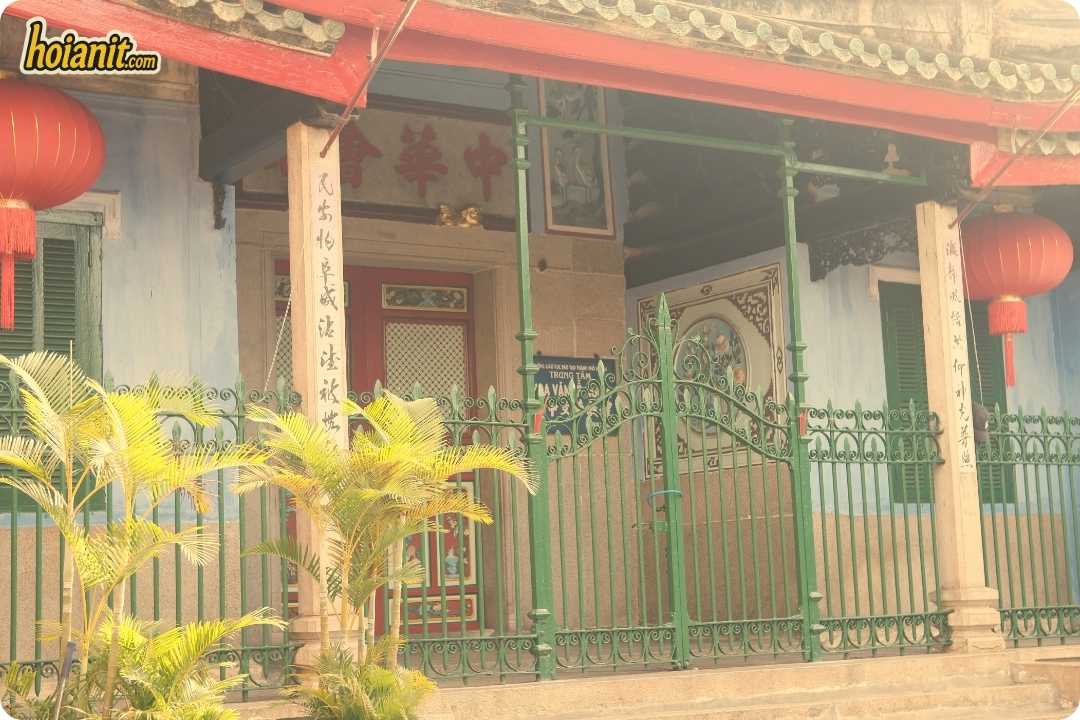
The Hoi An Museum of History and Culture occupies a three-storey building at 10B Tran Hung Dao, on the quieter northern edge of the protected zone. From our shop at 84 Phan Chau Trinh it is 550 m, about eight minutes on foot, measured on Google Maps: head west along Phan Chau Trinh, then cut across to Tran Hung Dao. There is no need to ride: the Old Town closes to motorbikes from 9:00 to 11:00 and 15:00 to 21:30, and the walk is shorter than the parking hunt.
Leave the bike with us while you wander — we hold it free for anyone renting from Anh Khoa, and you can pick it up whenever you are done. If you are staying out at An Bang or Cam Thanh, have the bike delivered to the hotel, ride to the edge of the protected zone, park, and walk the last five minutes.
Hoi An Museum of History and Culture tickets and opening hours
| Item | Detail |
|---|---|
| Ticket | No separate ticket office. The museum is one of the 21 ticketed Old Town sites: since 10 August 2026, 20,000₫ per person, the same for every nationality |
| Children | Under 16: free |
| Validity | Check at the booth — how tickets are packaged changed with the August 2026 fee |
| Opening hours | 7:00 to 17:00 daily. Arrive by 16:30 to see all three floors without rushing |
| Labels | Vietnamese and English panels in every room; staff at the desk answer questions |
| How long | 45 minutes is right; an hour if you read every panel |
Walking the streets themselves is free — the ticket is only for stepping inside a heritage site. Our full breakdown of prices, booths and the card readers is in the guide to Hoi An’s smart ticket kiosks.
From a village pagoda to 10B Tran Hung Dao
The Hoi An Museum of History and Culture was founded on 10 November 1989, in the years when Hoi An was first being studied seriously as an international trading port rather than a sleepy provincial town. Its first home was the pagoda of the Minh Huong village community at 7 Nguyen Hue — a beautiful room, but a small one, with no space for a full timeline.
The move to the purpose-adapted building at 10B Tran Hung Dao gave the collection three floors and let the curators lay the story out in order. If you have an older guidebook that still sends you to Nguyen Hue, that is why; the address on the current ticket list is Tran Hung Dao.
Three floors of the Hoi An Museum of History and Culture, in the right order
Inside the Hoi An Museum of History and Culture, start at the bottom and work up. The building rewards that, because the chronology runs with the stairs.
- Ground floor — before the port. Sa Huynh burial jars, bronze and iron tools, jade ornaments, then Champa sculpture and ceramics from the 2nd to 15th centuries. This is the two thousand years most visitors never hear about.
- Second floor — the trading port. Ceramics and trade goods from the 16th to 18th centuries, merchants’ scales and weights, and old maps on which the town is labelled Faifo or Haiso. There is also a room on the revolutionary period, built around material from 1927 and the town’s first youth association chapter.
- Top floor — modern Hoi An and the art room. The section titled “Hoi An rising from hardship” gathers over a hundred objects from 1975 to 1986: ration books, scales, cooperative equipment, photographs of a bombed-out town being put back together. It ends in a room of oil paintings of the Old Town.
Two thousand years fit into three flights of stairs, and the last flight is the one nobody expects to find moving.
Six things worth stopping for
- The Sa Huynh burial jars. Human remains were buried in ceramic jars here two millennia before the first Japanese merchant arrived.
- Champa sculpture. A dancer and a wealth deity, carved when this river mouth belonged to a different kingdom entirely.
- Merchants’ scales and weights. The unglamorous tools that made the town rich, and the reason so many nations built halls here.
- The Faifo maps. Seeing the town under its European trading name is the fastest way to grasp how far its reputation travelled.
- The 1927 material. Photographs, membership lists and objects from the first revolutionary youth chapter in Hoi An.
- “Hoi An rising from hardship”. Ration books and cooperative gear from 1975 to 1986 — the decades of poverty that, ironically, saved the old houses from being knocked down.
How it differs from the other three museums
Four museums sit on the Old Town ticket list; at 20,000₫ each you could see them all, but few people have the time. This is how we split them for guests:
| Museum | Address | Choose it if |
|---|---|---|
| Hoi An Museum of History and Culture | 10B Tran Hung Dao | It is your first visit and you want the whole timeline in one building |
| Sa Huynh Culture Museum | 149 Tran Phu | You want the deep prehistory in detail — burial jars, beads, iron tools |
| Museum of Trade Ceramics | 80 Tran Phu | You are drawn to the shipwreck story and the sea routes |
| Museum of Folk Culture | 33 Nguyen Thai Hoc | You care about daily life, crafts, fishing and festivals |
If you only see one museum, make it this one. The other three are richer once you know where their subject sits on the timeline.
Best time to visit the Hoi An Museum of History and Culture
At the Hoi An Museum of History and Culture, the quietest window is 7:00 to 9:00, before the tour groups reach this end of town; 13:00 to 15:00 is the sensible way to dodge the afternoon heat, since the museum is one of the few indoor sites on the ticket. Photography is allowed, but skip the flash near textiles and paper. Keep your voice down on the second floor, where the revolutionary room often has older local visitors in it, and leave big backpacks at the desk — the stairwells are narrow.
Pair it with Quan Cong Temple and the market
Everything below is a few minutes’ walk from the Hoi An Museum of History and Culture, which makes a tidy half-day:
- Quan Cong Temple, 24 Tran Phu — four minutes away, the town’s largest temple to Quan Cong, and another ticketed site.
- Hoi An Market — five minutes, free to enter, and the best cheap lunch in the protected zone.
- Tan Ky Old House — eight minutes, the most complete merchant house in town and a natural third stop.
- The Japanese Covered Bridge — twelve minutes at the far end of Tran Phu, and it makes far more sense after the museum.
Riding out after the Old Town?
Scooters, e-bikes and bicycles at 84 Phan Chau Trinh, right on the edge of the protected zone. Free parking with us while you walk the museum, plus helmets, raincoats and a map marked with the vehicle-free hours. Prefer twist-and-go? Automatic scooter rental in Hoi An starts at 110,000₫ a day.
Hoi An Museum of History and Culture: frequently asked questions
Where is the Hoi An Museum of History and Culture?
At 10B Tran Hung Dao in Son Phong, on the northern edge of the protected zone. It is 550 m, about eight minutes on foot, from our shop at 84 Phan Chau Trinh. The collection was first shown at 7 Nguyen Hue, which is why some older guides still list that address.
How much does it cost to enter?
There is no separate ticket office. The Hoi An Museum of History and Culture is one of the 21 ticketed Old Town sites, and since 10 August 2026 entry is 20,000₫ per person, the same for every nationality. Children under 16 go free.
What are the opening hours?
7:00 to 17:00 every day. The quietest slot is 7:00 to 9:00, and you want to be inside by 16:30 to have time for all three floors.
How many artefacts are on display?
335 items: 281 original artefacts plus 54 photographs and documents, covering the Sa Huynh culture, Champa from the 2nd to 15th centuries, the Dai Viet trading-port era and modern Hoi An.
How long should I allow for a visit?
Allow 45 minutes at the Hoi An Museum of History and Culture for three floors, or an hour if you read every panel and linger in the art room at the top.
Is this the best museum if I only see one?
For a first visit, yes. The Hoi An Museum of History and Culture is the only site that lays out the whole timeline, so the assembly halls, old houses and other museums make more sense afterwards.








Pick your ride in Hoi AnChọn xe cho chuyến đi Hội An
Scooters, electric bikes and bicycles from one shop in the Old Town — delivered to your hotel, helmets and roadside help included.Xe máy, xe điện và xe đạp — giao tận khách sạn, kèm hai nón bảo hiểm và hỗ trợ dọc đường.
Not sure which one fits? Message us on WhatsApp and we’ll recommend a bike for your plans.
Chưa biết chọn xe nào? Nhắn Zalo 0935 439 306, tụi mình tư vấn theo lịch trình của bạn.