Hoi An Travel Tips
Museum of Trade Ceramics Hoi An: Tickets, Hours and the Cu Lao Cham Shipwreck
Museum of Trade Ceramics Hoi An: Tickets, Hours and the Cu Lao Cham Shipwreck
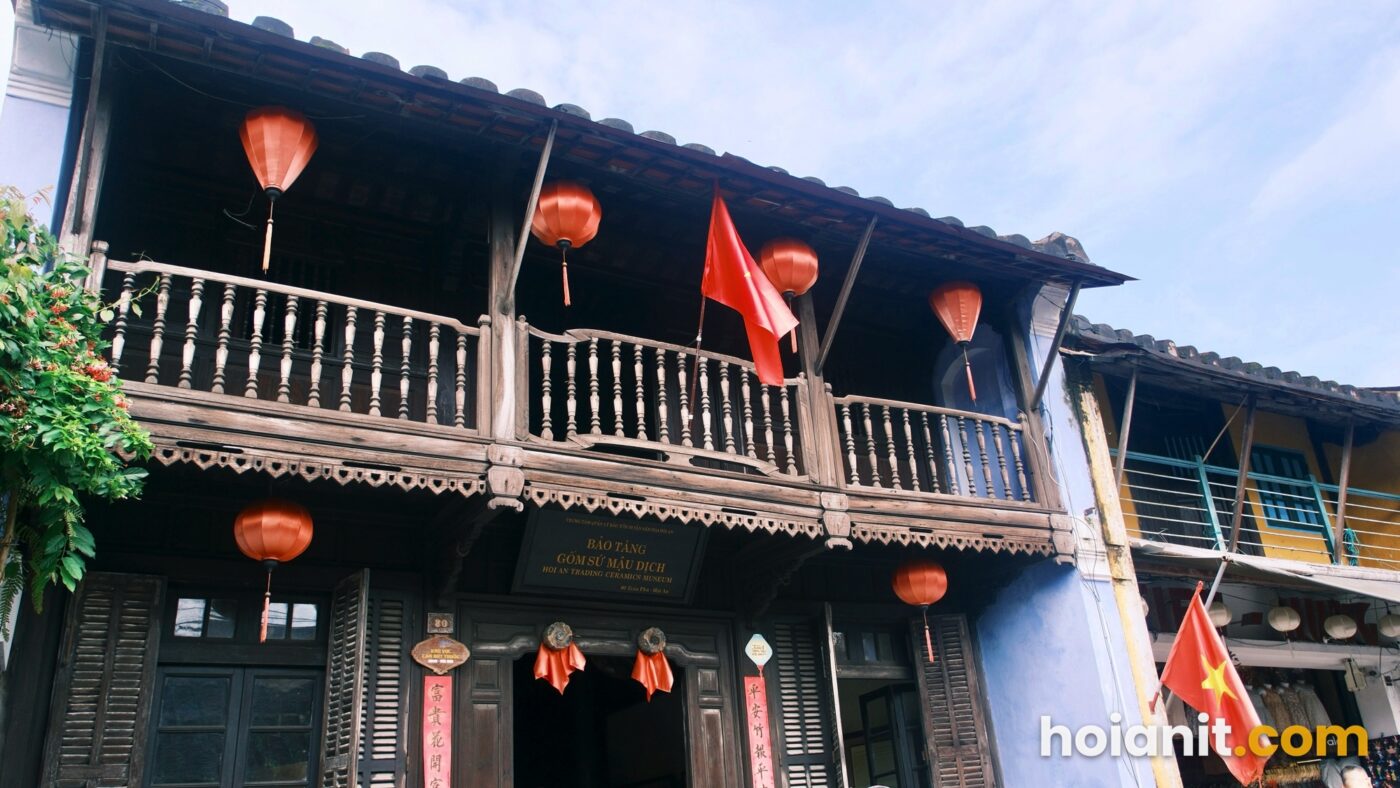
The Museum of Trade Ceramics at 80 Tran Phu explains why this river mouth became a port, using 368 pieces fished out of the sea and dug from under the shophouses. It is a 550 m walk from our shop.
Guests renting bikes from us always ask the same thing about the Old Town ticket: which sites are worth the entry fee? The Japanese Covered Bridge and an assembly hall pick themselves. For the third we usually point at the Museum of Trade Ceramics, because it is the one building that explains the other twenty — why a small Vietnamese river mouth ended up with Japanese, Chinese and Portuguese names on its maps.
What the Museum of Trade Ceramics is
The Museum of Trade Ceramics opened in 1995, with help from Japanese researchers, in the years when Hoi An was first being studied properly as an international port rather than a quiet provincial town. The Hoi An heritage authority lists 368 objects dating from the 9th–10th centuries to the 19th, most of them recovered from archaeological digs inside the Old Town itself and from the sea off Cu Lao Cham.
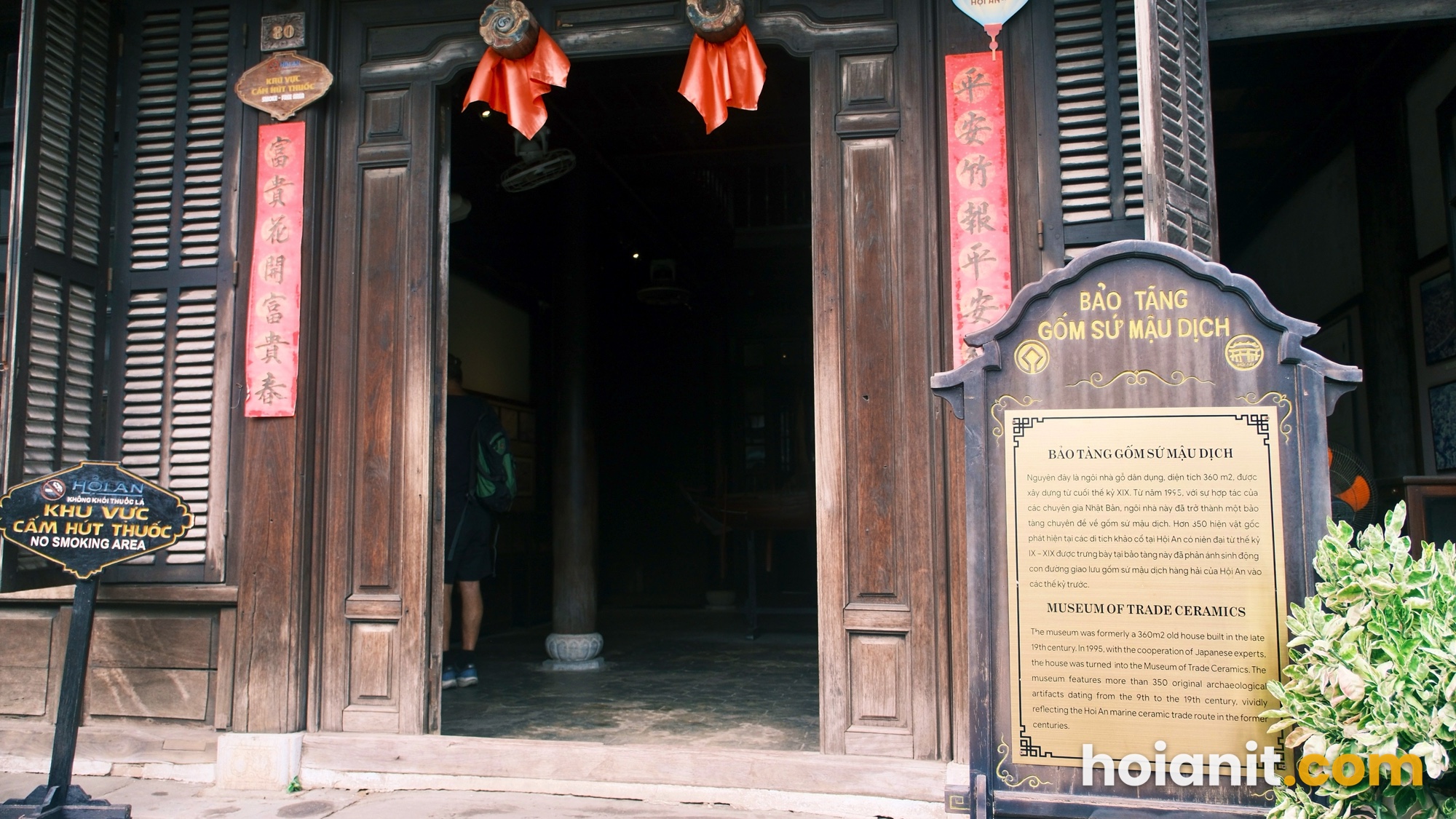
What makes this different from the town’s other museums is that the ceramics here are not art objects, they are evidence of trade. Vietnamese, Chinese, Japanese, Thai and Middle Eastern wares sit side by side because the same sea route carried all of them through this harbour. Ten minutes at the cases and the town outside makes sense: of course there is a Fujianese assembly hall, of course there is a Japanese bridge.
Museum of Trade Ceramics tickets, hours and how to get in
| Item | Detail |
|---|---|
| Address | 80 Tran Phu, in the protected zone |
| Ticket | No separate ticket office. One of the 21 ticketed Old Town sites: since 10 August 2026, 20,000₫ per person, any nationality |
| Children | Under 16: free |
| Opening hours | Daytime daily, closed on the 15th of each month for conservation work |
| Labels | Vietnamese and English panels in every room |
| How long | 30 to 45 minutes, plus 15 more if you read the shipwreck panels properly |
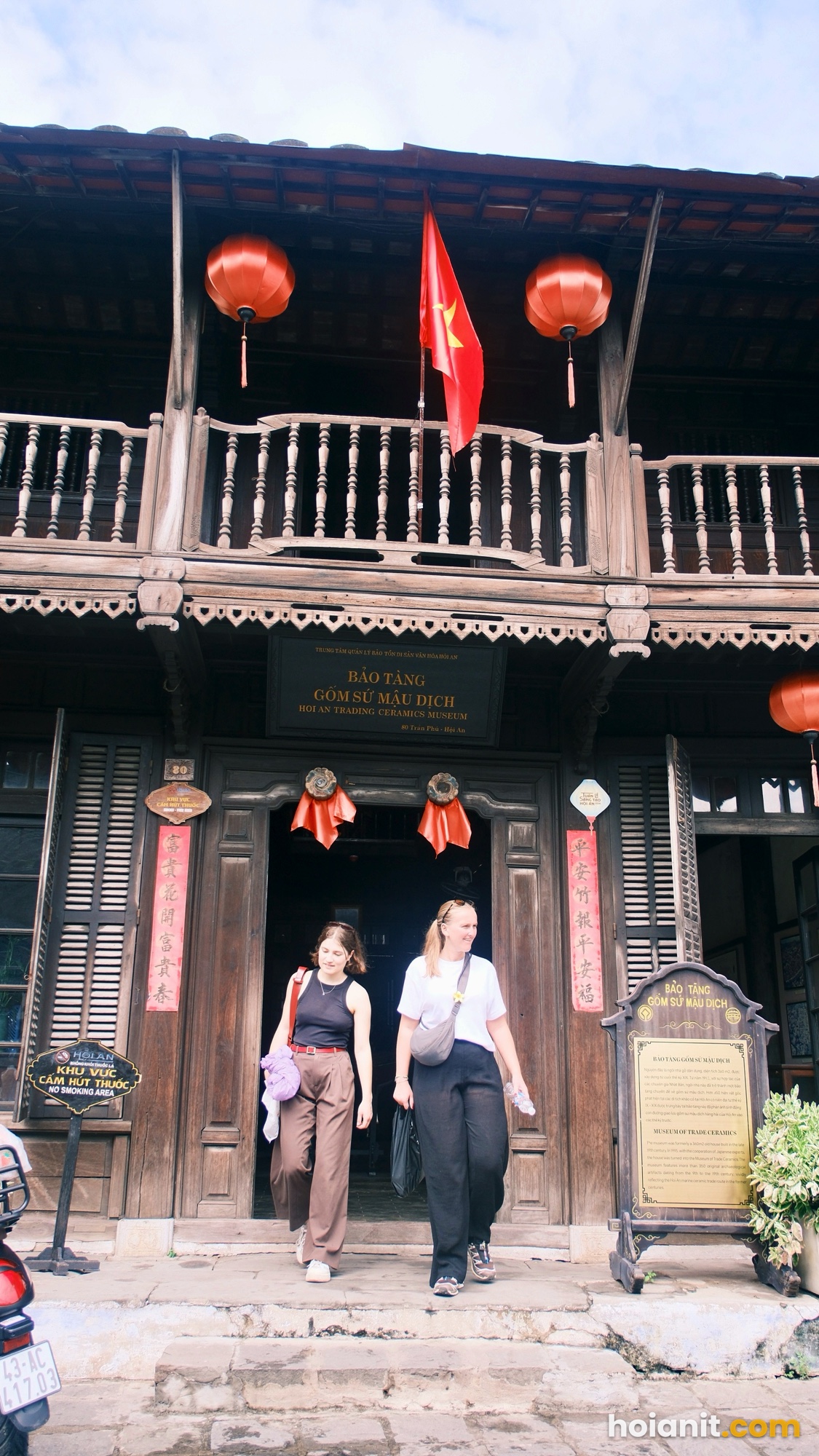
Ticket booths sit around the edge of the protected zone — the corner of Tran Phu and Nguyen Hue is the closest one to the museum. Staff check your ticket as you enter, so decide your sites before you buy. Walking the streets is free; the ticket only matters when you step inside a heritage building. Prices, booths and card readers are covered in our guide to Hoi An’s smart ticket kiosks.
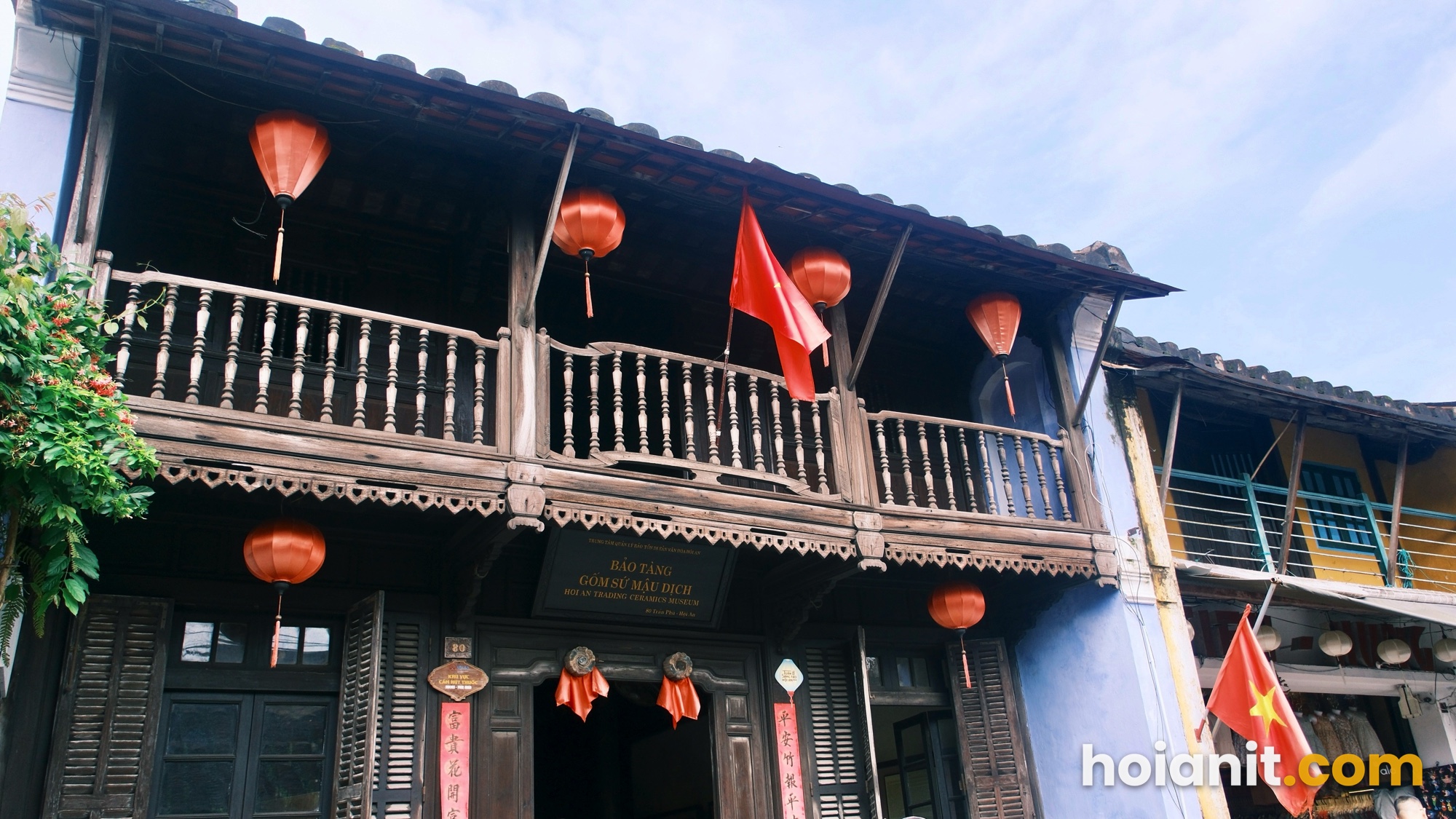
The two-storey house is an exhibit in itself
The Museum of Trade Ceramics occupies a classic Hoi An merchant house: front building facing Tran Phu, rear building behind, a covered bridge room between them and an open sky-well courtyard letting in light. The house was restored during the Vietnamese–Japanese cooperation of the early 1990s, and one section of the display is devoted to that restoration — which beams were replaced, how the yin-yang roof tiles were relaid.
So take the stairs slowly. From the upper floor you look down into the courtyard and across the tiled roofs of the neighbours, a view you do not get at the Japanese Covered Bridge or the assembly halls, where visitors stay at ground level. Rain makes it better rather than worse: water falling into the sky-well is peak Hoi An, and it costs nothing extra.
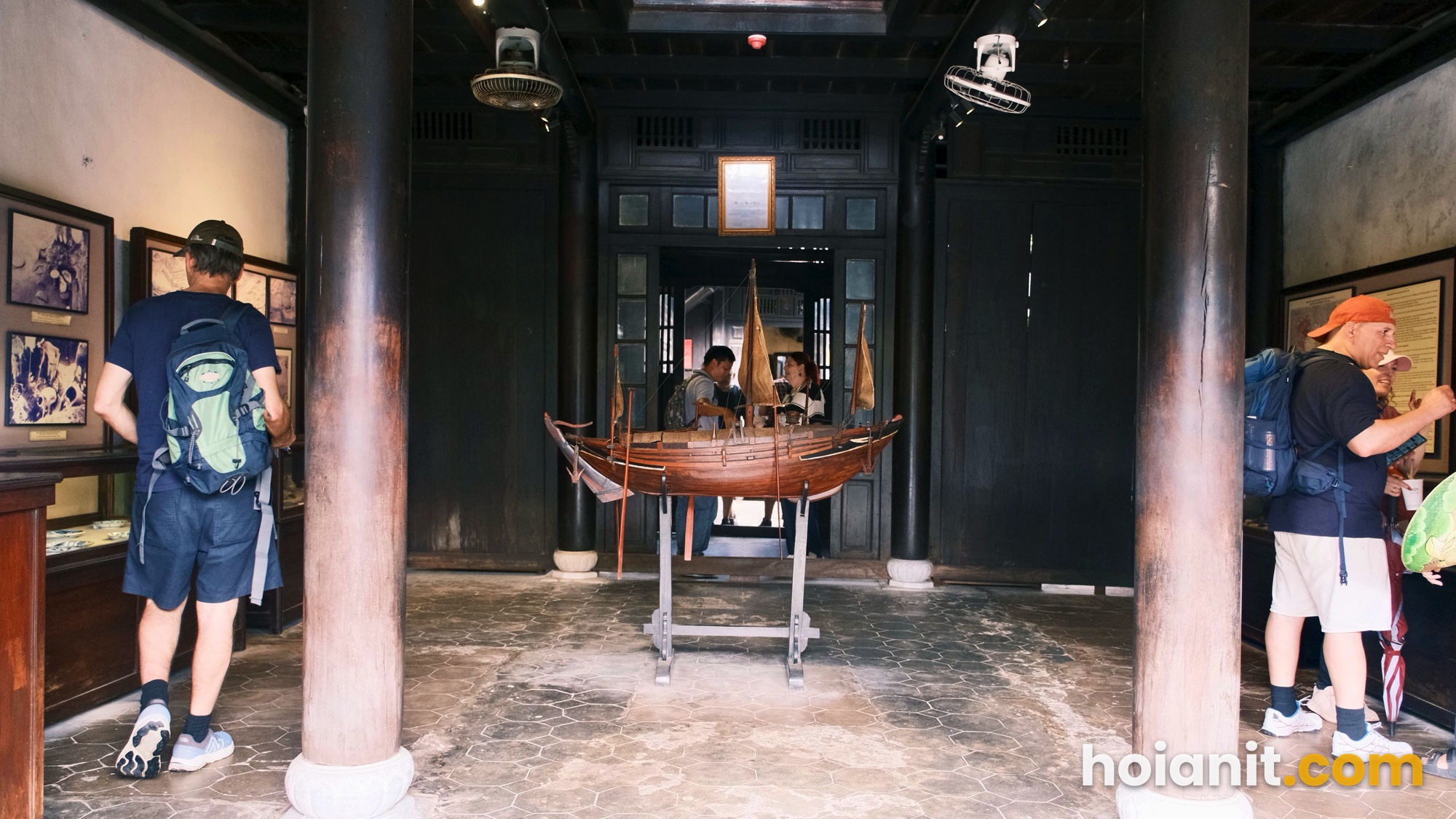
Four sections of the Museum of Trade Ceramics, and the shipwreck
The display at the Museum of Trade Ceramics runs in four parts, front building to rear, then upstairs:
- Hoi An and the maritime ceramic road — route maps, sample wares from each country, and the point that Hoi An was a transshipment port, not just a market.
- The house and its restoration — photographs, drawings and the timber taken out during the works.
- The Cu Lao Cham shipwreck — the section people remember.
- Archaeological sites in the Old Town — shards dug from beneath the very houses you walked past, proving trade here long before the 15th century.
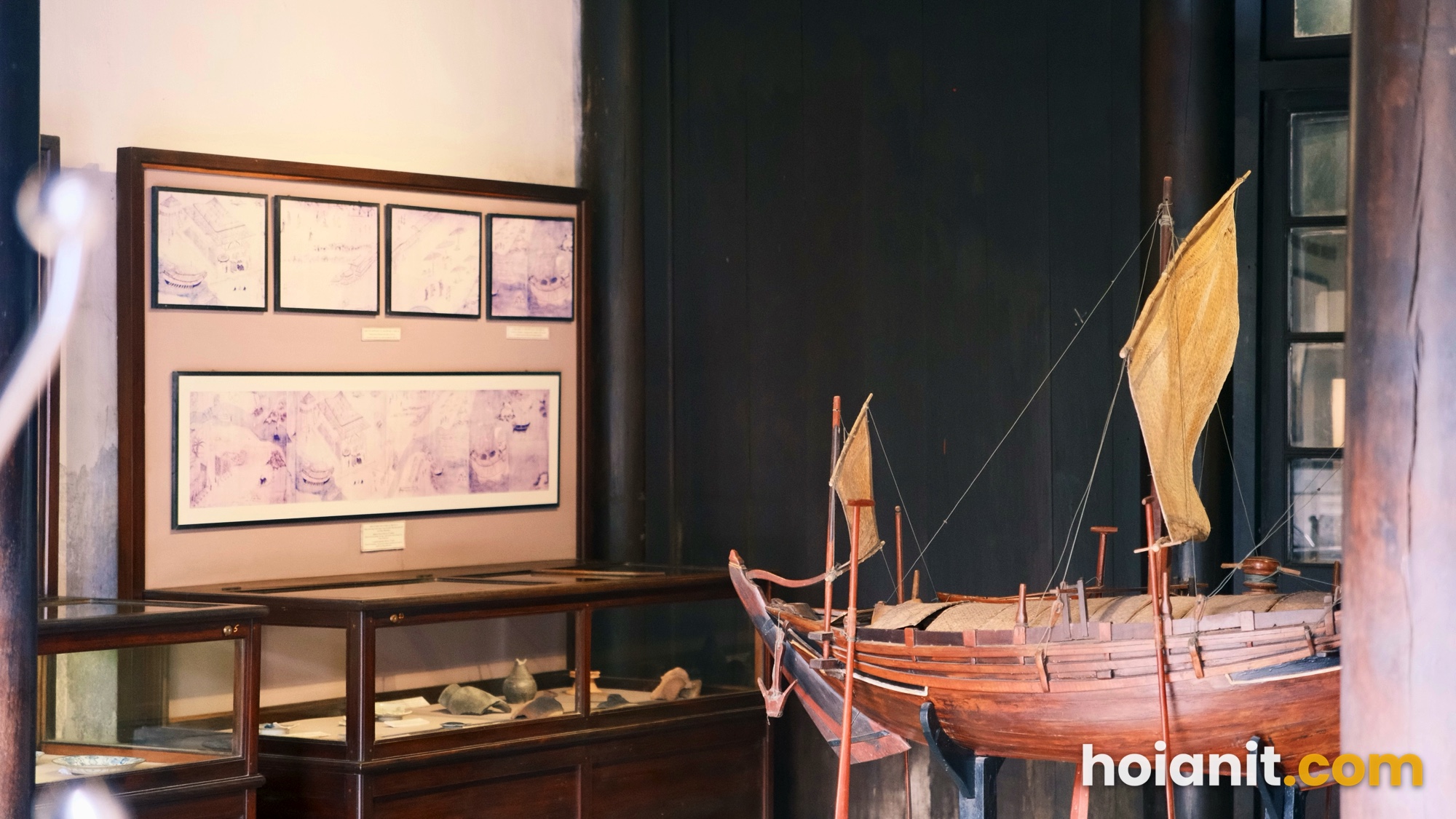
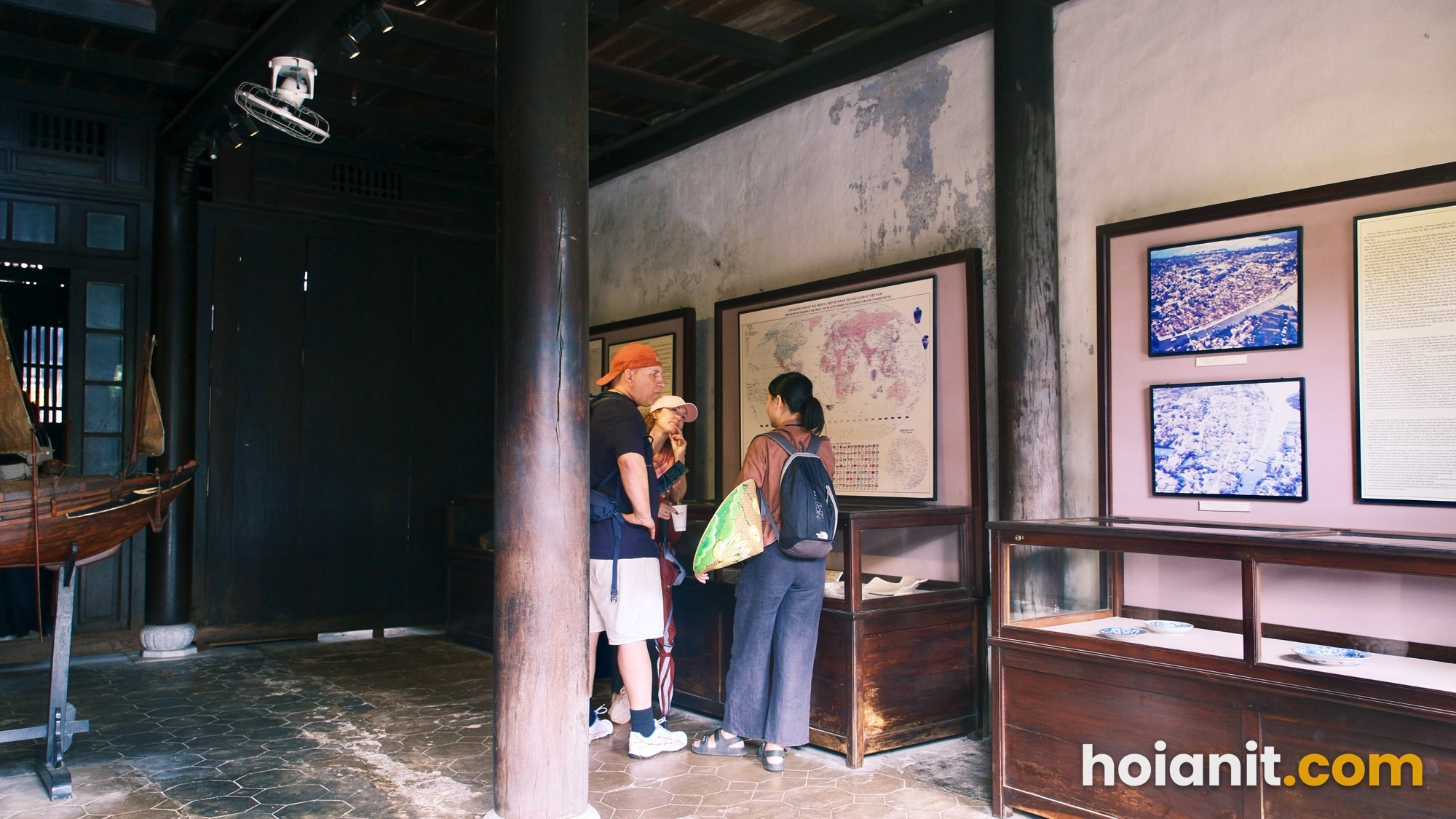
The Cu Lao Cham wreck alone justifies the 20,000₫. The site lies about 15 km north of Cu Lao Cham at roughly 80 m depth, and the ship was carrying ceramics from northern Vietnamese kilns of the 15th and 16th centuries, preserved almost intact by the seabed silt. Hand-painted blue-and-white bowls and dishes, including dragon designs first recorded at an underwater site here — meaning Vietnamese ceramics were being exported through this harbour five hundred years ago, not merely imported into it.
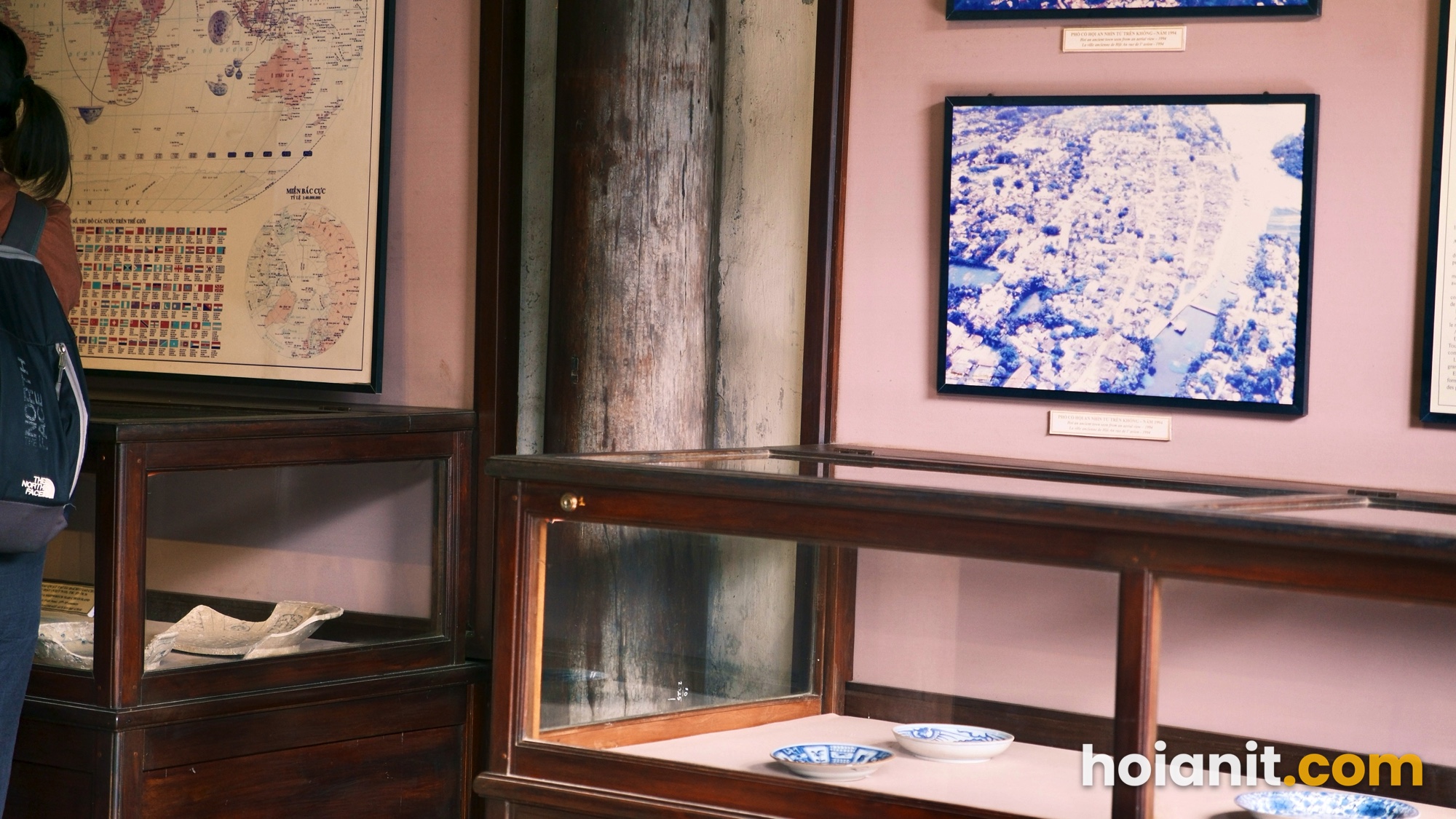
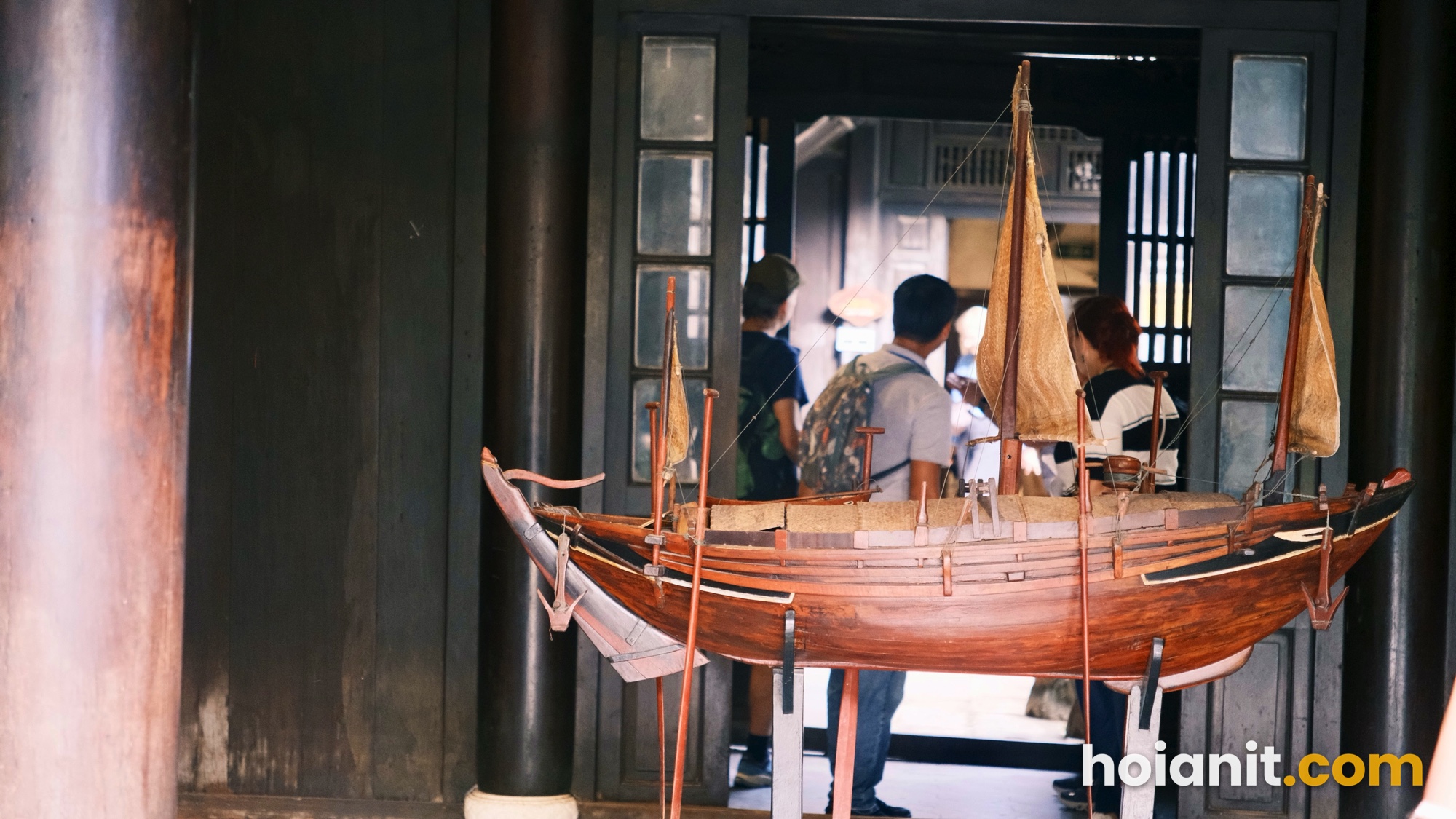
The whole town is a buried ceramics warehouse; this museum simply lifted a few shelves of it into the light.
Walking to the Museum of Trade Ceramics from our shop
From 84 Phan Chau Trinh it is 550 m, about seven minutes on foot, measured on Google Maps: follow Phan Chau Trinh, then turn down to Tran Phu. Do not try to ride in — the Old Town closes to motorbikes from 9:00 to 11:00 and 15:00 to 21:30. Park with us instead; we keep bikes free of charge while our renters walk the town, and you can collect yours whenever you finish.
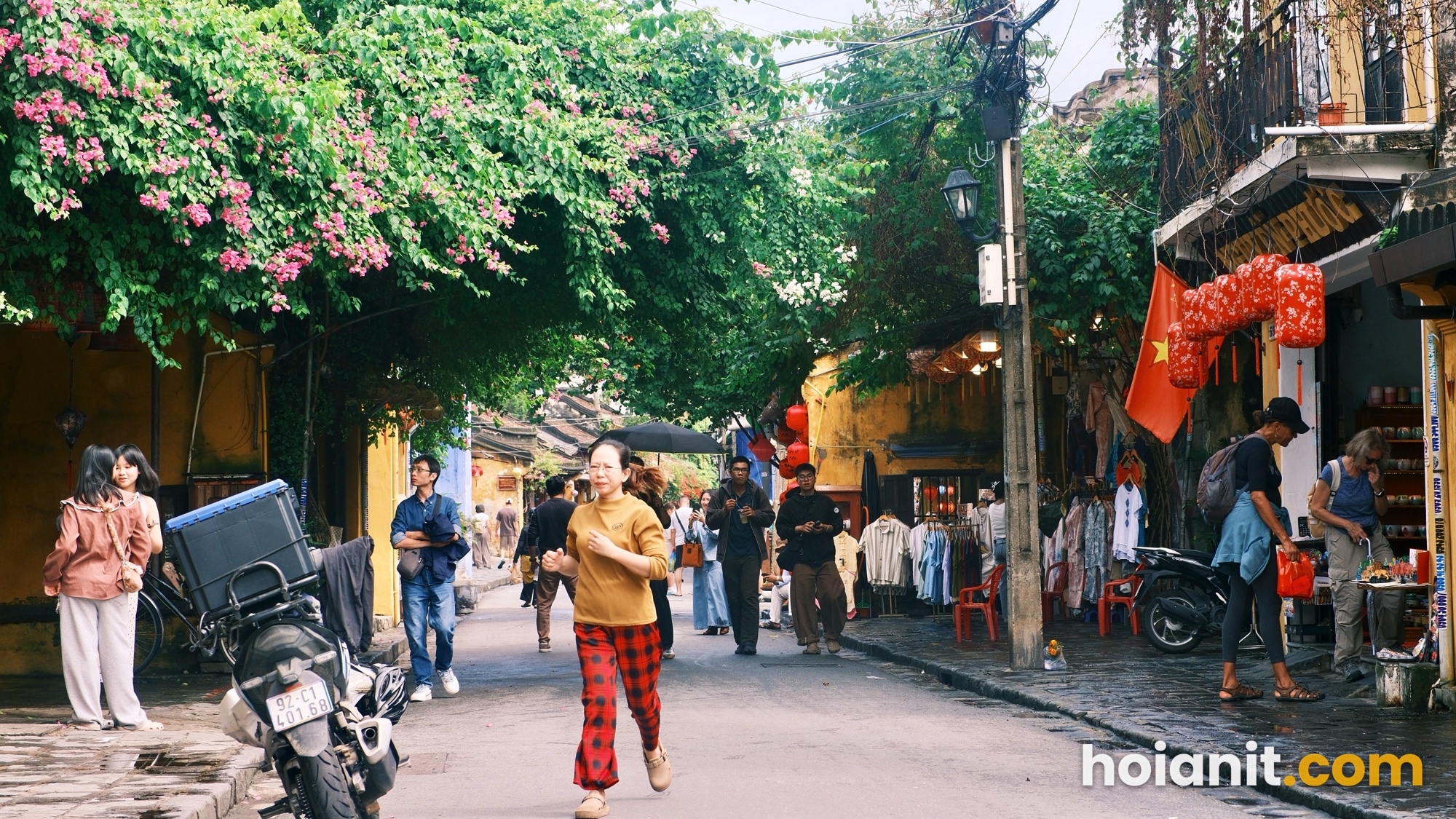
Staying out at An Bang or Cam Thanh? Have the bike delivered to your hotel, ride to the edge of the protected zone, park there and walk the last five minutes to the Museum of Trade Ceramics.
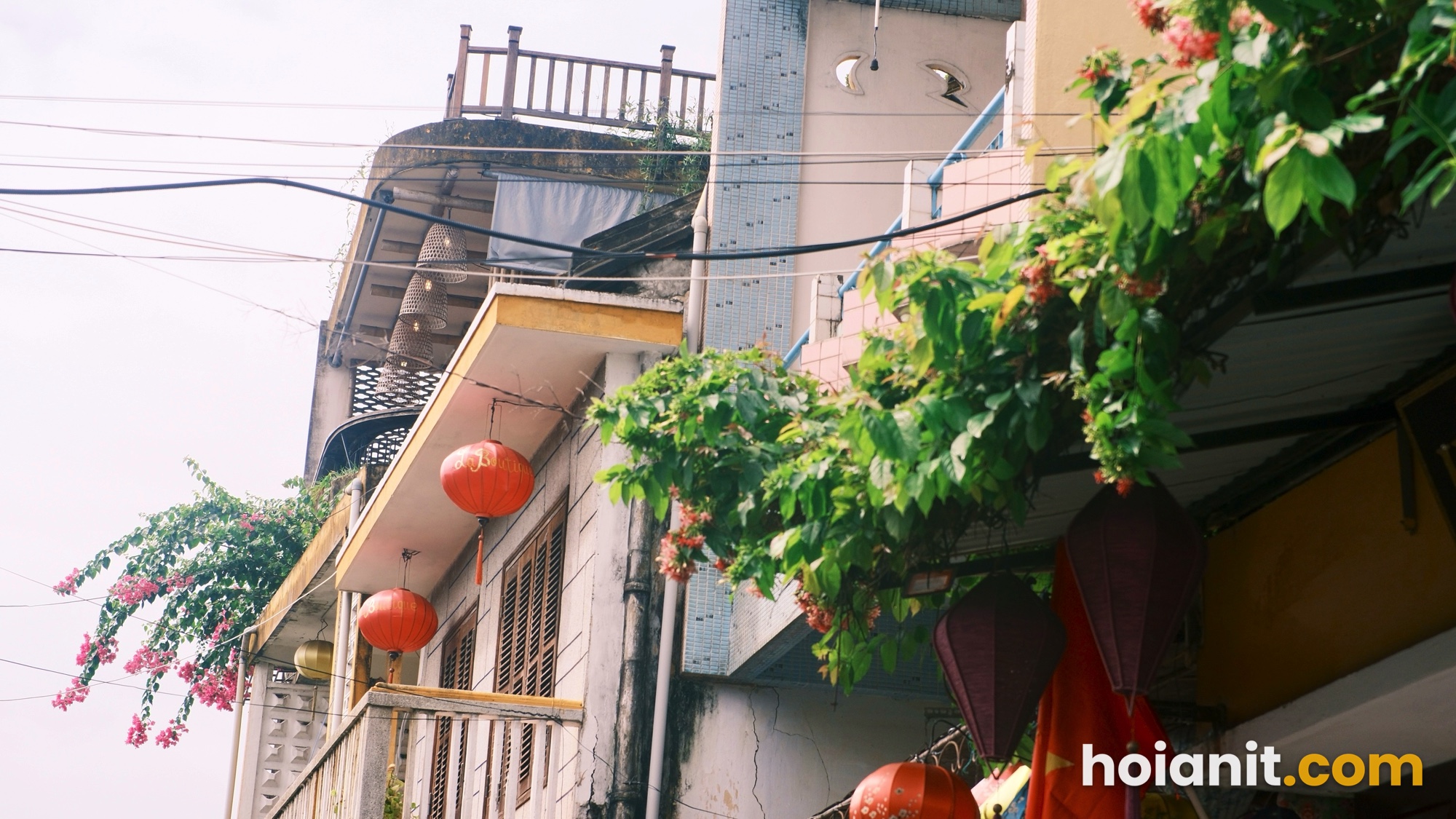
Which sites to pair it with
With a morning, this is the set of Old Town sites we suggest to first-time visitors — everything within 400 m of the museum door:
| Site | Address | Why |
|---|---|---|
| Japanese Covered Bridge | End of Tran Phu | The symbol of the town, printed on the 20,000₫ note |
| Fukian Assembly Hall | 46 Tran Phu | The largest and most ornate hall in town |
| Museum of Trade Ceramics | 80 Tran Phu | Explains why the town exists at all |
| Tan Ky Old House | 101 Nguyen Thai Hoc | The most complete merchant house, with flood marks on the wall |
| Sa Huynh Culture Museum | 149 Tran Phu | Two thousand years further back, before the port |
Afterwards, walk five minutes to Hoi An Market for lunch, or pick up the bike and ride 3 km west to Thanh Ha Pottery Village to watch the same craft still being thrown by hand — a complete morning of ceramics, old and new.
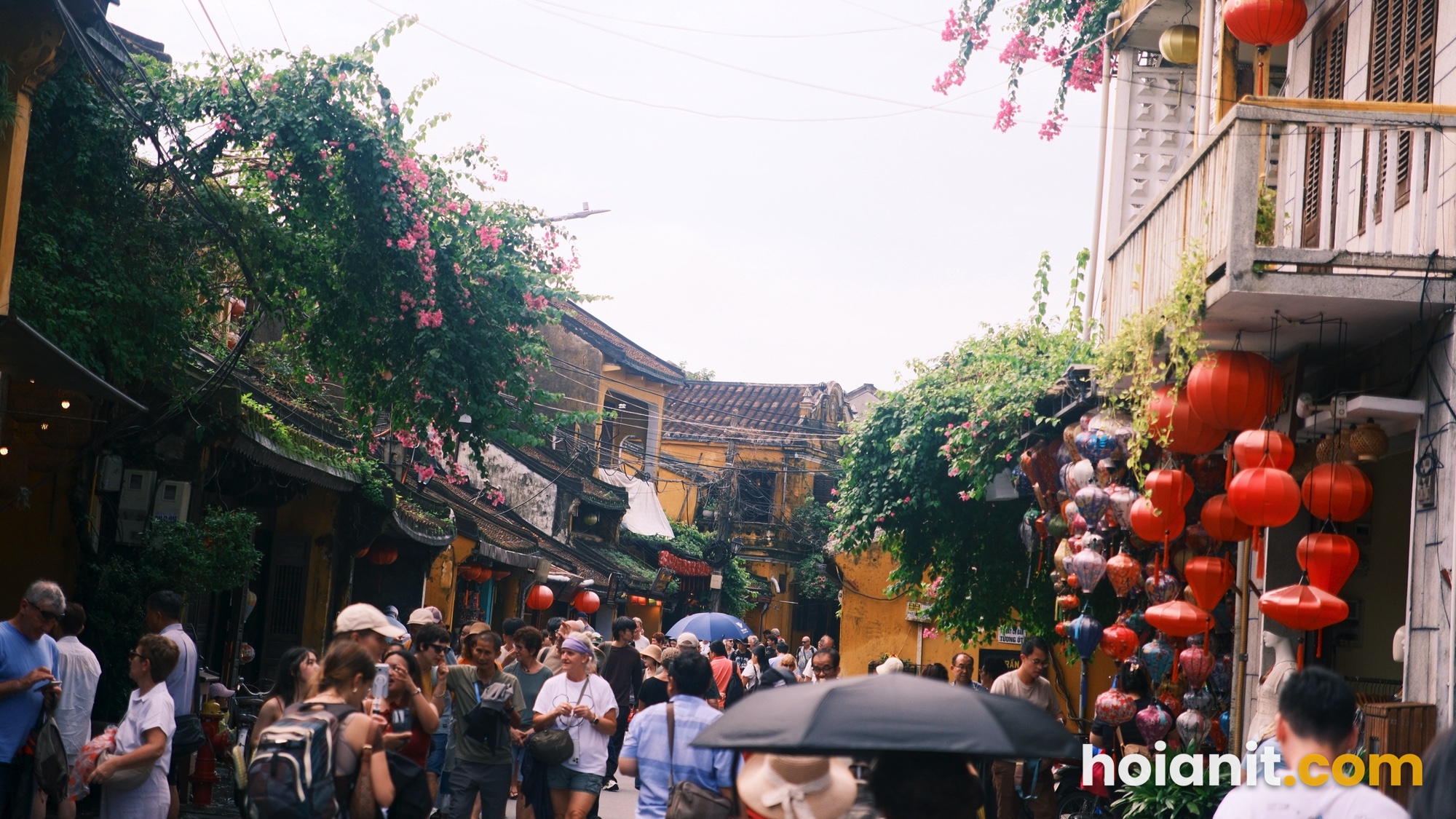
Riding out after the Old Town?
Scooters, e-bikes and bicycles at 84 Phan Chau Trinh, right on the edge of the protected zone. Free parking with us while you explore, plus helmets, raincoats and a map marked with the vehicle-free hours. For the full automatic range, start with Hoi An scooter rental — from 110,000₫ a day.
Museum of Trade Ceramics: frequently asked questions
Where is the Museum of Trade Ceramics in Hoi An?
At 80 Tran Phu, in the middle of the protected zone, 550 m and about seven minutes on foot from our shop at 84 Phan Chau Trinh.
How much does the Museum of Trade Ceramics cost?
There is no separate ticket office. It is one of the 21 ticketed Old Town sites, and since 10 August 2026 entry is 20,000₫ per person, the same for every nationality; children under 16 go free.
What are the Museum of Trade Ceramics opening hours?
Daytime, every day except the 15th of each month, when the museum closes for conservation work. Early morning and late afternoon are the quietest times.
How many objects are on display?
368 objects dating from the 9th–10th centuries to the 19th, including Vietnamese, Chinese, Japanese, Thai and Middle Eastern wares, according to the Hoi An heritage authority.
What is the Cu Lao Cham shipwreck?
A wreck found about 15 km north of Cu Lao Cham at roughly 80 m depth, loaded with 15th and 16th century ceramics from northern Vietnamese kilns. It showed that Vietnamese ceramics were exported through Hoi An, not only imported.
How long does a visit to the Museum of Trade Ceramics take?
30 to 45 minutes for the four sections, plus another 15 if you read the shipwreck panels closely and sit in the upstairs courtyard.
Keep reading Hoi An Travel Tips