
Hoi An Travel Tips
Sica Alley Hoi An: The Lane Named After a French Liquor Company
Sica Alley Hoi An: The Lane Named After a French Liquor Company
Sica Alley is a quiet kiet off 56 Le Loi, in the dead centre of Hoi An Old Town. Free, unticketed and usually empty before 8 a.m., it carries the name of a French alcohol company founded in 1907 — and a wartime story almost nobody tells.
People in Hoi An call an alley a kiet, and among the hundreds of them threading through the Old Town, Sica Alley has the strangest name of all. Not a founding craftsman, not a well, not a temple — four letters left behind by a French company that vanished from Vietnam more than seventy years ago. We followed that name into the colonial company files, and the story turned out to be far longer than the lane it belongs to.
- Where Sica Alley is, measured
- What Sica actually stands for
- The liquor warehouse and the alcohol war in Annam
- Before dawn, 2 September 1966
- What is in Sica Alley today
- Why the Old Town has so many alleys
- Photographing Sica Alley: when and how
- People live here — a short code of conduct
- A free morning route around Sica Alley
- Getting there and parking
- Frequently asked questions
Where Sica Alley is, measured
Sica Alley opens off 56 Le Loi Street, on the stretch between Phan Chau Trinh and Tran Phu, almost opposite Hoi An Communal House (Dinh Hoi An, 27 Le Loi) — the temple many locals still call Dinh Ong Voi, the Elephant Shrine. From the mouth of the lane the path runs west into the belly of the block, squeezing between ochre walls, then feeds into the tangle of alleys behind the main streets.
What surprised us when we measured it: Sica Alley sits almost exactly in the middle of the Old Town. On Google Maps walking directions it is 350 m and about 5 minutes from the Japanese Covered Bridge, 350 m from Hoi An Market at 01 Tran Phu, and 350 m from our shop at 84 Phan Chau Trinh. Whichever corner of town you start from, it is the same short walk. The coordinates are 15.87774, 108.32838 (plus code V8HH+39R).
On the paperwork: since 1 July 2025, when Quang Nam province merged into Da Nang City, this whole quarter sits in Hoi An ward, Da Nang City. Before that it was Minh An ward, Hoi An City, Quang Nam.
One sign that the lane has outgrown neighbourhood gossip: Google Maps now labels it separately as “Kiet Sica (Sica Alley)”, listed as a tourist attraction rather than an unnamed stretch of paving. House numbers inside run in the 56/… format — the chicken rice place deep in the lane is 56/16 Le Loi, the sixteenth door in from the street.
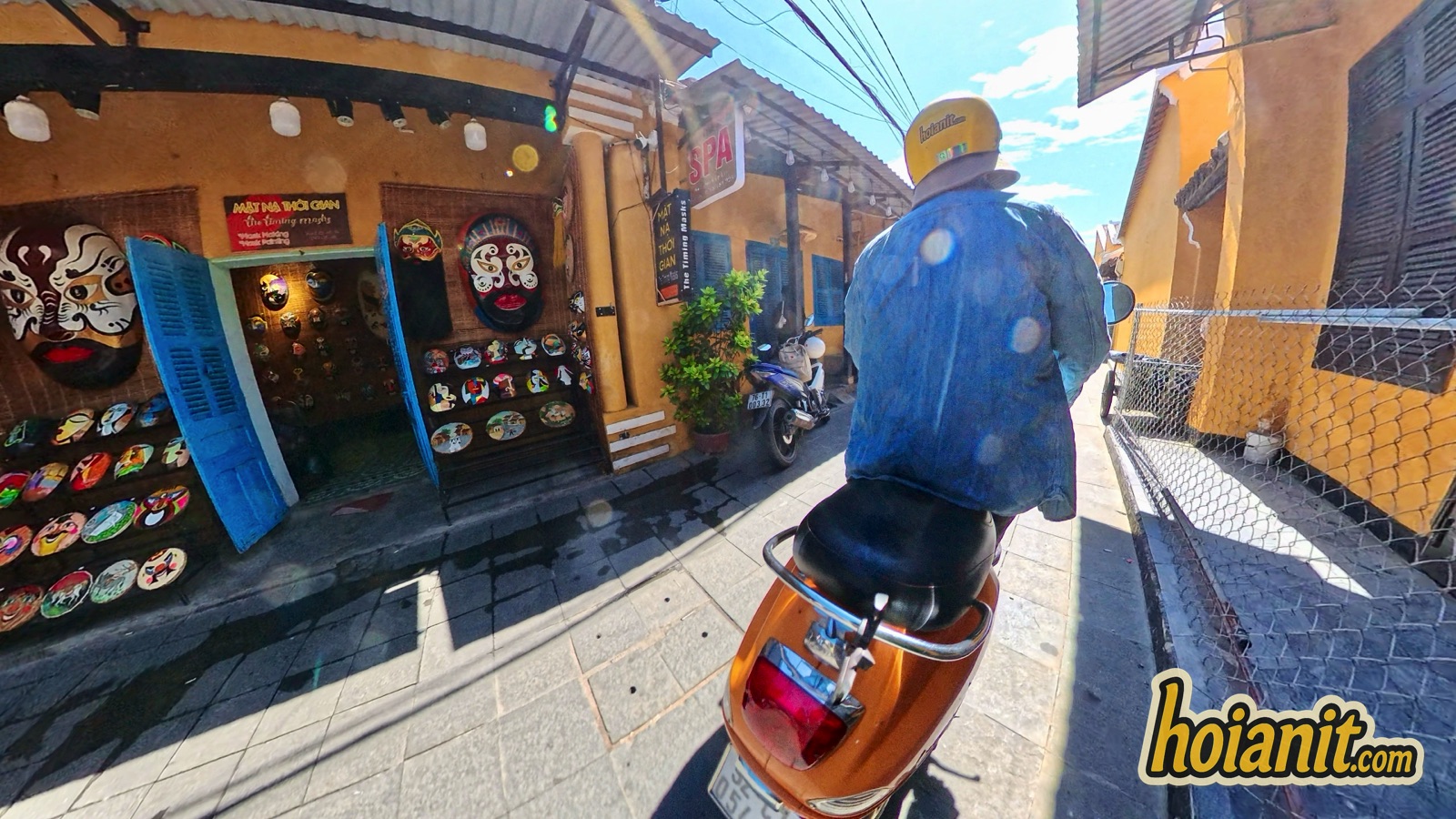
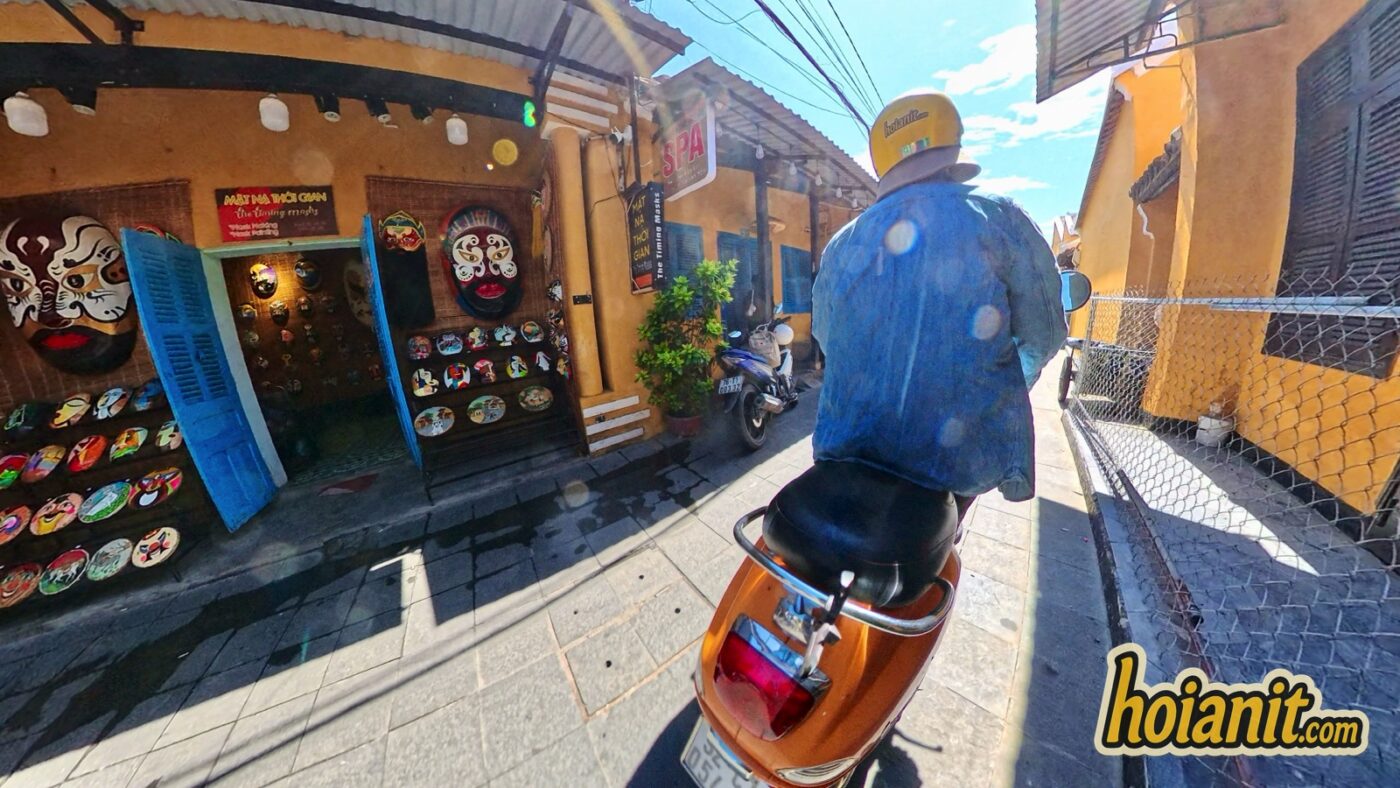
In Hoi An and the old Quang Nam area, kiet is the local word for a narrow lane. You will see both spellings in use: “kiet Sica” and “hem Sica” refer to exactly the same place. Hoi An people almost never say ngo — that is northern Vietnamese. Typing “Kiet Sica” into Google Maps finds it faster than “Sica Alley”.
What Sica actually stands for
Nearly every article about Hoi An stops at one sentence: Sica Alley is where the French had a liquor warehouse called SICA. True enough, but it leaves out the interesting part — what was SICA?
We went digging in the French colonial business archives and found a match that lines up on every detail: the Société Industrielle et Commerciale de l’Annam, officially abbreviated S.I.C.A., roughly “the Industrial and Commercial Company of Annam”. Its company file is published by the French research site Entreprises coloniales.
- Founded in 1907 as a joint-stock company.
- Registered business: the manufacture and sale of alcohol — in the original, fabrication et vente d’alcool.
- Operating base in Tourane — today’s Da Nang — which is how the company file is headed. Its registered seat later moved to Hanoi.
- Six distilleries in central Vietnam. The 1912 decree names them: Ba Don, Kim Long, Phu Cam, An Than, Bong Son and Phu My. None of them is in Hoi An — which is exactly why a trading port would need a warehouse rather than a still.
- Staff in the Faifo area. The 1936 Annam electoral roll includes a district called “Circonscription électorale de Faifo — Quangngai” listing SICA employees. Faifo was the European name for Hoi An.
Put it together: a French liquor company based in Da Nang, distilling elsewhere in Annam and with staff around Faifo, needed storage and a distribution point in the river port itself. A lane just off Le Loi, running deep into the block yet still connected to a main street, is close to the perfect place for a warehouse.
We have not found a document that says, in so many words, “the SICA warehouse at Faifo stood on Le Loi Street”. What we have are two halves. First, Vietnamese sources, including the Hoi An heritage centre’s own study quoted below, use the name “kiet SICA” for this lane, and local memory ties it to a French liquor warehouse. Second, the colonial company records confirm that S.I.C.A. was a French alcohol company founded in 1907, run from Tourane, with people in Faifo. Joining those two halves is our own inference. We think it is a strong one — but it is inference, not citation. If you have family papers or old photographs of that warehouse, we would like to see them.
The liquor warehouse and the alcohol war in Annam
To understand why a warehouse mattered enough to name a lane after, you have to zoom out a little.
In the early twentieth century alcohol was one of the three great revenue pillars of the colonial administration, alongside opium and salt. The giant of the trade was the Société française des distilleries de l’Indochine, founded in 1901 by Auguste-Raphaël Fontaine, which dominated rice-alcohol distilling in Tonkin and northern Annam for three decades. Fontaine alcohol was what Vietnamese villagers of the period called ruou ty — the licensed liquor each village was obliged to buy by quota.
S.I.C.A. was born into that world as a smaller rival in the centre. In 1912 Governor-General Albert Sarraut signed a decree allowing it to import factory alcohol into Annam up to half the authorised annual output of its six distilleries. The independence did not last. In 1954 the Distilleries de l’Indochine raised its stake in S.I.C.A. from 14 percent to more than half.
The end of SICA is also the end of the warehouse. The same 1954 record notes that the company’s plants had been entirely destroyed, leaving it to resell alcohol supplied from the Binh Tay plant in the south. Nine years into the First Indochina War, the name disappeared from the economic map of Vietnam.
What survived, oddly enough, was a lane. The warehouse is gone, the company is gone, but people in Hoi An still call the place Sica Alley — a French name that outlived a war, a change of street names and the town’s inscription as a World Heritage Site in 1999, purely because nobody ever bothered to stop saying it.
The warehouse disappeared three generations ago. The name stayed, because it never occurred to anyone to change it.
Before dawn, 2 September 1966
This is the part we believe no travel article has told. Sica Alley appears by name in a study published by the Hoi An Centre for Cultural Heritage Management and Preservation about the communal house, quoting the memoir of Dinh Van Loi of the Hoi An urban commando unit.
The setting: the communal house was guarded at night. For Vietnam’s National Day on 2 September 1966, the commando team decided to raise the flag of the National Liberation Front on its flagpole. Nguyen Thi Sim was given the job of sewing it — 1.2 by 2 metres.
- Around 3 a.m.Three men — Tran Do, Dinh Van Loi and Bui Son Thanh — set out and were stopped by a military police patrol. All three were in shorts and T-shirts, pretending to be out for early exercise. Fortunately they had not yet collected the flag or the grenade.
- Checking the groundAfter going through the motions of exercising in the courtyard and confirming no guards were present, Loi ran back for the flag and the grenade.
- Splitting the lookoutsFrom the memoir: “Comrade Tran Do kept watch on Pho Tung alley, comrade Thanh kept watch on SICA alley and Le Loi street.” The lane you are about to walk into was one of the two lookout posts that night.
- Flag plus grenadeOnce the flag was tied on, they hung an M26 grenade beneath it before hoisting — so that nobody would dare pull it down in a hurry.
- 7 a.m.Only then did the authorities notice. They surrounded the communal house, closed the road and blocked traffic.
- 10 a.m.Engineers finally arrived to sweep for mines and take the flag down. It had flown over the roof for seven hours in the middle of town.
The detail Old Town obsessives will enjoy most: “Pho Tung alley” in that memoir is also still there. Pho Tung sits at 51/7 Phan Chau Trinh and still serves beef noodle soup — rated 4.8 on Google from more than 700 reviews when we checked. On the map the two lookout posts are only about 65 metres apart as the crow flies, which makes sense: two men watching both ends of the same block. Two alleys in one page of a wartime memoir, both still open sixty years later — one selling pho, the other carrying the name of a French liquor firm.
Source: the study “Di tích đình Hội An trong lịch sử” (Hoi An Communal House in History), Hoi An Centre for Cultural Heritage Management and Preservation, quoting the memoir of Dinh Van Loi.
What is in Sica Alley today
Do not expect a museum. Sica Alley is now an ordinary residential lane of the Old Town: ochre walls, wooden shutters, cables strung overhead, potted plants by the doorsteps, motorbikes tilted against the wall to leave a path. Along the lane a mask-painting workshop hangs its work on the wall, which is the shot most people come away with.

A few coordinates worth knowing
Com ga Huong – Kiet Sica · 56/16 Le Loi. A chicken rice place deep inside the lane that only opens around 16:30 — it does not serve breakfast. Google gives it 3.4 out of 5 across 82 reviews, with prices listed at under 200,000₫ a person: not a consensus favourite, but a neighbourhood regular whose owner makes her own chilli sauce.
Hoi An Communal House (Dinh Hoi An) · 27 Le Loi, across from the alley mouth. Its origins go back to the Le dynasty; it was restored in the seventeenth year of Gia Long and moved when the French cut a new street through the quarter under Emperor Thanh Thai. This is where the 1966 flag story happened.
Pho Tung · 51/7 Phan Chau Trinh, the other lookout lane, a minute away.
The alley network behind · Keep walking and you will meet other branches leading towards Tran Phu. Several of Hoi An’s better-known restaurants sit at the end of lanes like these — the hidden-down-an-alley restaurant is practically a local genre.
If you are after grandeur, this is not it. If you are after the specific sensation of stepping from a street packed with visitors into complete quiet within ten paces, this lane delivers it about as cleanly as anywhere in town, for the simple reason that hardly any tourists think to turn in.
Why the Old Town has so many alleys
There are real numbers behind this. Research by Tran Thi Le Xuan of the Hoi An Centre for Cultural Heritage Management and Preservation puts figures on the Old Town alley system:
| Measure | Figure | What it means on foot |
|---|---|---|
| Typical width | 1 – 2 m | Two people passing must both turn sideways |
| Narrowest lanes | about 0.7 m | One person only; a large backpack has to go sideways |
| Density | roughly one alley per ten houses | Walk one block and you miss about ten turnings |
| Tran Phu to Nguyen Thai Hoc alone | 20 through-alleys | Almost every stretch has a shortcut down to the river |
| Shape | usually straight, few dead ends | Turn in with confidence; you rarely have to double back |
The reason for that density is thoroughly practical. Hoi An was a trading port. The old shophouses are tube houses — narrow frontage, great depth — and goods coming off the river needed a route to the storerooms at the back. The alleys served as trade routes, as fire breaks and as ventilation between tightly packed rows. When roads replaced boats, the lanes simply stayed where they were, and became the thing visitors now hunt for with a camera.

That is also why Hoi An alleys are named after whatever was actually there: Ba Le well alley has the ancient Cham well with the sweetest water in town, Nhi Trung alley has a mossy well sitting square in the middle of the path, Am Hon shrine alley has the shrine, and Kiet Sica had the liquor warehouse. Alley names here work as a shared memory map. If you want to walk a few more of them, we cover the best in our guide to the hidden alleys of Hoi An, and this lane also makes our list of Hoi An hidden gems.
Photographing Sica Alley: when and how
Hoi An alleys are narrow and high-walled, so the light inside changes fast through the day. A few things we have learned taking guests down them:
- 6:30 to 8:00 is the golden window. The sun is still low, the ochre walls warm up without blowing out, and — more importantly — there is nobody in your frame.
- 16:30 to 17:30 is the second option. Soft light, but by then people are moving about, parking bikes, cooking, and the chicken rice shop is opening. Beautiful in a lived-in way rather than an empty one.
- Avoid 11:00 to 14:00. Overhead sun cuts hard bright and dark bands across the path and the files are almost unsalvageable.
- Shoot from the mouth of the lane inwards for the leading-line effect. Two walls converging is the single strongest composition these alleys offer.
- Go vertical rather than horizontal. The lane is tall and tight; a portrait frame tells the story far better.
- Watch for the wooden shutters and ventilation grilles. That detail is what separates an Old Town alley from any yellow wall anywhere else.
- Do not write off rainy days. Wet ochre goes several shades deeper, and the paving reflects late-afternoon light beautifully.

Alley names, wells, shrines and shophouse layouts make far more sense with someone explaining them. If you would rather not piece it together alone, a guided walk or Old Town tour on GetYourGuide covers the lanes and the trading history behind them. Most tours there offer free cancellation up to 24 hours ahead — check the listing. Booking through that link supports this guide at no extra cost to you.
People live here — a short code of conduct
The key difference between this lane and a heritage site: nobody sells you a ticket, but nobody invited you either. The whole lane is the front yard of the families living along it.
1. Keep your voice down, especially before 8 a.m. and after 9 p.m.
2. Never step over a threshold or into someone’s yard to get a better angle.
3. Ask before photographing residents. People in Hoi An almost always say yes — but you have to ask.
4. Do not move plant pots, bicycles or chairs to tidy up your composition.
5. Give way to anyone carrying goods. The lane is narrow, they are working and you are sightseeing.
6. No litter, no smoking in the lane.
7. No drones over residential blocks in the Old Town.
To be blunt: a number of Hoi An alleys have started putting up no-photography signs or stringing ropes across the entrance because visitors pushed too far. Kiet Sica is still relaxed about it, and the only way it stays relaxed is if people behave as though they are walking past someone’s home — because they are.
A free morning route around Sica Alley
Sica Alley takes 15 to 20 minutes. It works best as one stop in a morning walk rather than a destination in itself — and because it sits 350 m from both ends of Tran Phu, it slots into almost any route.
A morning of alleys, without spending a dong on tickets
6:30 – 7:15 · Breakfast at Pho Tung, the 1966 lookout lane at 51/7 Phan Chau Trinh. The Old Town is at its best now — see our notes on a peaceful early morning in Hoi An.
7:20 – 7:45 · Sica Alley, then cross Le Loi to the communal house at number 27. This is the emptiest the lane gets all day.
7:50 – 8:40 · Walk over to the Ba Le well and the alleys off Tran Phu. More of them in our guide to the hidden alleys of Hoi An.
8:45 – 9:30 · Chua Ong (Quan Cong Temple) and Hoi An Market, both minutes away on foot.
Late afternoon · Come back to the lane for com ga after 16:30 if you want to close the loop. Nearby, Phap Bao Pagoda on Hai Ba Trung is another free, almost tourist-free stop.
Getting there and parking
Sica Alley sits on Le Loi, inside the Old Town vehicle restriction zone. During restricted hours you cannot ride up to the alley mouth. Check the current schedule in our guide to Hoi An Old Town vehicle restriction hours.
| Starting point | Walk to Sica Alley | How |
|---|---|---|
| Japanese Covered Bridge | 350 m · 5 min | East along Tran Phu, left onto Le Loi |
| Hoi An Market (01 Tran Phu) | 350 m · 5 min | West along Tran Phu, right onto Le Loi |
| Anh Khoa, 84 Phan Chau Trinh | 350 m · 5 min | East along Phan Chau Trinh, right onto Le Loi |
- From the Japanese Covered BridgeThe bridge is the usual first stop; more on the Japanese Covered Bridge if it is your first visit. The lane is a five-minute walk east.
- By motorbike or scooterPark at one of the lots around Phan Chau Trinh, Hoang Dieu or Nguyen Hue and walk in. Expect 5,000 to 10,000₫. See how the Old Town ticket and kiosks work if you plan to visit the ticketed monuments afterwards — the lane itself needs no ticket.
- By carNot advisable. Park on the outer ring and continue on foot or by bicycle.
- From Da NangAbout 30 km, 45 to 60 minutes by motorbike along Vo Nguyen Giap and Lac Long Quan, then park outside the Old Town and walk.
More Bike Options in Hoi An


E-Bike · No license


No License? No Worries!
Rent a 50cc Bike in Hoi An Today!Walk the alleys, ride everything else
Lanes are for walking, but the beaches, Tra Que vegetable village and Cam Thanh need wheels. Anh Khoa is a 5-minute walk from the lane, delivers bikes to your hotel and answers the roadside line 24/7.
84 Phan Chau Trinh, Hoi An · info@hoianit.comFrequently asked questions
Where is Sica Alley in Hoi An?
The lane opens off 56 Le Loi Street, between Phan Chau Trinh and Tran Phu, almost opposite Hoi An Communal House at 27 Le Loi. It is about 350 m, or 5 minutes on foot, from the Japanese Covered Bridge, Hoi An Market and 84 Phan Chau Trinh. The administrative address today is Hoi An ward, Da Nang City.
What does the name Sica mean?
Sica comes from a French liquor warehouse that once stood in this lane. Colonial business records describe S.I.C.A., the Société Industrielle et Commerciale de l’Annam, as a French alcohol company founded in 1907, run from Tourane, now Da Nang, with staff in Faifo, the old European name for Hoi An. Linking the lane to that company is our own inference from those records.
Do you need a ticket for Sica Alley?
No. It is a residential lane, not one of the ticketed heritage monuments of Hoi An Ancient Town. You can walk in freely, there is no charge and nobody checks tickets.
What is the best time to visit Sica Alley?
Between 6:30 and 8:00 in the morning, when the light is still low and the lane is almost empty. The second-best window is 16:30 to 17:30. Avoid roughly 11:00 to 14:00, when overhead sun creates harsh bands of light and shadow along the path.
Is there anywhere to eat in Sica Alley?
Yes. Com ga Huong sits at 56/16 Le Loi, deep inside the lane. It only opens from around 16:30 and does not serve breakfast. For breakfast, Pho Tung at 51/7 Phan Chau Trinh is a minute away.
What happened in Sica Alley in 1966?
Before dawn on 2 September 1966, a Hoi An commando team raised a National Liberation Front flag on the communal house opposite the lane. According to the memoir of Dinh Van Loi, quoted by the Hoi An heritage centre, one man kept watch on SICA alley and Le Loi street while another watched Pho Tung alley. The flag flew for about seven hours.
What is the difference between kiet and hem?
There is none in practice. Kiet is the local word used in Hoi An and central Vietnam for a narrow alley, while hem is the more general southern term. Both kiet Sica and hem Sica refer to the same lane. Hoi An people rarely use the northern word ngo.
Can you ride a motorbike into Sica Alley?
No, and you should not try. The lane is narrow, people live along it, and it lies inside the Old Town vehicle restriction zone. Park at one of the lots around Phan Chau Trinh, Hoang Dieu or Nguyen Hue for 5,000 to 10,000₫ and walk in.
For the full list of com ga shops beyond the alley, see our guide to the best chicken rice in Hoi An. Đọc bằng tiếng Việt: Kiệt Sica Hội An – con kiệt mang tên một hãng rượu Pháp.
Updated October 2026. Walking distances measured on Google Maps walking directions to the lane’s pin (15.87774, 108.32838). Sources: the study “Di tích đình Hội An trong lịch sử” by the Hoi An Centre for Cultural Heritage Management and Preservation, quoting the memoir of Dinh Van Loi and giving the communal house address as 27 Le Loi; the alley survey by Tran Thi Le Xuan of the same centre; and the S.I.C.A. company file on entreprises-coloniales.fr (founding 1907, the 1912 Sarraut decree naming six distilleries, and the 1954 stake and destroyed plants). The link between the lane name and the S.I.C.A. company is our own inference from those sources. Ratings and opening hours from Google Maps, October 2026. This page contains an affiliate link: if you book through it we may earn a small commission at no extra cost to you. Kiet Sica is a residential lane — please keep noise down and respect the privacy of the families who live there.








Pick your ride in Hoi AnChọn xe cho chuyến đi Hội An
Scooters, electric bikes and bicycles from one shop in the Old Town — delivered to your hotel, helmets and roadside help included.Xe máy, xe điện và xe đạp — giao tận khách sạn, kèm hai nón bảo hiểm và hỗ trợ dọc đường.
Not sure which one fits? Message us on WhatsApp and we’ll recommend a bike for your plans.
Chưa biết chọn xe nào? Nhắn Zalo 0935 439 306, tụi mình tư vấn theo lịch trình của bạn.