

Hoi An Travel Tips
Japanese Covered Bridge Hoi An (Chùa Cầu) – 2026 Guide
Japanese Covered Bridge Hoi An (Chùa Cầu) – 2026 Guide
It is not a pagoda. It was not built by the Vietnamese. And the version you photograph today was rebuilt between 2022 and 2024 — with roughly 60% of its original timber still in place. Here is the whole story, and how to visit it properly.
The Japanese Covered Bridge — Chùa Cầu, or officially Lai Viễn Kiều — is the single most photographed object in Vietnam’s most photographed town. It is on the back of the 20,000₫ banknote in your wallet right now. And almost everything written about it in English gets at least one thing wrong: its name, its religion, its age, or its condition.
Some links in this article are affiliate links — if you book through them, we earn a small commission at no extra cost to you. It helps keep this local guide free and updated.
We live and work 400 metres from it. We watched the entire 2022–2024 restoration happen from behind the protective shed, and we’ve fielded the same questions from guests every week since it reopened. This guide covers what the Japanese Covered Bridge actually is, the restoration by the numbers, the honest story of the “it looks too new” argument that broke out in 2024, and the practical detail — tickets, hours, parking, the 15:00 street closure — that decides whether your visit is a pleasure or a scramble.
The Japanese Covered Bridge at a glance
- Where — West end of Trần Phú, spanning a small canal into Nguyễn Thị Minh Khai, Hội An Old Town
- Official name — Lai Viễn Kiều (来遠橋), “the Japanese Covered Bridge for friends from afar”, given in 1719
- To look at it — Free. The bridge is in the open street; you can photograph it any time, day or night
- To walk across it — Requires the Old Town heritage ticket: 20,000₫ per person, any nationality (since 10 August 2026)
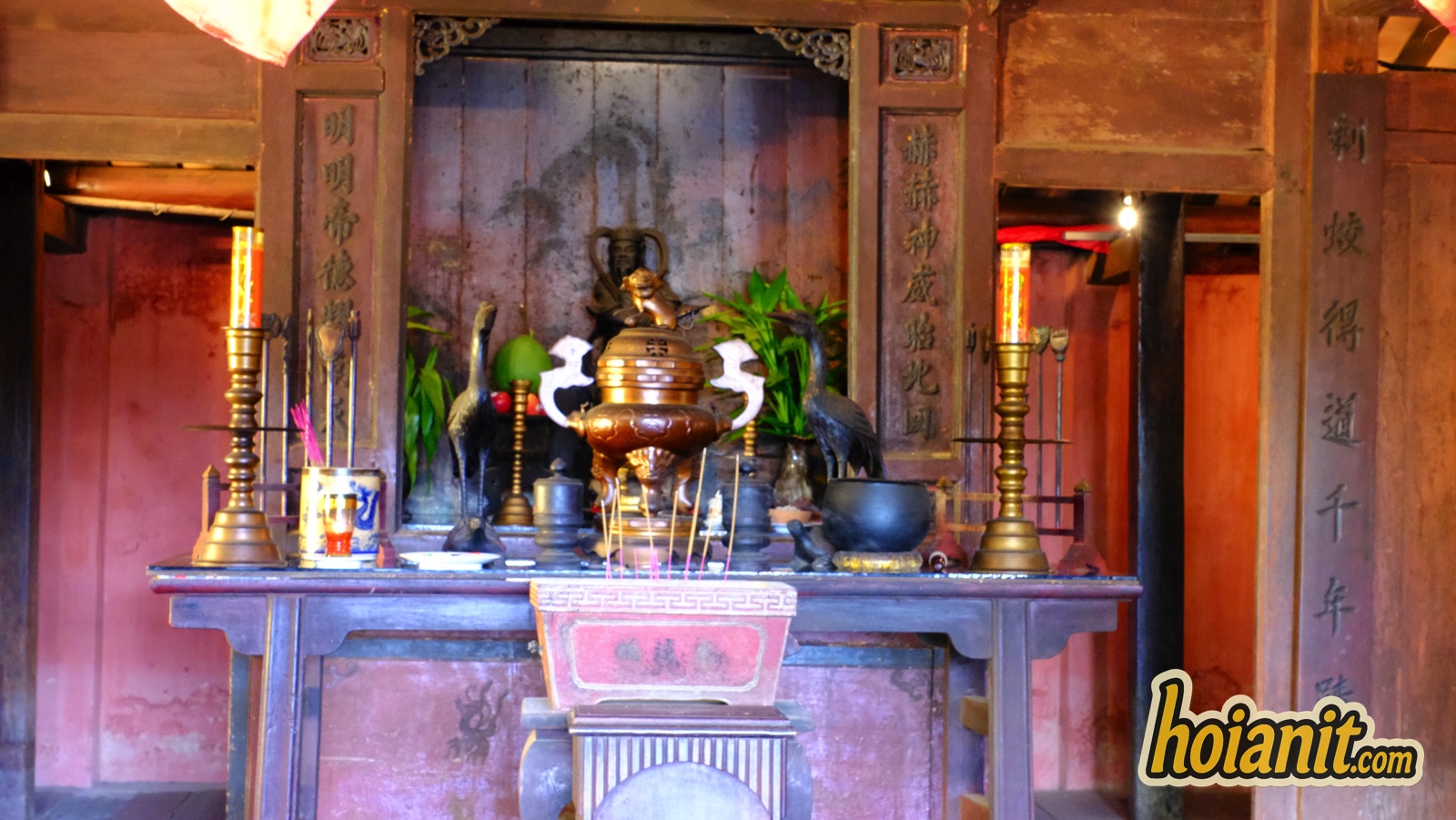
- What’s inside — A small shrine to Bắc Đế Trấn Vũ, a Taoist deity. There is no Buddha and no monk
- Last restored — 28/12/2022 to 03/08/2024, at a cost of 20.2 billion₫
- Best light — 05:30–06:30 for empty frames; 18:30–20:00 when the lanterns are lit
- It is not a pagoda — what “Chùa Cầu” really means
- Who built it, and the name a lord gave it in 1719
- The architecture of the Japanese Covered Bridge: 18 metres, one deliberate curve
- The monkey, the dog and the earthquake catfish
- The 2022–2024 restoration, by the numbers
- “It looks too new” — the honest version
- Japanese Covered Bridge tickets, hours and what they buy
- When to go, and how to photograph the Japanese Covered Bridge
- Riding here — and the 15:00 street closure
- What’s within five minutes’ walk
- Etiquette inside the shrine
- FAQ
It is not a pagoda — what “Chùa Cầu” really means
English guides almost universally translate Chùa Cầu as “Pagoda Bridge” or “Bridge Pagoda”, and then describe a Buddhist temple sitting on a bridge. That is not what is there.
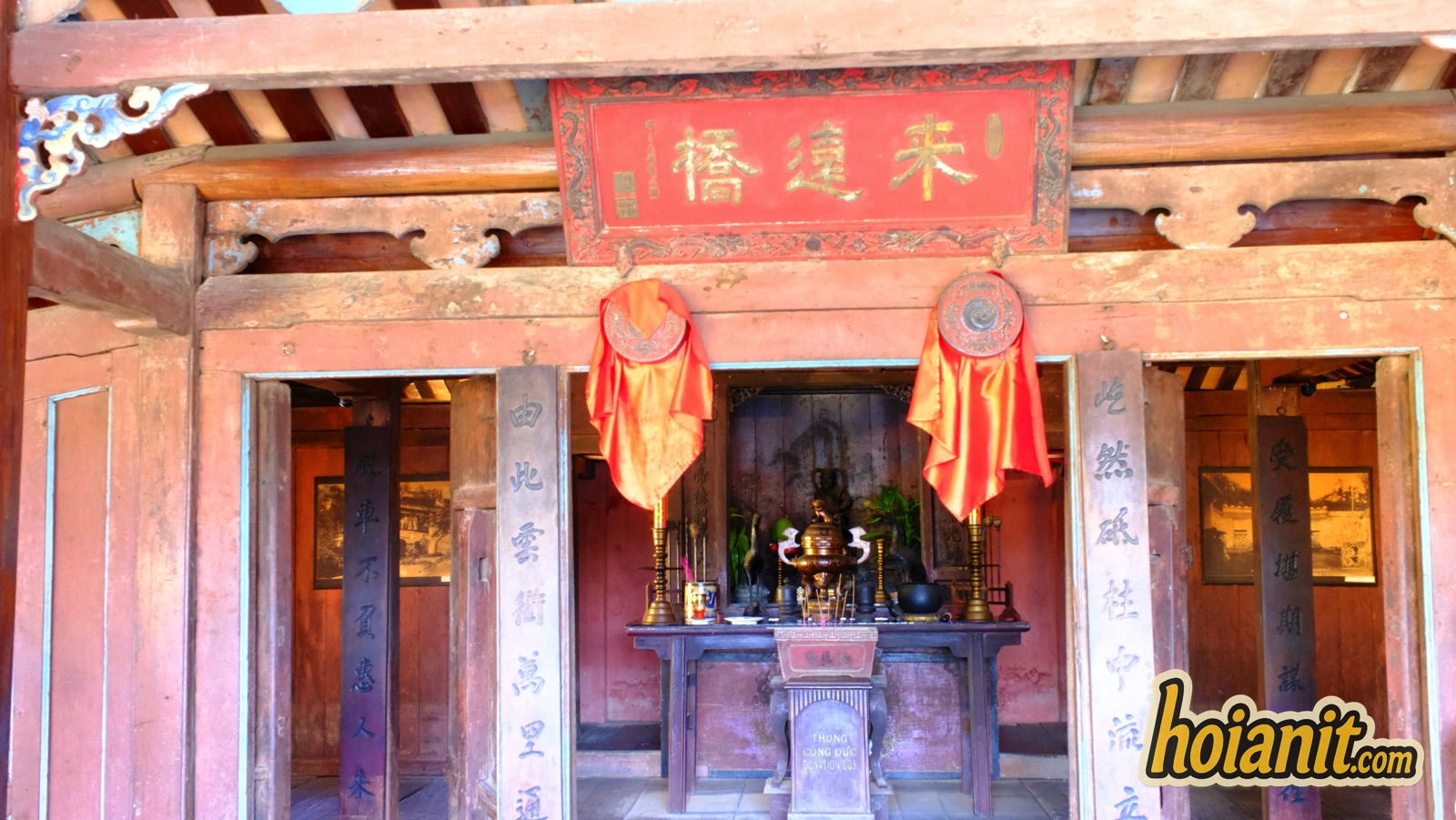
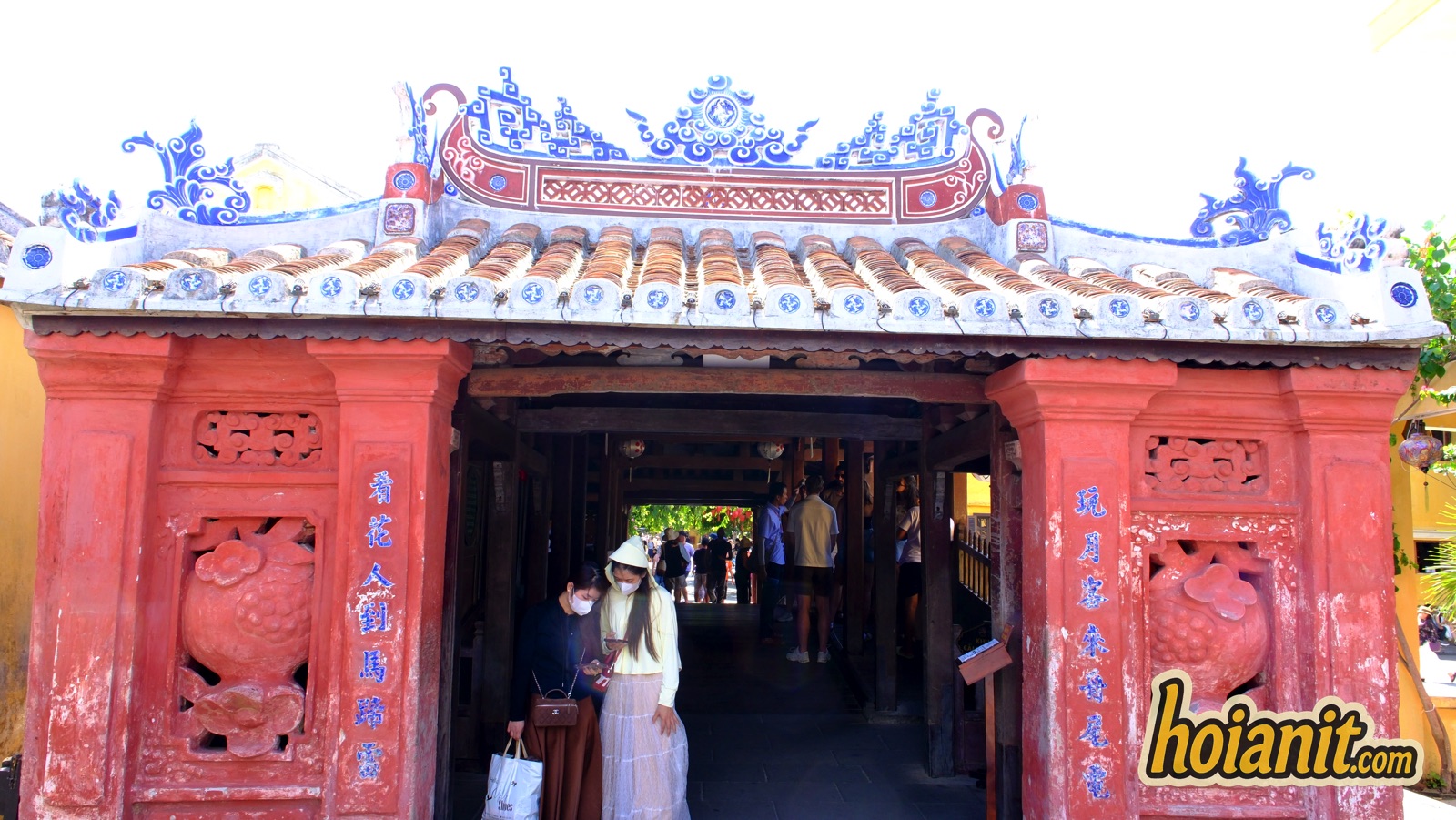
The small shrine built into the northern side of the Japanese Covered Bridge houses a wooden statue of Bắc Đế Trấn Vũ — the Northern Emperor, a Taoist deity of water, weather and protection, known in Chinese tradition as Xuanwu. He is a guardian against floods and storms, which for a river town built on a flood plain is exactly the god you want watching your bridge. There is no Buddha statue, no resident monk, and no Buddhist function.
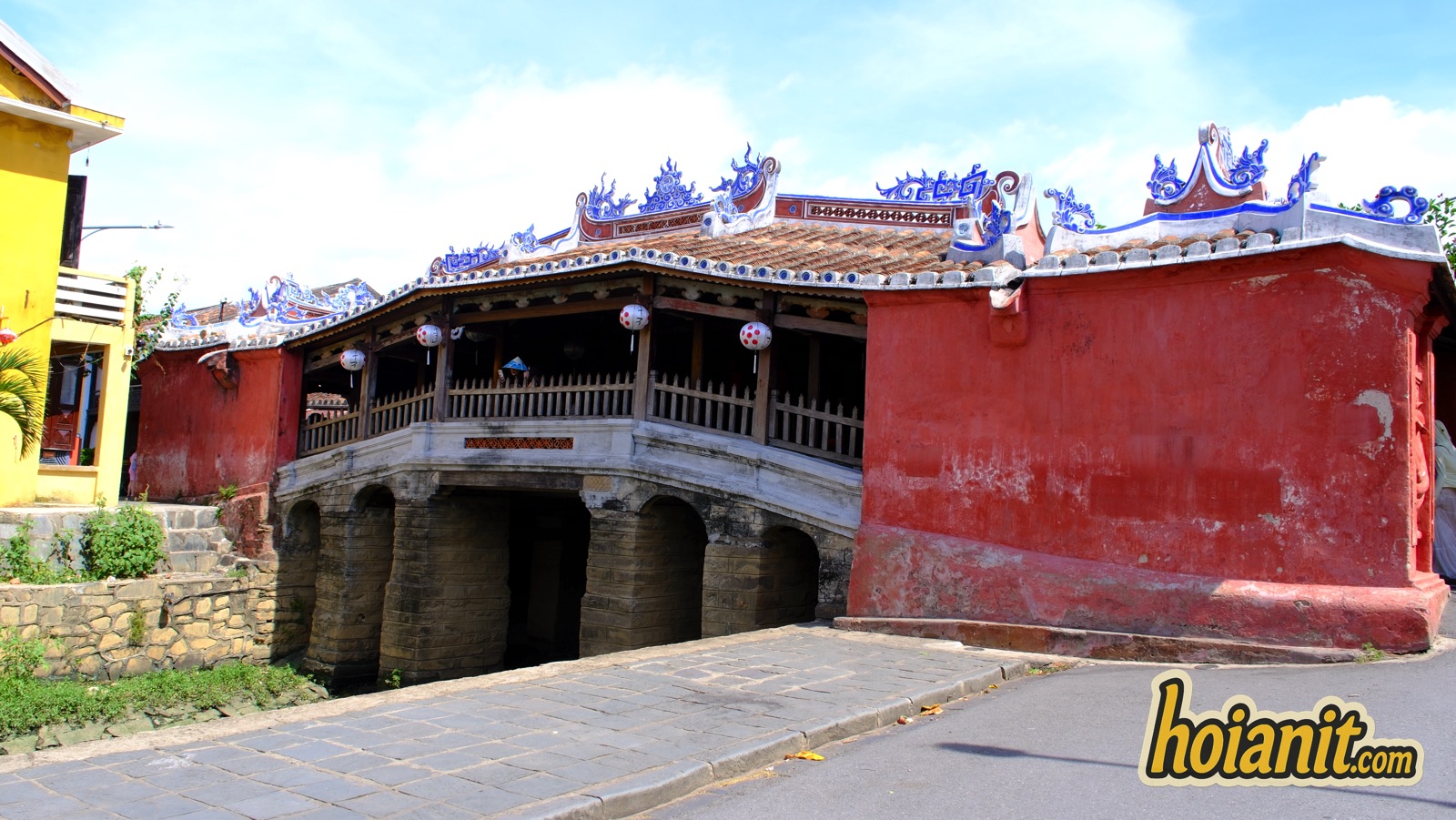
The Vietnamese word chùa does get used loosely for shrines and temples in general, which is where the confusion begins. But if you walk across expecting incense and a Buddha, what you will actually find is a modest Taoist altar to a flood god — and knowing that changes what the whole structure means.
Why a flood god matters here. Hội An floods. Not occasionally — most years, in October and November, the Thu Bồn comes over the banks and the Old Town takes water. Shopkeepers on Bạch Đằng keep a stack of boards and a boat. The bridge’s shrine was not decorative; it was insurance. When you see the high-water marks painted on the walls of the old houses nearby — some of them above head height — the choice of deity stops being trivia and starts making sense.

Who built it, and the name a lord gave it in 1719
The bridge was built by the Japanese merchant community around the turn of the 17th century, when Hội An was one of Asia’s great trading ports and Japanese, Chinese, Dutch and Portuguese traders all kept quarters here. It linked the Japanese quarter on one side of the canal with the Chinese quarter on the other — a piece of infrastructure that was also a piece of diplomacy.
In 1719, Lord Nguyễn Phúc Chu visited Hội An and gave the bridge a formal name: Lai Viễn Kiều (来遠橋) — “the Japanese Covered Bridge for friends coming from afar”. Those three characters are still carved on the board above the main entrance. It is one of the few places in Vietnam where you can stand under a name plaque and know the exact year, and the exact person, that put it there.
Japan closed itself to the outside world under the sakoku policy from the 1630s and the Japanese community in Hội An dwindled and eventually dispersed. The bridge outlived them by four hundred years.
| Year | What happened |
|---|---|
| ~1590s–1600s | Built by Japanese merchants over the canal |
| 1719 | Named Lai Viễn Kiều by Lord Nguyễn Phúc Chu |
| 1817, 1865, 1915, 1986 | Four documented historical restorations |
| 1990 | Recognised as a National Historical–Cultural Relic |
| 1999 | Hội An Ancient Town inscribed on the UNESCO World Heritage List |
| 2022–2024 | The most thorough restoration in its history |
Check your wallet. The bridge is printed on the reverse of the Vietnamese 20,000₫ polymer banknote. Hold the note up next to the real thing — it is the cheapest and most satisfying photo in Hội An, and almost nobody thinks to do it.
The architecture of the Japanese Covered Bridge: 18 metres, one deliberate curve
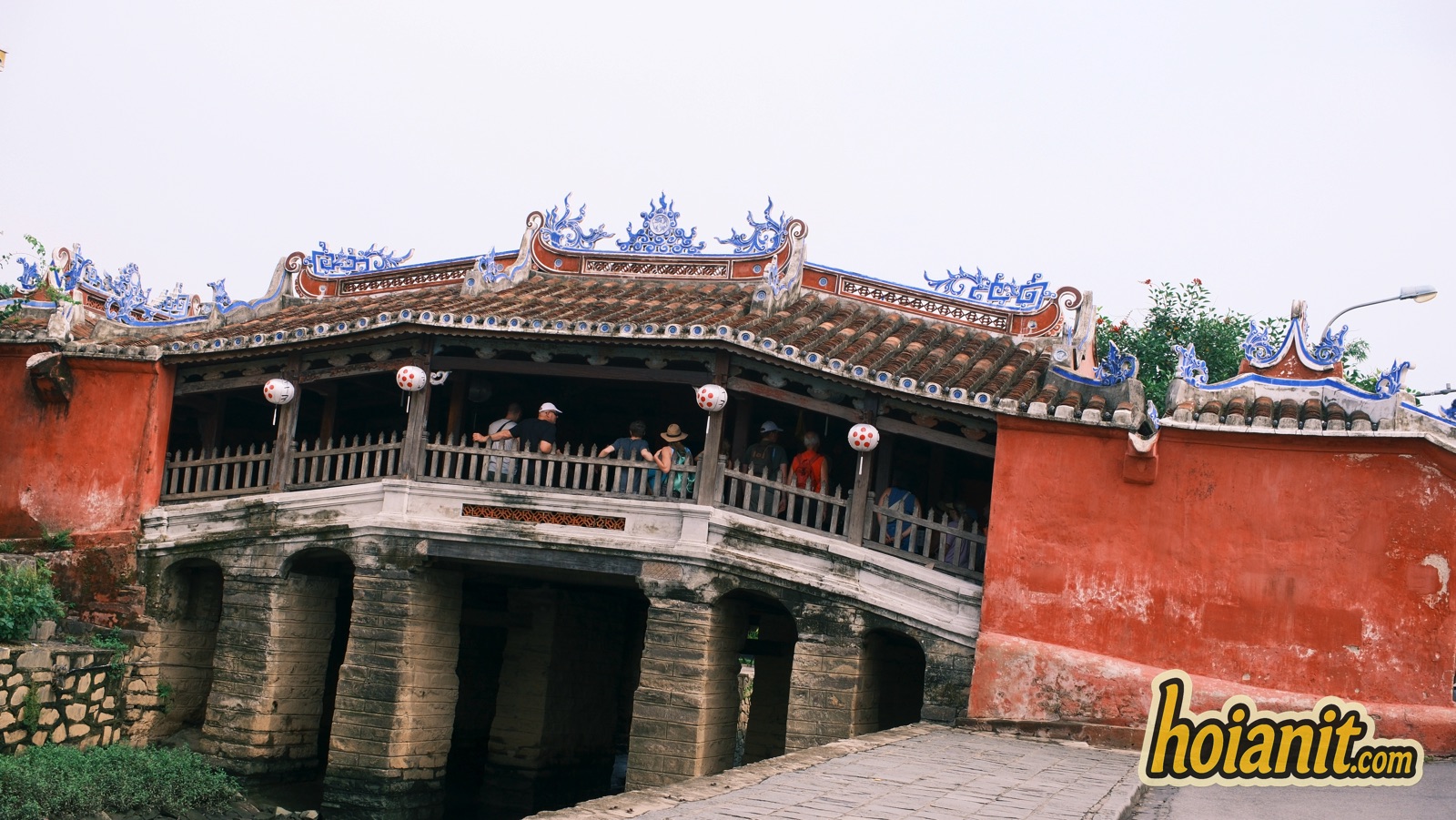
The bridge is roughly 18 metres long: a timber structure resting on brick-and-stone piers, roofed along its entire length with âm dương (yin-yang) tiles — the interlocking convex-and-concave tiles that give every roof in the Old Town its rippled texture. The whole thing is joined in the traditional way, with mortise and tenon rather than nails.
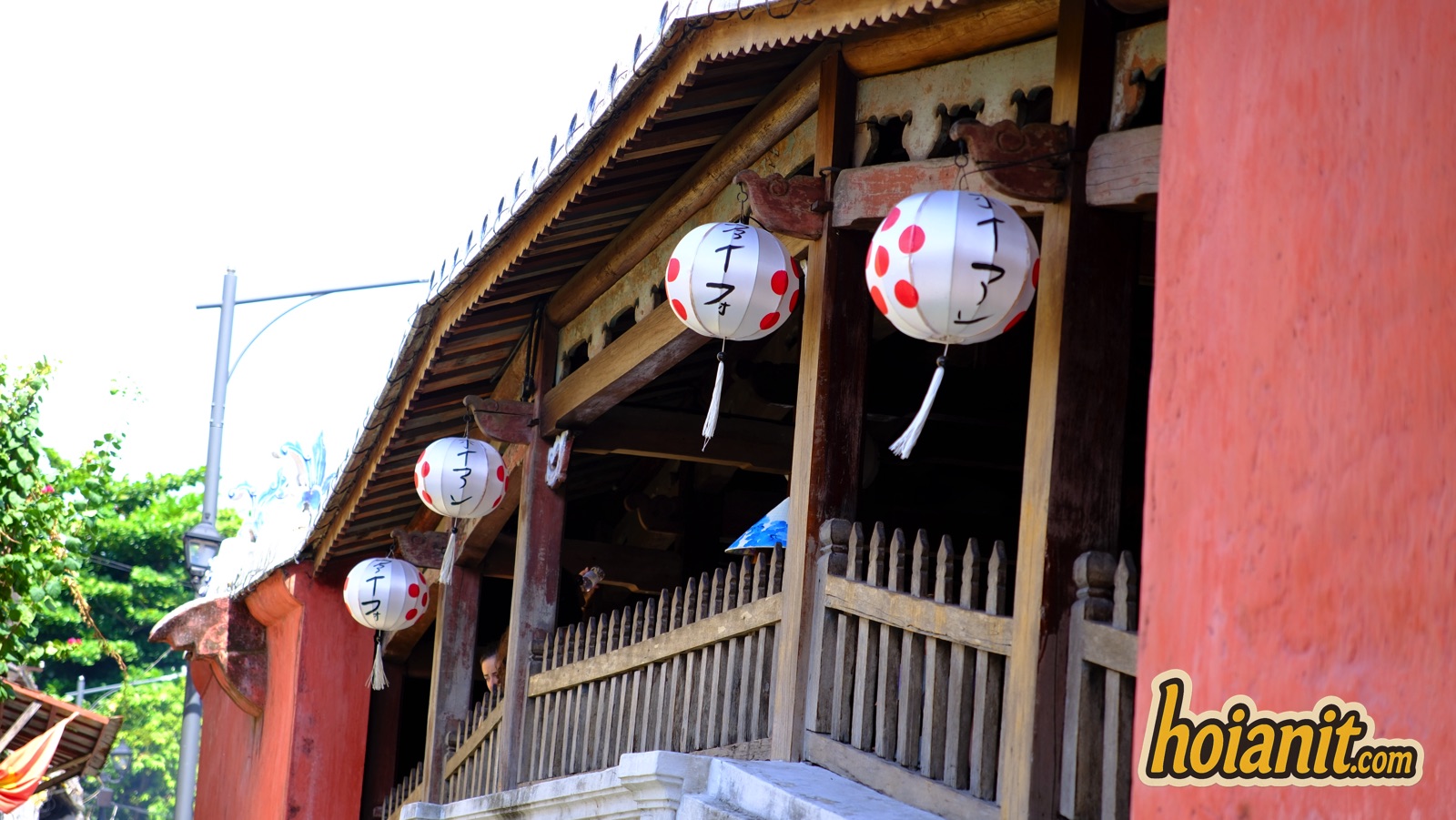
- The roof is the point. A covered bridge in a monsoon climate is a shelter as much as a crossing. People waited out downpours here for centuries.
- The deck curves. The floor rises gently to the middle. Historical survey evidence suggests it was originally flat and the curve was introduced in a 20th-century repair — but the restoration team kept the curve deliberately (see section 05).
- The shrine is off-centre. It sits on the northern side rather than in the middle, which is why the walkway feels asymmetric.
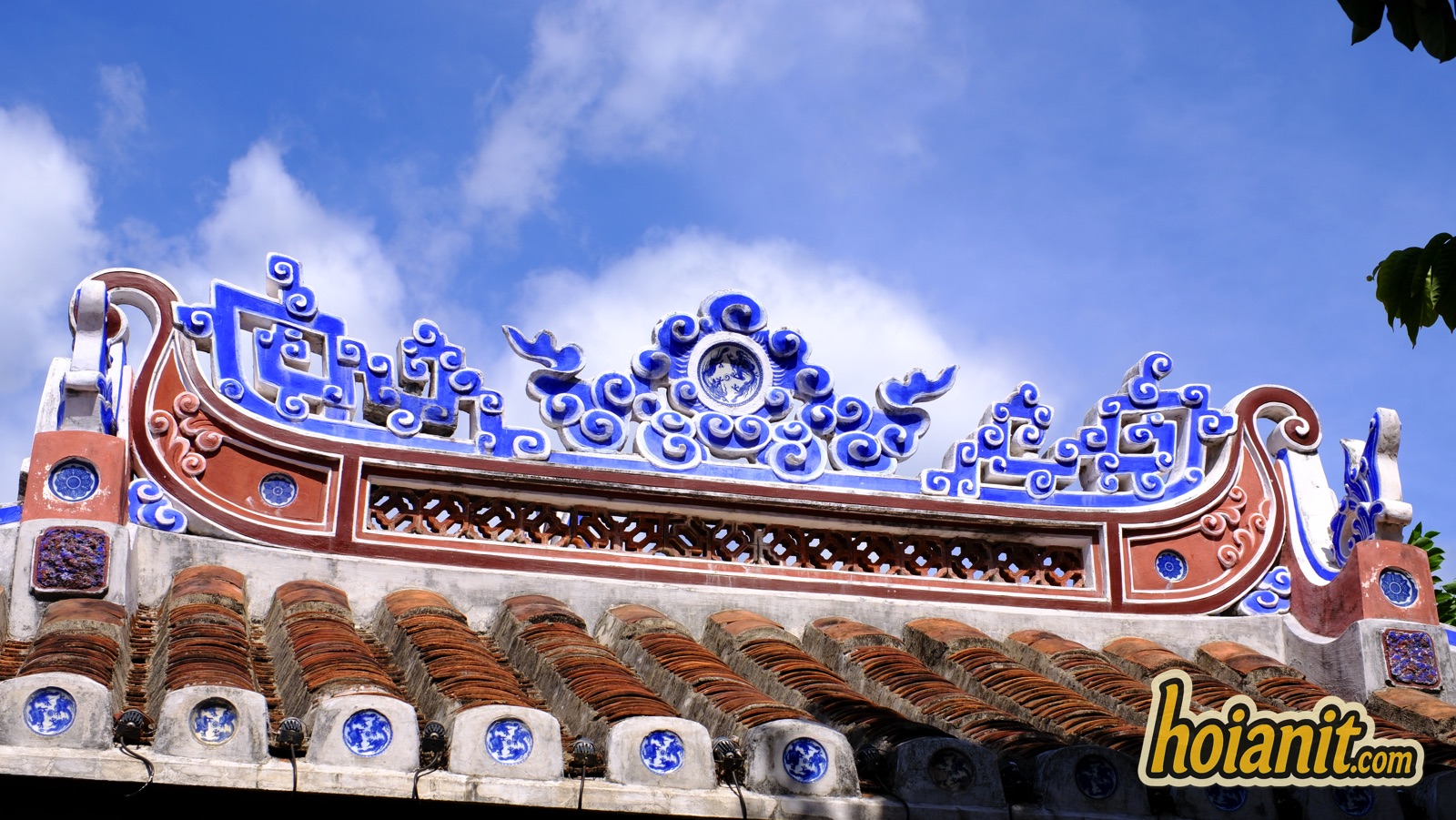
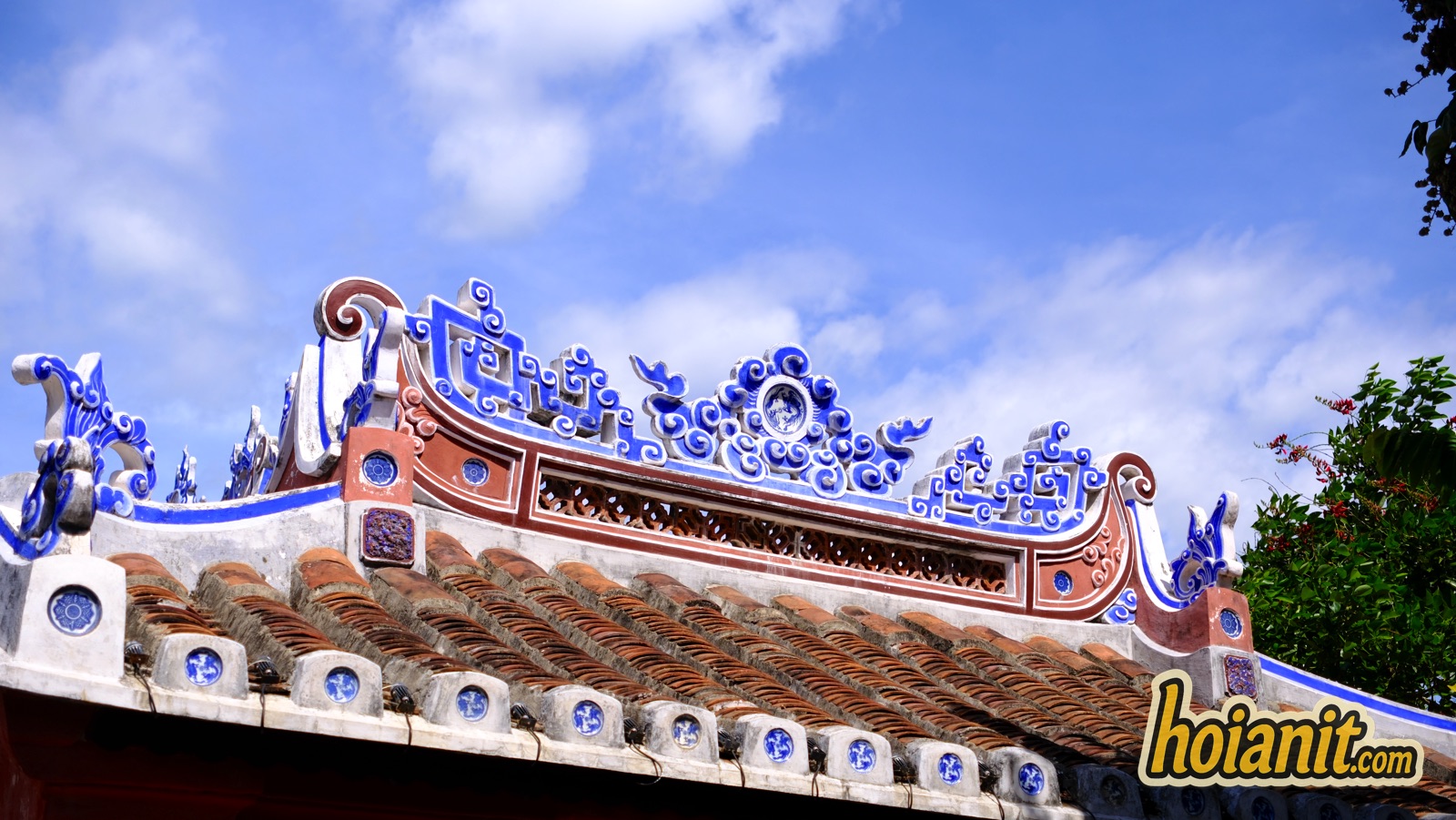
- Look for the ceramic discs. Antique porcelain plates are set into the decorative work — 80% of them are the original pieces, put back after the restoration.
- Look up at the ridge. The small animal figures along the roof ridge (con giống) are individually made. Only about a third survived to be reused.
Cần xe để đi?
Anh Khoa giao xe máy, xe máy điện và xe đạp tận khách sạn trong Hội An, kèm mũ bảo hiểm và áo mưa, hỗ trợ 24/7.
84 Phan Châu Trinh, Hội An · 0935 206 306
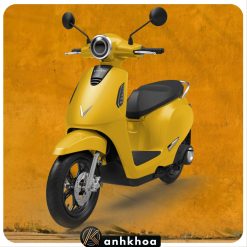
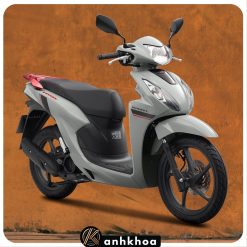
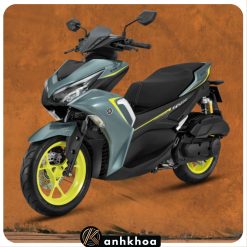
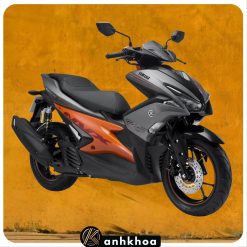
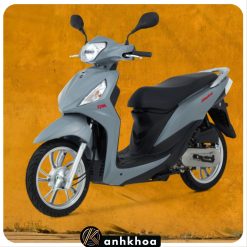



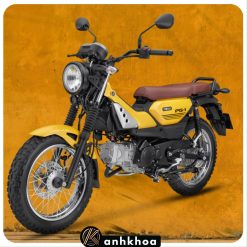
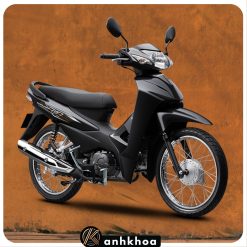
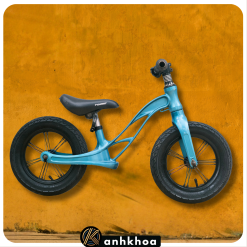
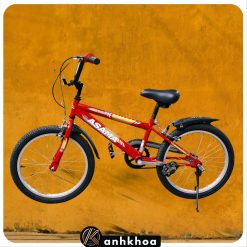

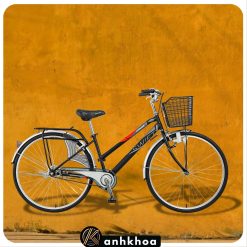
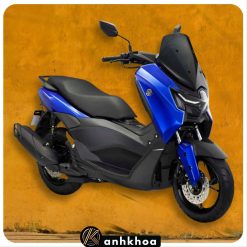
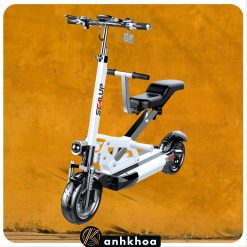
Bikes Rental


The monkey, the dog and the earthquake catfish
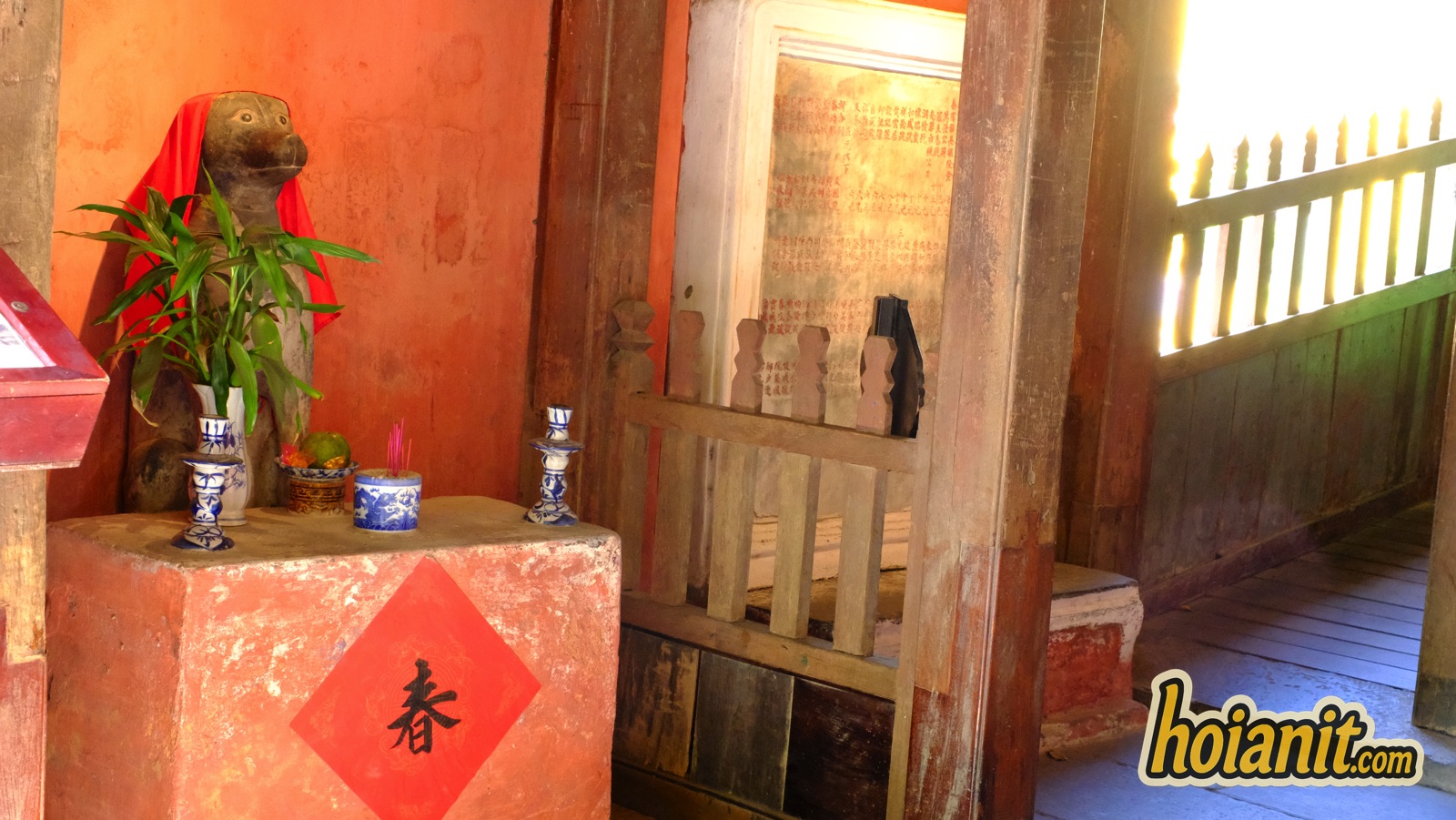
At each end of the Japanese Covered Bridge stands a pair of carved wooden animals: a pair of monkeys at one entrance, a pair of dogs at the other. Every guide mentions them. Very few explain them properly, and the usual explanation — “the bridge was started in the year of the monkey and finished in the year of the dog” — is a later folk rationalisation, not the original idea.
Namazu, the catfish that shakes the earth
In Japanese folk belief, earthquakes are caused by Namazu — a giant catfish living underground, whose thrashing shakes the land. In the version carried to Hội An, the creature is enormous: its head lies under India, its body under Vietnam, and its tail under Japan. When it moves, all three suffer.
The monkey and the dog are guardian spirits set to pin the catfish down. Placing them at the two ends of a bridge over water — right above where the creature would be — is not decoration. It is a charm, built into the structure, to hold the earth still. The bridge is, in the most literal sense, a device for keeping Japan, Vietnam and India from shaking.
It is worth standing at each end for a moment with that in mind. A trading community four thousand kilometres from home built a bridge in a foreign port and quietly wrote their own cosmology into it — and four centuries later the carvings are still at their posts.
The 2022–2024 restoration, by the numbers
By 2022 the Japanese Covered Bridge was in genuine trouble: the piers were degraded, the timber frame was sagging, and termite damage was extensive. What followed was the most systematic restoration in the structure’s history — and the numbers are public, which is unusual and worth quoting properly.
| Detail | Figure |
|---|---|
| Work began | 28 December 2022 |
| Inaugurated / reopened | 3 August 2024 |
| Total project cost | 20.2 billion₫ (≈ US$800,000) |
| Of which construction | 13.3 billion₫ |
| Funding split | 50% Quảng Nam province · 50% Hội An city |
| Original timber retained | ≈ 60% |
| Original roof tiles retained | ≈ 30% |
| Antique ceramic discs retained | 80% |
| Roof-ridge figures retained | 35% |
| Stone base components retained | 20% |
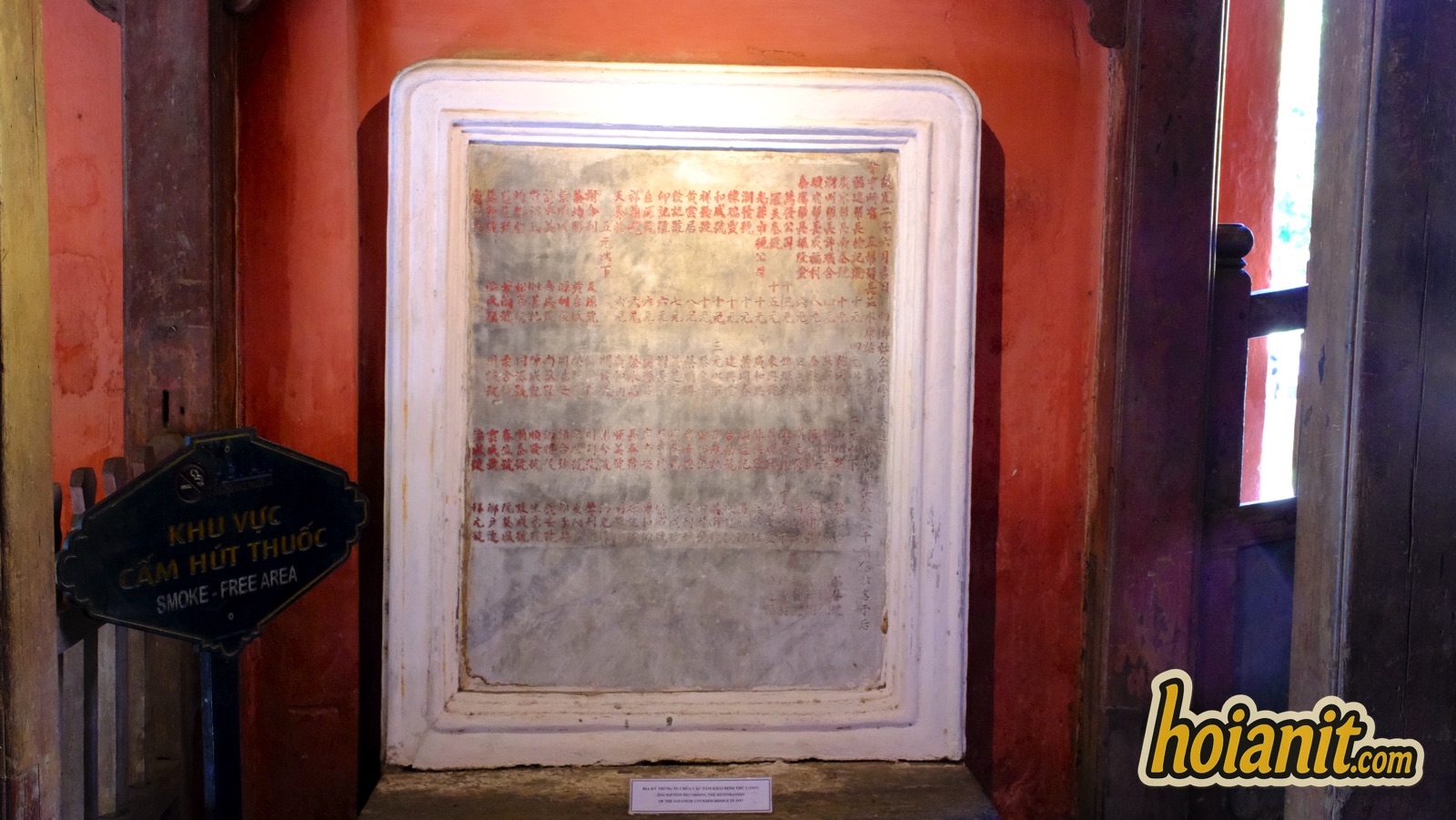
Two decisions from that project are worth knowing, because they are the reason the Japanese Covered Bridge looks the way it does today.
- It was taken apart in the open. Rather than screening the site off, the city built a protective shelter over the bridge and ran the dismantling as what Vietnamese heritage specialists called an “open surgery” — visitors could watch the work in progress through viewing panels for nearly two years. For a monument this famous, that level of public access to a restoration is rare anywhere in the world.
- They kept the curve, not the original flat deck. Survey evidence indicated the deck was flat before a 20th-century repair introduced the arch. The team chose to keep the curved profile the Japanese Covered Bridge has had for around forty years — the profile it had when Hội An was inscribed by UNESCO in 1999 — rather than revert to an earlier state. Preserving the recognised heritage object won over reconstructing the oldest known one.

“It looks too new” — the honest version
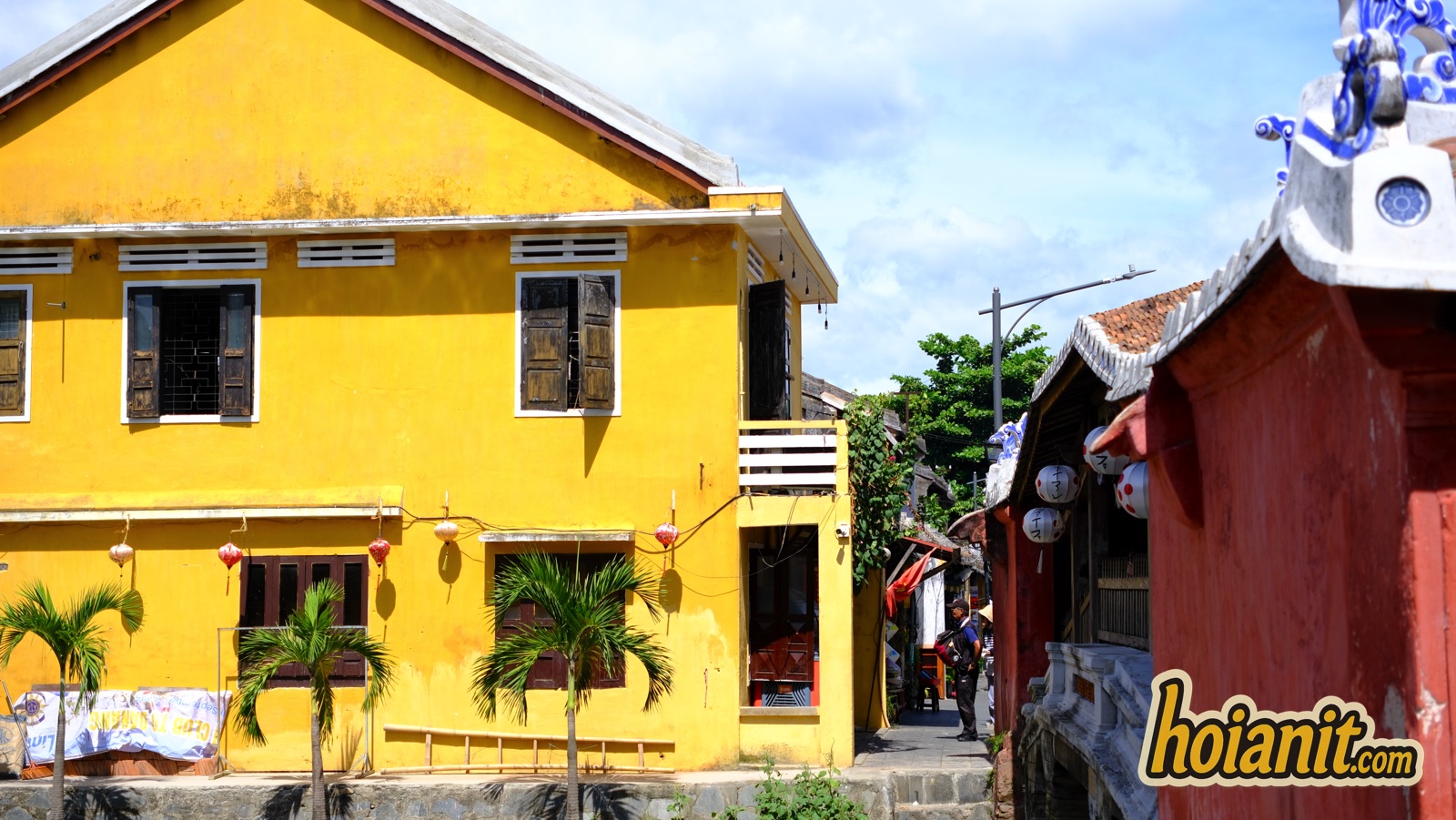
When the protective shed came down in July 2024, a genuine argument broke out. Photographs of the freshly finished bridge circulated widely and a lot of Vietnamese visitors reacted badly: it looked too new, too bright, too red — “oddly misplaced” in a town whose entire appeal is its patina. Some said they preferred how it looked in 1996.
You are going to see this discussed online, so here is the fair account of both sides.
| The criticism | The official answer |
|---|---|
| The red is too bright and looks artificial | The colour was matched to surviving traces of paint on the original components, cross-checked against comparable traditional structures. It reflects the pre-1985 state |
| Too much of it looks replaced | Around 60% of the timber, 80% of the ceramic discs and 30% of the tiles are the original pieces — a high retention rate for a structure this decayed |
| It has lost its old character | The Hội An heritage centre’s position is that weathering will restore the patina, exactly as it did after 1817, 1865, 1915 and 1986 — none of which looked “old” the day they finished either |
What this means for your photos. If you are working from images taken before 2022, the Japanese Covered Bridge you find will not match them — it is cleaner, brighter and redder. Two years of Hội An sun and monsoon have already taken some of the edge off, and it will keep softening. Whether you find the current state jarring or handsome is a matter of taste; what is not in dispute is that the structure was in serious danger and is now sound.
Japanese Covered Bridge tickets, hours and what they buy
This is where most visitors get caught out, so read it carefully: looking at the bridge is free. Walking across it is not.
| Foreign visitors | Vietnamese visitors | |
|---|---|---|
| Adult | 20,000₫ | 20,000₫ |
| Under 16 | Free | Free |
- You pay per site — since 10 August 2026 each of the 21 ticketed sites (historic houses, assembly halls, museums, the Japanese merchant tombs, the traditional performance and Chùa Cầu) costs 20,000₫. Pay only for the ones you enter.
- Walking the Old Town streets is free. The ticket is for entering specific monuments, not for being in the town.
- Buy at any of the ticket booths around the edge of the Old Town. There is one right by the Japanese Covered Bridge on the Nguyễn Thị Minh Khai side.
- Ticket checking is not constant. Enforcement at the Japanese Covered Bridge varies by hour and by season — but do not plan around slipping past. Staff are stationed at the entrances most of the day, and being turned back in front of a queue is a poor start to a morning.
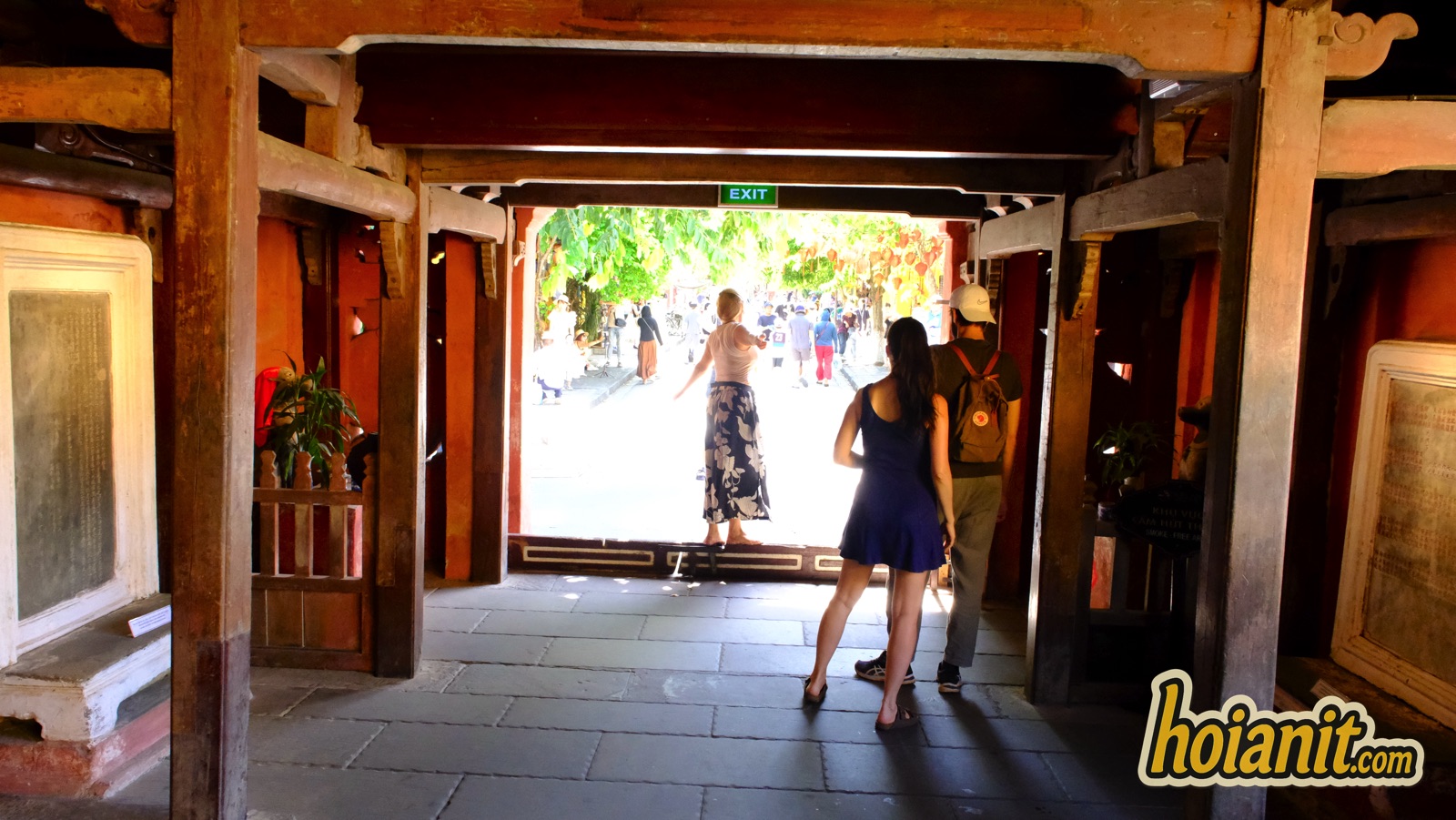
The move most people miss. If the Japanese Covered Bridge is the only thing you want to walk across, add two more 20,000₫ entries: the Phùng Hưng old house (60 seconds away, and the upstairs balcony gives you a view down onto the bridge from above) and one of the assembly halls on Trần Phú. Three sites in ninety minutes, 60,000₫, and you get the aerial angle almost nobody has.
More Bike Options in Hoi An
E-Bike · No license

No License? No Worries!
Rent a 50cc Bike in Hoi An Today!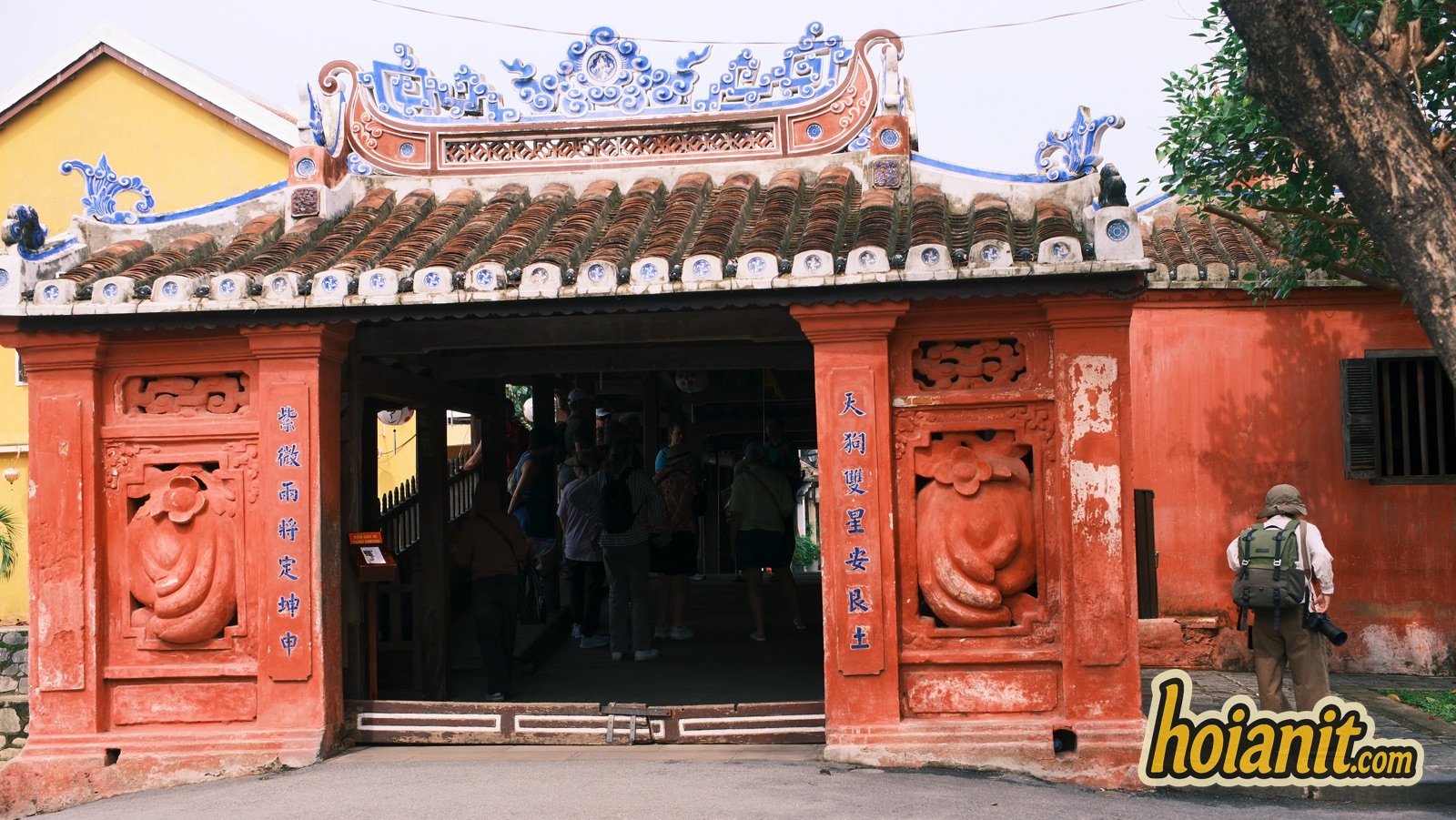
When to go, and how to photograph the Japanese Covered Bridge
The bridge is small, it sits at a pinch point between two busy streets, and it is on every itinerary in town. Timing is the entire game.
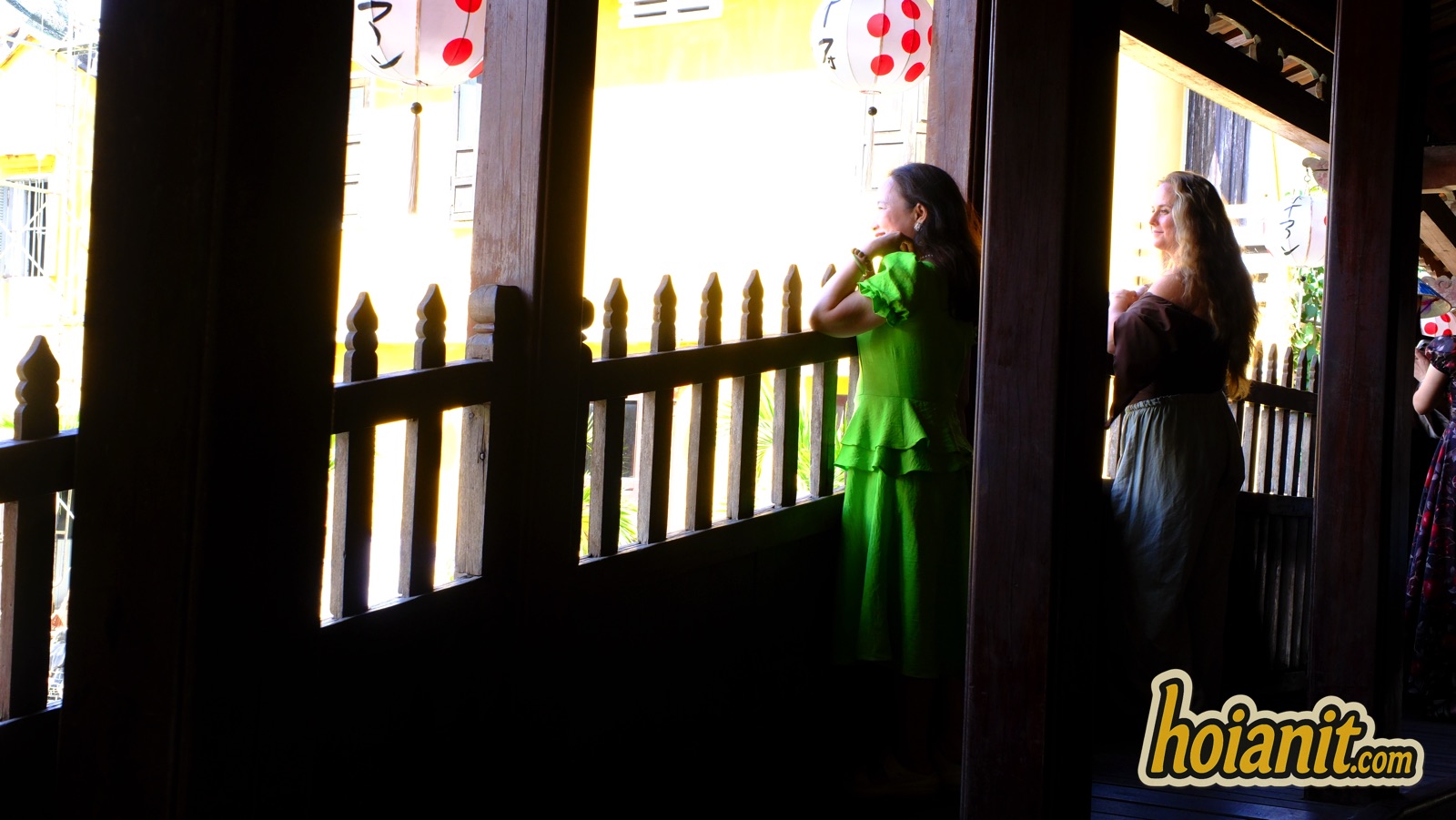
| Time | What it’s like | Verdict |
|---|---|---|
| 05:30–06:30 | Empty. Soft light. Locals doing tai chi by the canal | Best for photos |
| 07:00–09:00 | Filling up, but still workable | Good |
| 09:30–16:00 | Tour groups, hard overhead light, queues at both entrances | Avoid |
| 18:30–20:00 | Lanterns lit, reflections on the canal, very crowded | Best for atmosphere |
| 21:30 onwards | Crowds thin, lanterns still on | Underrated |
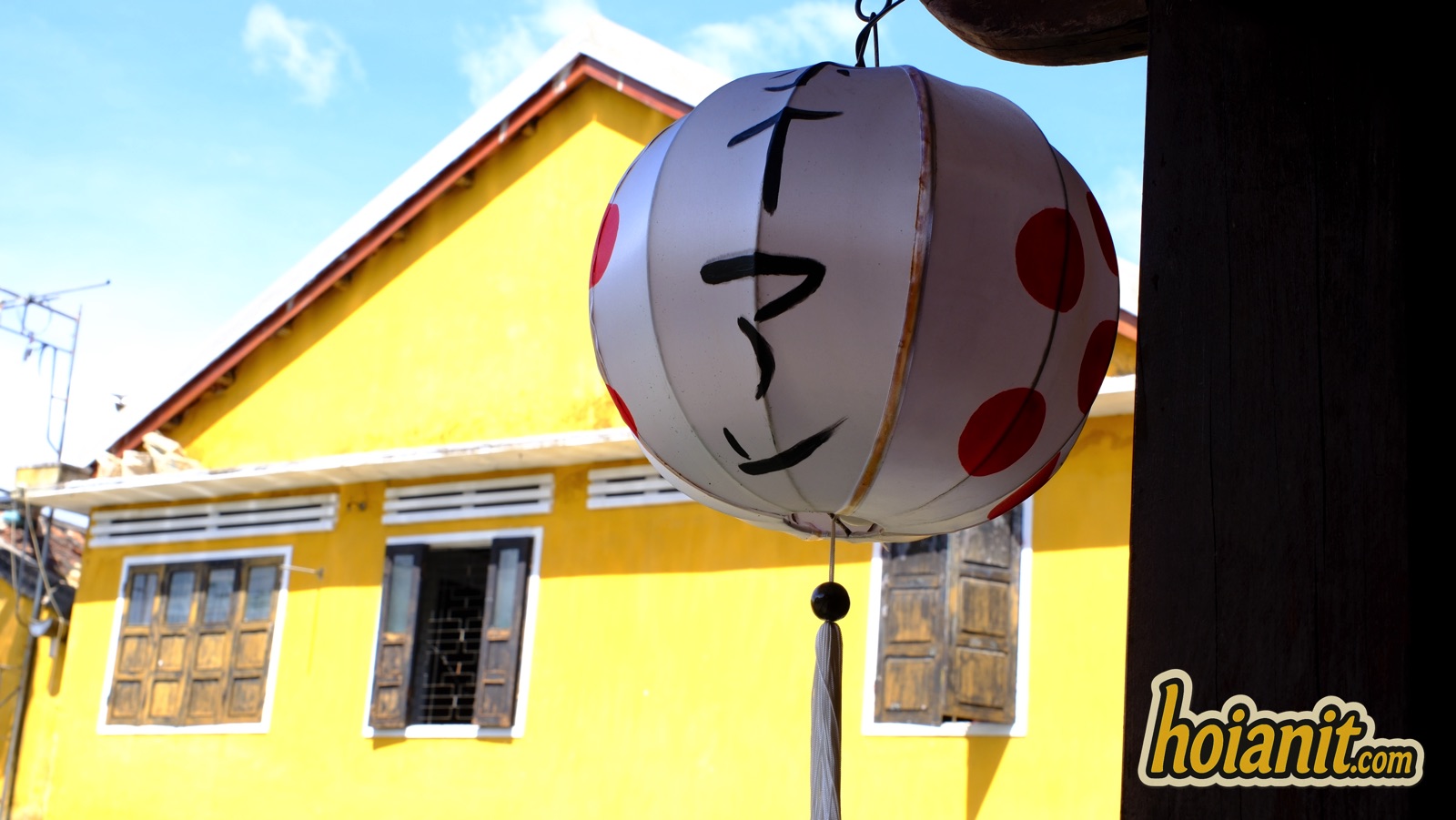
- Shoot from the Nguyễn Thị Minh Khai side. The classic three-quarter view — bridge, reflection, and the old houses behind — comes from the western bank, not from Trần Phú.
- Get low. Crouch to near canal level. It removes the heads of the crowd and doubles the Japanese Covered Bridge in the water.
- Go up. The upstairs balcony of the Phùng Hưng old house gives you a downward angle across the roof tiles that you cannot get from the street.
- For the lantern shot, arrive at 18:15 and wait. The lanterns come on before full dark, and the ten minutes when there is still blue in the sky are the only ten minutes the photo really works.
- On the 14th of the lunar month the Old Town switches off its electric lights for the full-moon lantern night. It is the best and the most crowded night of the month — decide which of those matters more to you.

Riding here — and the 15:00 street closure
The bridge sits at the western end of Trần Phú, inside the Old Town pedestrian zone. That has a consequence that catches people out every single day: for much of the afternoon and evening you cannot ride a motorbike anywhere near it.
Old Town vehicle restrictions (2026)
• Monday–Saturday: 09:00–11:00 and 15:00–21:00
• Sunday: 09:00–11:00 and 15:00–21:30
• Trần Phú, Nguyễn Huệ, Công Nữ Ngọc Hoa and the riverside strip: closed to motorbikes 15:00–21:30 every day
• 14th of the lunar month: bicycles banned as well — walking only
Full detail: Old Town vehicle ban hours.
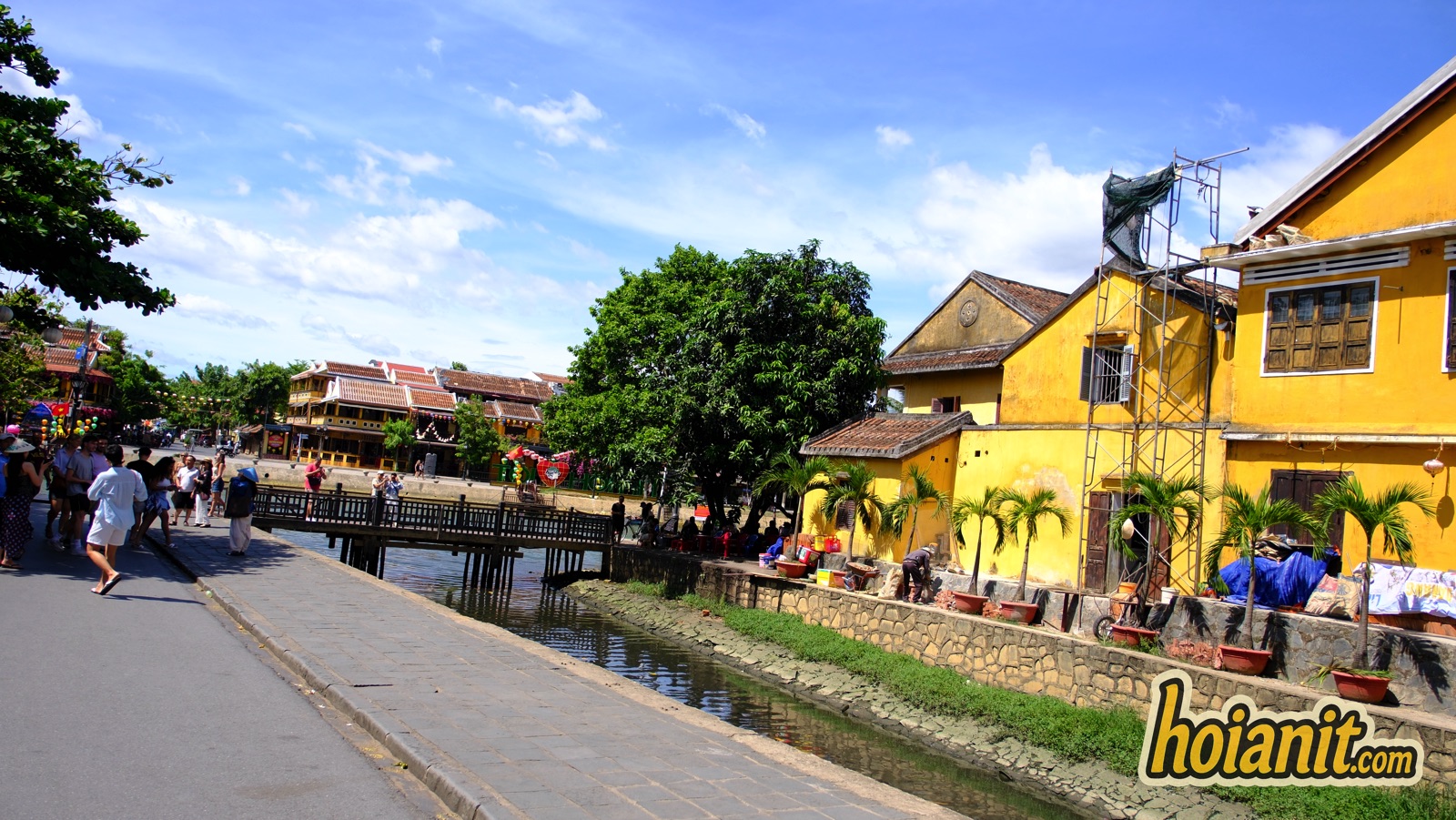
- Morning visit — ride in before 09:00 and park at the Sông Hoài square lot, which is the closest attended parking to the bridge. 5,000–10,000₫.
- Afternoon or evening visit — park outside the zone and walk. The Nguyễn Hoàng night market lot on An Hội islet is a 6-minute walk across the Japanese Covered Bridge and is open late.
- Bicycles are exempt from nearly every closure window except full-moon night. For Old Town evenings a bicycle genuinely beats a motorbike.
- Never leave anything in the seat compartment at a busy lot, and keep the parking ticket.
If you’re deciding between a scooter, an electric bike and a bicycle for a trip built around the Old Town, we lay out the trade-offs in our Hoi An motorbike rental guide.

What’s within five minutes’ walk
The bridge takes ten minutes to see. Do not build a morning around it alone — build the morning around the streets it sits in.
| Where | Walk | Why bother |
|---|---|---|
| Phùng Hưng old house | 1 min | 230-year-old merchant house; the balcony view down onto the Japanese Covered Bridge |
| Hoi An Market | 7 min east | The working market — food court, spices, the real Hội An before 08:30 |
| Assembly halls on Trần Phú | 3–6 min | Fujian, Cantonese and Chaozhou halls, all on the ticket |
| An Hội islet & night market | 5 min south | Lantern street, evening food stalls, boat rides |
| Thanh Hà pottery village | 10 min by bike | 500-year-old kilns, and quiet in a town that isn’t |
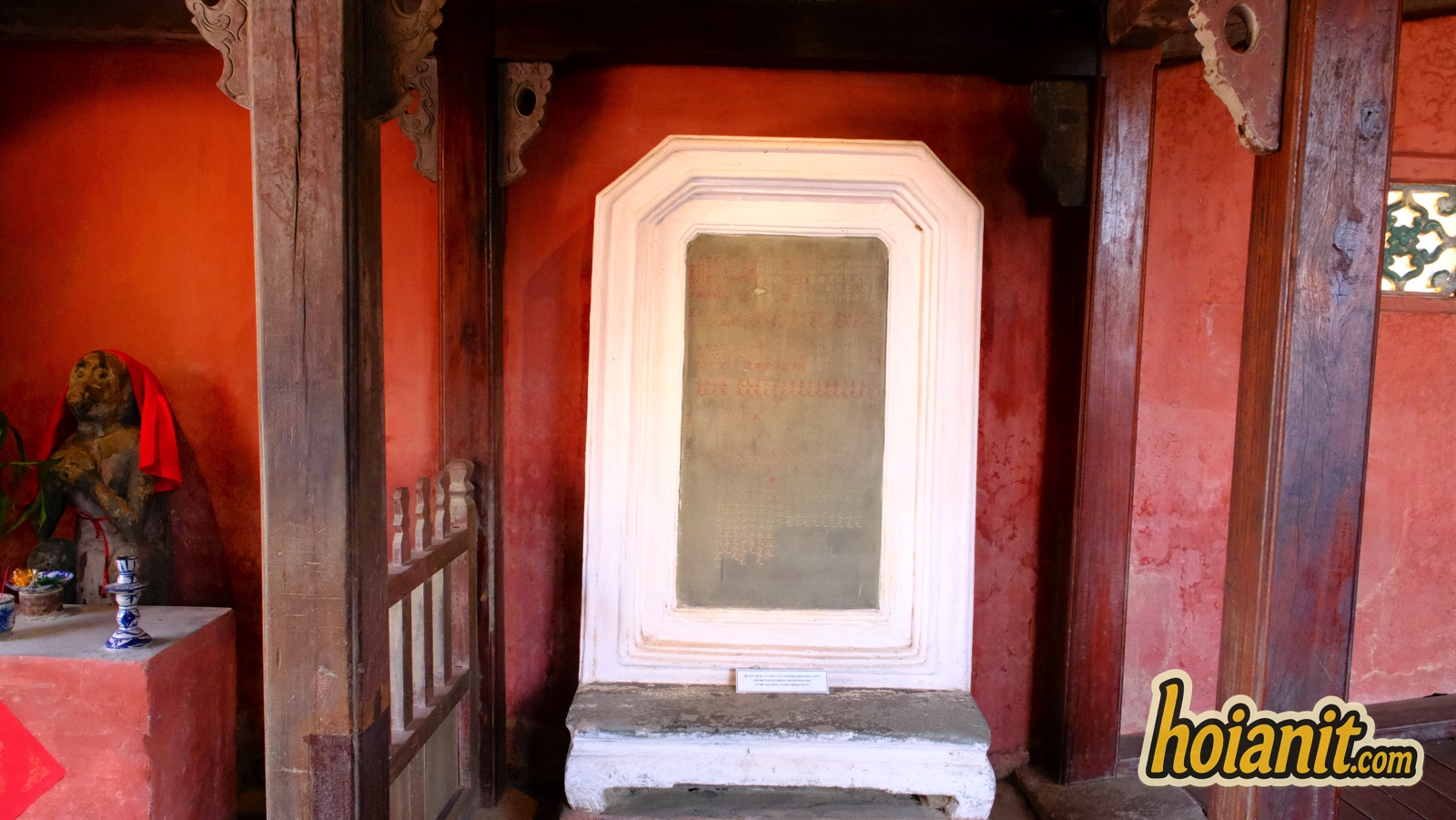
Deeper guides to each: Hoi An Ancient Town · Hoi An Market · Nguyễn Hoàng Night Market · Thanh Hà pottery village. And if you’re eating nearby, the dish to order is cao lầu.
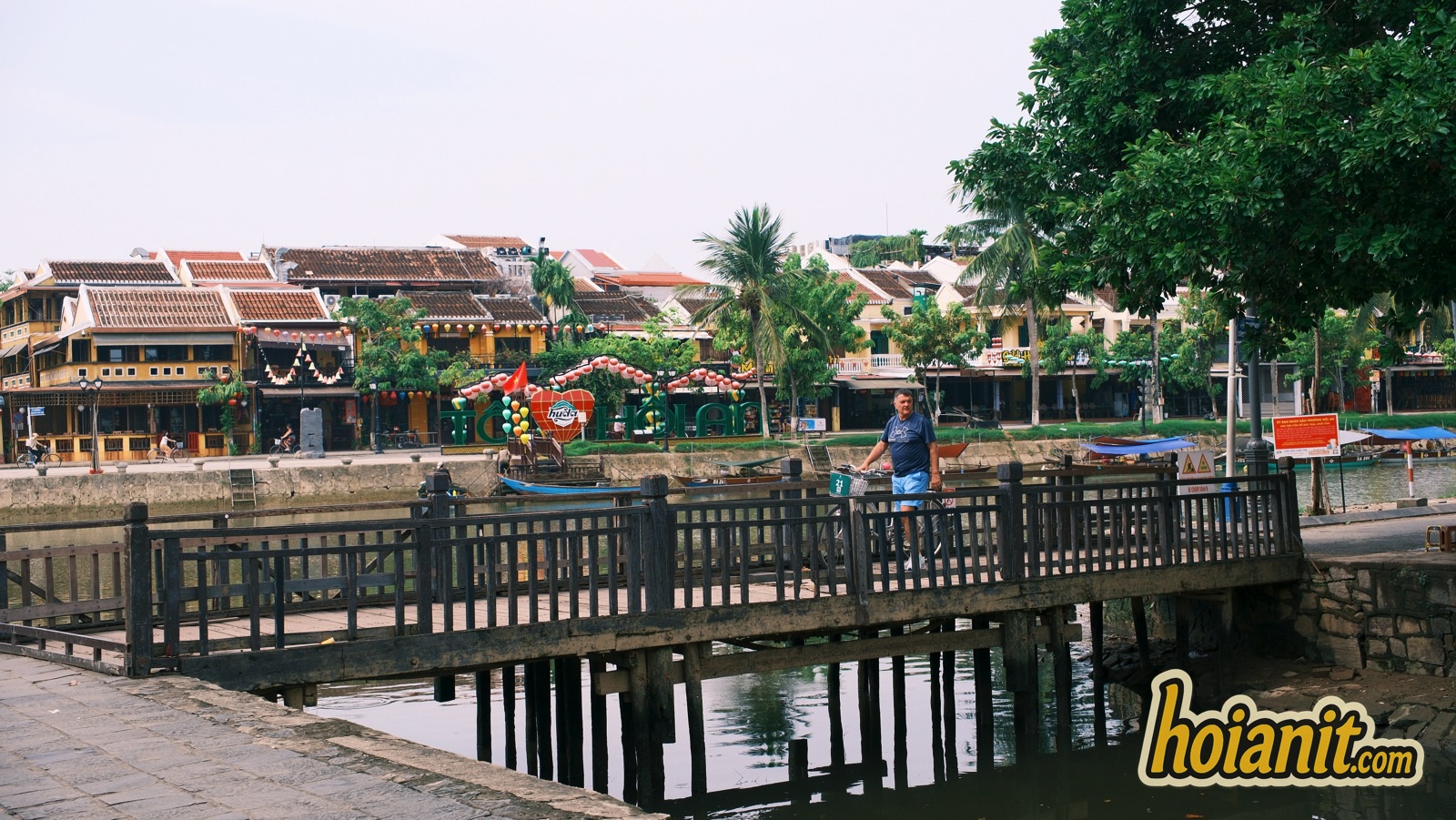
Etiquette inside the shrine
- It is an active shrine. People come here to make offerings. Keep your voice down and don’t stand in front of the altar while someone is praying.
- Cover your shoulders and knees. Nobody will stop you at the entrance, but it is a place of worship and it is noticed.
- Don’t touch the carvings — including the monkeys and the dogs. Roughly 60% of what you’re looking at is four hundred years old and has just been through a two-year restoration.
- Photograph the altar respectfully, without flash, and not while someone is at it.
- Keep moving on the deck. It is 18 metres long and often has a queue at both ends. Take the photo, then step aside for it.
- Don’t leave coins or notes on the woodwork. If you want to make an offering there is a proper box for it.

Frequently asked questions
Do I need a ticket to see the Japanese Covered Bridge?
To look at it and photograph it from the street, no — it stands in the open and costs nothing to see. To walk across it you need the Hội An Old Town heritage ticket, which since 10 August 2026 costs 20,000₫ per person, the same for every nationality.
Is the Japanese Covered Bridge open after the restoration?
Yes. The 2022–2024 restoration was completed and the bridge was formally reopened on 3 August 2024. All protective scaffolding has been removed and it is fully accessible to visitors.
Why is it called Chùa Cầu if it is not a pagoda?
The shrine built into the Japanese Covered Bridge holds a statue of Bắc Đế Trấn Vũ, a Taoist deity of water and weather, not a Buddha. The Vietnamese word chùa is used loosely for shrines and temples generally, which is where the “pagoda bridge” mistranslation comes from. There is no Buddhist function and no resident monk.
What do the monkey and dog statues mean?
They are guardian spirits from Japanese folk belief, set to hold down Namazu — a giant catfish said to live underground and cause earthquakes when it thrashes. In the version told in Hội An its head lies under India, its body under Vietnam and its tail under Japan. The common explanation that construction started in the year of the monkey and ended in the year of the dog is a later folk story.
How old is the Japanese Covered Bridge?
It was built by Japanese merchants around the turn of the 17th century, so roughly 400 years old. Lord Nguyễn Phúc Chu gave it the official name Lai Viễn Kiều in 1719. It has been restored at least five times: in 1817, 1865, 1915, 1986 and most recently between 2022 and 2024.
Why does the Japanese Covered Bridge look so new now?
The 2022–2024 restoration replaced badly decayed elements and repainted the structure in a red matched to surviving traces of original paint. Around 60% of the timber, 80% of the antique ceramic discs and 30% of the roof tiles are still the original pieces. The Hội An heritage authorities expect weathering to restore the patina over time, as it did after every previous restoration.
What is the best time of day to visit the Japanese Covered Bridge?
Between 05:30 and 06:30 for photographs — it is empty and the light is soft. Between 18:30 and 20:00 for atmosphere, when the lanterns are lit and reflect in the canal, though it is very crowded then. Avoid 09:30 to 16:00, when the tour groups arrive and the light is harsh.
Can I ride a motorbike to the Japanese Covered Bridge?
In the morning, yes — ride in before 09:00 and park at the Sông Hoài square lot for 5,000–10,000₫. From 15:00 to 21:30 every day, Trần Phú and the riverside streets are closed to motorbikes, so in the afternoon and evening you must park outside the zone and walk about five to eight minutes.
The bridge makes more sense with a guide
Most visitors photograph the Japanese Covered Bridge in four minutes and move on. On a guided Old Town walk (~$12, ★4.9) the Namazu legend, the monkey and dog statues and the temple attached to the bridge actually get explained.
Staying nearby? We’re a five-minute walk from the Japanese Covered Bridge.
Anh Khoa is a family-run rental at 84 Phan Châu Trinh — automatic scooters, electric bikes, 50cc bikes and bicycles, with helmets, raincoats, phone mounts and 24/7 roadside help. We’ll mark the parking lots on your map and tell you which streets close when, so you don’t get turned back at 15:05.
Zalo 0935 439 306 · 84 Phan Châu Trinh, Hội An
Bản tiếng Việt: Chùa Cầu Hội An — lịch sử, kiến trúc và giá vé
Ticket prices, opening hours and vehicle restriction windows were checked in August 2026. Restoration figures are from the Hội An city inauguration records of 3 August 2024. Hours shift around Tết and the lunar full-moon nights — message us and we’ll confirm what’s happening the week you arrive.








Pick your ride in Hoi AnChọn xe cho chuyến đi Hội An
Scooters, electric bikes and bicycles from one shop in the Old Town — delivered to your hotel, helmets and roadside help included.Xe máy, xe điện và xe đạp — giao tận khách sạn, kèm hai nón bảo hiểm và hỗ trợ dọc đường.
Not sure which one fits? Message us on WhatsApp and we’ll recommend a bike for your plans.
Chưa biết chọn xe nào? Nhắn Zalo 0935 439 306, tụi mình tư vấn theo lịch trình của bạn.