

Useful Information
Saint Andrew of Phu Yen – Vietnam’s First Catholic Martyr
Saint Andrew of Phu Yen – Vietnam’s First Catholic Martyr
Saint Andrew of Phu Yen (1625–1644) was a 19-year-old catechist executed for his faith at Thanh Chiem, 7.8 km from Hoi An. This guide tells his story and shows how to visit his shrine at Phuoc Kieu on a half-day ride from town.
Saint Andrew of Phu Yen is honoured as the protomartyr of the Vietnamese Church — the first of hundreds of thousands of Vietnamese Catholics who would die for their faith over the following three centuries. A young catechist baptised by the Jesuit Alexandre de Rhodes, he was executed near Hoi An in 1644 at just 19. Today he is the patron of catechists in Vietnam, his feast on 26 July doubles as the national Catechists’ Day, and his shrine sits on the Hoi An–Da Nang road, close enough for a morning’s ride.

Saint or Blessed? His official title
Strictly speaking, his official title today is Blessed Andrew of Phu Yen: Pope John Paul II beatified him in Rome on 5 March 2000, and the cause for his canonisation is still underway. Vietnamese Catholics, however, have long called him “Saint Andrew of Phu Yen” out of affection and veneration — so you will see both titles used, including in this article. He is not one of the 117 Vietnamese Martyrs canonised in 1988; his cause was examined separately.
Early life and vows
| Year | Event |
|---|---|
| 1625 | Born into a poor but devout family in a small coastal village of Phu Yen, in the area of today’s Mang Lang Parish in south-central Vietnam. The youngest child, raised by his widowed mother Joanna. |
| 1641 | Baptised by Father Alexandre de Rhodes, the Jesuit missionary who also helped shape the Romanised Vietnamese script (chữ Quốc ngữ). His civil name was never recorded — the Holy See knows him by his baptismal name joined to his home province. |
| 1642 | At his mother’s request, the 17-year-old is accepted into the Association of Catechists founded by Father de Rhodes. |
| 1643 | At Hoi An, he and nine companions make a solemn promise to dedicate their lives to the Church. Andrew is the youngest of the group. |
| 1643–44 | Travels with the missionaries through Quang Nam, Quang Ngai, Quy Nhon and Quang Binh, teaching the catechism to Vietnam’s first Christian communities. |
Martyrdom at Thanh Chiem
In July 1644, under Lord Nguyen Phuc Lan, the mandarin Ong Nghe Bo launched a persecution of Christians in Quang Nam. On 25 July, soldiers raided Father de Rhodes’ house in Hoi An looking for Ignatius, the senior catechist of the group — but only young Andrew was at home. Convinced that the community needed Ignatius more than him, Andrew stepped forward, took responsibility and let himself be arrested.
He was taken to the citadel of Thanh Chiem (Ke Cham), then the capital of Quang Nam Province. Offered his freedom if he renounced his faith, he refused, declaring: “Would that I had a thousand lives to offer them all to God in gratitude for what He has done for me.” The death sentence was carried out within 24 hours.
Around 5 pm on 26 July 1644, thirty soldiers escorted Andrew to Go Xu, the execution ground near the citadel — a site that today lies in Phuoc Kieu, 7.8 km from Hoi An Ancient Town. Before a crowd that included Father de Rhodes himself, he encouraged his fellow Christians: “Remain firm in your faith, do not be sad about my death, and pray that I remain faithful to the end.” He died with the name of Jesus on his lips.
“Let us return love for love to our Lord; let us return life for life.” — Blessed Andrew of Phu Yen, repeated before his martyrdom, as recorded by Father Alexandre de Rhodes.
On 15 August 1644, Father de Rhodes brought Andrew’s body by ship to Macau, where it was buried at St Paul’s church. His head was carried to Rome, where it is still kept at the residence of the Superior General of the Jesuits.

Legacy and feast day
- Protomartyr of Vietnam — the first of hundreds of thousands of Vietnamese who would witness to their faith through nearly three centuries of persecution. His example is held up especially to young people: a 19-year-old lay catechist, not a priest, who died for teaching the faith.
- Feast day 26 July — the anniversary of his death. The Vietnamese Bishops’ Conference has also made it the National Day of Catechists, and catechists across the country take him as their patron.
- Two pilgrimage sites — the Shrine of Blessed Andrew of Phu Yen at Phuoc Kieu (Diocese of Da Nang), where he died, and Mang Lang church in Phu Yen, where he was born.
- When 26 July falls on a Sunday the diocese moves the pilgrimage to the following Monday, as in 2026 (held on 27 July). In 2027 the feast falls on a Monday, so the pilgrimage is on the day itself.
Why the shrine is at Phuoc Kieu — and why the place matters for the Vietnamese alphabet
Andrew was beheaded at the Thanh Chiem citadel. Phuoc Kieu, the bronze-casting village next to Thanh Chiem, is where the shrine now stands — and that is no coincidence. This was the first missionary centre of Cochinchina, and it is also where the Romanised Vietnamese alphabet was born.
The local history Dinh Tran Thanh Chiem Quang Nam (Dinh Trong Tuyen & Dinh Ba Truyen, p. 243) records that Phuoc Kieu had a Catholic church built in the time of the Nguyen lords, and that the Jesuit Francisco de Pina — the man credited with first devising the Latin-script writing of Vietnamese — was superior of that residence until his death in December 1625. Father de Rhodes and Jerónimo Majorica learned Vietnamese here under de Pina from 1624. De Pina drowned off Cua Dai while rescuing people from a boat in distress; he was buried in Hoi An, though the grave has never been located.
The diocese also notes three old graves behind the shrine’s chapel — “of unknown identity but certainly Catholic” — restored during the last renovation. That is all that is known about them, and we report it as such. If you are heading north afterwards, the visit combines naturally with our guide to the Hoi An to Da Nang ride.
The relic inside the shrine
The relic of Blessed Andrew displayed at the front of the shrine is a lock of his hair. On pilgrimage day the faithful may venerate it from early morning until the afternoon; the rest of the year the shrine is open to visitors. In front of the altar stands a statue of the Blessed in Vietnamese dress. The whole compound is little more than 2,000 m² — small, but it is the ground of Go Xu itself.
Visiting the shrine from Hoi An
The Shrine of Blessed Andrew of Phu Yen stands at Phuoc Kieu, Thanh Chiem hamlet — formerly Dien Phuong commune, since 1 July 2025 part of Dien Ban ward, Da Nang city — right on the road connecting Hoi An with Da Nang. Google Maps rates it 4.8 from 58 reviews (plus code V796+V6J; website denthanhanrephuyen.org). Distances below are measured on Google Maps from our shop at 84 Phan Chau Trinh:
| From | Distance | Time | Route |
|---|---|---|---|
| 84 Phan Chau Trinh, Hoi An | 7.8 km | 18 min | Pham Phan → Nguyen Du |
| Hoi An, main-road option | 11 km | 19 min | Hung Vuong → Le Quy Don / DT608 |
| Dragon Bridge, Da Nang | 27 km | 44 min | QL1A |
- Half a morning is enough. The shrine, the traditional Phuoc Kieu bronze-casting village and the Thanh Chiem citadel site sit within a few hundred metres of each other on the same road. A motorbike or e-bike is the simplest way; our 50cc and electric bikes need no licence and are delivered to your hotel.
- 26 July is very busy. Parish volunteers manage parking from early afternoon; a motorbike is far easier to park than a car, and you should arrive before 4 pm for the procession.
- On ordinary days the shrine is quiet and open. Dress modestly and keep silence in the chapel. If you want a full day of Catholic heritage, continue 11.8 km (20 min) west to Tra Kieu church, the Marian centre of the diocese.
Ride to Phuoc Kieu from Hoi An
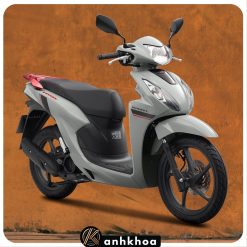
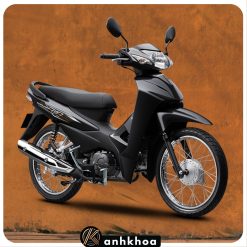
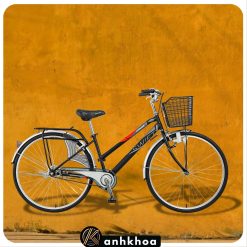
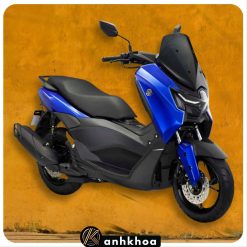
Anh Khoa delivers motorbikes, electric motorbikes and e-bikes free to your hotel in Hoi An — 7.8 km to the shrine, there and back in a morning, with the bronze village and Thanh Chiem on the way.
84 Phan Chau Trinh, Hoi An · hotel delivery from 30,000₫ · 24/7 supportFAQ about Saint Andrew of Phu Yen
Who was Saint Andrew of Phu Yen?
Saint Andrew of Phu Yen (1625–1644) was Vietnam’s first Catholic martyr — a young catechist from Phu Yen, baptised by Father Alexandre de Rhodes in 1641, who was executed at the age of 19 near Hoi An for refusing to renounce his faith.
Is Andrew of Phu Yen a saint or a blessed?
Officially he is Blessed: Pope John Paul II beatified him on 5 March 2000, and his canonisation cause is still in progress. He is popularly venerated in Vietnam as “Saint Andrew of Phu Yen”.
When and where did Saint Andrew of Phu Yen die?
He was executed around 5 pm on 26 July 1644 at Go Xu, near the Thanh Chiem citadel — today Phuoc Kieu, Dien Ban ward, Da Nang city, 7.8 km from Hoi An Ancient Town.
What is Saint Andrew of Phu Yen the patron of?
He is the patron of catechists in Vietnam. His feast day, 26 July, is also the National Day of Catechists chosen by the Vietnamese Bishops’ Conference.
Where is the shrine of Blessed Andrew of Phu Yen?
At Phuoc Kieu, Thanh Chiem hamlet, Dien Ban ward, Da Nang city (formerly Dien Phuong commune), on the Hoi An–Da Nang road — plus code V796+V6J. It is the main pilgrimage centre of the Diocese of Da Nang and marks the old Go Xu execution ground.
How far is the shrine from Hoi An and how do I get there?
From 84 Phan Chau Trinh in Hoi An it is 7.8 km and about 18 minutes by motorbike via Pham Phan and Nguyen Du; the main-road route via Hung Vuong and DT608 is 11 km, 19 minutes. From Da Nang’s Dragon Bridge it is 27 km, about 44 minutes. A motorbike or e-bike is the easiest option, especially on the crowded 26 July pilgrimage.
What relic is kept at the shrine?
A lock of his hair, displayed at the front of the shrine. His body was taken by Father de Rhodes to Macau and buried there on 15 August 1644; his head is kept at the Jesuit Superior General’s residence in Rome.
When is the annual pilgrimage to Phuoc Kieu?
On his feast day, 26 July, with veneration of the relic from the morning and the procession and solemn Mass from about 4:30 pm. When 26 July is a Sunday the Diocese of Da Nang moves the pilgrimage to the Monday, as it did in 2026; in 2027 the feast itself falls on a Monday.
Updated September 2026. Biographical details follow the Vietnamese Bishops’ Conference and the Diocese of Da Nang; pilgrimage timings are from the diocese’s 2026 programme and change yearly. Distances measured on Google Maps from 84 Phan Chau Trinh; place names follow Vietnam’s administrative reform effective 1 July 2025. Vietnamese version: Thánh Anrê Phú Yên.
















Bikes Rental






More Bike Options in Hoi An
E-Bike · No license









Pick your ride in Hoi AnChọn xe cho chuyến đi Hội An
Scooters, electric bikes and bicycles from one shop in the Old Town — delivered to your hotel, helmets and roadside help included.Xe máy, xe điện và xe đạp — giao tận khách sạn, kèm hai nón bảo hiểm và hỗ trợ dọc đường.
Not sure which one fits? Message us on WhatsApp and we’ll recommend a bike for your plans.
Chưa biết chọn xe nào? Nhắn Zalo 0935 439 306, tụi mình tư vấn theo lịch trình của bạn.