
Routes & Day Trips
Cham Museum Da Nang from Hoi An by Motorbike: Tickets, the 12 National Treasures and the Tra Kieu Detour (2026)
Cham Museum Da Nang from Hoi An by Motorbike: Tickets, the 12 National Treasures and the Tra Kieu Detour (2026)
The Cham Museum in Da Nang holds the largest collection of Champa sculpture in the world, 27 km up the coast road from Hoi An. Here is how to ride there, what the 60.000₫ ticket buys, and why you should see it before My Son.
- Why the Cham Museum comes before My Son
- Riding there from Hoi An: two roads
- Tickets, hours, audio guide, free days
- A 1915 building and the world’s largest Cham collection
- The 12 national treasures, room by room
- The Tara statue and its 47-year-lost lotus
- How to walk it in 90 minutes
- The Tra Kieu detour: Simhapura and the hill
- Make it a day: pairings, bike and timing
- FAQ
Why the Cham Museum comes before My Son, not after
Most riders do it backwards. They spend a morning at My Son, walk the brick towers in the heat, and only later, if at all, wander into the Cham Museum in Da Nang and realise that the altars, lintels and dancing figures they were trying to imagine at the ruins are all here, indoors, at eye level, with the light coming through tall French windows. The museum is where the sculpture went; the sanctuary is where the buildings stayed. See the museum first and My Son stops being a pile of bricks and becomes the empty frame around pictures you have already seen.
It also happens to be one of the easiest rides out of Hoi An. The coast road north is flat, straight and mostly scenic, the museum sits at the foot of the Dragon Bridge with free parking, and a ticket costs 60.000₫ — about the price of a coffee on An Bang beach. Go on a hot afternoon or a wet one; the galleries are air-conditioned and the sandstone looks its best in soft light.
| You are… | Do this | Time |
|---|---|---|
| Museum only, out and back | Coast road up, fast road back | 3–3.5 h |
| A Champa day | Cham Museum in the morning → south on QL1A to Tra Kieu hill → My Son for the last two hours | full day, ~125 km |
| A Da Nang day | Cham Museum → Marble Mountains on the way home, or Son Tra first | 6–7 h |
| Rainy day | Cham Museum + Han Market + a coffee on Bach Dang | 4 h |
Riding to the Cham Museum from Hoi An: two roads
The museum’s address is 02 Duong 2 Thang 9, on the west bank of the Han River where Tran Phu street meets the Dragon Bridge. From our shop at 84 Phan Chau Trinh there are two sensible ways to get there.
| Route | Roads | Distance | Riding time | Best for |
|---|---|---|---|---|
| Coast road (recommended) | Hai Ba Trung → Lac Long Quan → Vo Nguyen Giap → Vo Van Kiet → Dragon Bridge | 27.3 km | 45–55 min | Views, beaches, fewer trucks; slower speed limit |
| Inland road | DT607 → Le Van Hien → Ngu Hanh Son → 2 Thang 9 | 30.4 km | 40–50 min | Rain, headwind, or the return leg in the dark |
Take the coast road out. It runs behind Ha My and the resort strip, past Non Nuoc and My Khe, and delivers you onto Vo Van Kiet, the boulevard that feeds the Dragon Bridge from the east. Cross the bridge — the museum is the ochre building on your left the moment you land on the west bank, and there is a slip road down to it. The Hoi An to Da Nang scooter guide covers the whole road in detail.
Parking is free in the museum forecourt on the Tran Phu side, in a row of bikes under the trees. Lock the wheel, take your helmet inside. If the forecourt is full — coach groups arrive around 10:00 — the side streets behind the museum have attended parking for 5.000₫–10.000₫.
You will be parked 200 metres from the head of the Dragon Bridge. On Saturday and Sunday nights at 21:00 it breathes fire and water for about fifteen minutes; on any other evening it is simply lit. If you time the museum for late afternoon on a weekend, eat on Bach Dang, watch the show, and ride the inland road home — the coast road is unlit in stretches and we do not recommend it after dark on a first visit.
Tickets, hours, audio guide and the free days
The Cham Museum is open every day of the year from 07:00 to 17:00 with no lunch closure, which makes it one of the few Da Nang attractions you can hit at 07:30 and have almost to yourself. Adult entry is 60.000₫ (about $2.30); children under 16 are free; students with a valid card paid a token 5.000₫ at the time of writing. You can pay cash or scan the QR code at the counter.
The audio guide is free and lives on your own phone: connect to the museum Wi-Fi, open chamaudio.com, and each major piece has a numbered QR code beside it that jumps straight to its track in English, French or Vietnamese. Bring earphones. There is no paper guidebook worth buying at the door; the audio is better and costs nothing.
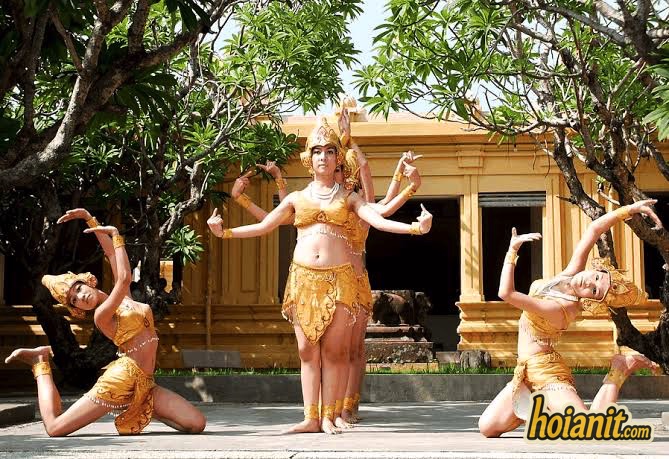
Four days a year the museum waives the ticket entirely: the first day of Tet, 29 March (Da Nang’s liberation day), the Hung Kings’ festival on the 10th day of the 3rd lunar month, and National Day on 2 September. On National Day the museum usually stages Cham dance performances in the courtyard; expect a crowd on free days and go at 07:00 or skip them.
| Item | Price |
|---|---|
| Adult ticket | 60.000₫ |
| Child under 16 | free |
| Student (card) | 5.000₫ |
| Audio guide (own phone, museum Wi-Fi) | free |
| Motorbike parking, forecourt | free |
| Free-entry days | Tet day 1 · 29 Mar · 10th of 3rd lunar month · 2 Sep |
A 1915 building and the largest Cham collection in the world
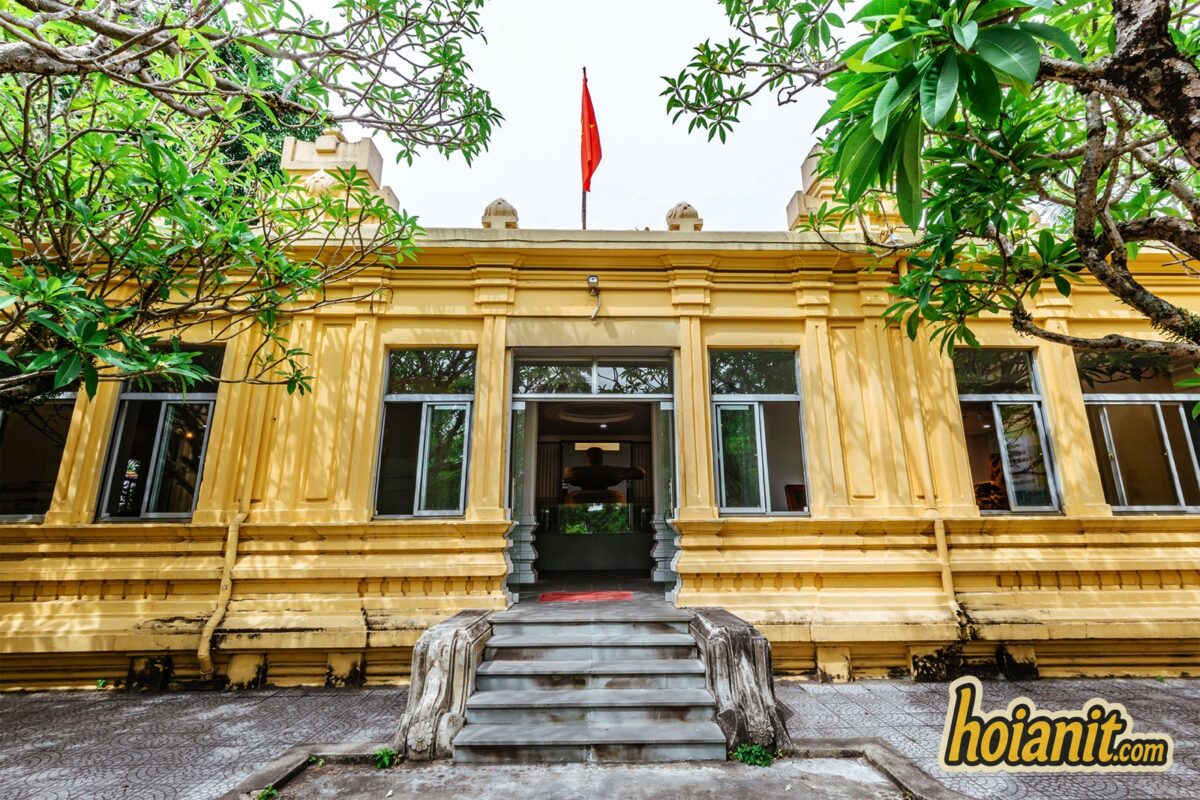
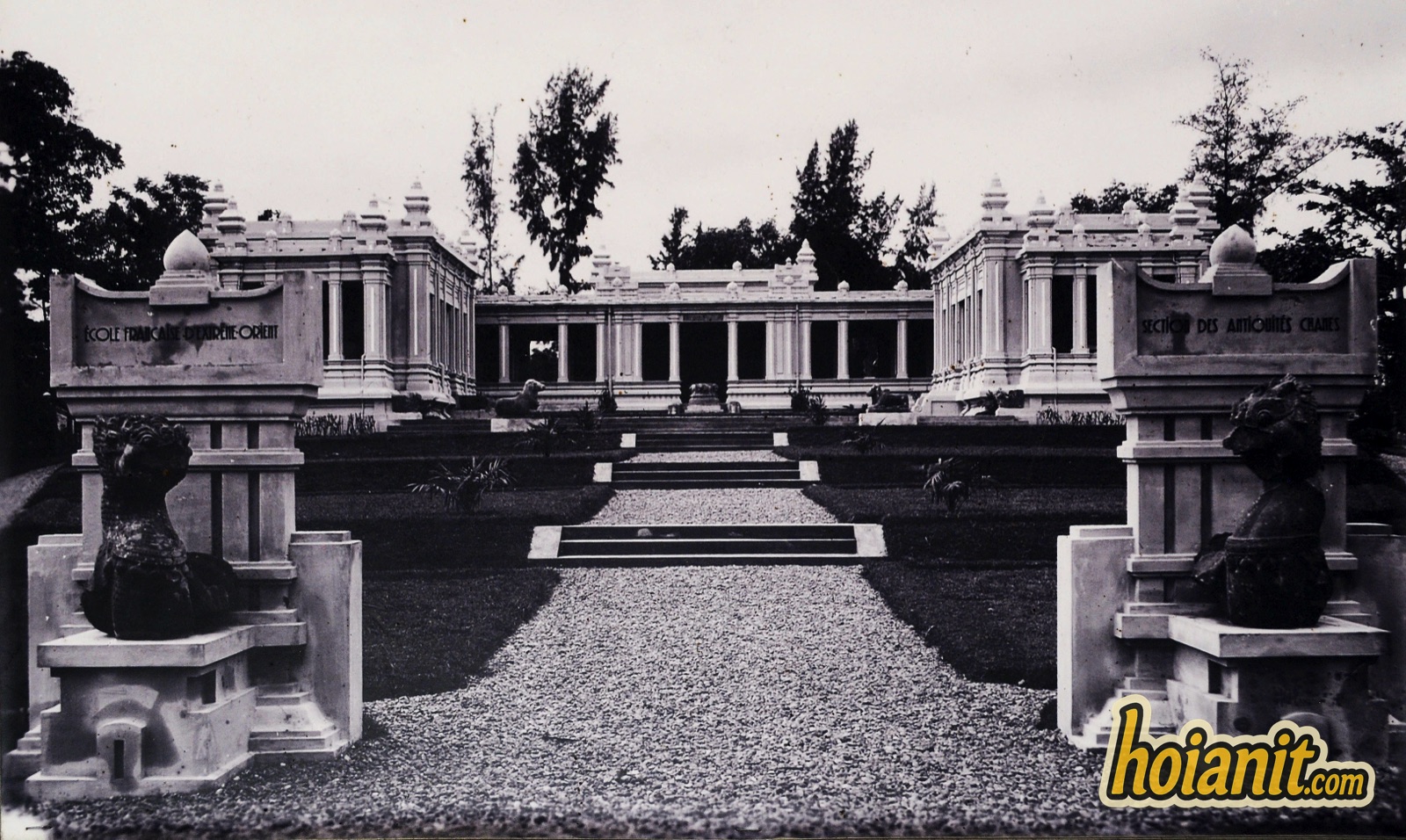
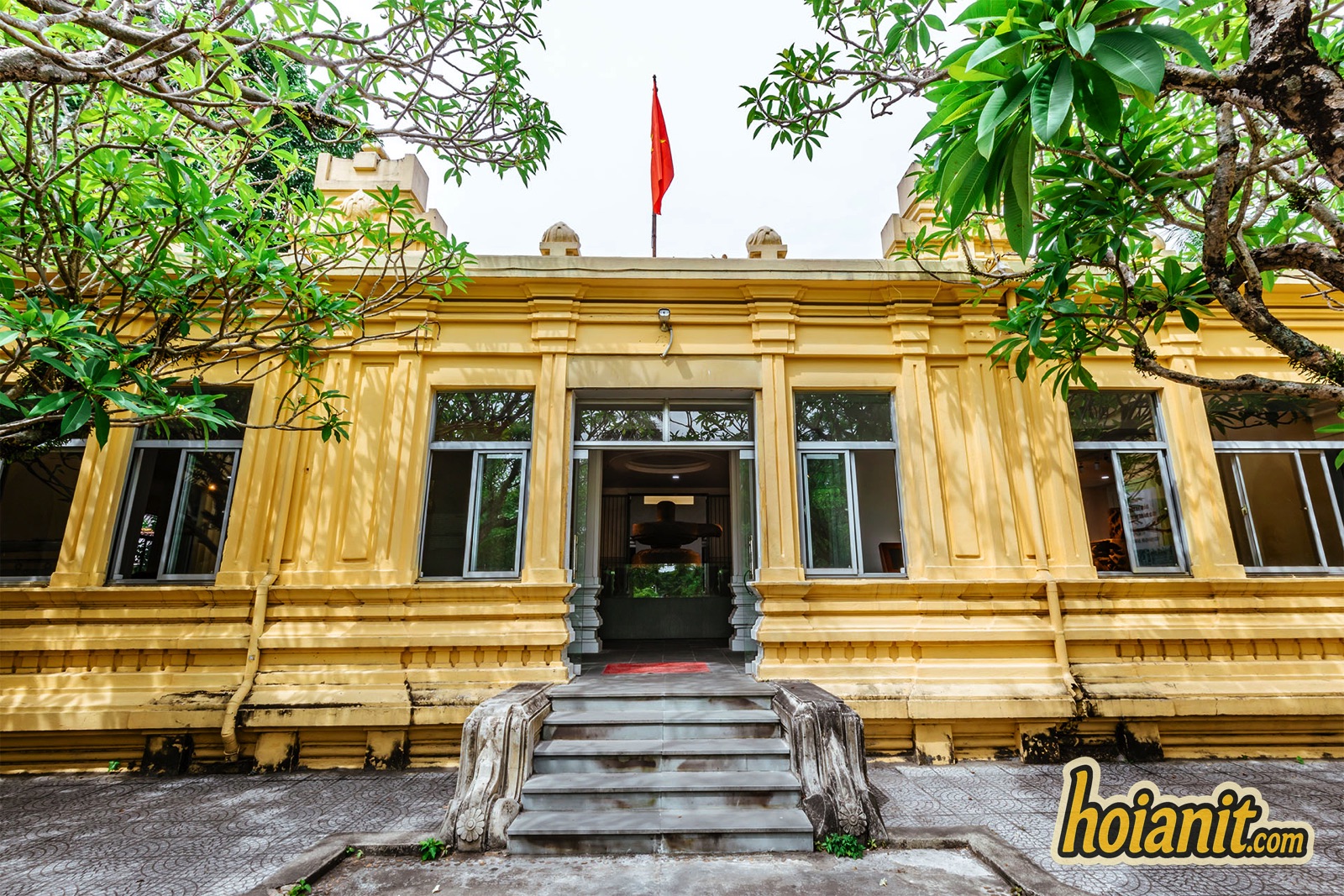
The museum was the idea of Henri Parmentier, the French archaeologist who spent decades mapping Cham temples for the École française d’Extrême-Orient and who needed somewhere to put what the jungle, the weather and the treasure hunters were destroying. The EFEO proposed it in 1902, the first building went up in 1915 to a design by two French architects, Delaval and Auclair, borrowing Cham motifs for its columns and roofline, and it opened to the public in 1919. Parmentier oversaw a 1,000-square-metre expansion in the mid-1930s; a two-storey block for storage, a library and a restoration workshop was added in 2002. The result is a low, ochre, colonnaded building that is worth a photograph in its own right and that has looked essentially the same for a century.
What it holds is, by any count, the largest collection of Champa sculpture anywhere: around 2,000 objects, of which some 500 are on display at any time, ranged in halls named for the sites they came from — My Son, Tra Kieu, Dong Duong, Thap Mam — plus rooms for Quang Nam, Quang Ngai, Binh Dinh and Kon Tum finds and newer galleries on Cham pottery, festivals and the living Cham community of today. In 2011 it was ranked a first-class museum, the top tier in Vietnam’s system.
Everything here was once bolted to a tower somewhere between Quang Binh and Binh Thuan. The museum is the kingdom’s attic, and the ruins are its emptied rooms.
The 12 national treasures, room by room
Vietnam has recognised a little over 300 objects as bao vat quoc gia, national treasures, and twelve of them are in this building — the most of any museum in Da Nang and one of the densest concentrations in the country. The list below is what to hunt for; the numbers match the order you will meet them if you walk the rooms as described in section 07.
| # | Treasure | Date | Room | Recognised |
|---|---|---|---|---|
| 1 | Tra Kieu Altar (pedestal with dancing apsaras and musicians) | 7th c. | Tra Kieu | 2012 |
| 2 | Apsara relief, Tra Kieu style | 10th c. | Tra Kieu | 2024 |
| 3 | My Son E1 Altar (the birth of Brahma and hermit scenes) | 7th c. | My Son | 2012 |
| 4 | Ganesha | 7th c. | My Son | 2020 |
| 5 | Birth of Brahma relief | 7th–8th c. | My Son | 2024 |
| 6 | Shiva | 8th c. | My Son | 2024 |
| 7 | Bodhisattva Tara, bronze, 114 cm | 9th c. | Dong Duong | 2012 |
| 8 | Dong Duong Altar | late 9th c. | Dong Duong | 2018 |
| 9 | Dancing Shiva relief from Phong Le | 10th c. | Quang Nam | 2024 |
| 10 | Uma relief from Chanh Lo | 11th–12th c. | Quang Ngai | 2024 |
| 11 | Gajasimha (elephant-lion) | 12th c. | Thap Mam | 2020 |
| 12 | Dragon of Thap Mam | 12th c. | Thap Mam | 2024 |
Three of these were in the very first batch of national treasures the country ever named, in 2012: the Tra Kieu altar, the My Son E1 altar and the Tara. Five more were added in one go in early 2024; Dan Tri’s photo essay from May 2026 shows all twelve in their current positions. If you saw Bang An Tower on the Dien Ban loop, the pair of gajasimha guarding its door are the same creature as treasure number 11, two centuries younger and a great deal more worn.
The Tara statue, and the lotus that took 47 years to come home
The single most famous object in the Cham Museum is a bronze woman just over a metre tall. She was found in 1978 by villagers digging at Dong Duong, the ruined Buddhist monastery-city in Thang Binh, 60 km south of Hoi An, and she is the largest Cham bronze ever discovered: 114 cm, 81 kg, ninth century, bare-breasted, with the tall chignon and the almond eyes of the Dong Duong style. Scholars call her Tara, or Prajnaparamita; either way she is the Buddhist counterpart to all the Hindu Shivas around her.
When she went to the museum, her hands were empty. The two small bronze objects she had held — a lotus bud in the right hand and a conch shell in the left — had been kept back by the village of Dong Duong, which regarded them as its share of the find. For four decades the museum displayed a statue with open palms and the village kept the lotus and the shell in the commune office. The villagers agreed in principle to return them in 2019, after a negotiation that at one point involved a request for a new village cultural hall in exchange; the formal handover finally happened on 9 December 2023, and at the end of 2025 the museum mounted both pieces back in her hands, provisionally, for the first time since they came out of the ground. If you visited before 2026, you have not seen her complete. Now you can; VnExpress has the full story of the reunion.
How to walk the Cham Museum in 90 minutes
The building is a hollow rectangle around a courtyard, and the halls are arranged by site rather than by date, so a straight lap is chronologically scrambled. The order below roughly follows the kingdom’s history from its early capital to its late one, and it puts the best rooms first while your attention is fresh.
- Tra Kieu hall (7th–10th c.) — 20 minStart with the great altar: a square sandstone pedestal whose four sides carry scenes from the Ramayana, ringed by dancers and musicians who look as if they were carved yesterday. The nearby apsara relief, with its lifted knee and swaying hips, is the image on half the postcards in Hoi An.
- My Son hall (7th–8th c.) — 20 minThe E1 altar is the oldest important piece in the museum and the one to compare with the ruins: hermits, musicians and the birth of Brahma from Vishnu’s navel, all from the temple group you can still walk through 40 km inland. Ganesha, pot-bellied and cheerful, is beside it.
- Dong Duong hall (late 9th c.) — 15 minThe Buddhist room. The Tara is here, now with her lotus and conch, and the vast Dong Duong altar with its seated figures — the closest thing Champa produced to a Buddhist cathedral.
- Quang Nam, Quang Ngai and Binh Dinh rooms — 15 minThe dancing Shiva from Phong Le, found a few kilometres from where you parked, and the Uma from Chanh Lo. Then the Thap Mam room for the fierce late style: the gajasimha, the dragon, the makara sea-monsters with everything in their mouths.
- Courtyard and the pottery gallery — 10 minStep out into the garden for the building itself, then finish in the newer rooms on Cham pottery and festivals, which tell you the people whose gods you have just seen are still here, some 180,000 of them, mostly in Ninh Thuan and Binh Thuan.
- Coffee — 10 minThere is no café inside. Cross Tran Phu to the riverside on Bach Dang for a cà phê muối with a view of the bridge.
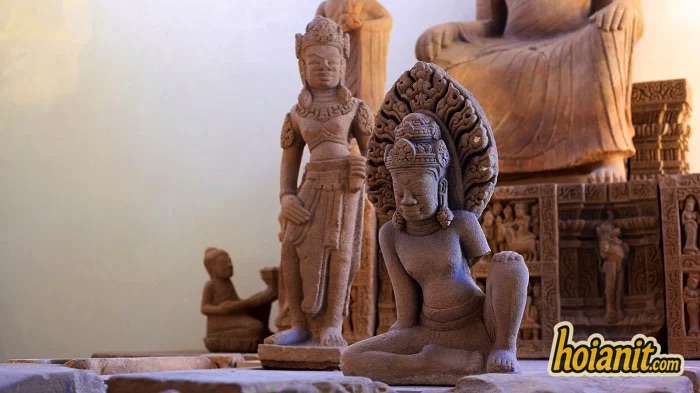
Photography without flash is allowed everywhere; tripods and selfie sticks are not. Toilets are off the courtyard. The rooms are cool, the floors are stone and the pieces are mostly at chest height — this is one of the rare museums in Vietnam that works well with a toddler on your hip.
The Tra Kieu detour: Simhapura and the hill that overlooks it
The best room in the museum is named for a village 19 km from Hoi An on the road to My Son, and almost nobody stops there. Tra Kieu was Simhapura, “Lion City”, the first capital of Champa from about the 4th century until the court moved to Dong Duong in the 9th. French aerial surveys in 1927 traced its rectangular ramparts across the rice fields; on the ground today nothing remains of the city but low earthworks, and every piece of carved stone the site produced — including the altar you have just admired — has gone to Da Nang.
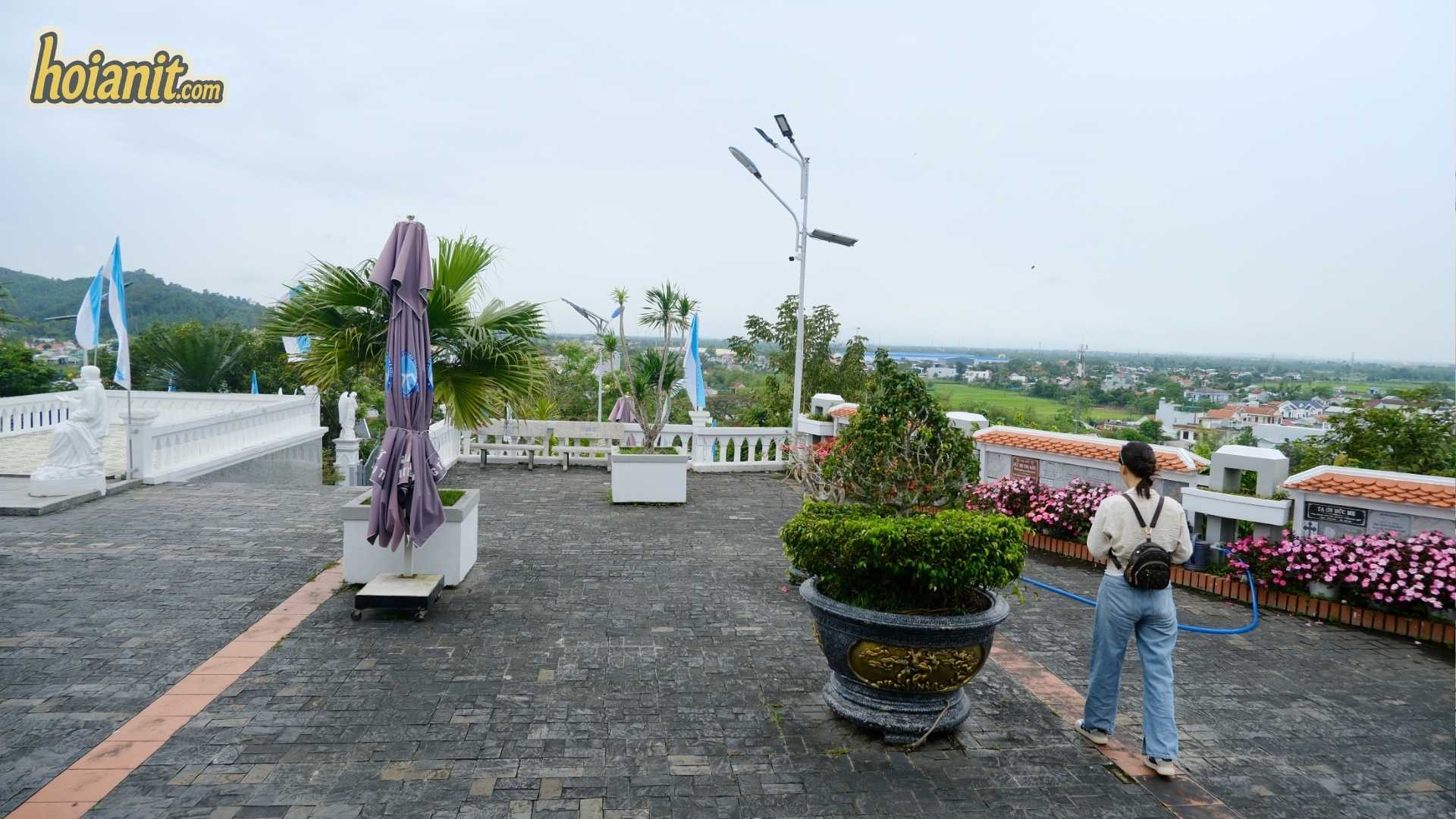
What there is to see is the view. Buu Chau, “Jade Hill”, a 60-metre knoll on the east side of the village, was the citadel of Simhapura, and it is now crowned by a small Catholic church reached by a steep flight of steps. From the top you look over the whole Thu Bon plain the Cham kings ruled — rice, the river, the Truong Son mountains where My Son hides — and you understand at once why they built here. The hill church dates from 1898, rebuilt in stone in 1927 and again in 1963, and marks something else: in September 1885, during the anti-Catholic Can Vuong uprising, the parish held out against a siege for three weeks and credited a vision of the Virgin above this hill with saving them. Tra Kieu has been the Marian pilgrimage centre of central Vietnam since 1971, and on 31 May each year tens of thousands of pilgrims fill the village. Any other day it is open 06:00–17:00, free, and quiet.
Below the hill on the main road is the parish church, and the parish is known to keep a small collection of Cham fragments turned up by local ploughs — worth asking to see if someone is about. Ride on west 20 km and you are at My Son; our My Son by motorbike guide covers the quiet hours. Ride back east 19 km on DT610 and you are home for dinner.
07:30 leave Hoi An on the coast road → 08:30–10:00 Cham Museum → 10:15 south on QL1A through Vinh Dien to Nam Phuoc, then DT610 west (about 40 km) → 11:45 Tra Kieu hill, lunch in the village (mi Quang, around 30.000₫) → 13:30–16:00 My Son in the emptiest hours → 17:15 back in Hoi An. About 125 km in all: a 110–125 cc automatic does it comfortably, a 50 cc or an electric scooter should not attempt it.
Make it a day: pairings, which bike and when to go
The Cham Museum is 90 minutes of indoors, so it pairs well with something outside. Riding home on the inland road you pass the Marble Mountains at the 8 km mark — two hours of caves and steps that use the same sandstone the sculptures are carved from, quarried from these very hills. Going north instead, Son Tra and the Lady Buddha are 12 km beyond the bridge. And My Khe beach is on your way back either way, ten minutes from the museum door.
Any bike in our fleet does the coast road; if you are riding on without a motorcycle licence, a 50 cc SYM or a VinFast electric will reach the museum and back on one charge with room to spare (55 km return), but leave the Tra Kieu–My Son extension for a 110–125 cc automatic. Go early in the dry season for the light through the windows; in the rainy months from October to December the museum is the best wet-weather hour in the region, and the inland road stays open when the coast road floods at the Cua Dai end.
Ride to the Cham Museum tomorrow
Scooter, semi-auto, 50 cc or electric — delivered (from 30,000₫) to your hotel in Hoi An with two helmets, a phone holder and a rain poncho. No passport deposit, no hidden fees.
84 Phan Chau Trinh, Hoi An · Zalo 0935 439 306 · roadside line +84 766 766 087 (24/7)FAQ
How much is the Cham Museum ticket in 2026?
Adult entry to the Cham Museum in Da Nang is 60.000₫ (about $2.30). Children under 16 are free and students with a card pay 5.000₫. The audio guide on your own phone and motorbike parking in the forecourt are both free. Entry is free for everyone on the first day of Tet, 29 March, the 10th day of the 3rd lunar month and 2 September.
How far is the Cham Museum from Hoi An by motorbike?
The Cham Museum is 27.3 km from Hoi An Old Town by the coast road through Ha My, Non Nuoc and My Khe, about 45 to 55 minutes on a scooter, or 30.4 km by the inland road through DT607 and Le Van Hien, which is slightly faster. It stands at 02 Duong 2 Thang 9 at the west end of the Dragon Bridge.
What are the Cham Museum opening hours?
The Cham Museum is open every day from 07:00 to 17:00 with no lunch break, including public holidays. The quietest time is before 09:00; coach groups arrive from about 10:00. Allow 90 minutes, or two hours with the audio guide.
Is the Cham Museum worth visiting before My Son?
Yes, and ideally before rather than after. My Son is the architecture; the Cham Museum is where the sculpture that once decorated those towers is kept, including the My Son E1 altar and the Ganesha. Seeing the museum first lets you picture the empty niches at the sanctuary filled.
Which pieces in the Cham Museum are national treasures?
Twelve objects in the Cham Museum are recognised national treasures of Vietnam: the Tra Kieu altar and apsara, the My Son E1 altar, Ganesha, Shiva and the birth-of-Brahma relief, the bronze Tara and the Dong Duong altar, the dancing Shiva from Phong Le, the Uma from Chanh Lo, and the gajasimha and dragon from Thap Mam.
Where do I park a motorbike at the Cham Museum?
In the museum forecourt on the Tran Phu street side, where bikes park under the trees for free. If it is full, the side streets behind the building have attended parking for 5.000₫ to 10.000₫.
Can I combine the Cham Museum with Tra Kieu and My Son in one day?
Yes. Ride the coast road to the Cham Museum for 08:30, ride south on QL1A to Nam Phuoc and then DT610 west, climb Buu Chau hill at Tra Kieu around 11:45, and reach My Son for the quiet afternoon hours. It is about 125 km in total and needs a 110–125 cc automatic scooter rather than a 50 cc or electric bike.
Distances were measured on the road from 84 Phan Chau Trinh, Hoi An, to the museum forecourt and to Buu Chau hill; riding times assume a scooter in normal traffic. Ticket prices are those posted at the museum and confirmed in press reports of September 2026; the student rate and free-entry days are museum policy and can change without notice. National-treasure dates follow the Ministry of Culture’s recognition decisions of 2012, 2018, 2020 and 2024; the Tara account follows Tuoi Tre, Thanh Nien and VnExpress reporting from 2019 to 2025. Anh Khoa does not sell museum tickets or tours; buy at the door.








Pick your ride in Hoi AnChọn xe cho chuyến đi Hội An
Scooters, electric bikes and bicycles from one shop in the Old Town — delivered to your hotel, helmets and roadside help included.Xe máy, xe điện và xe đạp — giao tận khách sạn, kèm hai nón bảo hiểm và hỗ trợ dọc đường.
Not sure which one fits? Message us on WhatsApp and we’ll recommend a bike for your plans.
Chưa biết chọn xe nào? Nhắn Zalo 0935 439 306, tụi mình tư vấn theo lịch trình của bạn.