

Routes & Day Trips
Thanh Ha Pottery Village Hoi An: Tickets, History and What Is Left
Thanh Ha Pottery Village Hoi An: Tickets, History and What Is Left
Three kilometres from the Ancient Town, a village has been turning river clay on a wheel for four centuries. Thirty-two households are left. Five still do it the old way.
Thanh Ha Pottery Village sits on the Thu Bon River just west of Hoi An. It is a real working craft village that happens to sell tickets, not a set built for visitors — and it is a craft in genuine decline. This guide covers the two separate tickets, the 1602 founding story, how the unglazed pottery is actually fired, and what is worth your time once you are inside.
Some links in this article are affiliate links — if you book through them, we earn a small commission at no extra cost to you. It helps keep this local guide free and updated.
- What Thanh Ha is — and the honest state of it
- The 1602 story, and the “500 years” question
- Two tickets, two completely different places
- How the pottery is actually made
- Getting there from Hoi An
- What to do once you are inside
- Nam Dieu temple and the ancestors’ festival
- Buying, shipping and practical notes
For every entrance fee in Hoi An in one table, see the Hoi An entrance ticket guide. For the other craft village worth riding to, see Tra Que Vegetable Village — the two pair well in one morning and sit on opposite sides of town.
What Thanh Ha is — and the honest state of it
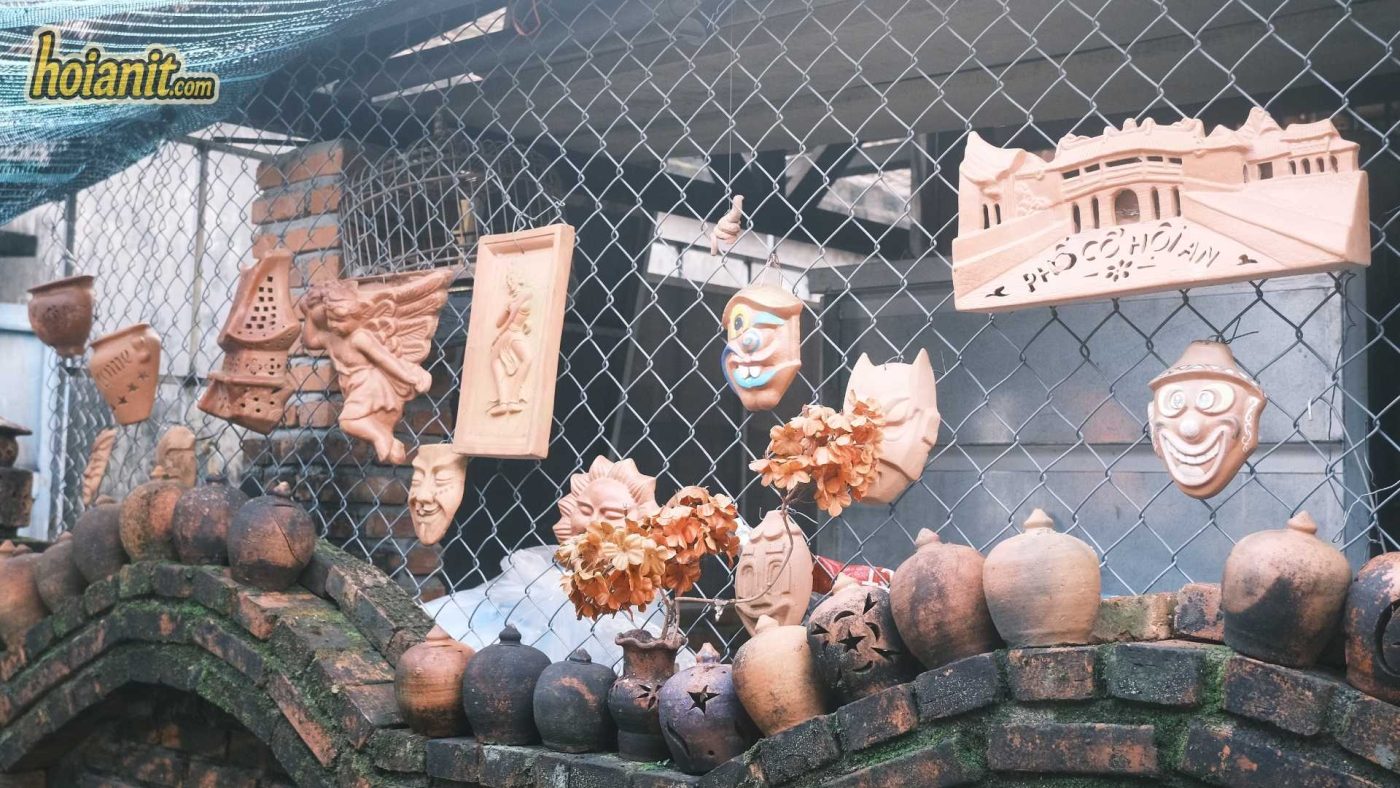
Thanh Ha is a pottery village in the Nam Dieu area, on the bank of the Thu Bon about three kilometres west of Hoi An Ancient Town. It makes unglazed earthenware — household pots, water jars, roof tiles historically, and now a great deal of decorative work aimed at visitors.
On 27 August 2019, by Decision 2965/QĐ-BVHTTDL, Vietnam’s Ministry of Culture, Sports and Tourism entered Nghề gốm Thanh Hà — the Thanh Ha pottery craft — on the national list of intangible cultural heritage.
Fifty households became thirty-two. Five still throw traditionally.
The national heritage file records what the village used to be: roughly 50 pottery households, 8 traditional kilns, and 200 to 300 people working the clay.
Today it lists 32 households and 134 workers. Of those, five households still practise traditional pottery. Thirteen make con thổi — the small clay animal whistles you will see everywhere. Most of the rest produce decorative ceramics for the tourist trade, and three households work as pottery merchants.
That is not a reason to skip it. It is the reason to buy something while you are there, and to spend your time watching the people who still throw rather than only shopping.

One administrative note: since the July 2025 merger of provinces, the official address reads Nam Dieu block, Hoi An Tay ward, Da Nang City. Older signs and tickets still say Thanh Ha ward, Quang Nam. Same village.
The 1602 story, and the “500 years” question
Almost every sign and brochure in Hoi An says Thanh Ha is more than 500 years old. The documented record is a little more interesting than that.
The founding story recorded by Hoi An’s heritage authorities goes like this. Lord Nguyen Hoang — Chua Tien — dreamed of a goddess of Nam Dieu, who gave him a clay vessel and told him to travel north to find her temple. He was led to a small shrine beneath an ancient banyan tree, and there was the same clay bowl. He built a larger temple on the spot and recruited potters from the famous ceramic villages of the north, bringing them south to settle here.
That happened around 1602, when Nguyen Hoang established his administrative post in Quang Nam. Other records place the settlers as migrants from Thanh Hoa province, and the national heritage file dates the craft’s development to the 16th and 17th centuries.
Both, depending on what you are counting. The craft arrived with northern potters around 1602 — roughly 420 years. The settlement and the tradition it grew from reach further back into the 16th century, which is where the “over 500 years” figure comes from. Nobody is being dishonest; two different clocks are being read.
Two tickets, two completely different places
This is the single most common source of confusion, and it costs people either money or an experience they wanted. The village and the Terracotta Park are separate destinations with separate tickets.
| Thanh Ha Pottery Village | Thanh Ha Terracotta Park | |
|---|---|---|
| Ticket | 35,000₫ | 50,000₫ adult25,000₫ under 15 |
| Hours | 08:30 – 16:30 | 08:00 – 17:30 |
| What it is | The living village — lanes, workshops, kilns, families still working | A private museum and park: craft village museum, ceramic art exhibition, Sa Huynh–Champa museum, miniature world models |
| Go for | Watching real potters, buying direct, atmosphere | Context, air-conditioning, children, a rainy afternoon |
Pay for the village. It is cheaper, the money goes closer to the people making things, and watching someone throw a pot in a working yard beats a display case. Add the Terracotta Park if you have children, if it is raining, or if you want the archaeology — the Sa Huynh–Champa material is genuinely good and explains why there has been pottery on this river for two thousand years, not four hundred.
How the pottery is actually made
Thanh Ha ware is unglazed. That single fact defines everything about how it looks and how it is fired, and it is why the pieces come in those earthy reds, oranges and near-blacks rather than a shiny finish.
- Lam dat — preparing the clayRiver clay from the Thu Bon is mixed, kneaded and worked until the texture is even. Done badly, everything after it fails.
- Chuot gom — throwing by handShaped on a turning wheel, traditionally with one person turning and one shaping. No moulds for the traditional forms.
- Sua nguoi — leather-hard finishingOnce the piece has dried to leather hardness it is trimmed and refined. This is where the wall thickness and the final line are decided.
- Firing in a lo xanh or lo doTwo traditional rectangular kiln types — the “green kiln” and the “red kiln”. Both are wood-fired, and a single firing consumes five to seven cubic metres of wood. That number alone tells you why so few households still do this.
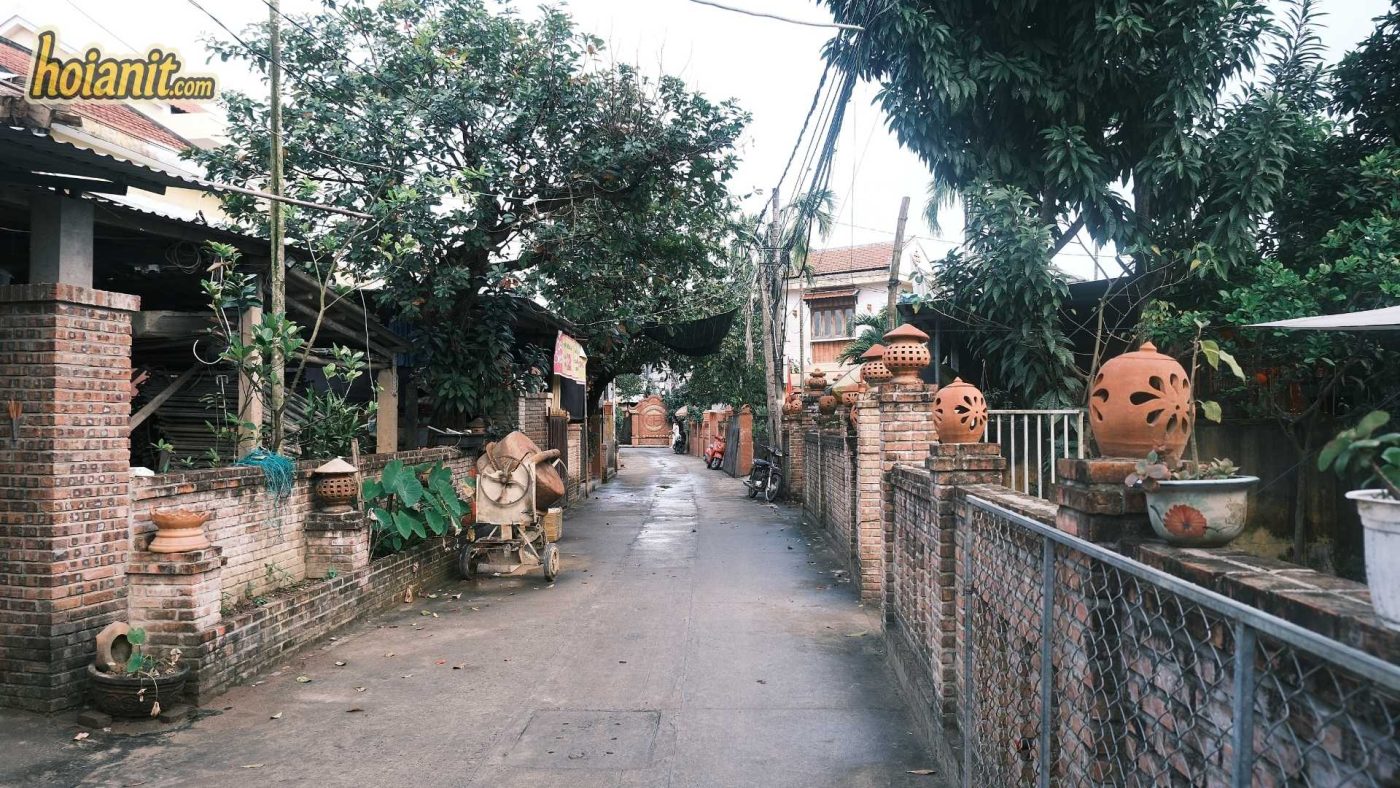
Because there is no glaze, colour is controlled by fire, not by chemistry. Where a pot sits in the kiln, how much oxygen reaches it and how long it burns decide whether it comes out orange, deep red or almost black. Two identical pots can leave the same kiln looking nothing alike, which is worth knowing when you are choosing one to buy.
Getting there from Hoi An
Three kilometres west, flat the whole way, and genuinely easy on anything with two wheels.
- By motorbike or scooter — about 10 minutes. Head west out of the Ancient Town along the river. Remember the Old Town pedestrian hours (09:00–11:00 and 15:00–21:30) and leave from outside the zone.
- By bicycle — about 20 minutes. Flat, riverside, shaded in parts. Arguably the nicest way to arrive, and the village is small enough to leave the bike anywhere.
- By boat. Small boats run from the Ancient Town up the Thu Bon. Slower and more expensive, but it is the way the pottery itself used to travel, and the approach from the water is the good one.
- By taxi or Grab — 10 minutes. Fine, but you will want a way back; the village is not a place taxis wait.
Parking at the village is straightforward and cheap. If you would rather leave the bike in town, our guarded lot at 84 Phan Chau Trinh is 10,000₫ and free for rental customers.
What to do once you are inside
The village is small. An hour is enough to see it properly, two if you make something.
| Hands-on experience | Price | Note |
|---|---|---|
| Pottery making, basic | 40,000₫ | Throw a small piece with guidance |
| Pottery with acrylic painting | 60,000₫ | Good option for children |
| White clay pottery | 100,000₫ | Finer clay, better result |
| Premium, oxide glazes + shipping | 250,000₫ | They fire it properly and post it to you |
| Ceramic colouring, mask | 60,000–150,000₫ | By size |
Prices above are the published Terracotta Park experience rates; workshops in the village itself set their own, usually lower and negotiable.
- Watch before you book anything. Stand at a wheel for ten minutes first. You will make far better use of a lesson afterwards.
- Try turning the wheel, not just shaping. Traditionally it is a two-person job, and taking the turner’s role for a minute teaches you more about the craft than shaping does.
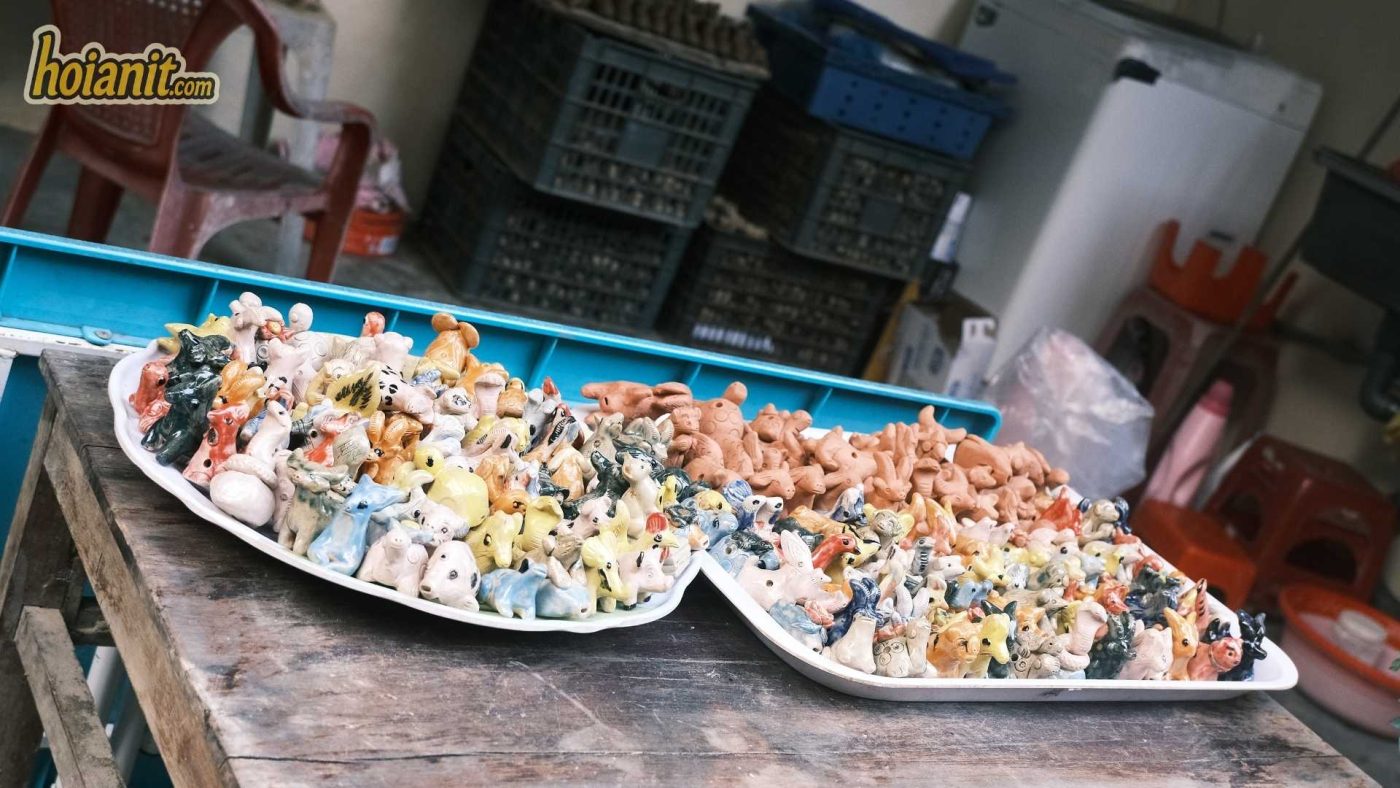
- Buy a con thoi. The little clay animal whistles cost almost nothing, they are the village’s signature, and thirteen households make their living from them.
- Walk the back lanes. The ticket gate area is the busiest part. Two streets back you find drying yards, stacked kiln wood and people working without an audience.
Nam Dieu temple and the ancestors’ festival
Nam Dieu temple is where the village worships the founding ancestors of the craft — the temple from the founding legend, rebuilt and maintained ever since. It is quiet, free to look at from outside, and the reason the whole place is called Nam Dieu.
Once a year, on the 10th day of the 7th lunar month, the village holds the ancestor worship festival for the pottery trade. There is a palanquin procession, boat racing on the river, pottery demonstrations and competitions. It is a working village festival rather than a staged one, and if your dates happen to line up it is by far the best day to come.
The founding legend has the temple sitting beneath an ancient banyan tree. Banyans still shade parts of the village, and the old ones are treated with obvious care. In a place where almost everything is made of fired earth, the trees are the oldest living things there.
Buying, shipping and practical notes
- Buy from the workshop, not the gate. Prices are similar but the money goes to the person who made it, and you can ask which kiln it came out of.
- Unglazed earthenware is fragile and heavy. Think about your luggage before falling in love with a large pot. The 250,000₫ premium experience includes shipping for a reason.
- Wrap it yourself if you are carrying it. Ask for newspaper and pack it in the middle of your bag — this ware chips easily.
- Go in the morning. Kilns and drying yards are busiest early, and the village has very little shade in the middle of the day.
- Bring cash. Small workshops do not take cards.
- It is a place people live. The lanes are somebody’s front yard. Ask before photographing inside a workshop and you will almost always get a yes, and often a demonstration.
Clay in the morning, lanterns in the afternoon
Thanh Ha proves Hoi An is a town of makers. The other craft worth your hands is a folding-lantern class in the Old Town (★4.9, 4,400+ reviews) — you keep what you make and it packs flat for the flight home.
Riding out to Thanh Ha this morning?
Motorbikes, scooters and bicycles delivered (from 30,000₫) to hotels and homestays across Hoi An. Thanh Ha is ten minutes away — and it pairs neatly with Tra Que on the other side of town.
Zalo 0935 439 306 · 84 Phan Chau Trinh, Hoi An



















Bikes Rental


More Bike Options in Hoi An
E-Bike · No license

No License? No Worries!
Rent a 50cc Bike in Hoi An Today!More around Hoi An: Tra Que Vegetable Village, the Ancient Town explained, every entrance fee in one table, and Hoi An in one day.
Frequently asked questions
How much is the entrance ticket to Thanh Ha Pottery Village?
The village ticket is 35,000 dong per person and the village is open from 08:30 to 16:30. Thanh Ha Terracotta Park is a separate destination with its own ticket at 50,000 dong for adults and 25,000 dong for children under 15, open from 08:00 to 17:30. Hands-on pottery experiences are charged separately, starting at around 40,000 dong.
Is Thanh Ha Pottery Village worth visiting?
Yes, if you go to watch people work rather than only to shop. It is a real working craft village recognised as national intangible cultural heritage in 2019, but it is in decline: the heritage record lists 32 pottery households and 134 workers today, down from around 50 households and 200 to 300 workers historically, and only five households still practise traditional pottery. An hour is enough to see it properly.
How do you get to Thanh Ha Pottery Village from Hoi An?
It is about 3 kilometres west of Hoi An Ancient Town along the Thu Bon River. By motorbike or scooter it takes around 10 minutes, by bicycle about 20 minutes on flat riverside roads, and small boats also run up the river from the Ancient Town. Remember that the Old Town core closes to vehicles from 09:00 to 11:00 and 15:00 to 21:30, so set off from outside the pedestrian zone.
What is the difference between Thanh Ha Pottery Village and Thanh Ha Terracotta Park?
They are two separate places with separate tickets. The village is the living settlement of workshops, kilns and families, costing 35,000 dong. The Terracotta Park is a private museum and park costing 50,000 dong, containing a craft village museum, a ceramic art exhibition, miniature world models and a Sa Huynh and Champa archaeology collection. The village is better for atmosphere and watching real potters, the park is better for context, children and rainy afternoons.
How old is Thanh Ha Pottery Village?
Local signage usually says more than 500 years. The documented founding story places the arrival of northern potters at around 1602, under Lord Nguyen Hoang, which is roughly 420 years, while the national heritage file dates the development of the craft to the 16th and 17th centuries. Both figures are in use because they count different things: the settlement and the craft.
When is the Thanh Ha pottery festival?
The ancestor worship festival for the pottery trade is held at Nam Dieu temple on the 10th day of the 7th lunar month each year. It includes a palanquin procession, boat racing on the river, pottery demonstrations and competitions. It is a working village festival rather than a staged performance, and it is the best day of the year to visit if your dates allow.
Updated August 2026. Ticket prices, opening hours and experience fees are recorded at the time of writing and are set locally, so treat them as a guide rather than a guarantee. Household and worker figures are from the national intangible cultural heritage record for Nghề gốm Thanh Hà, Decision 2965/QĐ-BVHTTDL dated 27 August 2019. Festival dates follow the lunar calendar. Spotted something out of date? Message us and we will correct it.








Pick your ride in Hoi AnChọn xe cho chuyến đi Hội An
Scooters, electric bikes and bicycles from one shop in the Old Town — delivered to your hotel, helmets and roadside help included.Xe máy, xe điện và xe đạp — giao tận khách sạn, kèm hai nón bảo hiểm và hỗ trợ dọc đường.
Not sure which one fits? Message us on WhatsApp and we’ll recommend a bike for your plans.
Chưa biết chọn xe nào? Nhắn Zalo 0935 439 306, tụi mình tư vấn theo lịch trình của bạn.