
Food & Coffee
Cao Lau Noodles: Why They Only Exist in Hoi An
Cao Lau Noodles: Why They Only Exist in Hoi An
Four local ingredients tie cao lau noodles to a fifteen-kilometre radius around Hoi An — the ash, the well, the herbs and the rice. Here is what makes it, and the places that still do it properly.
- What cao lau noodles actually are
- The four things that cannot be copied
- How cao lau noodles are actually made
- Real cao lau versus the tourist version
- Where to eat cao lau
- Prices and opening hours
- Cao lau or mi Quang? Telling them apart
- How to eat cao lau properly
- Making a day of it by bike
- Questions we get asked
What cao lau noodles actually are
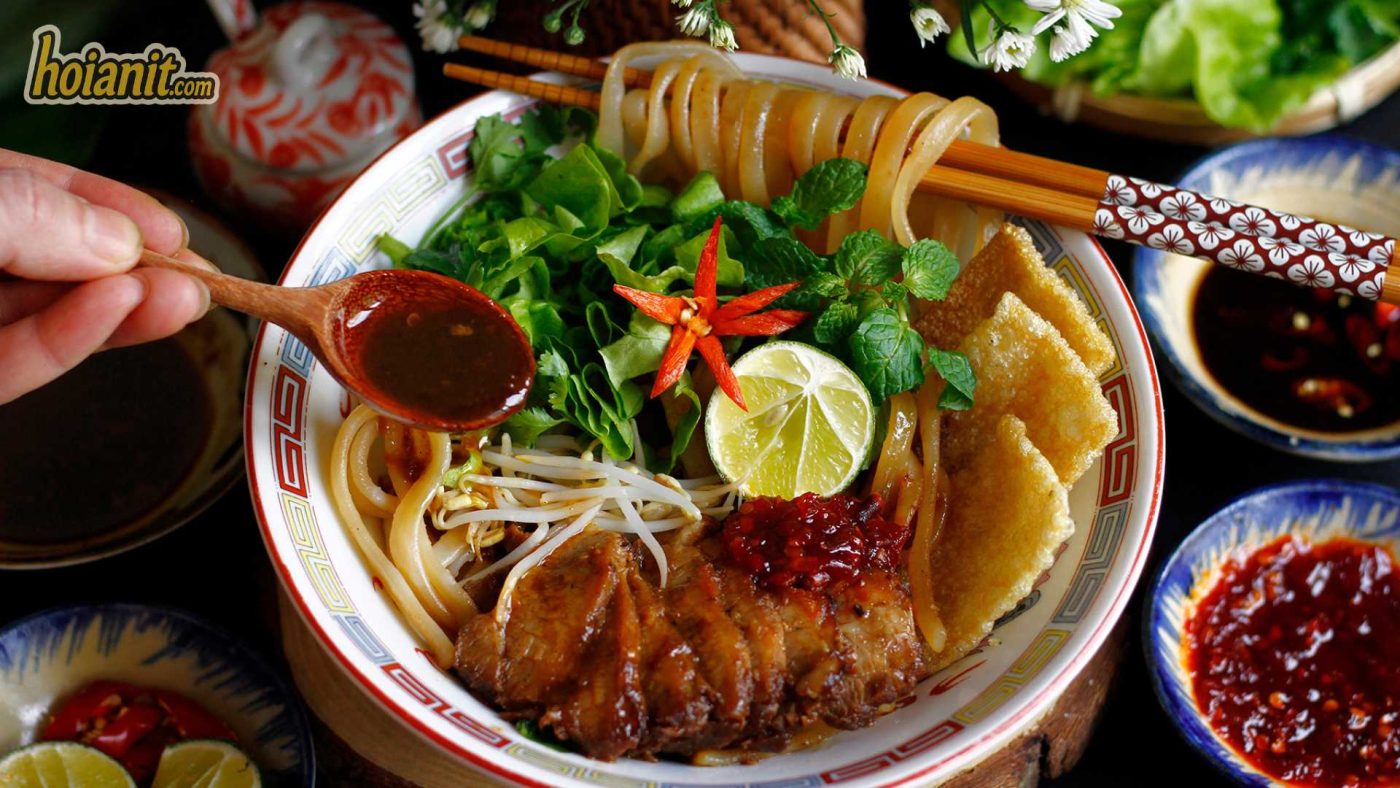
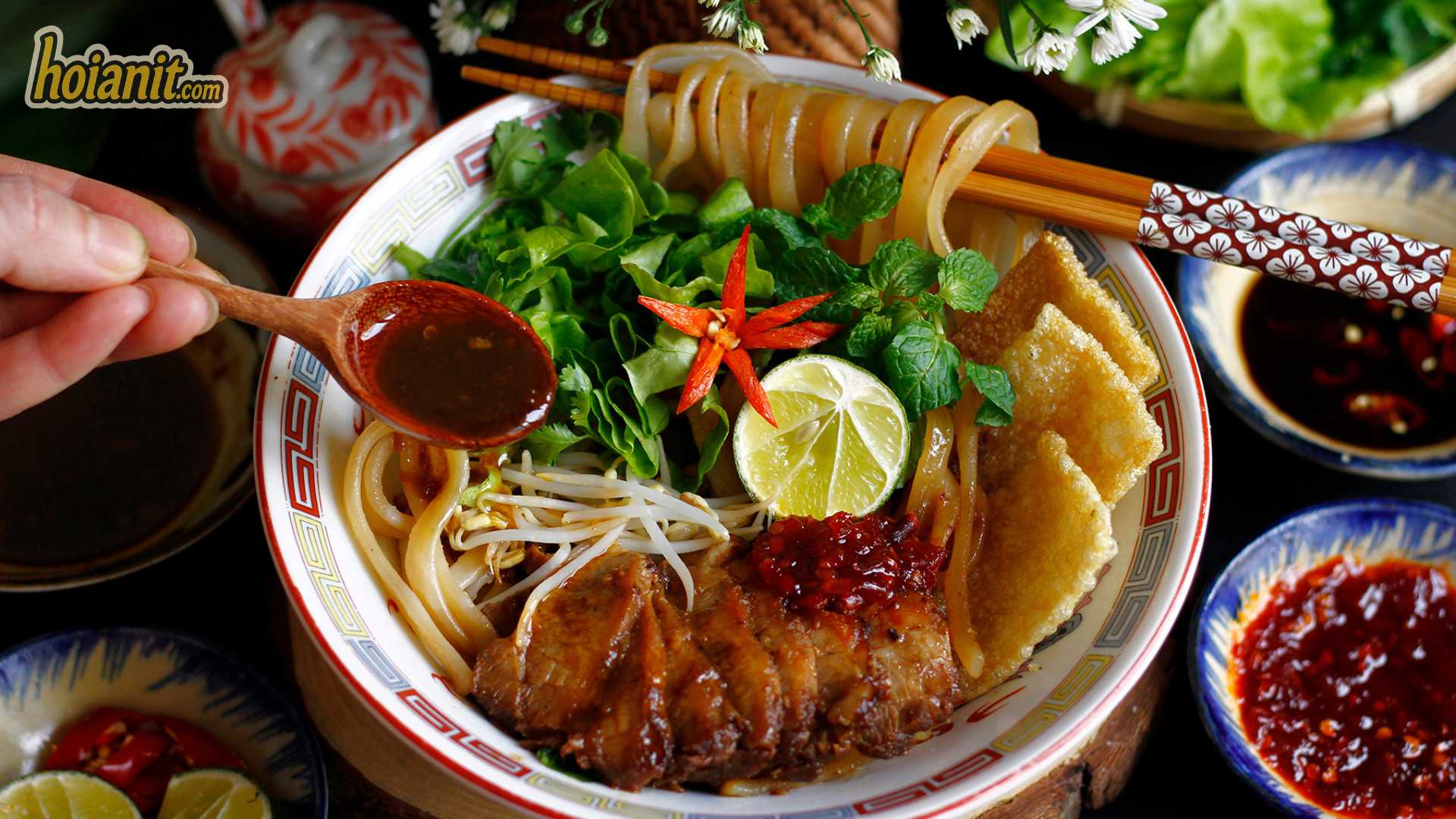
A bowl of cao lau holds thick, chewy, brown-tinged noodles; slices of marinated pork; fresh herbs and bean sprouts; crisp squares of something that looks like a cracker; and — this surprises almost everyone — barely any liquid. Two or three spoonfuls of concentrated pork sauce sit at the bottom. You toss the bowl before eating. It is much closer to a dry noodle salad than to pho.
Cao lau noodles are the point. They are noticeably thicker than pho noodles, firmer than udon, and have a faint bounce that comes from being soaked in alkaline water. The colour is not from soy sauce; it is a by-product of that soaking.
Those crisp squares on top confuse a lot of visitors. They are not prawn crackers. They are cao lau dough itself, cut and deep-fried — the same noodle in a second form, put there for texture.
Origin stories vary and none is settled. Some trace the dish to Japanese udon, brought when Hoi An had a Japanese quarter in the 16th and 17th centuries. Others point to Chinese noodle traditions carried in by merchants. The name itself is usually explained as “high floor” — food eaten upstairs in the trading houses, where wealthier customers sat and watched the river. Take all of it as folklore rather than record.
The four things that cannot be copied
Ask a cook in Hoi An why cao lau does not travel and you will get the same four answers.
| Ingredient | Where it comes from | What it does |
|---|---|---|
| Wood ash lye | Firewood burned on Cu Lao Cham, the island 15 km offshore | Alkaline soak — gives the noodles their colour and chew |
| Well water | The Ba Le well, an old Cham well in the Old Town | Traditional water for making and cooking the noodles |
| Herbs | Tra Que village, 3 km toward the beach | The specific mix of greens served raw underneath |
| Rice | Local paddies | The base of the dough |
Whether the well water is chemically essential is debated — what is not debated is that the people who make cao lau noodles believe it is, and they have been doing it for generations. Either way, the practical outcome is the same: the supply chain for real cao lau is about fifteen kilometres wide.
Worth a small detour. The Ba Le well sits down an alley off Tran Hung Dao, still in daily use, and Tra Que is a fifteen-minute ride from the Old Town through vegetable beds. Seeing where two of the four ingredients come from takes an afternoon and makes the bowl taste different — not because the food changed, but because you did.
How cao lau noodles are actually made
Nobody makes cao lau noodles at the restaurant. They come from a handful of families who have supplied the town for generations, and the process is why the dish resists mass production.
- Burn the wood, keep the ash. Firewood from Cu Lao Cham is burned and the ash collected, then steeped in water to draw out the lye. This alkaline solution is the step everything else depends on.
- Soak the rice. Good local rice goes into the lye water. The soak changes both the colour and the protein structure — this is where the faint brown tint and the chew come from, not from any sauce added later.
- Wash, grind, settle. The rice is rinsed thoroughly, ground into a wet batter and left to settle so the excess water can be drawn off.
- Roll and cut. The dough is rolled into sheets and cut into thick, square-edged strands — noticeably heavier than the noodles used for pho or mi Quang.
- Steam repeatedly. The strands are steamed several times over, then dried. The repeat steaming is what makes them hold their shape in the bowl instead of collapsing.
Two consequences follow from this for anyone eating in Hoi An. First, a shop that sells out has genuinely sold out — noodles are delivered in a batch and there is no back room to make more. Second, the price of a bowl has a floor: the noodle takes two days of work before it reaches a kitchen, which is why cao lau is rarely the cheapest thing on a Hoi An menu even at a market stall.

Real cao lau versus the tourist version
Hoi An sells a great deal of cao lau to people who will only eat it once, and standards vary accordingly. Four tells, in order of usefulness:
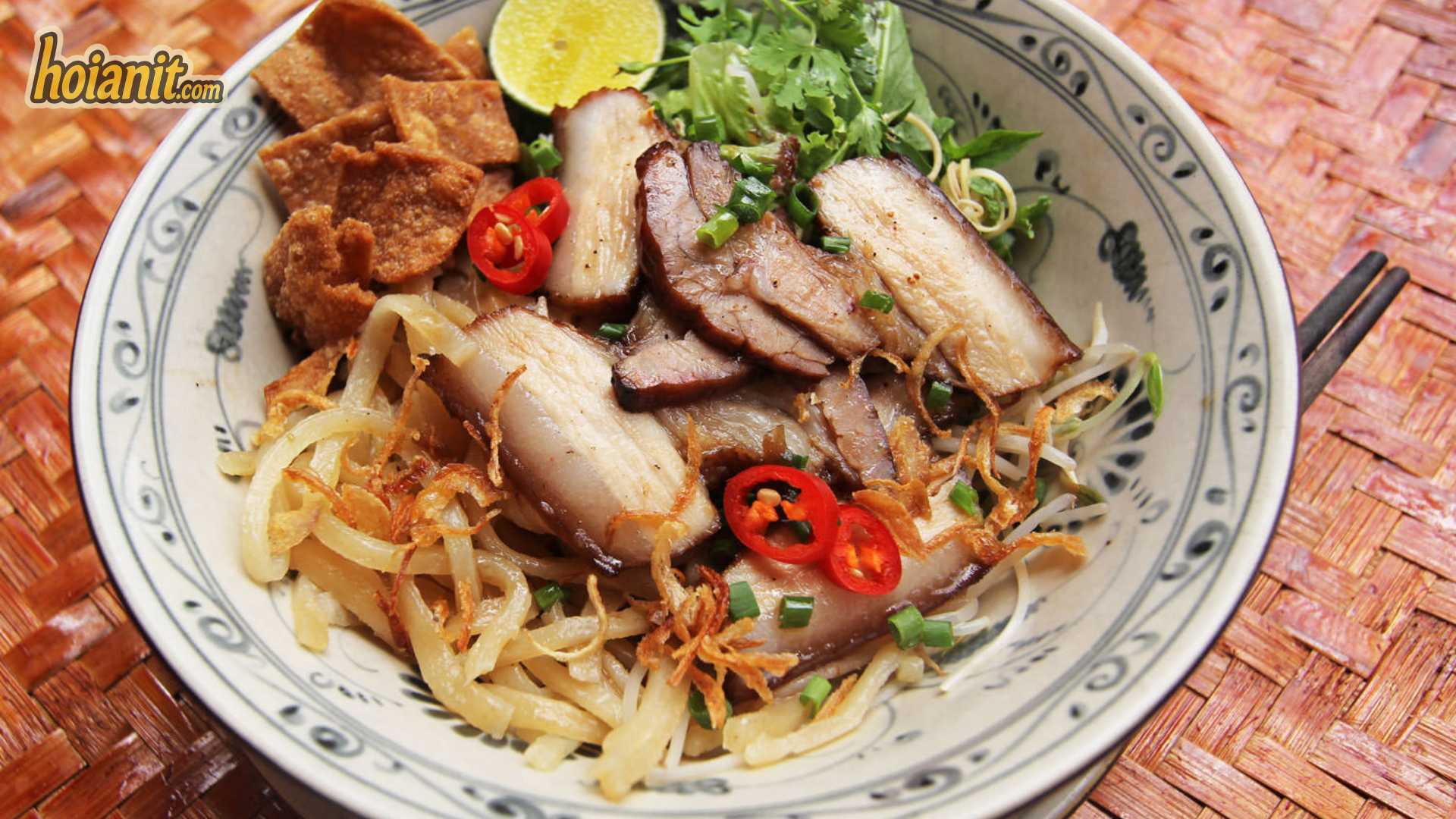
- Look at the liquid. A proper bowl is nearly dry — a dark, thick sauce pooled at the bottom, no more. If your cao lau arrives swimming in broth, it has been turned into soup for foreign palates.
- Bite a noodle. It should resist. Soft, slippery noodles mean either the wrong noodle or one boiled far too long.
- Check the crisp bits. Fried squares of the same dough, irregular and pale gold. Uniform pink-white prawn crackers are a shortcut.
- Count the herbs. A generous raw handful underneath, not a decorative sprig on top.

One address note. Since 1 July 2025, Quang Nam province has been merged into Da Nang and ward-level names in Hoi An were reorganised. Restaurant listings that read “Minh An ward, Hoi An, Quang Nam” are using an address that no longer formally exists. The streets and the shops are exactly where they were — only the paperwork changed. Use the street name and number and you will be fine.
Where to eat cao lau
Four places locals actually name, spread across price and atmosphere. All are in or beside the Old Town and all are easy to reach by bike. For the full list of seven, checked on Google Maps in October 2026 with hours and prices, see our guide to where to eat cao lau in Hoi An.
| Place | Where | Price | What sets it apart |
|---|---|---|---|
| Cao lau Ba Be | Food section, Hoi An Market | 20,000–44,000₫ | Market stall, opens 14:00–22:00, tender pork and crisp skin |
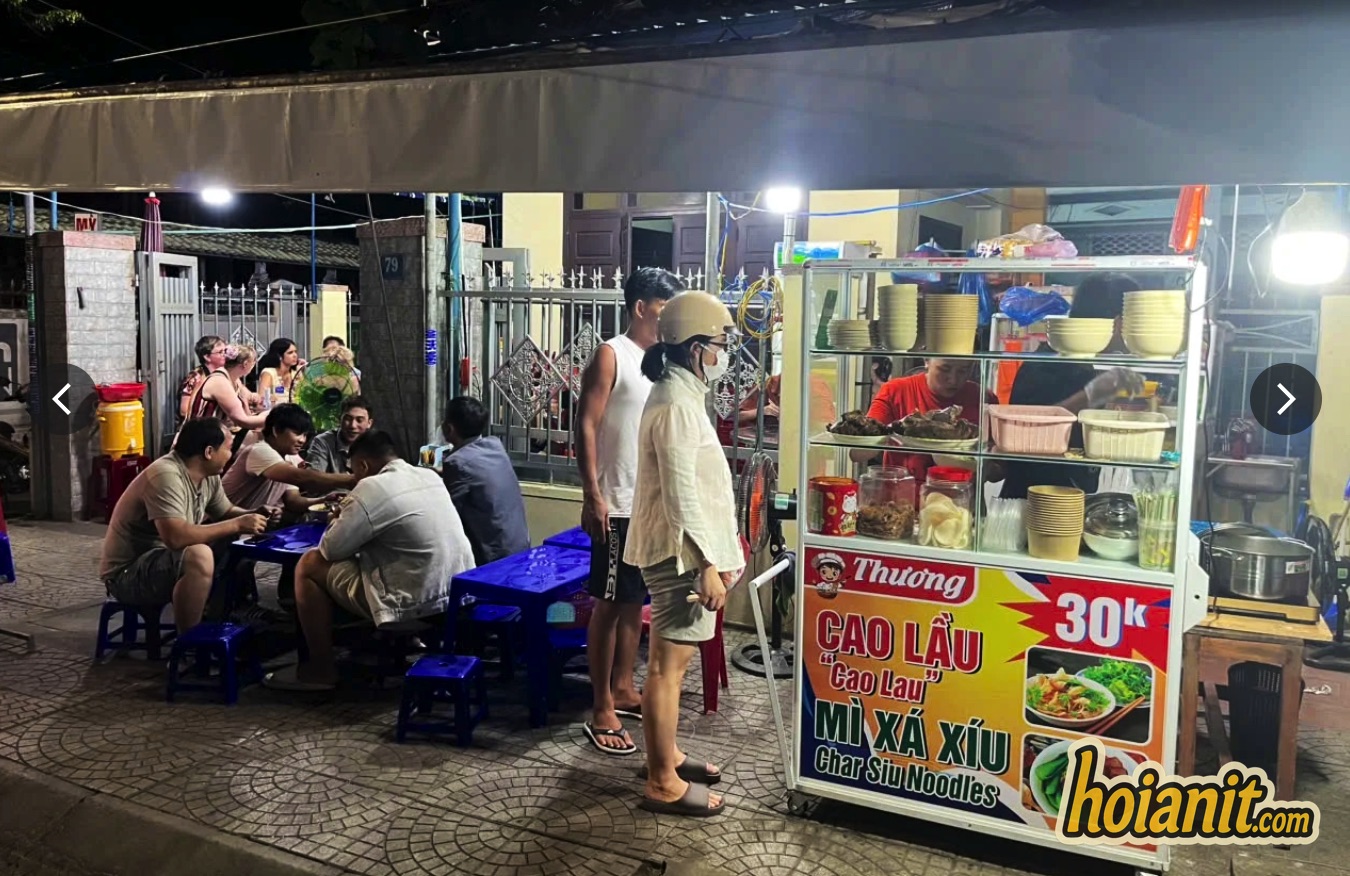
| Cao Lau Thuong | 79 Tran Cao Van | 30,000–50,000₫ | Street cart, 5.0 on 653 Google reviews, open 10:30–21:30 |
| Cao lau Khong Gian Xanh | 687 Hai Ba Trung | 20,000–40,000₫ | Garden setting, easy parking, quieter than the centre |
| Cao lau Lien | 47/30 Tran Hung Dao | ~40,000₫ | Small, local crowd — moved here from Thai Phien |

Where locals do not eat cao lau: the riverside terraces with laminated photo menus in five languages. Not because the food is dangerous — it is fine — but you are paying a view premium for a dish that costs 30,000₫ two streets inland and tastes better there. Walk one block north of Bach Dang and the price halves.
Prices and opening hours
Expect 30,000 to 50,000₫ for a standard bowl in 2026. Market stalls start around 20,000₫; the heritage houses charge up to 110,000₫ for larger or special portions. Anything above that is paying for the room.
- Lunch is the real service. Cao lau is traditionally a midday dish, and several places make one batch of noodles a day. Arrive at two in the afternoon and you may be told they have run out.
- Ba Be is the exception — it opens in the afternoon and runs into the evening, which makes it useful if you have spent the day riding.
- Cash. Small places take cash only. Bring notes under 100,000₫.
- Portion size. A standard bowl is a light lunch by Western standards. Order two if you have been on a bike all morning.
Cao lau or mi Quang? Telling them apart
These two get confused constantly, partly because both are regional noodle dishes served with very little liquid, and partly because some menus list them side by side with near-identical photographs. They are not the same thing.
| Cao lau | Mi Quang | |
|---|---|---|
| Noodle | Thick, square-cut, brown-tinged, chewy | Flat, wide, white or turmeric-yellow, soft |
| Liquid | Two or three spoons of dark sauce | A shallow layer of rich broth |
| Protein | Sliced marinated pork | Pork and prawn, sometimes chicken or egg |
| On top | Fried squares of the same dough | Roasted peanuts and sesame rice cracker |
| Where | Hoi An, effectively nowhere else | All over the former Quang Nam region |
If the bowl has peanuts and a big sesame cracker, you ordered mi Quang. Both are worth eating; just know which one you are getting.
How to eat cao lau properly
- Toss it first. Lift from the bottom and turn everything over two or three times so the sauce coats the cao lau noodles. Eating from the top down means the first half is dry and the last half is salty.
- Add chilli and lime to taste, not before tasting. The sauce is already seasoned. Vietnamese diners adjust after the first mouthful, not before.
- Eat the crisp squares as you go. They soften once they sit in the sauce. Their whole job is contrast.
- Do not ask for extra broth. It is not an omission. A cook who adds broth for you is being polite, not correct.
- Herbs go in, not aside. The raw greens underneath are part of each mouthful, not a garnish to push to the rim.
Making a day of it by bike
Everything behind a bowl of cao lau sits within a short ride of the Old Town, which makes for an unusually satisfying half-day. This is the order that works.
| Stop | Distance from Old Town | Why |
|---|---|---|
| Tra Que vegetable village | ~3 km | Where the herbs come from. Beds worked by hand, best before 9am |
| Ba Le well | In the Old Town, off Tran Hung Dao | Down a residential alley, still drawn from daily |
| Hoi An Market | Central | Ba Be and the food section — eat here |
| Cu Lao Cham | 15 km offshore | Source of the ash. A separate day and a boat, not a detour |
Ride out to Tra Que early while the growers are working, loop back into the Old Town for the well, then eat at the market when the afternoon service opens. The whole circuit is under ten kilometres and works equally well on a scooter, an electric bike or a pushbike — the roads between the Old Town and Tra Que are flat and quiet.
One practical note: the Old Town core is closed to motorbikes during certain hours, so park on the edge and walk in for the well. Nobody will fine you for riding in by accident, but you will be turned around at a barrier, usually in front of an audience.

Questions we get asked
What is cao lau?
A Hoi An noodle dish of thick chewy rice noodles, marinated sliced pork, fresh herbs and crisp fried squares of the same dough, served with only a few spoonfuls of concentrated sauce rather than broth.
Why can you only get real cao lau in Hoi An?
Four of its components are local: lye from firewood ash burned on Cu Lao Cham island, water from the old Ba Le well, herbs from Tra Que village and locally grown rice. Cooks here consider all four essential, which keeps the dish tied to about a fifteen-kilometre radius.
How much does cao lau cost in 2026?
Usually 30,000 to 50,000₫ a bowl. Market stalls start near 20,000₫ and heritage restaurants go up to about 110,000₫ for larger portions.
Is cao lau the same as mi Quang?
No. Cao lau has thick brown chewy noodles, almost no liquid and fried dough squares on top. Mi Quang has flat soft noodles, a shallow layer of broth, peanuts and a sesame rice cracker.
Is cao lau vegetarian-friendly?
Not by default — the sauce is pork-based. Some places prepare a vegetarian version on request, and Hoi An has a strong vegetarian tradition around the full moon, so it is worth asking rather than assuming.
What time should I eat it?
Lunch. Many places make one batch of noodles a day and stop when it is gone. Ba Be at the market is the useful exception, running from early afternoon into the evening.
Eating your way around Hoi An?
Anh Khoa Hoi An — 84 Phan Chau Trinh. Scooters, electric bikes and bicycles, hotel delivery from 30,000₫, helmet and phone mount included. Tell us you are after food rather than sights and we will mark the market stalls and the streets worth riding down on your map.
Updated August 2026. Prices and opening hours are collected from Vietnamese sources on Hoi An’s cao lau restaurants and shift with season and owner — confirm before ordering, especially for larger portions. Ingredient origins (Cu Lao Cham lye, Ba Le well water, Tra Que herbs) reflect what local cooks and Hoi An heritage sources describe as traditional practice rather than a laboratory finding. Administrative note: Quang Nam merged into Da Nang on 1 July 2025, so older listings show an address format that is no longer current.








Pick your ride in Hoi AnChọn xe cho chuyến đi Hội An
Scooters, electric bikes and bicycles from one shop in the Old Town — delivered to your hotel, helmets and roadside help included.Xe máy, xe điện và xe đạp — giao tận khách sạn, kèm hai nón bảo hiểm và hỗ trợ dọc đường.
Not sure which one fits? Message us on WhatsApp and we’ll recommend a bike for your plans.
Chưa biết chọn xe nào? Nhắn Zalo 0935 439 306, tụi mình tư vấn theo lịch trình của bạn.