

Routes & Day Trips
Hue Imperial City from Hoi An: 2026 Tickets, Hours and the Night Session
Hue Imperial City from Hoi An: 2026 Tickets, Hours and the Night Session
The Hue Imperial City is 132 km north of Hoi An. Here is what the ticket covers in 2026, when the gates open, and why the evening session is the one worth staying for.
The Hue Imperial City is the one day trip from Hoi An that people either love or regret, and the difference is almost always planning. The Hue Imperial City is 133 km away, the ticket costs more than most travellers expect, and the site is far bigger than a two-hour stop allows. This guide covers the 2026 prices, the opening hours including the night session, what is actually worth your time inside the walls, and the honest answer to whether you should ride, bus it, or stay the night.
- Day trip or overnight? Decide this first
- What the Hue Imperial City actually is
- Hue Imperial City tickets and opening hours, 2026
- Inside the walls: what to see, in walking order
- The night session: the Hue Imperial City after dark
- Getting to the Hue Imperial City from Hoi An
- The royal tombs, and which two to pick
- What to eat between visits
- Hue Imperial City practical notes people wish they had read first
- Frequently asked questions
Day trip or overnight? Decide this first
Everything else follows from this one choice, so be honest about it before you book anything.
| Plan | Time on site | Verdict |
|---|---|---|
| Day trip by bus or car | 4-5 hours | Enough for the citadel and one tomb. Sensible if Hue is not your priority. |
| Day trip by motorbike | 2-3 hours | Eight hours of riding for two hours of walking. Only do this if the Hai Van Pass is the point and Hue is a bonus. |
| One night in Hue | Full day plus the night session | The one we recommend. You see the palace properly, the tombs the next morning, and you get the 19:00 night opening. |
| Two nights | Everything | Tombs, pagodas, the beach at Thuan An, a proper Hue food crawl. Rarely regretted. |
The enclosure covers 36 hectares inside its walls. People plan two hours for it and then discover the Forbidden Purple City, the Mandarin halls, the Royal Theatre and the Dien Tho residence are all separate walks in full sun. Three hours is the minimum for a first visit; four is comfortable.
What the Hue Imperial City actually is
Hue was the capital of Vietnam from 1802 to 1945 under the thirteen emperors of the Nguyen dynasty, the last royal house of the country. What everyone calls the Hue Imperial City is really three nested walled enclosures, and knowing which is which saves a lot of confusion at the gate.
The Citadel (Kinh Thanh)
The outermost ring, ten kilometres of Vauban-style rampart and moat enclosing a whole district of Hue where people still live, run shops and go to school. You do not need a ticket to be inside the Citadel – you are inside it the moment you cross the moat.
The Imperial City (Hoang Thanh)
The walled palace complex inside the Citadel, entered through the Ngo Mon (Noon Gate). This is what your 200.000₫ ticket buys. Throne hall, courtyards, temples to the emperors, gardens, theatre.
The Forbidden Purple City (Tu Cam Thanh)
The innermost enclosure, the emperor’s private residence, off limits to almost everyone in its day. It is inside your ticket, and it is mostly foundations – the 1947 fighting and the 1968 Tet Offensive destroyed the majority of the buildings. UNESCO listed the whole ensemble in 1993 and restoration has been running ever since.
Hue Imperial City tickets and opening hours, 2026
Ticketing is run by the Hue Monuments Conservation Centre, and the ensemble has been on the UNESCO World Heritage list since 1993. Pricing is combo-based: buying single tickets at three sites costs noticeably more than buying the route ticket at the first one.
| Ticket | Adult 2026 | Covers |
|---|---|---|
| Hue Imperial City only | 200.000₫ | Hoang Thanh and the Forbidden Purple City |
| Single royal tomb | 150.000₫ | Minh Mang, Tu Duc or Khai Dinh, each separately |
| Three-site route | 420.000₫ | Imperial City + Minh Mang + Khai Dinh |
| Four-site route | 530.000₫ | the three above plus Tu Duc |
| All-sites route | 600.000₫ | everything the Centre manages |
Children aged 7-12 pay a heavily reduced rate, roughly 20% of the adult price, and under-7s are free. Bring the passport if a child looks older than they are.
Opening hours
Summer 06:30-17:30, winter 07:00-17:00, every day of the year including Tet. Last entry is roughly 30 minutes before closing and the guards do enforce it. The night session runs 19:00-22:00 as a separate programme with its own ticket.
Inside the walls: what to see, in walking order
The complex is laid out on a single ceremonial axis running north from the Noon Gate. Follow it and you will not get lost.
Ngo Mon, the Noon Gate
The five-entrance gate with the yellow-tiled Belvedere of Five Phoenixes on top. The central door was for the emperor alone. Bao Dai, the last emperor, abdicated from this balcony on 30 August 1945.
Thai Hoa Palace, the throne hall
Across the Trung Dao bridge and the courtyard of stone rank-markers where mandarins lined up by grade. Eighty ironwood columns, red and gold lacquer, the throne itself. Reopened after a major restoration – it is the best-preserved single building on the site.
The Mandarin halls and the Nine Dynastic Urns
Left and right of the courtyard behind the throne hall. The urns, cast 1835-1837, each weigh around two tonnes and carry engravings of Vietnam’s mountains, rivers, animals and weapons. UNESCO added their documentary record to the Memory of the World Asia-Pacific register in 2024.
The Forbidden Purple City
Beyond the throne hall. Largely empty ground with the Royal Theatre and a few restored pavilions. Read the boards; the empty rectangles were the emperor’s living quarters.
The To Mieu temple complex and Hien Lam pavilion
Southwest corner, and the part most visitors skip. Ancestral temples to the Nguyen emperors, dark and cool, still smelling of incense. If you only have twenty minutes left, spend them here rather than on another courtyard.
Dien Tho residence
Northwest, where the queen mothers lived. Timber, lotus ponds, shade. The quietest corner of the Hue Imperial City and the best place to sit down.
What most guides have not caught up with. A lot of writing about the Hue Imperial City still describes it as mostly foundations and empty ground. That was true for seventy years. It is less true every season, and the clearest example is Kien Trung Palace, which reopened at Tet in 2024 after a restoration that started on 16 February 2019 and cost over 123 billion dong.
Kien Trung was where the last two Nguyen emperors, Khai Dinh and Bao Dai, actually lived. It was destroyed in 1947 and for the next seven decades the site was a bare platform that most visitors walked past without knowing what had stood there. The rebuild is deliberately odd-looking: Vietnamese royal roofline over a facade with European balustrades and staircases, which is exactly what the original was, because Khai Dinh liked French architecture and did not care who disapproved.
Two things worth knowing about it. Your Hue Imperial City ticket already covers Kien Trung and the Museum of Royal Antiquities — you do not pay again at the door. And it sits at the far end of the enclosure, so if you walk the route in the order most people do, you reach the newest and most photogenic building at the point when you are tired and thinking about lunch. Consider walking it backwards.
The night session: the Hue Imperial City after dark
Most day-trippers never learn this exists. From 19:00 to 22:00 the Hue Imperial City reopens as a night programme, and it is a genuinely different experience from the daytime visit.
The evening opens with a changing-of-the-guard ceremony at Ngo Mon with cannon effects, then a torch-lit route through the courtyards with 3D projection mapping of royal patterns onto the Trung Dao bridge. There are VR stations, an “imperial archaeology” space, and seasonal orchid displays. From 17:30 the imperial cuisine area at Phu Noi Vu serves dinner before the tour begins.
It is a separate ticket from the daytime one, and the programme content changes through the year – the Conservation Centre runs free-entry nights around festival dates, most recently a “Mystical Imperial Palace” run in late April. Check on the day rather than trusting any article, including this one.
Getting to the Hue Imperial City from Hoi An
Three realistic options, and the right one depends on whether the journey is part of the trip or an obstacle to it.
By motorbike over the Hai Van Pass
133 km, roughly four hours of riding without stops, and closer to six with the pass, Lang Co and a coffee. This is the reason many people come to central Vietnam in the first place. Motorbikes are banned from the Hai Van tunnel and from the expressway, so the pass is not optional – which is fine, because the pass is the good part.
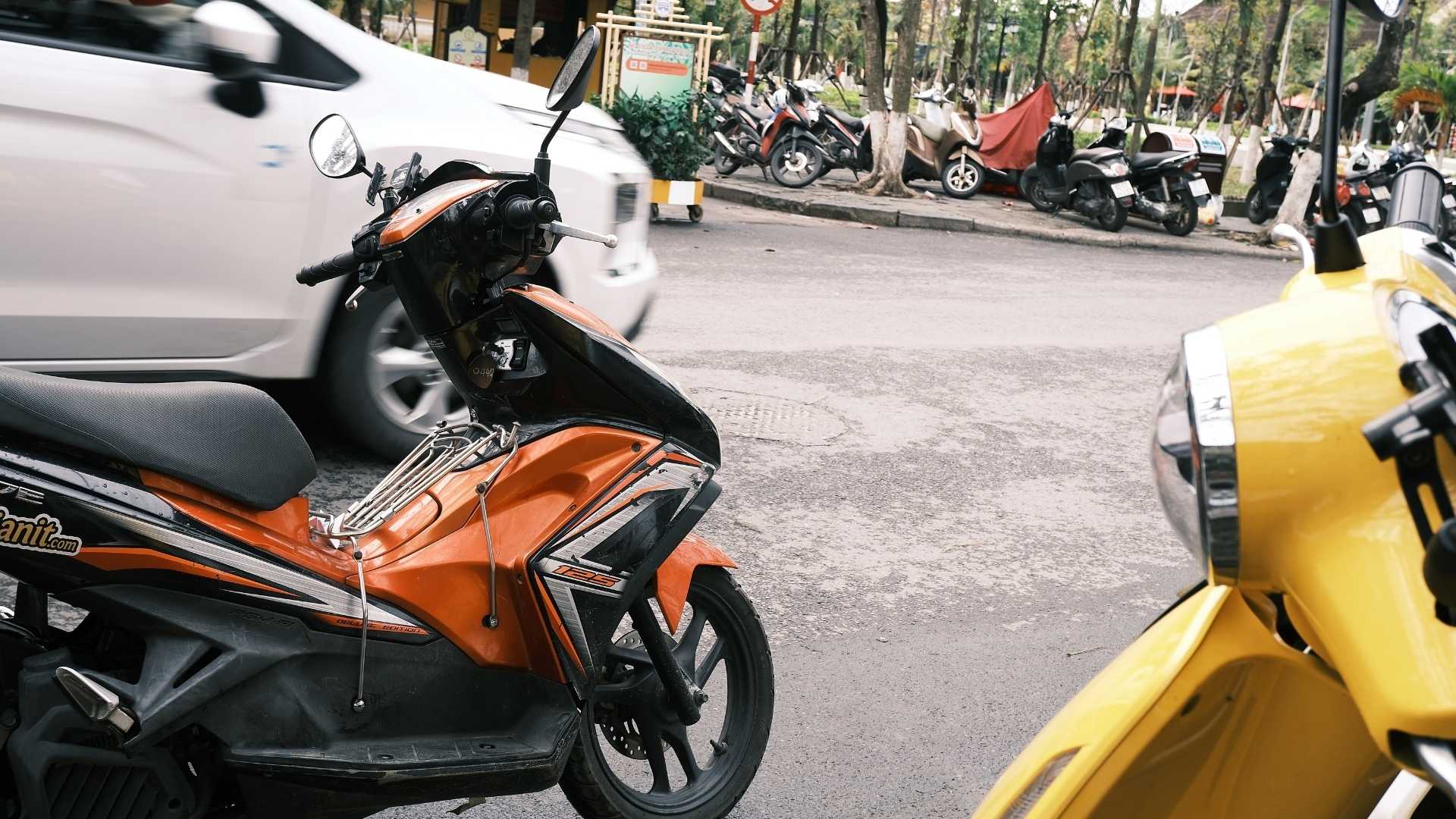
We rent one-way so you do not have to ride back: see our Hoi An to Hue one-way rental, or the reverse leg on the Hue to Hoi An one-way page.
By bus or limousine van
Three to four hours through the tunnel to the Hue Imperial City, air-conditioned, hotel pickup. The cheapest and least tiring option, and the sensible one if you are visiting Hue for the palace rather than for the ride. Details in our Hoi An to Hue bus guide.
If you have not settled on a method yet, we compare all of them side by side — times, real prices and what each one costs you in comfort — in every way to get from Hoi An to Hue. Riders who want the pass without the return leg should read the one-way motorbike rental guide first, because the drop-off arrangement is the part people get wrong.
By private car
Two and a half to three hours, and you can stop at Lang Co, Elephant Springs and the Hai Van Pass viewpoint on the way. Best value for a group of three or four, and the only option that lets non-riders see the pass.
Book the Hoi An → Hue seat online
Vans, limousines, sleeper buses and the train all sell out in high season. 12Go shows live seats, times and prices for the route in one page:
Affiliate links: same price for you, a small commission for us. We rent scooters, e-bikes and bicycles — we do not run buses, vans or trains.
The royal tombs, and which two to pick
The tombs are scattered south and west of the Hue Imperial City along the Perfume River, between 5 and 15 km out. They are the reason the combo ticket exists, and they are not interchangeable – each emperor built something with a completely different personality.
| Tomb | Distance from the Imperial City | Character |
|---|---|---|
| Khai Dinh | ~10 km south | Concrete, blackened, wildly ornate inside with glass and porcelain mosaic. Nothing else in Vietnam looks like it. Small site, steep steps. |
| Tu Duc | ~7 km south | A garden palace the emperor used while alive – lake, pavilions, pines. The most pleasant to walk, the least dramatic. |
| Minh Mang | ~12 km south | The classical one: perfectly symmetrical, formal courtyards on an axis, water on both sides. Furthest out, worth the ride. |
If you have one afternoon, take Khai Dinh and Minh Mang – they are the two extremes and seeing both tells you more about the dynasty than either alone. Tu Duc is the one to add on a second day.
Doing the tombs by rented motorbike from Hue is easy and cheap; doing them by taxi one at a time is not. If you rode up from Hoi An, this is where the bike earns its keep.
What to eat between visits
Hue food is its own cuisine, more than Hoi An food is. Two hours in the Hue Imperial City in the heat and you will want all of it.
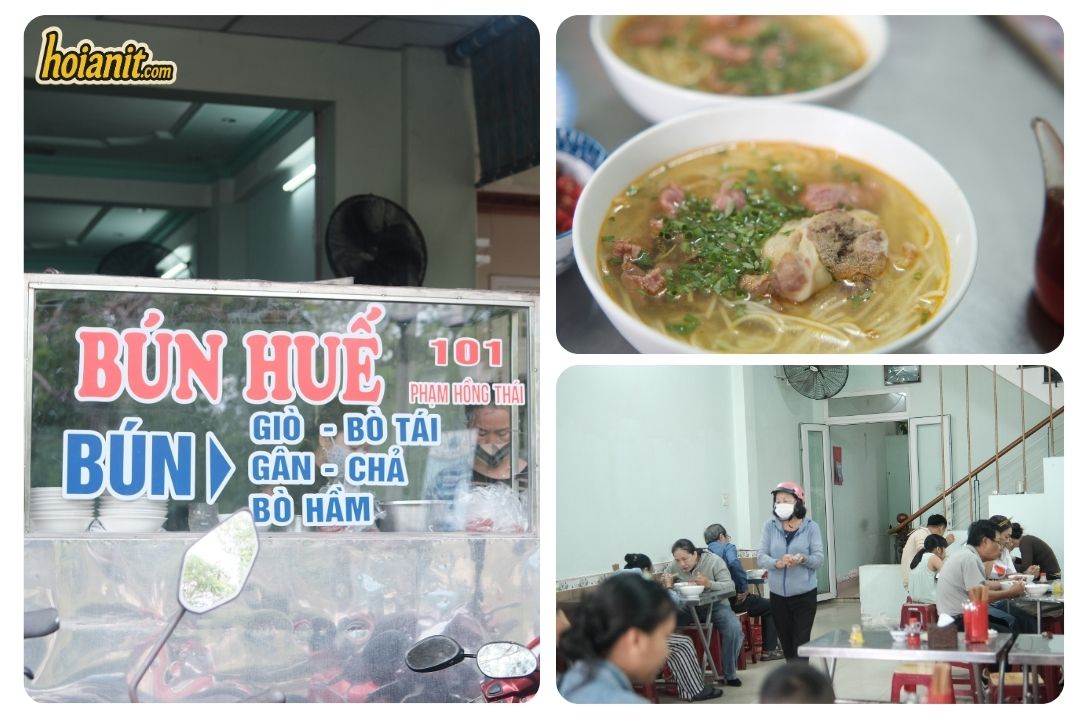
Bun bo Hue
The dish the city exports. Lemongrass and shrimp paste in the broth, thick round noodles, beef shank and a slab of congealed pork blood if you let them. Eaten for breakfast here, not lunch.
Banh beo, banh nam, banh loc
The royal-court snack plates: steamed rice cakes in little dishes, shrimp and pork wrapped in banana or dong leaf. Ordered as a set, eaten in a dozen small bites. A Hue speciality you will not find done properly in Hoi An.
Com hen
Baby clams, rice, herbs, crackling, chilli, a bowl of clam broth on the side. Cheap, sour, addictive, and native to Con Hen island in the river a few minutes from the Citadel.
Hue Imperial City practical notes people wish they had read first
There is almost no shade
The Hue Imperial City courtyards are stone and the walk between buildings is exposed. Hat, water, sunscreen. There are drinks stalls inside but they are priced accordingly.
Dress modestly at the temples
No formal dress code at the gate, but To Mieu and the ancestral temples are active places of worship. Covered shoulders and knees, shoes off where indicated.
Ao dai rental is everywhere and it is fine
Shops around the Citadel rent royal-style ao dai for photos inside the Hue Imperial City. It is not disrespectful and locals do it too. Just budget the extra hour it will take.
Hue is now a centrally governed city
Thua Thien Hue province became Hue Central City on 1 January 2025, and the 2025 provincial merger reshaped the map further south. Older guides and even some road signs still say “Thua Thien Hue” – it is the same place.
Cash still helps
Ticket counters at the Hue Imperial City take cards and QR, but the ao dai shops, the xe om and the banh beo places largely do not. Carry a few hundred thousand dong.
What our customers actually say. The riders who enjoy Hue most are the ones who booked a one-way bike, slept in Hue, did the Hue Imperial City at opening and the tombs after lunch. The ones who regret it are the ones who tried to do 266 km and a 36-hectare palace between breakfast and dinner.
Frequently asked questions
How much is the Hue Imperial City entrance fee in 2026?
200.000₫ for an adult, around $8, covering the Imperial City and the Forbidden Purple City. Children aged 7-12 pay a heavily reduced rate and under-7s are free. A three-site combo with Minh Mang and Khai Dinh tombs is 420.000₫, four sites is 530.000₫, and an all-sites ticket is 600.000₫.
What time does the Hue Imperial City open?
06:30 to 17:30 in summer and 07:00 to 17:00 in winter, every day including Tet. Last entry is about 30 minutes before closing. A separate night programme runs 19:00 to 22:00.
How far is Hue from Hoi An?
133 km measured to the Imperial City on Google Maps with expressways excluded. By motorbike that is about four hours of riding over the Hai Van Pass, or nearer six with stops. Buses and private cars use the tunnel and take three to four hours.
Can I visit the Hue Imperial City as a day trip from Hoi An?
Yes by bus or private car, which gives you four to five hours on site. By motorbike it is a poor day trip – eight hours of riding for two hours of walking. If you are riding, stay one night in Hue.
How long do I need inside the Hue Imperial City?
Three hours minimum for a first visit, four to be comfortable. The walled complex covers 36 hectares and the Forbidden Purple City, Mandarin halls, To Mieu temples and Dien Tho residence are all separate walks.
Is the Hue Imperial City worth it?
Yes, if you arrive knowing that much of it was destroyed in 1947 and 1968 and that what you are seeing is a partly restored ensemble rather than an intact palace. Visitors who expect Beijing’s Forbidden City are disappointed; visitors who read the history first are not.
Can I ride a motorbike through the Hai Van tunnel to Hue?
No. Motorbikes are banned from the Hai Van tunnel and from the expressway, so you ride over the Hai Van Pass. That adds about 30 minutes and is the best half hour of the trip.
Which royal tombs should I add to the Hue Imperial City ticket?
Khai Dinh and Minh Mang if you only have one afternoon – they are architectural opposites and seeing both explains the dynasty better than either alone. Tu Duc is the most pleasant to walk and the best third choice.
Prices and opening hours were checked in August 2026 against the Hue Monuments Conservation Centre’s published rates and can change without notice. Distances were measured on Google Maps to the Hue Imperial City with expressways excluded. Anh Khoa Hoi An Motorbike Rental, 84 Phan Chau Trinh, Hoi An · Zalo 0935 439 306 · WhatsApp +84 935 206 306.








Pick your ride in Hoi AnChọn xe cho chuyến đi Hội An
Scooters, electric bikes and bicycles from one shop in the Old Town — delivered to your hotel, helmets and roadside help included.Xe máy, xe điện và xe đạp — giao tận khách sạn, kèm hai nón bảo hiểm và hỗ trợ dọc đường.
Not sure which one fits? Message us on WhatsApp and we’ll recommend a bike for your plans.
Chưa biết chọn xe nào? Nhắn Zalo 0935 439 306, tụi mình tư vấn theo lịch trình của bạn.