

Routes & Day Trips
Hai Van Pass Motorbike Weather: Month-by-Month Guide and Rain Rules (2026)
Hai Van Pass Motorbike Weather: Month-by-Month Guide and Rain Rules (2026)
Hai Van Pass motorbike weather can be sunny in Da Nang and soaked in fog at the 496 m summit. Here is when to ride, when the road closes, and how locals read the forecast.
Every October somebody walks into our shop at 84 Phan Chau Trinh, points at a blue sky over Hoi An and asks why we are hesitating to send them up the Hai Van Pass. The honest answer is that the sky over Hoi An tells you almost nothing about the sky over the pass. The road climbs a spur of the Truong Son range that sticks straight out into the sea, and that wall of rock makes its own weather.
This guide is the weather briefing we give riders at the counter, written down: what each month is really like on the pass, what fog, rain and wind do to a motorbike on those hairpins, what happens when the authorities shut the road, and the three checks we run before handing over the keys. If you want the route itself, stop by stop, read our complete Hai Van Pass by motorbike guide; this page is only about the sky.
- Hai Van Pass weather by month: the quick answer
- Why the pass has its own weather
- Fog on the summit: when it comes and how to ride it
- Riding the Hai Van Pass in the rain
- Landslides, typhoons and road closures
- Wind, cold and heat at the top
- How to read the forecast before you go
- The right bike and gear for the conditions
- Plan B when the weather says no
- FAQ
Hai Van Pass weather by month: the quick answer
Central Vietnam does not follow the north or the south. Its rainy season runs roughly September to December and peaks in October and November, while the dry, settled months are February to August. Da Nang’s city government puts the yearly average at about 2,505 mm of rain, with October and November alone bringing 550–1,000 mm a month and January–February only 23–40 mm. The pass, sitting higher and catching the sea air first, is usually a notch wetter and cloudier than the city.
| Month | What the pass is usually like | Our call |
|---|---|---|
| Jan | Cool, grey, drizzle on the Lang Co side, morning fognortheast monsoon fading | Ride with a jacket |
| Feb – Apr | Dry, mild, light haze in the mornings, clear by late morning | Best riding of the year |
| May – Aug | Hot, clearest long views, the odd afternoon thunderstorm | Great — start early |
| Sep | Storm season begins; mostly fine days broken by heavy showers | Ride, but check daily |
| Oct – Nov | Wettest months, cloud on the summit, landslides and closures happen | Only on a clear forecast window |
| Dec | Wet and cold winds, frequent fog, slippery corners | Possible, with care |
Two things the table cannot show. First, a “rainy” month on the pass is not rain all day: in October you can get a crisp, dry morning followed by a downpour at 2 pm. Second, a single storm system decides everything. In a normal October we still send riders over the pass on most days; in a week with a typhoon or a cold surge in the forecast, we do not send anyone.
February to August, ride whenever you like and go early for the views. September to January, decide the night before and again in the morning — and keep a Plan B (section 9).
Why the pass has its own weather
The Hai Van Pass crosses the Bach Ma–Hai Van spur, the last finger of the Truong Son range before it drops into the sea. The road tops out at 496 m, just south of Ai Van Son peak at 1,172 m. Vietnamese call the pass a climate border: in winter the cold, wet northeast monsoon piles up against the northern face above Lang Co and Hue, while Da Nang on the south side often stays drier. That is the main reason Hai Van Pass motorbike weather catches people out — you look at the Da Nang forecast, see “cloudy”, and ride straight into a cloud bank on the far side.
The name tells you the rest. Hai Van means “sea cloud”: warm, humid air off the East Sea is pushed up the slope, cools, and condenses into fog and low cloud right where the road crests. The same mountain mass is a rain magnet. On 26–27 October 2025 the weather station on Bach Ma peak, just inland along this range, logged 1,739.6 mm of rain in 24 hours — a Vietnamese record and, by the national weather agency’s count, second only to a 1966 reading on Réunion island worldwide. Nobody rides on a day like that, but it shows how fast this ridge can turn.

Fog on the summit: when it comes and how to ride it
Low cloud can sit on the top of the pass in any month, but it is thickest and most frequent from about November to February, and most likely before 9 am and again in the late afternoon. It is also patchy: you can ride out of bright sun into twenty metres of visibility on a single bend, then pop back into sunshine on the descent. In summer the morning haze usually burns off by mid-morning.
Fog on this road is beautiful, and genuinely risky, for three reasons. The hairpins are tight and many corners are blind; trucks carrying fuel, livestock and other loads that are banned from the Hai Van Tunnel still use the pass; and water condensing on the road surface makes the white lines and painted sections slick even when it is not raining.
- Lights on, always. Daytime fog is when you most need to be seen; tap the horn before blind corners as local riders do.
- Drop to second gear on the hairpins and keep both hands covering the brakes — no sudden grabs on wet paint.
- Leave twice the gap behind any truck, and never overtake on a corner you cannot see round.
- Wipe your visor on the inside as well as the outside; a clear visor fogs up the moment you stop at the top.
- If you cannot see the next marker post, stop at a café pull-out and wait. Fog on the pass rarely lasts more than an hour in the dry season.
If the summit is fogged in when you arrive, do not write the day off. Hai Van Gate is often in and out of cloud, and the photos you get when it clears for ten minutes are the ones riders keep.
Riding the Hai Van Pass in the rain
Light rain on the pass is something most competent riders handle fine. The road surface is in reasonable condition, traffic is light since the tunnel took the cars and lorries, and the gradients are moderate. What changes in the rain is grip and visibility, and both get worse in the places you least want: painted road markings, the steel joints on bridges, and the corners where gravel and red soil wash down from the cut slopes.
Heavy rain is different. Run-off pours straight across the road on the steep sections, stones and mud come down from the hillside, and spray from a passing truck can blank out your view for a second or two. Weatherspark’s long-term data for Da Nang shows October with the most wet days of the year, around 18. That is the core of Hai Van Pass motorbike weather in the wet season, and on those days our advice is simple: if it is raining hard in Hoi An at breakfast, it will be raining harder on the pass.

- Brake earlier and softer, upright, before the bend; use both brakes together.
- Stay off the paint and the metal bridge joints when you are leaning.
- Watch the cut slopes on the inside of corners for fresh mud or small stones — that is often the first sign of a slip.
- Pack your phone, passport copy and wallet in a dry bag; a poncho alone will not keep a backpack dry at 40 km/h.
- Plan the day so you are off the pass by mid-afternoon in the rainy season, when storms tend to build.
Landslides, typhoons and road closures
This is the part most weather guides skip, and the one that matters most in October and November. When prolonged heavy rain soaks the slopes, the old road over the pass gets landslides, and the road authority simply closes it. These are not rare events. A few from recent years, all reported in the Vietnamese press:
| When | What happened on the pass |
|---|---|
| Oct 2022 | Rain from Storm Sonca triggered 56 slope failures along the pass road; two blocked it completely until the afternoon of 16 October. |
| 13 Oct 2023 | A slope collapsed at Km 905+600, about a kilometre below the summit on the Da Nang side; police closed the road at both ends and kept it shut while rain continued. |
| 27 Oct 2024 | During Typhoon Trami, fallen trees and slips closed the pass; even the Hai Van Tunnel shut for three hours in the wind after a truck overturned. |
| Late Oct 2025 | Record rain along the Bach Ma–Hai Van range flooded most of Hue; travel across the region was disrupted for days. |
What a closure means for you on a motorbike: motorbikes are not allowed to ride through the Hai Van Tunnel. In past closures, the tunnel operator has ferried bikes and riders through on trucks from the tunnel’s transfer station on the Da Nang side, but that is arranged on the day by the authorities — you cannot book it, and you should not plan a one-way trip around it. If the pass is closed, the practical answer is to wait a day or switch to Plan B.
If there is a typhoon or a tropical depression heading for central Vietnam in the next 48 hours, we will tell you plainly that it is not a pass day — and moving or cancelling a booking before pickup is free. A day of your holiday is cheaper than a crash or a night stuck in Lang Co.
Wind, cold and heat at the top
The summit is exposed, and wind is the part of Hai Van Pass motorbike weather that forecasts handle worst. Wind funnels between the mountain and the sea, and on the bends just below Hai Van Gate a side gust can push a light scooter a surprising distance. It is strongest in the winter monsoon months and around storms; if you see the trees on the ridge bending hard, keep your speed down and your knees in on the open curves.
Temperature drops about 0.6°C for every 100 m you climb, so the top is typically around 3°C cooler than the beach — more once you add wind chill at riding speed. From December to February that is the difference between a T-shirt in Hoi An and real cold on the summit; pack a windproof layer. In summer the opposite problem bites: on the climb from Da Nang there is little shade, and by noon in June the heat off the tarmac is serious. Start early, carry water, and take the shaded café stops at the top.

A note on the gate itself: after two years of restoration, Hai Van Gate reopened in August 2024 and began charging a ticket of 70,000₫ per person on 2 June 2026, with half price for residents of Hue and Da Nang. It is open-air, so in heavy rain there is little shelter beyond the gateways — another reason to pick your day.
How to read the forecast before you go
The single biggest mistake we see is checking the weather for the place you are leaving, not the place you are going. For reliable Hai Van Pass motorbike weather, run these three checks:
- The night before: look for warnings, not icons.Open the warnings page of Vietnam’s National Centre for Hydro-Meteorological Forecasting. Any landslide, flash-flood or heavy-rain warning covering Hue and Da Nang means no pass tomorrow.
- In the morning: check both sides.Look at the forecast for Lang Co or Hue as well as Da Nang. If the north side shows rain and the south is dry, expect cloud and wet road over the top.
- Before you set off: ask someone who has been up.Message us on WhatsApp. We are in Hoi An, not on the pass, but we hear from riders coming back and from our partner in Hue, and we will tell you straight what we know that morning.
Our long-term climate figures above come from the Da Nang city government’s climate page. Phone weather apps are fine for the next six hours; for anything further out in storm season, trust the national warnings over the little sun icon.
The right bike and gear for Hai Van Pass motorbike weather
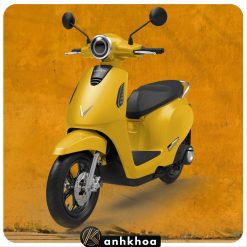
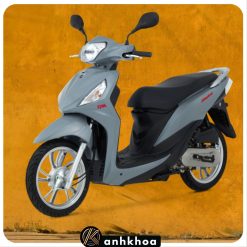
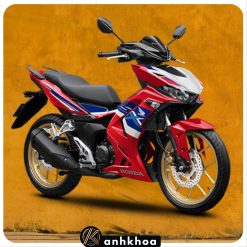
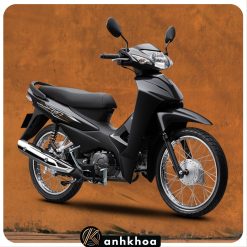
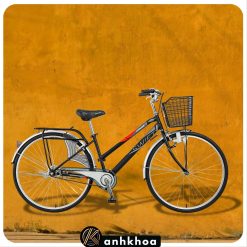
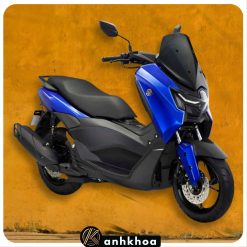
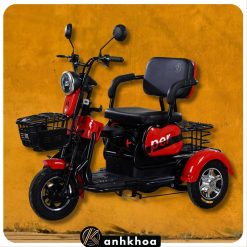
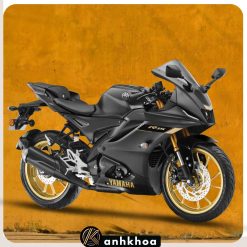
On a dry day, almost any healthy 110–125cc scooter will climb the pass. In wet or windy conditions the bike starts to matter. You want decent tyres, brakes you trust, and enough power that you are not crawling up the hill with trucks behind you. Our electric scooters are great around Hoi An, but we do not send them over the pass: the climb eats the battery and there is nowhere to charge at the top.
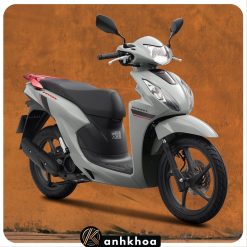
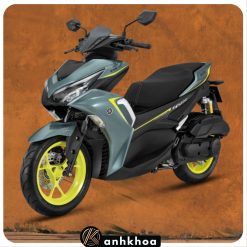
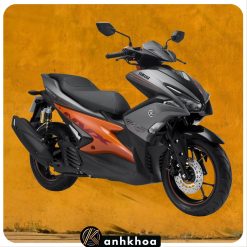
| Bike | Why it suits the pass | Price / day |
|---|---|---|
| Honda Air Bladeautomatic | Easy to ride, steady in light rain, our most popular pick for first-timers on the pass | 150,000₫ |
| Yamaha NVX 155automatic | More power for the climb, wider tyres — calmer in crosswinds | 300,000₫ |
| Honda Winner 150manual clutch | Engine braking on the wet descent, for riders who know gears | 250,000₫ |
| Honda ADV 160adventure scooter | Tall riding position, long suspension, best for bad weather days | 500,000₫ |
| One-way Hoi An ⇄ Huevia Hai Van | Ride over the pass and drop the bike in Hue, luggage sent ahead | 750,000₫ |
Prices are per day and change by season; we confirm the final quote by message. Every petrol bike leaves with a litre of fuel, and the deposit is 2,000,000₫ or simply a copy or photo of your passport — we never keep the original. We deliver to hotels in Hoi An from 30,000₫.







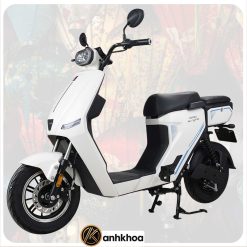
E-Bike · No license


For the gear, think rain first and cold second:
- A full-face or visor helmet — rain at speed stings, and fog on an open-face helmet means wet glasses.
- A proper two-piece rain suit or long poncho, plus a dry bag inside your backpack.
- A windproof layer from November to February, even if Hoi An is warm when you leave.
- Closed shoes rather than flip-flops; wet rubber sandals slide off the footboard.
- A downloaded offline map; mobile signal near the summit can drop in heavy cloud.

Plan B when the weather says no
If the Hai Van Pass motorbike weather rules out the ride, you still have good options. The most popular is to swap days: ride the coast to Da Nang and the Son Tra peninsula when it is merely cloudy, and save the pass for the clearest morning of your trip. Our three-day Hoi An – Hai Van – Lang Co itinerary is built with a spare day for exactly this reason.
If you need to get to Hue anyway, take the train. The North–South railway runs along the cliffs on the seaward side of the pass, so you still get the view, dry and seated, from Da Nang station. We do not run trains or buses ourselves; we book them through 12Go, which lists the train, buses and vans on one page — see Da Nang to Hue tickets on 12Go, or compare transfers from Hoi An to Hue.
And if it is simply pouring in Hoi An, stay in town. We keep a list of what locals actually do on a rainy day in Hoi An, and if you are visiting in October or November it is worth reading how flood season really works here before you plan any ride.
The pass will still be there tomorrow. The best photos of it are almost always taken on the morning after the rain.
Want a straight answer about tomorrow?
Send us your date and route — we will tell you honestly whether it is a pass day, and have the right bike ready at 84 Phan Chau Trinh.
Or browse the fleet: motorbike rental in Hoi An · one-way to Hue via Hai VanFAQ
What is the Hai Van Pass weather like in October?
October is the wettest and least predictable month. Many days still have a dry morning, but heavy rain, low cloud on the summit and landslides that close the road are all common. Ride only when the national forecast shows no heavy-rain or storm warnings for Hue and Da Nang, and keep a backup day.
Is it safe to ride the Hai Van Pass in the rain?
Light rain is manageable for a confident rider on a good bike: slow down, brake before corners and stay off painted lines. Heavy, prolonged rain is not worth it, because run-off, mud and falling stones make the hairpins dangerous and the road may be closed without much warning.
What time of day gives the clearest views?
From February to August, aim to reach the summit between about 8 and 10 am, before the heat haze builds. In the cooler months fog often sits on the top before 9 am, so a mid-morning arrival usually gives the best chance of a clear view.
Does the Hai Van Pass close in bad weather?
Yes. When heavy rain causes landslides or a typhoon approaches, the road authority and police close the old pass road at both ends. This happened in October 2022, October 2023 and October 2024. Closures usually last from a few hours to a couple of days.
Can I ride my motorbike through the Hai Van Tunnel if the pass is closed?
No, motorbikes are not allowed to ride through the tunnel. During some past closures the operator carried bikes through on trucks from its transfer station, but this is organised on the day and cannot be booked, so do not plan a trip around it.
How cold is it at the top of the Hai Van Pass?
The summit is usually about 3°C cooler than the coast, and the wind makes it feel colder at riding speed. From December to February bring a windproof jacket; in summer the bigger risk is heat on the shadeless climb from Da Nang.
Which bike is best for the Hai Van Pass in wet weather?
A 125–160cc petrol bike with good tyres, such as a Honda Air Blade, Yamaha NVX 155 or Honda ADV 160. Electric scooters are not a good choice for the pass because the climb drains the battery and there is nowhere to charge at the top.
Planning the full trip? Start with our Hai Van Pass by motorbike guide or the ride from Hoi An to Hue by motorbike. You can also watch our ride over the pass on TikTok.
Distance measured on Google Maps from 84 Phan Chau Trinh to Hai Van Gate via QL1A (52.3 km, about 1h30). Rainfall figures: Da Nang city government; 2025 Bach Ma record: Vietnam’s national meteorology agency; road closures: Vietnamese press reports (VnExpress, Phap Luat, SGGP). Gate ticket per Hue City People’s Council resolution, collected from 2 June 2026. Links to 12Go are affiliate links — we may earn a small commission at no extra cost to you. Updated October 2026.
Keep reading Routes & Day Trips












Pick your ride in Hoi AnChọn xe cho chuyến đi Hội An
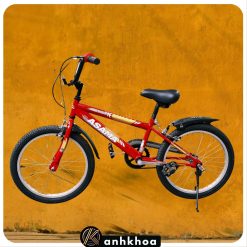
Scooters, electric bikes and bicycles from one shop in the Old Town — delivered to your hotel with helmets, plus free roadside help within 10 km of Hoi An.Xe máy, xe điện và xe đạp — giao tận khách sạn, kèm hai nón bảo hiểm, cứu hộ miễn phí trong bán kính 10 km.
Not sure which one fits? Message us on WhatsApp and we’ll recommend a bike for your plans.
Chưa biết chọn xe nào? Nhắn Zalo 0935 439 306, tụi mình tư vấn theo lịch trình của bạn.