

Routes & Day Trips
Kim Bong Carpentry Village Hoi An (2026): The Carpenters Who Built Hue
HOI AN CRAFT VILLAGES · CAM KIM · UPDATED AUGUST 2026
Most visitors reach Kim Bong carpentry village on a boat, spend twenty minutes watching someone chisel a dragon, buy nothing, and leave. That is a shame, because this is not a craft demonstration set up for tourists — it is a working village whose carpenters were summoned to Hue to build the imperial city, whose trade was declared national intangible heritage in June 2016, and whose four family lines have kept the same workshops for roughly 600 years. Ride here instead of taking the boat, arrive before the tour groups, and you get a genuinely different afternoon.
№ 01The address changed in 2025 — read this first
If you look up Kim Bong carpentry village and the paperwork confuses you, this is why.
Under Resolution 202/2025/QH15, effective 1 July 2025, Quang Nam province was merged into Da Nang. Hoi An stopped being a city in its own right: its wards were reorganised into Hoi An ward, Hoi An Dong ward, Hoi An Tay ward and Tan Hiep commune (the Cham Islands), all under Da Nang.
What that means for this village: the old Cam Kim commune — where Kim Bong sits — was folded into the new Hoi An ward, together with Minh An, Cam Pho, Son Phong and Cam Nam. Official notices for the village festival now give the address as Trung Ha residential group, Hoi An ward, Da Nang City.
Nothing physical moved. Same island, same bridge, same workshops, same distance from the Old Town. Only the label changed — and almost no travel page has updated it, which is why you will still see “Cam Kim commune, Hoi An city, Quang Nam province” everywhere.
Practical tip: search Google Maps for “Kim Bong” or “Cam Kim” rather than the administrative address. Place-level searches are unaffected by the merger.
№ 02Why Kim Bong carpentry village matters
Every craft village in Vietnam claims history. This one has a specific, checkable claim that sets it apart.
The founders arrived in the 16th century, migrants from the north who settled on the island in the river. Four family lines — Nguyen, Chuong, Phan and Huynh — took up carpentry, and their descendants still run workshops here. The trade is usually dated at close to 600 years.
Then the court called them. Kim Bong carpenters were summoned by the Nguyen lords of Dang Trong, and later by the Nguyen dynasty itself, to work on the imperial buildings at Hue. The same hands that shaped the shophouses of Hoi An worked on the capital 130 km up the coast — which is why the joinery in both places rhymes if you look closely.
In June 2016 the Ministry of Culture, Sports and Tourism recognised the Kim Bong woodworking trade as national intangible cultural heritage. That is a status given to a living practice, not a monument — the recognition is of the skill still being used, not of an old building.
Why you can see it in the Old Town: when you admire a carved door frame, a roof truss or a shopfront in Hoi An, there is a reasonable chance it was cut on this island and floated across. The village is not a side trip from the heritage site — it is where a good part of the heritage site was made.
№ 03Four trades, not one
“Carpentry village” undersells it. The craft here splits into four distinct branches, and knowing them changes what you notice as you walk around.
- Construction carpentry (mộc xây dựng) — house frames, roof trusses, communal halls, temples. The branch that built Hoi An and worked at Hue. Look for the biggest timbers and the mortise-and-tenon joints cut without a single nail.
- Furniture and household carpentry (mộc gia dụng) — beds, cabinets, altars, the ancestor tables that sit in every Vietnamese front room. The bread and butter of most workshops today.
- Boat building (mộc đóng thuyền) — the branch almost no visitor knows exists. This is a river island; the same families who carve altars also build wooden fishing boats and the round basket boats you see on the water. If you hear hammering near the riverbank rather than in the workshops, that is where it is coming from.
- Fine-art woodcarving (mộc mỹ nghệ) — the sculpture and decorative work, and what most tourist stalls sell. The dragons, the Buddha figures, the carved panels.
Ask which branch a workshop does. A carver of souvenir dragons and a man framing a temple roof are doing very different jobs with different tools, and they are usually happy to explain the difference if you show you know there is one. This single question turns a photo stop into a conversation.
№ 04Riding to Kim Bong carpentry village: the bridge route
Cam Kim used to be reachable only by ferry. The Cam Kim bridge changed that, and it is now one of the easiest short rides out of Hoi An — about 7 km, roughly 15 minutes on a scooter and 30 on a bicycle, flat the whole way.
- Head south out of the Old Town towards Cam Nam, then follow the road west along the river.
- Cross the Cam Kim bridge. It is signposted and unmistakable — a long low bridge over the Thu Bon. Stop on it for a minute: the view up and down the river is the best free thing on this trip.
- Once on the island, turn right and follow the riverside lane. Workshops start appearing within a kilometre; you will hear them before you see them.
- Keep going past the first cluster. The workshops nearest the boat landing are the ones geared to tour groups. Ride another five minutes and you reach yards where people are working on actual commissions.
Make it a loop, not a there-and-back. Cam Kim island is small, flat and almost traffic-free — perfect for aimless riding. Circle the island on the perimeter lanes past rice fields, vegetable plots and boat yards, then come back over the bridge. That loop is the real reason to bring a bike, and it takes about an hour.

№ 05Boat vs bike — and why the bike wins
| By boat | By bike over the bridge | |
|---|---|---|
| Time from Old Town | 20–30 min on the water | 15 min |
| Cost | paid trip or part of a tour | fuel only |
| Where you land | the tourist end of the village | anywhere you like |
| Time on the island | fixed by the boatman | as long as you want |
| Can you explore the island? | no | yes — this is the point |
| Best for | the river views | seeing the village properly |
Short version: the boat is a nice way to arrive and a poor way to visit. Boats dock at the landing where the group-facing workshops are, you get the demonstration, and you leave on the boatman’s schedule. On a bike you choose which workshops to stop at, you can ride the whole island, and you can stay until the light gets good.
If you cannot ride — no licence, no 1968-convention IDP, or you would simply rather not — guided trips that include Kim Bong and the boat crossing are listed here: Kim Bong and Cam Kim tours from Hoi An. Many combine the village with the coconut forest or a cooking class.
№ 06What you will actually see
- Open-fronted workshops along the riverside lane. No entrance, no ticket — you stand at the edge and watch. A nod is enough to ask permission; most carpenters will wave you in.
- Joinery cut by hand. The interesting thing is not the finished dragon, it is the mortise-and-tenon work — house frames assembled without nails, cut with chisels and a mallet to tolerances you would expect from a machine.
- The tiền hiền communal house, dedicated to the village founders, where the annual ancestor rite is held. Quiet, rarely visited, and the architectural showcase of what the village can do.
- Boat yards near the water — wooden hulls under construction, and round basket boats being woven and tarred.
- Rice fields and vegetable plots across the middle of the island. Cam Kim is farmland with workshops on the edge, not an industrial estate.
- Woodworking sessions. Several workshops let visitors try carving for a small fee. Ask on the spot rather than booking ahead — it is informal.

№ 07Buying something, and what a fair price is
Buying directly from the workshop is the single most useful thing a visitor can do here — it is what keeps the trade alive. A few honest pointers.
- Buy from the workshop, not the Old Town stall. Same object, better price, and the money reaches the person who made it.
- Small carved pieces — a fish, a Buddha, a panel the size of a hand — are the practical souvenir. They travel well and cost little.
- Ask what the wood is. Jackfruit, mahogany and imported hardwoods all behave differently and are priced differently. A carpenter who tells you plainly is one to buy from.
- Machine-carved pieces exist here too. Look at the inside of the cuts: hand work leaves slight variation and tool marks, CNC work is uniform. Neither is wrong — but you should know which one you are paying for.
- Commissions and shipping. Larger pieces can be made to order and shipped; this is normal and workshops do it regularly. Agree the timeline and shipping cost in writing before paying a deposit.
- Bargaining is mild here. This is not a tourist market — prices are closer to real. Asking for a small discount is fine; hard haggling is out of place.
№ 08The village festival
The village keeps two dates. The ancestor rite (giỗ tổ) falls on the 6th day of the first lunar month, when carpenters honour the founders of the trade. Separately, Hoi An runs the larger Kim Bong Traditional Craft Village Festival.
In 2026 the festival runs 27–28 February (the 11th and 12th of the first lunar month), at the village craft centre in Trung Ha. The tiền hiền ancestor ceremony takes place on the morning of 28 February at the communal house.
What happens: demonstrations of carpentry, bamboo carving, boat building, bag and basket weaving, rice-paper making, mat weaving and sedge splitting; fishing technique displays; a country market; cross-river boat racing; folk games and bài chòi singing.
Worth planning around? If you are in Hoi An in late February, yes — it is a village festival that locals attend, not a staged show, and the boat racing is genuinely exciting. Go early; parking on the island fills up.
№ 09Practical notes
- No entrance fee for the village itself. You are riding into a working community, not a ticketed attraction.
- Best hours: 08:00–10:30. Workshops are busy, the light is good, and the boat groups have not arrived. Many workshops break in the early afternoon.
- Allow 2–3 hours if you want the island loop as well as the workshops. Twenty minutes is enough only for the boat-landing version.
- It is a workplace. Ask before photographing faces, keep clear of anyone swinging a mallet, and mind the offcuts underfoot.
- Bring cash in small notes. No card machines, and change for a 500,000₫ note is a genuine problem here.
- Little shade and few cafés. Carry water, especially between May and August.
- Combine it with the coconut forest at Cam Thanh, or with a full day-trip loop by bike. Both are on the same side of town.

Khách hay hỏi tụi mình làng mộc có đáng đi không. Đáng — nhưng đừng đi bằng thuyền rồi về sau hai mươi phút. Thuê xe chạy qua cầu, vòng quanh đảo một tiếng, rồi hẵng ghé xưởng.
Ride to Kim Bong yourself — we are 15 minutes away
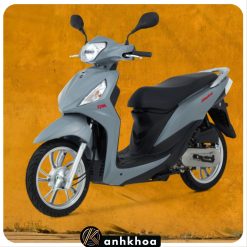
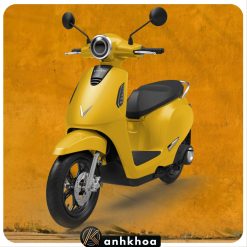
Anh Khoa Hoi An Motorbike Rental · 84 Phan Chau Trinh. Scooters, electric bikes and bicycles delivered free to your hotel, with the Cam Kim island loop marked on a map. Electric bikes need no licence and are ideal for this flat, quiet ride.
A short ride through Kim Bong on our own bike, shot in the village:
More Bike Options in Hoi An
E-Bike · No license


No License? No Worries!
Rent a 50cc Bike in Hoi An Today!FAQKim Bong carpentry village — your questions
Is there an entrance fee for Kim Bong carpentry village?
No. The village is free to enter because it is a working community rather than a ticketed attraction. You only pay if you buy something, join a woodworking session or take a boat across instead of riding over the bridge.
How do I get to Kim Bong carpentry village from Hoi An Old Town?
It is about 7 kilometres, roughly 15 minutes by scooter or 30 minutes by bicycle. Head south towards Cam Nam, follow the river west and cross the Cam Kim bridge onto the island, then turn right along the riverside lane. Boats also cross from the Old Town, but they land at the tour-group end of the village and you cannot explore the island.
What is Kim Bong carpentry village famous for?
Its carpenters were summoned by the Nguyen lords and later the Nguyen dynasty to work on the imperial buildings at Hue, and they built much of Hoi An Old Town itself. The trade was recognised as national intangible cultural heritage in June 2016 and is roughly 600 years old, carried on by four original family lines: Nguyen, Chuong, Phan and Huynh.
How much time do I need at Kim Bong?
Allow two to three hours if you want to ride the island loop as well as visit workshops. Twenty to thirty minutes only covers the workshops nearest the boat landing, which are the ones set up for tour groups.
When is the Kim Bong craft village festival?
In 2026 the festival runs on 27 and 28 February, the 11th and 12th days of the first lunar month, at the village craft centre in Trung Ha. The ancestor ceremony takes place on the morning of 28 February at the communal house. Separately, the carpenters hold their trade ancestor rite on the 6th day of the first lunar month.
Is Kim Bong still in Quang Nam province?
No. Under Resolution 202/2025/QH15, effective 1 July 2025, Quang Nam merged into Da Nang. The former Cam Kim commune where Kim Bong sits is now part of Hoi An ward, Da Nang City. Nothing physical changed, but most travel pages still show the old address.
What is the best time of day to visit?
Between 8am and 10:30am. The workshops are busy, the light is good for photographs and the boat tour groups have not arrived yet. Many carpenters break in the early afternoon, so a late-afternoon visit can find the yards quiet.
Can I buy furniture and have it shipped home?
Yes. Workshops regularly take commissions and arrange international shipping. Agree the timeline and shipping cost in writing before paying a deposit, and ask which wood is being used since jackfruit, mahogany and imported hardwoods differ in price and behaviour.
Cập nhật tháng 8/2026. Heritage recognition, festival dates and the administrative merger are taken from Vietnamese official and press sources; festival dates change every year with the lunar calendar, so confirm before planning a trip around them. Disclosure: one link on this page is an affiliate link to a booking partner — if you book through it we may earn a small commission at no extra cost to you.








Motorbike Rental
Bicycle Rental
One-way to Hue
Electric Bicycle
Electric Scooter
Dirt Bike Rental
No License