
Hoi An Travel Tips
Hoi An Souvenirs 2026: What To Buy, Real Prices, And Where To Find The Village-Made Ones
Hoi An Souvenirs 2026: What To Buy, Real Prices, And Where To Find The Village-Made Ones
A local guide to Hoi An souvenirs with September 2026 prices: collapsible silk lanterns, Thanh Ha pottery, tailored silk, Kim Bong woodwork and chili sauce. Plus how to spot village-made from imported, and the airline rule on fish sauce.
Three evenings in Hoi An and you will have walked past several hundred metres of shopfront selling Hoi An souvenirs: lanterns, leather bags, paintings and fridge magnets. It looks like a lot of choice. Then you get home and find the lantern snapped its ribs inside your suitcase, the fish sauce never made it past the check-in desk, and the “handmade Hoi An” wooden elephant is listed online for the equivalent of two dollars.
This guide is written from here. Which Hoi An souvenirs actually come from this place, what they cost in September 2026, whether the market or the craft village gives you the better deal, and how to pack the thing so it survives the flight. Including a few details nobody mentions, like the pottery village ticket that comes with a free ceramic, and the airline limit of three litres of fish sauce in plastic bottles only.
- Quick picks by budget and who you are buying for
- Lanterns: buy the collapsible kind, not the prettiest one
- Thanh Ha pottery and the clay whistle
- Silk, fabric and tailoring in 24 hours
- Kim Bong woodwork, bamboo and conical hats
- Edible souvenirs: chili sauce, cakes, tea, fish sauce
- Where to buy: market, night market, old town or village
- Telling village-made from imported
- Bargaining, cash and buying in bulk
- Packing, flying home and shipping
- A half-day souvenir route by motorbike
- Frequently asked questions
Quick picks: the best Hoi An souvenirs by budget
If you have ten minutes and a suitcase that is already close to full, this table settles it:
| What you need | Buy this | Price, 2026 | Where |
|---|---|---|---|
| Many small gifts, small budget | Clay whistle figurines, chopsticks, tea, mung bean cake | 10,000–50,000d | Thanh Ha village, Hoi An Market |
| One iconic thing | Collapsible silk lantern | 60,000–250,000d | Old town, craft workshop, night market |
| For older relatives | Pandan tea, Tra My cinnamon, Tien Phuoc pepper, chili sauce | 30,000–120,000d | Dry goods row on Tran Phu |
| Something properly good | Mulberry silk scarf, tailored ao dai, hand embroidery | 200,000–1,000,000d | Old town tailors, fabric stalls |
| Something you will use | Jackfruit-wood board, spoons, carved box | 100,000–500,000d | Kim Bong village, craft workshop |
| A gift with a story | Crafts made by artisans with disabilities | 100,000–800,000d | Social enterprise shop on Tran Phu |
One tip about sequencing. Buy food and fragile things on your last day, buy fabric and wood on your first, because tailoring takes 24 hours and cakes and pottery do better the fewer days they spend in a suitcase.
Lanterns: buy the collapsible kind, not the prettiest one
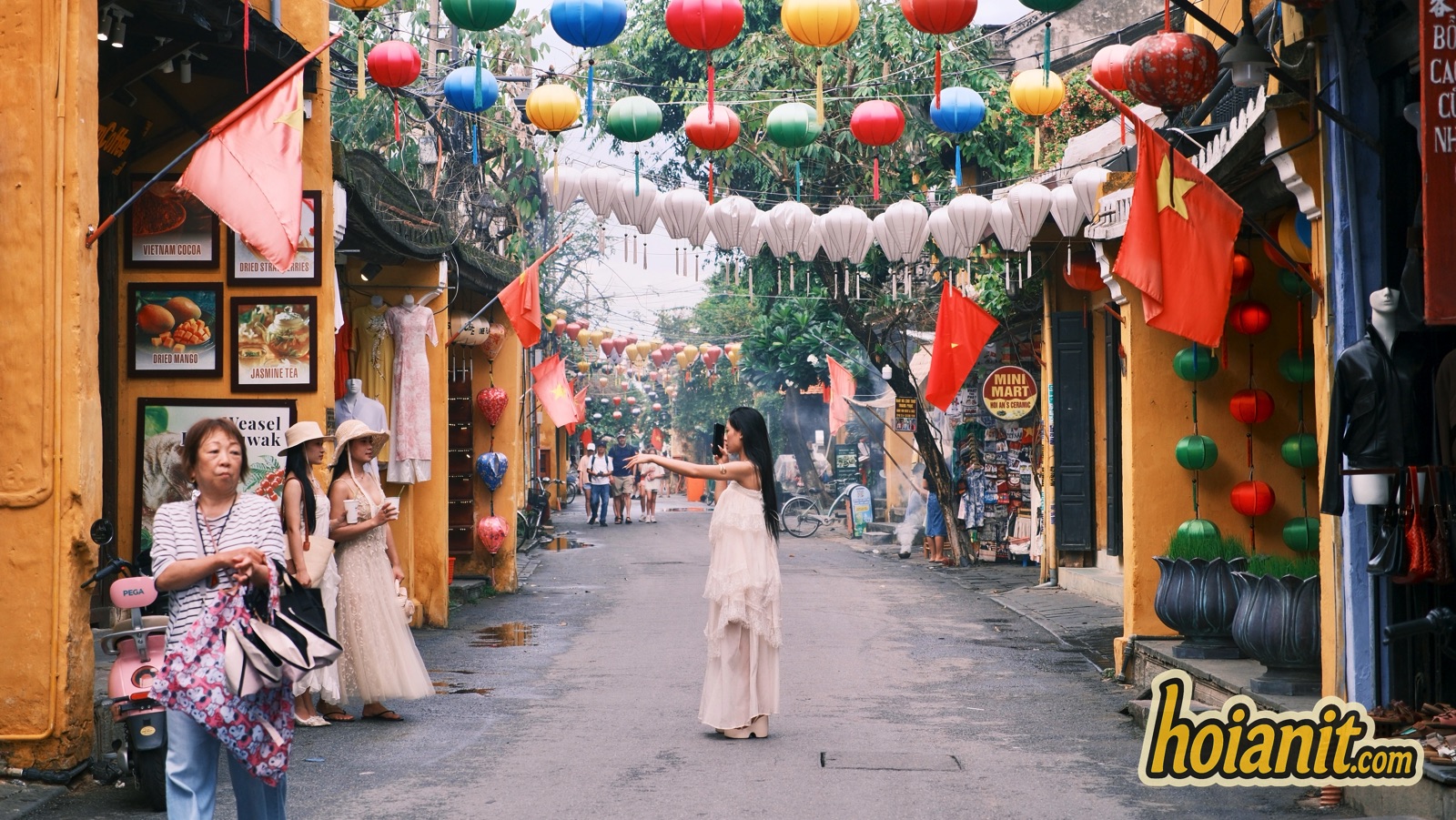
Of all the Hoi An souvenirs on offer, the lantern is the one everybody buys and the one that most often arrives home broken. The reason is simple: most of the lanterns strung across the street are fixed-frame. The bamboo ribs are seated permanently into two wooden rings and the whole thing will not fold. Beautiful, and doomed the moment you pack it.
The question to ask is “does it collapse?”. On the collapsible version the two wooden rings slide along a central spindle, so the lantern flattens to three or four centimetres like an umbrella and the fabric slackens instead of tearing. Every seller has both; the folding ones just get hung out front less often because they look less impressive.
| Type | Size | Price | Notes |
|---|---|---|---|
| Collapsible, cotton or canvas | 20–30 cm | 60,000–120,000d | Cheapest; good when buying several |
| Collapsible, plain silk | 30–40 cm | 120,000–200,000d | Silk catches light better and still folds |
| Collapsible, hand-painted silk | 35–50 cm | 180,000–250,000d | Every one is slightly different |
| Fixed frame | 40 cm and up | 150,000–400,000d | The prettiest, but carry-on only |
| Mini lanterns, keyrings | 8–15 cm | 10,000–40,000d | Light, hard to break, good in bulk |
Worth knowing while you choose: a Hoi An lantern is built from bamboo at least five years old, soaked in salt water for around ten days so insects leave it alone, and only then split into ribs. The ribs are seated into the two wooden rings and tied with cord, not glued. Pick one up and shake it gently. Firm ribs, tight rings, evenly stretched fabric means it was made properly. Floppy ribs, plastic rings and a crooked glued hem mean it was made fast.

Thanh Ha pottery and the clay whistle
About three kilometres west of the old town sits Thanh Ha, a pottery village more than 500 years old on the bank of the Thu Bon river. Pottery-making here was listed as national intangible cultural heritage under Decision 2965/QD-BVHTTDL of 27 August 2019, though the certificate ceremony had to wait until 7 August 2022 because of the pandemic. Around 33 households still throw pots, employing roughly 80 people including five master artisans.
The most characteristic and cheapest thing to buy is the con thoi, a hollow clay animal that whistles when you blow into its tail. Chickens, buffalo, fish, birds, 10,000 to 20,000d each, weighing almost nothing. A bag full of them still costs less than a coffee at home. Children love them, and they are close to impossible to buy by mistake, because nobody imports a clay whistle.
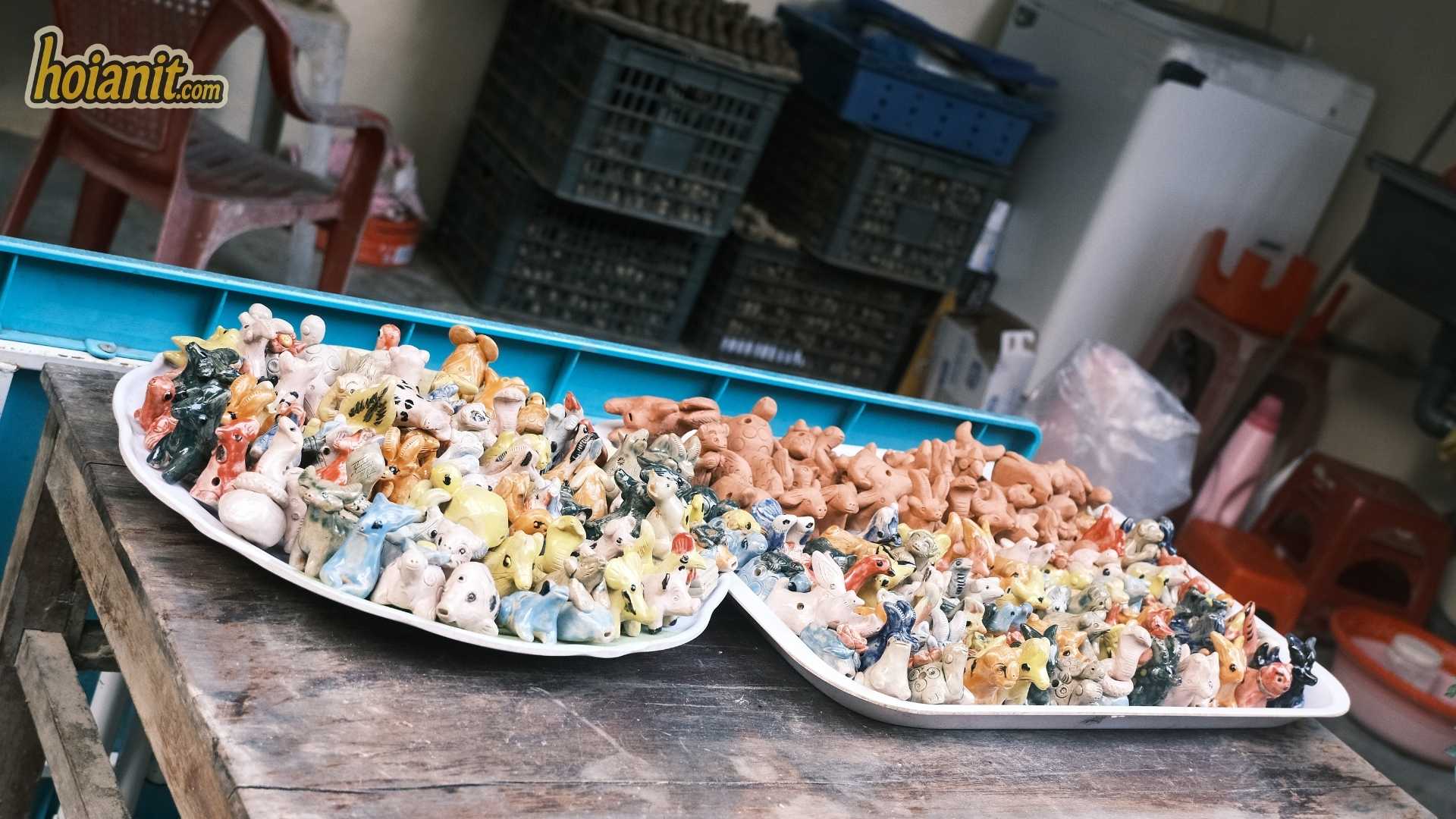
- Whistles and animal figurines: 10,000–20,000d; buy ten or more and the price drops.
- Cups, plates, unglazed bowls: 25,000–60,000d each. The brown stoneware fired at 800–1,000°C is sturdier than the low-fired red ware.
- Small vases: 60,000–150,000d. Do not buy anything taller than 25 cm if you are flying.
- Figurines and wall reliefs: 100,000–300,000d.
- Wind chimes and ceramic lamps: 80,000–200,000d; clay sounds duller and lower than metal.
Entry to the village costs 30,000 to 35,000d for an adult depending on which price board you read, around 15,000d for children, and the good part is that the ticket includes a small ceramic to take away. You have a souvenir before you have bought anything. If you want longer there, the Thanh Ha Terracotta Park next door charges separately: 50,000d adults, 25,000d for children under 15, open 8:00 to 17:30.
Getting there is easy. From our shop at 84 Phan Chau Trinh, Google Maps measures 2.9 km, about 8 minutes along Hung Vuong. Park at the village gate; the lanes inside are narrow and better walked.
Silk, fabric and tailoring in 24 hours
Silk is where Hoi An souvenirs stop being trinkets: this is one of the few places where you order clothes in the morning and collect them the next day. It is also the most expensive category here, so it deserves the most attention.
- Mulberry silk scarf: 200,000–600,000d depending on size and weight. Test it by hand: real silk feels cool, pulls through a ring, and creases lightly then relaxes flat again. Polyester blends feel slick and warm and barely crease at all.
- Fabric by the metre: silk, raw silk, linen and cotton, sold along the Nguyen Hue side of the market and in old town shops.
- Tailored ao dai: usually 24 hours, sometimes same day. Book a fitting time and never collect without trying it on.
- Suits, shirts, dresses: one to three days depending on the cut. Most tailors keep your measurements so you can reorder from home.
- Leather wallets, bags, shoes: quick to make, but ask directly whether it is real leather or synthetic. The price difference is three or four times.
Keep a receipt with the collection date and time written on it. Photograph the sample you chose, in the shop. And pay no more than 50% up front. Those three habits head off almost every dispute we hear about, which matters most when you fly out the next morning.

Kim Bong woodwork, bamboo and conical hats
The longest-lasting Hoi An souvenirs come from across the Thu Bon river, from Kim Bong, the carpentry village that built most of the wooden houses in the old town and a good deal of the royal architecture in Hue. Kim Bong carpentry is also national intangible cultural heritage, under Decision 4036/QD-BVHTTDL of 21 November 2016.
- Jackfruit-wood boards, spoons, chopsticks: 80,000–250,000d. Many workshops will carve a name into a board while you wait, about 15 minutes.
- Small figures, carved boxes, masks: 100,000–500,000d, palm-sized and easy to carry.
- Model junks and basket boats: distinctly Kim Bong, rare elsewhere.
- Bamboo baskets, trays and lamps from Cam Kim: 50,000–200,000d, light and hard-wearing.
- Hand-painted conical hats: 60,000–150,000d. Strap a hat to the outside of your case; do not pack it inside.
Wood bought in the village costs less than in town because you are buying at the workshop, and you get to watch the person who made it. The village is 5.8 km away over the Cam Kim bridge, or about ten minutes on the little ferry from the Bach Dang riverfront.
The souvenir worth carrying home is rarely the prettiest thing in the cabinet. It is the one you watched somebody make.
Edible Hoi An souvenirs: chili sauce, cakes, tea, fish sauce
This is the category that pleases recipients most, because everyone can use it and nobody has to find a shelf for it.
| Item | Price, 2026 | Keeps | Notes |
|---|---|---|---|
| Hoi An chili sauce | 25,000–60,000d/jar | 6–12 months | The oldest name is Trieu Phat at 41 Nguyen Thai Hoc; jars in 60, 100 and 120 ml |
| Mung bean cake | 30,000–100,000d/box | 1–2 weeks | The savoury pork-filled version is particular to Hoi An |
| Ginger leaf sticky cake | 3,000–5,000d each | 2–3 days | Buy on your last day, eat quickly |
| Pandan or jasmine tea | 40,000–90,000d/pack | 1 year | Light, easy to pack, good in quantity |
| Tra My cinnamon, Tien Phuoc pepper | 50,000–150,000d | 1 year | From the wider province rather than Hoi An itself, sold everywhere in the market |
| Fermented fish sauce | 50,000–100,000d per 500 ml | 1 year | Buy sealed plastic bottles if you are flying — see section 10 |
| Dried fish and squid | 150,000–400,000d/kg | Some months | Vacuum-sealed, wrapped in several layers |
The dry goods row along the Tran Phu frontage of Hoi An Market is the cheapest place for all of it, though ask about packing dates and use-by dates. Dedicated speciality shops in the old town run 20 to 40% higher, but they gift-box things and give you a receipt.

Where to buy Hoi An souvenirs: market, night market, old town or village
The same object can cost twice as much depending on where you pick it up. This is the breakdown we give guests:
| Where | Hours | Best for | Price level |
|---|---|---|---|
| Hoi An Market (19 Tran Phu) | 6:00–22:00 | Food, fabric, tailoring, small crafts | Cheapest; bargaining expected |
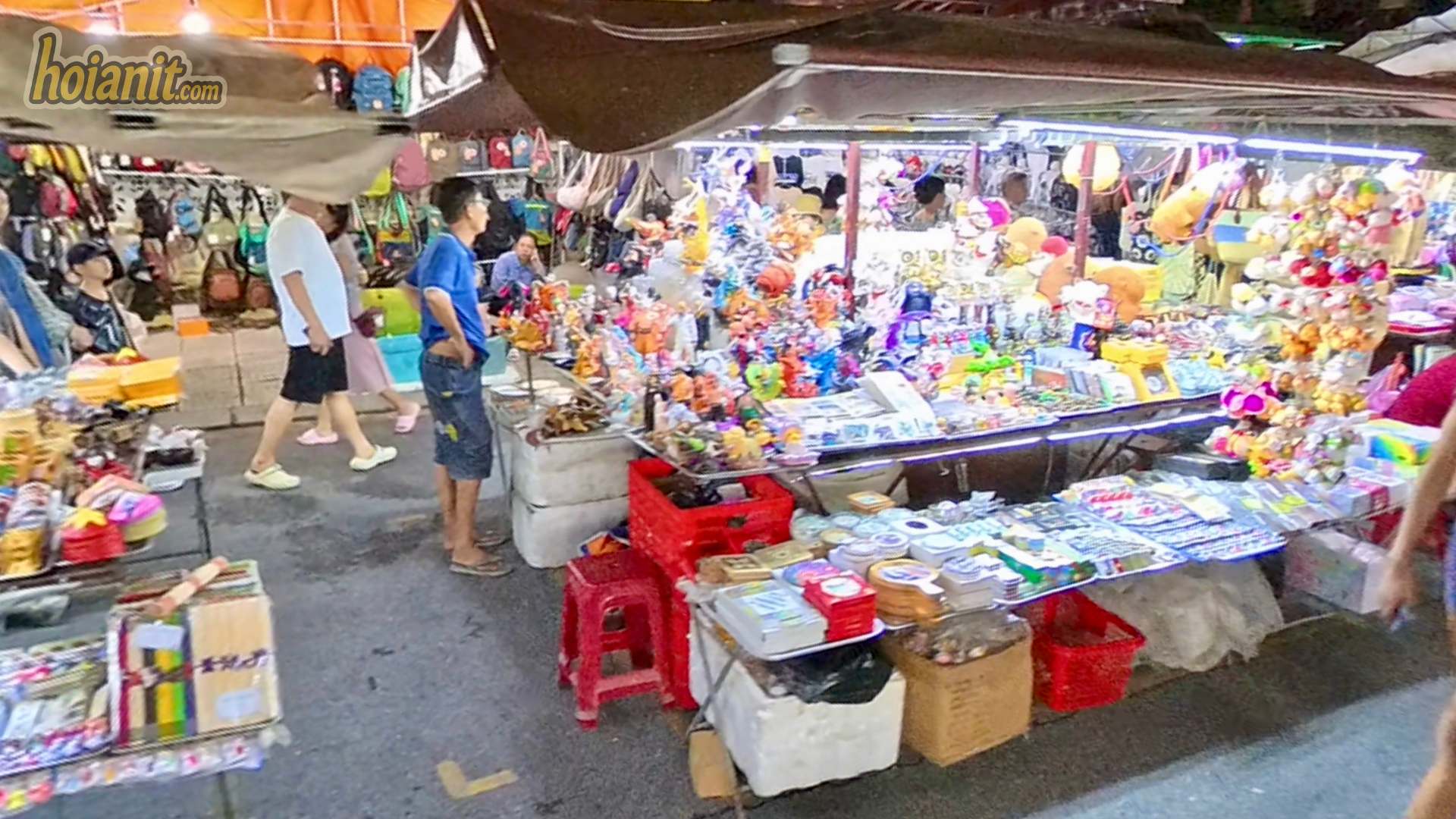
| Nguyen Hoang Night Market (An Hoi) | 17:00–22:00 | Lanterns, trinkets, gifts in bulk | Cheap, but inspect carefully |
| Old town shops (Tran Phu, Nguyen Thai Hoc) | 8:00–21:30 | Silk, leather, art, homeware | Highest; little bargaining, steadier quality |
| Thanh Ha pottery village | 7:30–17:30 | Ceramics, clay whistles | Cheap, straight from the kiln |
| Kim Bong carpentry village | 7:30–17:00 | Wood, model boats, commissions | Below town prices |
| Handicraft workshop (9 Nguyen Thai Hoc) | 8:00–17:30 | Every craft in one building, makers on site | Similar to old town, fixed prices |
| Social enterprise shop (131 Tran Phu) | 8:00–18:30 | Crafts by artisans with disabilities | Higher, fixed, with a story |
Two places deserve singling out. The Hoi An Handicraft Workshop at 9 Nguyen Thai Hoc gathers artisans from the surrounding craft villages to work in the middle of town, and it is one of the 21 sites covered by the Ancient Town ticket, which costs 120,000d for foreign visitors and 80,000d for Vietnamese, lets you pick three sites, and is valid 24 hours. Buy here and you know exactly who made the object. The other is Reaching Out at 131 Tran Phu, a social enterprise running since 2000 whose entire workforce is people with disabilities. Prices are fixed and not negotiable, and the gift arrives with something true attached to it.
Telling village-made from imported
On 31 October 2023 Hoi An joined the UNESCO Creative Cities Network in the field of Crafts and Folk Art, with five traditional craft villages and close to 50 handicraft trades. Along a single street, though, genuinely handmade Hoi An souvenirs sit beside factory goods trucked in from elsewhere. A few signals we use:
- Look for the hand: handmade things vary. Two bowls of the same pattern are never identical; the brushwork on a lantern wanders slightly. Twenty objects matching to the millimetre came out of a mould.
- Turn it over: village pottery has an unglazed base, slightly rough, often still showing the cutting-wire mark. Imported ceramics are glossy all the way round, base included.
- Ask one technical question: “which wood is this?”, “is this silk or canvas?”. Someone selling village work answers immediately. Someone selling imported stock answers vaguely.
- Price against labour: a 40 cm hand-painted silk lantern cannot be 50,000d. The silk and the painting alone cost more than that.
- Surest of all, buy at source: at the pottery village, the carpentry village or the handicraft workshop you can see the maker.
Bargaining, cash and buying in bulk
- Where bargaining over Hoi An souvenirs is expected: market stalls, the night market, street vendors. Ask the price, offer 10 to 20% less, and do not haggle hard. Old town shops post prices; the handicraft workshop and the social enterprise shop do not negotiate at all.
- Say you are buying several: the most effective phrase in the market is simply that you want a lot of them. Ten jars of chili sauce or ten clay whistles and the price comes down without item-by-item haggling.
- Carry cash and small notes: most stalls do not take cards, though many now have a QR transfer code. Keep 20,000 to 100,000d notes on you.
- Compare two stalls before anything expensive: thirty seconds of walking often finds a 20 to 30% difference.
- Keep receipts above 500,000d: useful for exchanges, and for customs if you carry a quantity.
- Do not buy everything at the first shop: walk the full street and come back. By then you have a reference price in your head.
One note on tone. Bargaining for Hoi An souvenirs here is normal and friendly, not adversarial. Smile, make one offer, accept the answer. Grinding a stallholder down over the equivalent of fifty cents reads badly and rarely works.
Packing, flying home and shipping
This is where Hoi An souvenirs most often come to grief, particularly fish sauce and ceramics.
Fish sauce and anything strong-smelling. Vietnam Airlines allows it in checked baggage only, capped at 3 litres or 3 kg per passenger, and it must be in plastic bottles. Glass and unsealed containers are refused. Fill to no more than 95%, tape the cap, put the bottle in a foam box and tape that shut. It is not accepted at all on ATR72 aircraft. Many international carriers ban odorous baggage outright, so if you are connecting onward, check with that airline before you buy. The detail is on the Vietnam Airlines odorous baggage page.
- Ceramics: have the seller wrap each piece in newspaper, add a layer of your own clothing, and place it in the middle of the case, never against the shell.
- Collapsible lanterns: fold flat, wrap in a shirt, lay lengthways in the case. Fixed-frame lanterns go as carry-on; most airlines allow it if the thing fits the overhead bin.
- Small liquids: chili sauce in 60 to 120 ml jars can ride in your cabin bag if each container is 100 ml or less and the whole clear bag stays under a litre. Checking it is simpler.
- Large wood, art, altar pieces: workshops will crate and ship. Agree the cost and the timeframe first, and take a receipt with a tracking number on it.
- Fresh cakes: buy them the morning you fly, not before.
Dried fish, dried squid and fish sauce carried in zip bags are the three most likely to be stopped, because the smell escapes and taints the whole hold. Buy the vacuum-sealed version, or ask the shop to vacuum-seal it again. It takes a few minutes and saves the gift.
A half-day souvenir route by motorbike
Done on foot, collecting Hoi An souvenirs eats a whole day and leaves you carrying everything. This is the loop we give guests, on a motorbike or an electric scooter, about four hours:
- 8:00 — Thanh Ha pottery village2.9 km from 84 Phan Chau Trinh, 8 minutes along Hung Vuong. Buy the ticket, collect the free ceramic, watch the wheel, buy whistles and tableware. Around an hour.
- 9:15 — Kim Bong carpentry villageBack around via the Cam Kim bridge, 5.8 km. Boards carved with a name, boxes, model boats. No entry fee. Around an hour.
- 10:30 — Hoi An MarketBack into town, park on the Nguyen Hue side. Chili sauce, mung bean cake, tea, cinnamon and pepper along the Tran Phu dry goods row. Eat lunch in the food hall while you are there. Around an hour.
- 11:45 — Tailor or fabric stallOrder the ao dai or pick a silk scarf. Ordered today, fitted tomorrow afternoon, so do this at least two days before you fly.
- Evening — Old town or night marketBuy the lantern last, because it is the most fragile thing and the least pleasant to carry around. Note the car-free hours in the old town, 9:00–11:00 and 15:00–21:30.
If you would rather pedal the short version of this loop, the flat lanes out to Thanh Ha appear in our Hoi An cycling routes. Coming from Da Nang, add roughly 45 minutes each way along Lac Long Quan. Leaving at 7:00 puts you at the pottery village while it is still cool and the potters are working.
Need wheels to make the loop?
Our shop sits at 84 Phan Chau Trinh, inside the old town. Motorbikes, electric scooters and bicycles, collected here or delivered to your hotel, with helmet, raincoat and a map marked with the car-free hours. Every bike has a seat box and hooks, enough for a crate of pottery and a bag of cakes.
Hoi An souvenirs: frequently asked questions
What are the best Hoi An souvenirs to buy?
The three most characteristic are a collapsible silk lantern (60,000–250,000d), Thanh Ha pottery including clay whistles and small bowls (10,000–150,000d), and carved Kim Bong woodwork (100,000–500,000d). Add chili sauce, mung bean cake and a silk scarf if you need gifts for several people.
Where is the cheapest place to buy souvenirs in Hoi An?
Hoi An Market at 19 Tran Phu is cheapest for food and small crafts, Thanh Ha pottery village is cheapest for ceramics because you buy at the kiln, and the Nguyen Hoang night market is cheap for lanterns and bulk gifts. Shops on Tran Phu and Nguyen Thai Hoc cost more but the quality is more consistent.
How much does a Hoi An lantern cost and can I fly with it?
A collapsible lantern of 20–30 cm is around 60,000–120,000d, plain silk at 30–40 cm around 120,000–200,000d, and hand-painted silk 180,000–250,000d. You can fly with one if you buy the collapsible type: it folds to three or four centimetres, wrap it in a shirt and lay it lengthways in the case. Fixed-frame lanterns do not fold and are better as carry-on.
How much is the Thanh Ha pottery village ticket and what does it include?
Around 30,000 to 35,000d for an adult depending on the price board, about 15,000d for children, and the ticket includes a small ceramic to take home. The Thanh Ha Terracotta Park next door charges separately at 50,000d for adults and 25,000d for children under 15, open 8:00 to 17:30.
Can I take fish sauce and dried seafood on a plane?
Yes, but in checked baggage only and limited to 3 litres or 3 kg per passenger under Vietnam Airlines rules. It must be in plastic bottles filled to no more than 95%, with the cap taped and the bottle inside a sealed foam box. Glass is refused and ATR72 flights do not accept it at all. Dried fish and squid should be vacuum-sealed. Many international airlines ban strong-smelling baggage entirely, so check your onward carrier.
How do I tell handmade crafts from imported goods in Hoi An?
Handmade pieces vary slightly from one to the next, village pottery has a rough unglazed base, and the seller can answer a technical question about the material straight away. Moulded goods are identical to the millimetre and priced far below the labour they would take. The safest approach is buying at the pottery village, the carpentry village or the handicraft workshop at 9 Nguyen Thai Hoc.
How long does tailoring take in Hoi An and what does it cost?
Usually 24 hours, and some tailors manage same day. A mulberry silk scarf runs 200,000–600,000d; a tailored ao dai, suit or dress depends on fabric and cut, commonly from a few hundred thousand dong upwards. Keep a receipt with the collection time, photograph the sample you chose, and pay no more than half in advance.
Is bargaining expected when buying souvenirs in Hoi An?
At market stalls, the night market and with street vendors, yes: ask the price and offer 10 to 20% less, once, without pushing. Old town shops post fixed prices, and the handicraft workshop and social enterprise shops do not negotiate. Saying you want several of something works better than haggling item by item.
Reading in Vietnamese? The local-language version is here: qua luu niem Hoi An.








Pick your ride in Hoi AnChọn xe cho chuyến đi Hội An
Scooters, electric bikes and bicycles from one shop in the Old Town — delivered to your hotel, helmets and roadside help included.Xe máy, xe điện và xe đạp — giao tận khách sạn, kèm hai nón bảo hiểm và hỗ trợ dọc đường.
Not sure which one fits? Message us on WhatsApp and we’ll recommend a bike for your plans.
Chưa biết chọn xe nào? Nhắn Zalo 0935 439 306, tụi mình tư vấn theo lịch trình của bạn.