

Hoi An Travel Tips
Hoi An Art Gallery Guide: 12 Places Worth Your Time (2026)
Every Hoi An art gallery looks tempting after a day in the Ancient Town — lacquer glowing under shop lights, oil paintings of lantern-lit alleys, black-and-white prints of boat women on the Thu Bon. The hard part isn’t finding art. It’s telling an original apart from a print run of fifty, knowing what a fair price looks like, and getting the thing home in one piece and legally.
This guide covers 12 galleries with verified addresses, what each one actually specialises in, realistic price ranges in USD, and the part most guides skip entirely: Vietnam’s export rules on art and antiques.
Full disclosure: Anh Khoa Hoi An does not sell art and takes no commission from any gallery listed here. We rent motorbikes — we wrote this because our customers kept asking. Every address was checked against the gallery’s own website, the official Hoi An heritage authority, or Vietnamese press. Sources are listed at the bottom, and where a listing rests on a single source, we say so.
Short on time?
- Traditional lacquer, done properly: Ngan Xua Gallery (95 Tran Phu).
- Contemporary Vietnamese artists: Art House Vietnam (692 Hai Ba Trung) or T&G Art Gallery (57 Tran Phu).
- Fine-art photography: Réhahn (7 Nguyen Hue) — and the free Precious Heritage Museum (26 Phan Boi Chau).
- Souvenirs that won’t break the bank: Hoi An Handicraft Workshop (9 Nguyen Thai Hoc).
- Make something yourself: Driftwood Village in Dong Na, ~3 km out — you’ll want a scooter.
- Free to enter: almost all of them. Browsing costs nothing and nobody will chase you.
- Admin note: since 1 July 2025 Hoi An is part of Da Nang City, not Quang Nam Province. Street names and numbers are unchanged — most guides online haven’t caught up yet.
In this guide
Why Hoi An has so many galleries
Hoi An was an international trading port from the 15th century, and the craft economy that built those shophouses never really stopped. The same lineage that produced carpenters, lacquer workers and embroiderers now produces painters and photographers.
The Hoi An Centre for Cultural Heritage Management describes an informal “painting market” around the old market and along Nguyen Thai Hoc and Tran Phu, with roughly 20 galleries dealing in large original works, alongside dozens of stalls selling double-sided hand embroidery, silk paintings and Dong Ho woodblock prints.
That range is the opportunity and the trap. On one street you can pay 50,000₫ (~$2) for an offset print or several thousand dollars for an original lacquer panel — and to an untrained eye at night, under warm shop lighting, both look great. So decide what you’re after before you ask a price:
| If you want | Look for | Start at |
|---|---|---|
| A cheap, packable gift | Prints, postcards, small sketches | Handicraft Workshop, market stalls |
| Something good for your wall | Mid-size hand-painted work, silk | Hoa Buu, Thanh Cong, Hoang Trong Tien |
| A collectable with a signature | Originals, lacquer, limited-edition prints | Ngan Xua, T&G, Réhahn, Art House |
| To make it, not just buy it | Carving and painting workshops | Driftwood Village, Handicraft Workshop |
12 galleries in Hoi An worth your time
Grouped by location so you can walk a sensible loop. Hours shift with the season and some of these are one-person operations — message ahead or check Google Maps before making a special trip.
Tran Phu — the main heritage street
1. Ngan Xua Gallery
Twenty-plus years in, and since 2005 focused entirely on contemporary lacquer on wood — modern subjects, but built the traditional way with real lacquer over many layers, not the plastic substitute you’ll find in tourist shops. Represents selected artists including Nguyen Dang Son and Nguyen Dinh Dang. If you visit one Hoi An art gallery to understand what Vietnamese lacquer actually is, make it this one.
- Address
- 95 Tran Phu, Hoi An Ward, Da Nang
- Hours
- Mon–Thu 9am–9pm · Fri–Sun 10am–8pm
- Entry
- Free
2. T&G Art Gallery
One of the first galleries in town, founded 1995 as painter Truong Bach Tuong’s studio. Since 2003 it has been the home of the Hoi An Fine Art Club — around 20 local painters — and it still shows and sells their work, plus members of the Quang Nam and Vietnam Fine Arts Associations. Range runs abstract to figurative, silk and lacquer through to oil, acrylic and sculpture. Probably the best single stop for seeing what Hoi An’s own painters are making right now.
- Address
- 57 Tran Phu, Hoi An Ward, Da Nang
- Hours
- 9am–6pm
- Entry
- Free
3. Hoa Buu Art Gallery
Founded in 1997 by artist Thai Tuyet Hoa — one of the longest-running spaces still going. Small, warm, and leaning toward work with a personal story rather than the standard lantern-and-rooftop repertoire. Open late, so it’s an easy stop after dinner.
- Address
- 37 Tran Phu, Hoi An Ward, Da Nang
- Hours
- Around 10am–9pm daily
- Entry
- Free
4. Au Lac Wood Art
Set up in 2004 by Tran Thu and Nguyen Viet Linh, with awards for design and craft behind it. Sculptures carved from roots and trunks, from suitcase-sized pieces up to architectural work. The production workshop sits out in the countryside (~30 min by car) and can be visited by arrangement. Notably, the studio trains and employs local young people and disabled woodcarvers. Ships internationally — ask before you buy anything big.
- Address
- 152 Tran Phu, Hoi An Ward, Da Nang
- Hours
- 9am–5pm
- Entry
- Free
5. Hoang Trong Tien Art Gallery
Hue-born, Hoi An-based since the 1990s, and a member of the Hoi An Fine Arts Association. He works without preliminary sketches or a palette — building each painting directly with brush and finger technique. Expressionist in feel, but anchored in landscape.
- Address
- 107 Tran Phu, Hoi An (single source — confirm on Maps)
- Hours
- Around 9am–10pm
- Entry
- Free
Nguyen Thai Hoc & the old market
6. Hoi An Handicraft Workshop
A 200-year-old Chinese trading house where artisans work 12 traditional crafts on site: silk and paper lanterns, pottery, woodcarving, embroidery, bamboo weaving, inlay, lacquer, silk weaving. You can watch, try a few simple steps, and buy without the markup of the boutique galleries. There’s a small theatre with daily traditional music and dance. The best option if you need several gifts and don’t want to overthink it.
- Address
- 9 Nguyen Thai Hoc, Hoi An Ward, Da Nang
- Hours
- Around 8am–9pm
- Entry
- Covered by the Ancient Town ticket
7. Thanh Cong Art Gallery
On the densest gallery stretch in the Ancient Town. Oils and lacquer by Vietnamese painters, originals available. Practical to combine with the surrounding block if you’re covering several galleries in an afternoon.
- Address
- 95 Nguyen Thai Hoc, Hoi An Ward, Da Nang
- Hours
- Around 8am–8.30pm
- Entry
- Free
Nguyen Hue, Phan Boi Chau & Le Loi
8. Réhahn Art Gallery
French photographer Réhahn’s first gallery, open since October 2014 on a quiet street near the market. Portraits, landscapes and Vietnamese life, including his Limited Edition series. Look for “The Hidden Smile of Madam Xong” — she still runs a boat on the Hoi An harbour. Books and postcards make good low-cost souvenirs.
- Address
- 7 Nguyen Hue, Hoi An, Da Nang
- Hours
- 10am–6pm, daily
- Entry
- Free · postcards from ~30,000₫ (~$1)
9. Precious Heritage Museum
Opened 2017 in a 19th-century house in the French Quarter. A permanent exhibition on Vietnam’s 54+ ethnic groups — large-format portraits, personal stories and genuine traditional costumes collected over years. Captions in French, English and Vietnamese. Go here before you shop: it recalibrates how you look at everything else in town.
- Address
- 26 Phan Boi Chau, Hoi An, Da Nang
- Hours
- 8am–8pm, daily
- Entry
- Free
10. Phan Kim Chi Art Gallery
On Le Loi, one street back from the crowds. Paintings by the Phan Kim Chi family — figurative work drawn from ordinary Vietnamese life rather than tourist motifs. Small and deliberately curated, which makes it a useful first stop to calibrate your eye before hitting the commercial rooms. They’ll tube and pack work for travel.
- Address
- 37 Le Loi, Hoi An Ward, Da Nang
- Hours
- Not consistently published — ask ahead
- Entry
- Free
Outside the Ancient Town — worth the ride
11. Art House Vietnam Gallery
Founded 2004 by Vu Trong Anh, moved to Hai Ba Trung in 2011. The one gallery in town built around young contemporary Vietnamese artists rather than decorative work for tourists — names like Dino Nguyen and Vo Xuan Huy alongside emerging painters. Abstract through figurative, painting through sculpture, and prices that are more reasonable than you’d expect for original contemporary work.
- Address
- 692 Hai Ba Trung, Hoi An, Da Nang
- Hours
- Check ahead
- Entry
- Free
12. Driftwood Village (Lang Cui Lu)
Out among the rice fields in Dong Na, about 3 km from the Ancient Town. Started in 2020 by artist Le Ngoc Thuan, built entirely from flood driftwood pulled out of the Thu Bon River after the rainy season. Carvers trained in the Kim Bong woodworking tradition turn it into work reflecting Co Tu ethnic culture. Ten-plus themed exhibitions and daily carving and painting workshops — one of the few places here where you work alongside the craftspeople instead of watching them.
- Address
- Group 13, Dong Na, Hoi An Tay Ward, Da Nang
- Hours
- 8am–5pm (Wed from 8.30am)
- Entry
- Free · workshops priced separately
Getting around: ten of these twelve sit inside the Ancient Town, which is closed to motorbikes during certain hours. Park at the edge (Nguyen Phuc Chu, Tran Hung Dao) and walk. Driftwood Village and Art House are outside the walking zone — that’s where a scooter or bicycle pays for itself.
Original or print? How to tell in 30 seconds
This is the single thing that separates a good purchase from a bad one, and it takes half a minute.
- Look across the surface, not at it. Tilt the canvas toward a window. A hand-painted oil has raised brushstrokes that catch the light unevenly. A print is flat. Your fingertips will confirm what your eyes suspect.
- Get close. A giclée or offset print reveals a dot pattern under scrutiny. Paint doesn’t have dots.
- Ask the killer question: “Do you have another one exactly like this?” If they can produce five from the back room, you’re looking at a reproduction. That’s fine — just pay reproduction prices.
- Check the back of embroidery. Genuine hand stitching is even but not machine-perfect. Machine work is identical to the millimetre and flat on the reverse.
- For photographic prints, ask what ink and paper. Pigment ink on archival paper lasts decades; dye ink on standard stock fades. A gallery that can’t answer is selling you a poster.
- For lacquer, look for depth. Real lacquer is built in many layers and sanded back — it has an optical depth you can see when you move. The plastic imitation looks the same from every angle.
None of this makes prints bad. A signed limited-edition photograph is a real thing worth real money. The problem is only ever paying original prices for a print.
What art costs in Hoi An
Please read: these are observed market ranges as of July 2026, not quotes from any gallery. Real prices swing enormously with size, medium, and the artist’s reputation. USD figures are rough conversions and move with the rate. Always ask in person.
| Item | Typical range | Notes |
|---|---|---|
| Postcards, small photo prints | From ~30,000₫ (~$1) | Published rate at Réhahn’s gallery |
| Small print or sketch (20×30cm) | ~$2–$15 | Framing adds a lot |
| Mid-size print (30×40–45×60cm) | ~$10–$40 | Ask about ink and paper |
| Mid-size hand-painted original | From ~$100+ | Huge spread by artist |
| Lacquer panel / signed original | From ~$400+ | Ask for a certificate |
| Numbered limited-edition photograph | Thousands of USD | Per published international rates |
Bargaining: when it’s fine, and when it’s rude
Foreign visitors get this wrong in both directions — some haggle over a signed original, others pay the first price for a mass-market print. The line is simple:
Haggle at stalls and print shops. Around the old market, the opening number is above the real selling price. Counter at roughly 60–70% and meet somewhere in the middle. Stay friendly; smiling works better than walking out. This is a normal, expected exchange.
Don’t haggle in an artist’s gallery. If there’s a name, a biography, and one of each work on the wall, the price is the price. Asking a painter to discount their own canvas reads roughly the way it would at home. If it’s beyond your budget, ask whether they have smaller works or prints — that’s a perfectly polite question, and usually they do.
Two practical habits. Photograph the wall you’re buying for and know its width before you shop — mis-sized art is the most common regret. And do one full lap of Tran Phu and Nguyen Thai Hoc before buying anything; you’ll see the same composition at several price points and learn the market in twenty minutes.
Getting your art home legally
This is the part almost no gallery guide covers, and it’s where trips go wrong at the airport.
Vietnam’s export rules
Antiques and objects of historical or religious value — including old paintings, statues and artefacts — cannot legally leave Vietnam without authorisation. The rule exists to stop cultural looting, and it’s enforced. Contemporary art bought from a working gallery is not affected: paint applied last year is not an antique.
The practical risk isn’t the gallery — it’s the person at a market stall telling you a piece is “genuinely antique.” If it’s true, you may not be able to export it. If it’s false, you’ve overpaid for a fake. Either way, walk away.
For higher-value or commercial-quantity items, ask the seller for a receipt and a written declaration that the item may be exported. Reputable galleries produce this without blinking. For originals, also ask for a certificate of authenticity — useful for customs at the other end and essential if you ever insure the work.
Packing, by medium
- Anything that rolls — silk, unframed prints, canvas off its stretcher: ask for a rigid tube. Most airlines accept these as carry-on, but confirm dimensions with yours first.
- Framed work with glass: don’t check it. Glass breaks. Ask them to remove the glass and reglaze at home.
- Lacquer: rigid, heavy, and vulnerable at the corners. Insist on a crate or multi-layer carton with corner protection.
- Sculpture and large work: raise shipping while you’re still browsing, not at the till. Au Lac Wood Art ships internationally; other galleries will quote a freight forwarder.
At your end
Rules differ by country, so check your own customs authority — but as a general pattern, many countries (including the US) treat original works of art differently from mass-produced goods for duty purposes, while prints and reproductions are often treated as ordinary merchandise. Keep the receipt, the certificate and a photo of the piece. Declare it. Trying to be clever about a $200 painting is not worth the conversation.
A half-day gallery route
The Ancient Town is walkable, but linking it to Driftwood Village, Art House, Kim Bong carpentry village or An Bang beach in one day needs two wheels. A workable loop:
| Time | Stop | How |
|---|---|---|
| 8.30 | Driftwood Village (Dong Na) | Scooter, ~10 min from town |
| 10.00 | Park at the edge → Precious Heritage Museum (26 Phan Boi Chau) | On foot |
| 11.00 | Réhahn (7 Nguyen Hue) → Handicraft Workshop (9 Nguyen Thai Hoc) | On foot, ~5 min |
| 14.00 | Tran Phu run: Hoa Buu (37) → T&G (57) → Ngan Xua (95) → Hoang Trong Tien (107) → Au Lac (152) | On foot, one street |
| 17.00 | Phan Kim Chi (37 Le Loi), then stay for the lanterns | On foot |
Need wheels for the loop?
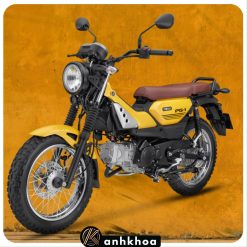
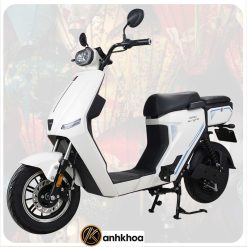
Anh Khoa Hoi An runs 300+ bikes — automatic scooters, semi-automatics, manuals and electric. Free delivery to your hotel, transparent pricing with no hidden fees, and 24/7 roadside support if anything goes wrong. You look at art; we’ll handle the rest.
See motorbike rental prices →
E-Bike · No license


Bikes Rental
Hoi An art gallery FAQ
Where are most of Hoi An’s art galleries?
Three streets in the Ancient Town cover most of them: Tran Phu (Ngan Xua, T&G, Hoa Buu, Au Lac, Hoang Trong Tien), Nguyen Thai Hoc and the old market area (Thanh Cong, the Handicraft Workshop), and Le Loi (Phan Kim Chi). They run parallel, a few hundred metres apart — an easy afternoon on foot. Art House Vietnam (692 Hai Ba Trung) and Driftwood Village (Dong Na) sit outside the centre.
Is it free to enter galleries in Hoi An?
Almost always yes, including the Precious Heritage Museum at 26 Phan Boi Chau. The Hoi An Handicraft Workshop at 9 Nguyen Thai Hoc sits on the Ancient Town ticket route. Workshops at Driftwood Village are charged separately. Nobody will pressure you to buy — browsing is normal.
How do I know if a painting is an original?
Tilt it toward natural light: hand-painted oil has raised brushstrokes that catch the light unevenly, prints are flat. Look closely for a dot pattern — paint has none. Then ask whether they have another identical piece; if five appear from the back, it’s a reproduction. Prints are fine to buy, just not at original prices.
Should I bargain at a Hoi An art gallery?
At market stalls and print shops, yes — counter around 60–70% of the opening price and meet in the middle. At a gallery representing named artists, no. Those prices are fixed and haggling over an artist’s own work is considered rude. If it’s out of budget, ask about smaller works or prints instead.
Can I take paintings out of Vietnam?
Contemporary art from a working gallery, yes. Antiques and items of historical or religious value cannot be exported without authorisation — so be wary of anyone at a stall claiming a piece is genuinely antique. For valuable works, ask for a receipt, a written declaration that the item may be exported, and a certificate of authenticity. Check your own country’s customs rules for what happens on arrival.
What’s the best way to get art home in one piece?
Anything that rolls (silk, unframed prints, canvas off the stretcher) goes in a rigid tube as carry-on — confirm dimensions with your airline. Never check framed work with glass; ask for the glass to be removed. Lacquer needs a crate or multi-layer carton with corner protection. For sculpture or large pieces, ask about international shipping while browsing — Au Lac Wood Art ships worldwide.
Is Hoi An in Quang Nam or Da Nang?
Since 1 July 2025, Quang Nam Province merged into Da Nang City. The former Hoi An city is now the wards of Hoi An, Hoi An Dong, Hoi An Tay and Tan Hiep, all within Da Nang. Street names and house numbers are unchanged, so every address here still works on Google Maps — but many guides still say “Quang Nam”.
Does Anh Khoa sell art?
No. Anh Khoa Hoi An only rents motorbikes, electric bikes and bicycles in Hoi An. This guide is independent and we take no commission from any gallery mentioned.
Sources & verification
- Hoi An World Heritage — Hoi An’s 10 Best Galleries and Art Studios (Art House, Au Lac, Ngan Xua, Handicraft Workshop)
- Hoi An Centre for Cultural Heritage Management — the Ancient Town “painting market”
- T&G Art Gallery / Hoi An Art — official site (current address 57 Tran Phu, Hoi An FAC history)
- Ngan Xua Gallery — official site (address, hours)
- Réhahn Photography — Fine Art Galleries in Hoi An (addresses, hours, postcard price)
- Hoa Buu Art Gallery — official site
- Wafaifo Resort Hoi An — 5+ Art Galleries In Hoi An (Phan Kim Chi, Thanh Cong, Hoang Trong Tien)
- Bao Dan toc & Phat trien — Driftwood Village, Dong Na
- Vietnam export restrictions on antiques and objects of historical value
- National Assembly resolution merging Quang Nam into Da Nang, effective 1 July 2025
Last updated 15 July 2026. Hours and prices change — confirm directly with the gallery before making a special trip. This guide is informational and is not legal or customs advice; check your own country’s rules before shipping.
Vietnamese version: Tiệm tranh ảnh Hội An — 10 địa chỉ mua tranh & quà lưu niệm








Motorbike Rental
Bicycle Rental
One-way to Hue
Electric Bicycle
Electric Scooter
Dirt Bike Rental
No License